Yesterday, September 15, 2026, the entire crypto industry was holding its breath for one thing: the CLARITY Act. After more than a year of negotiations, over 600 pages of legislative compromise, and hundreds of millions of dollars in lobbying, the Digital Asset Market Clarity Act (CLARITY Act) stood on the verge of becoming America's first comprehensive legal framework for digital asset markets. But a procedural vote in the Senate closed that dream for 2026.
So what caused a bill both parties praised as "the best crypto could realistically get" to collapse in a single afternoon? And more importantly for investors: is this failure really the end of the road, or just a longer detour than expected?
Key Takeaways
The CLARITY Act failed after falling short of the 60-vote threshold in the Senate.
Disagreement over ethics provisions tied to President Trump was the central sticking point.
The SEC and CFTC will continue building rules within their existing authority.
A comprehensive crypto legal framework could still return after the 2026 midterms.
This round of market volatility was also heavily amplified by macro factors like the upcoming rate decision.
1. What Is the CLARITY Act, and Why Does It Matter So Much?
The CLARITY Act (H.R. 3633), formally the Digital Asset Market Clarity Act, was designed to solve the biggest bottleneck the U.S. crypto industry has faced for nearly a decade: who regulates what. The original version ran 219 pages, but after continuous revisions to satisfy both sides, the final text ballooned to over 600 pages across five main titles.
At its core, the bill redraws the boundary of power between America's two largest financial regulators. The Commodity Futures Trading Commission (CFTC) would gain primary oversight of digital commodity exchanges, brokers, and dealers, including spot markets, an area where the CFTC currently has almost no direct registration or supervisory authority. Meanwhile, the Securities and Exchange Commission (SEC) would be responsible for digital asset intermediaries and stablecoins. For "hybrid" products that blend securities and commodities characteristics, the two agencies would be required to jointly issue rules.
One provision especially welcomed by the crypto community protects the right to self-custody. The bill affirms the right of U.S. citizens to hold hardware or software wallets and conduct peer-to-peer transactions without being forced to go through a financial intermediary, a core principle many in the industry consider fundamental to Bitcoin's original spirit.
If passed, the CLARITY Act would have delivered something the U.S. crypto industry has craved for years: a clear, stable legal pathway that doesn't hinge on the shifting interpretations of whoever happens to chair the SEC. Beyond that, industry watchers suggested it could have acted as a catalyst on par with, or even bigger than, the approval of the spot Bitcoin ETF in 2024.
2. How the Vote Played Out?
The cloture vote took place on the afternoon of September 15, with a final tally of 50 in favor and 49 against, short of the required 60-vote threshold. Every Senate Democrat voted no, joined by a handful of Republicans, including Susan Collins (Maine), Josh Hawley (Missouri), and Jerry Moran (Kansas). Thom Tillis (North Carolina) also contributed to the opposition through a related procedural motion.
The most striking detail wasn't the involvement of familiar crypto skeptics like Elizabeth Warren, but the fact that a wave of Democratic senators who had personally sat at the negotiating table for months turned against the bill at the last minute. Kirsten Gillibrand, Mark Warner, Cory Booker, Raphael Warnock, Ruben Gallego, Angela Alsobrooks, and Catherine Cortez Masto, names that had been expected to help carry the bill across the finish line, all voted no. That's a signal the breakdown wasn't just ordinary partisan disagreement, but something far more specific and sensitive.
3. The Ethics Fight: President Donald Trump at the Center
The sticking point that ultimately sank the CLARITY Act was its ethics provisions, specifically, language meant to restrict senior government officials, including President Donald Trump and his family, from holding financial stakes in the crypto industry while in office.
The backdrop that made this so contentious is a figure Trump himself disclosed: over $1 billion in income from crypto-related business activities in 2025, tied to ventures like World Liberty Financial and a memecoin bearing his name. For Democrats, passing an industry-wide regulatory law while a sitting president continues to directly profit from that same industry was simply unacceptable.
Just days before the vote, Republicans rolled out what was billed as a final effort: a revised, 630-plus-page version incorporating more than a hundred changes requested by Democrats over nearly a year of talks. Trump reportedly agreed to most of the new proposals in an attempt to clear the biggest remaining obstacle. The revision handed additional enforcement power to state attorneys general and required officials with significant crypto holdings to divest or place assets into a blind trust.
Democrats argued that still wasn't enough. Right before the vote, they pushed to expand the ethics rules to cover Trump's children as well, and to require officials with major financial interests to sell those assets outright rather than simply parking them in a blind trust, a demand Senator Lummis flatly rejected. Senator Mark Warner later explained that the two sides had actually come very close to agreement on enforcement and national security provisions, but the conflict of interest tied directly to the President personally was something he couldn't set aside when it came time to vote.
Beyond the ethics dispute, two other disagreements also dragged the bill down: Section 604, intended to shield non-custodial software developers from registration obligations under the Bank Secrecy Act (which Democrats viewed as a loophole for financial crime), and the stablecoin yield mechanism, which managed to leave both traditional banks and parts of the crypto community unhappy, for different reasons. On top of that, 18 state attorneys general voiced concern that the bill would tie states' hands in prosecuting local crypto fraud.
4. How Did the Market React?
The price reaction was almost immediate but not the panic many feared, partly because the market had already been quietly lowering expectations. On Polymarket and Kalshi, the implied probability of the CLARITY Act being signed into law in 2026 had been sliding hard in the days leading up to the vote, dropping from above 30-40% down to roughly 14-18% right before the vote, and falling further into single digits once the official result came in.
Bitcoin, which had been trading around $76,000-$77,000 in the preceding days as investors stayed cautious ahead of two major events at once, slipped toward $75,000 as the "no" votes piled up during the count, before recovering slightly to the $75,500-$76,000 range. Ether fell relatively harder than Bitcoin, while XRP posted one of the steepest declines among large-cap altcoins.
An interesting, and instructive, detail for investors is that crypto-linked equities on U.S. exchanges, including Coinbase, Circle, Galaxy Digital, Gemini, and Bitcoin mining companies, took a noticeably harder hit than the tokens themselves. That reflects a real dynamic: publicly listed crypto companies are far more sensitive to long-term regulatory risk, since their business models depend directly on a stable legal framework to scale, raise capital, and avoid unexpected compliance costs.
That said, it's worth being fair: this correction wasn't driven by the CLARITY Act alone. On September 16, just a day after the vote, the U.S. Federal Reserve was set to announce its rate decision at the FOMC meeting, with markets pricing in a high probability of a 25-basis-point hike, at times as high as 87-93% according to the CME FedWatch tool. Short-term bond yields climbed, Brent crude pushed above $106 a barrel on geopolitical tension, and hotter-than-expected producer price (PPI) data all combined into something close to a "perfect storm" that pushed investors to de-risk across both crypto and traditional equity markets simultaneously. In other words, the CLARITY Act was the trigger, but the macro backdrop is what amplified the price swings over that 48-hour window.
What's notable is how measured the crypto industry's leadership response was. Coinbase CEO Brian Armstrong acknowledged the outcome was disappointing but not a disaster. He revealed his team had accepted a number of unwanted compromises during negotiations, and that the bill failing might actually turn out to be the better long-term outcome. In his view, the SEC and CFTC are fully capable of building clear rules using their existing authority, and legal clarity for the crypto industry will arrive eventually, one way or another.
Veteran legal advisor Gabe Shapiro sounded more regretful, calling the CLARITY Act the best bill the industry could realistically expect for years to come, and describing its failure as a missed opportunity unlikely to repeat itself soon. The Digital Chamber, an industry advocacy group, framed it as a setback rather than an ending, and pledged to keep pushing for a comprehensive legal framework going forward.
5. The Road Ahead: SEC and CFTC Take Matters Into Their Own Hands
With the legislative window essentially closed for 2026, attention now shifts to the two federal regulators. The SEC proposed its "Regulation Crypto Assets" (Reg Crypto) framework back in mid-August 2026, featuring two notable exemptions: one for startups raising up to $5 million over four years, and another for larger raises of up to $75 million within 12 months. The public comment period for this proposal is expected to close in mid-October 2026, with a final rule potentially arriving in early 2027.
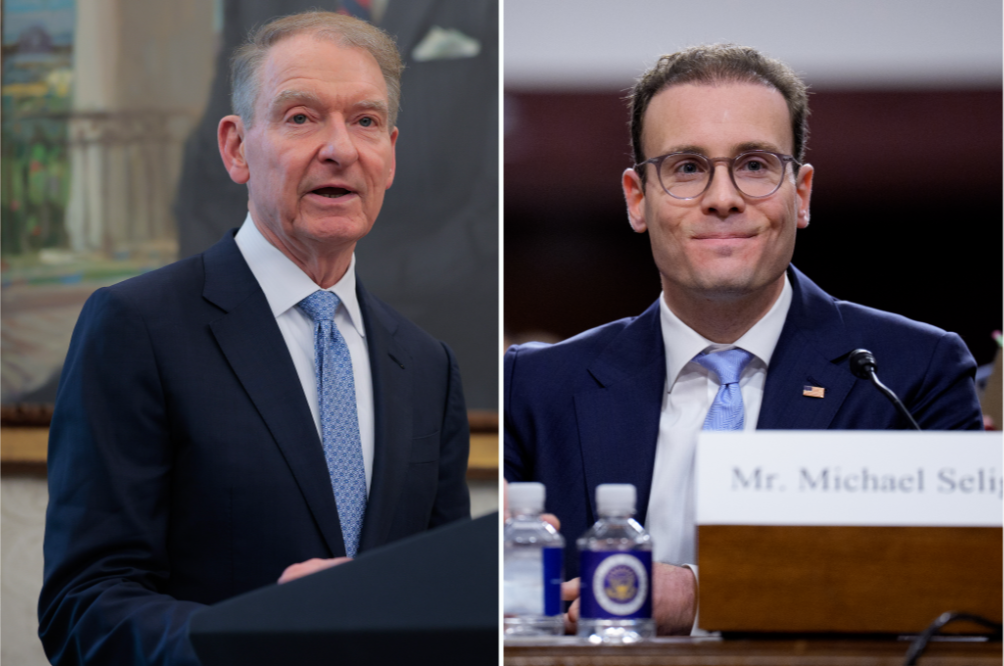
On the CFTC side, under Chairman Michael Selig, the agency has said it won't wait around for Congress and will proactively build a crypto market structure framework using its existing authority. SEC Chairman Paul Atkins has echoed a similar stance, stating the SEC is prepared to allow investment advisers to self-custody clients' crypto assets under certain conditions, and that this work will proceed regardless of the CLARITY Act's fate.
This is the point investors should pay particularly close attention to: rules issued by regulators and laws passed by Congress are fundamentally different in terms of durability. An SEC or CFTC rule can be reversed relatively easily by a new chairman through the notice-and-comment process, whereas a law requires both chambers of Congress plus a presidential signature to change. More importantly, regulatory guidance doesn't offer the same firm legal "safe harbor" that compliance with a codified statute does. Even Chairman Atkins has acknowledged that the SEC's new rules will struggle to hold up over time without formal legislation backing them. In short, what the SEC and CFTC are about to do is a stopgap, not a full substitute for a federal law.
6. The Midterms and What Comes Next?
The November 2026 midterm elections are fast approaching, and Congress's calendar leaves almost no room for another major negotiation this year. If Democrats win control of one or both chambers after the elections, any successor version of the CLARITY Act will face a completely different political landscape in 2027, potentially with tougher ethics provisions, or alternatively, an easier path to consensus if the political pressure surrounding Trump eases.
The biggest lesson from this episode isn't really about legislative mechanics, it's that even a bill both parties considered the best possible compromise, built on more than 600 pages of painstaking negotiation, can still collapse over a single issue: a personal conflict of interest at the highest level of government. For long-term investors, this doesn't mean the story of crypto regulation in the U.S. is over, only that the path to legal clarity will now run through federal agencies first: slower, less certain, but not entirely stalled. In the meantime, short-term volatility around policy events like this one is likely to repeat, and that's both a risk and an opportunity for anyone tracking Washington politics alongside the price charts.
Conclusion
The CLARITY Act's failure today doesn't mean the story is over, but it does show that the road to regulatory clarity still has plenty of obstacles ahead. In the near term, the SEC and CFTC can keep filling the gap with rules within their existing authority, but this remains a temporary and less stable solution compared to a federal law.
Disclaimer: This content does not constitute investment, tax, legal, financial, or accounting advice. MEXC Blog provides this information for educational purposes only. Always do your own research, understand the risks, and invest responsibly.