Overview
As the rapid expansion of artificial intelligence infrastructure collides with physical electrical grid constraints, political and community opposition surrounding hyperscale computing facilities is mounting across the United States. Following executive directives issued by the
Public Utility Commission of Texas and the
Electric Reliability Council of Texas (ERCOT), Texas has formally halted new data center grid interconnection approvals pending a statewide verification and audit to manage an unprecedented 474 gigawatts in interconnection requests where roughly ninety percent stem from data centers. Concurrently, the
Commonwealth of Pennsylvania issued executive orders stripping proposed AI data centers of fast-track permitting while instituting strict bring-your-own-power mandates, environmental safeguards, and local municipal consent requirements. Reporting from
Reuters underscores that political and regulatory friction across regional power corridors has emerged as a key factor dampening market sentiment across mega-cap technology equities. As energization lead times extend, market participants are evaluating whether utility interconnect bottlenecks will disrupt hardware delivery timelines for
Nvidia, challenge contracted backlog execution for
CoreWeave, and constrain multi-billion-dollar capital expenditure budgets across leading cloud hyperscalers.
Key Takeaways
Regulatory approvals encounter state-level resistance as Texas halts grid interconnection approvals for a comprehensive audit and Pennsylvania eliminates fast-track permitting under stringent environmental standards.
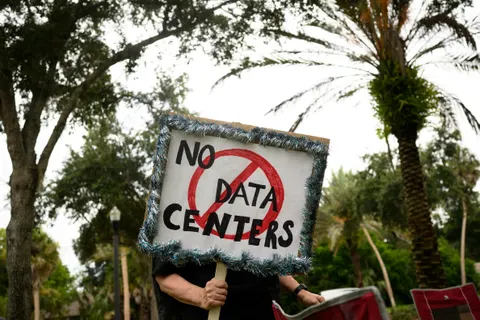
Unprecedented 474-gigawatt queue triggers public backlash as data center interconnection requests reach more than five times the historic peak power demand of the Texas grid, amplifying residential concerns regarding utility rates.
Physical energization timelines face substantial delays, with interconnection pauses threatening to extend data center commissioning cycles by six to eighteen months and delaying hardware delivery schedules.
Hyperscalers face escalating capital intensity under bring-your-own-power mandates, forcing Microsoft, Amazon, Alphabet, and Meta to finance dedicated generation and transmission infrastructure.
Centralized power bottlenecks accelerate interest in decentralized architectures, prompting enterprise developers to explore distributed compute layers to bypass regional grid constraints.
Regulatory Interventions: Why Texas and Pennsylvania Are Pausing Data Center Approvals
Historically, Texas served as the primary destination for data center operators due to deregulated energy markets, land availability, and rapid permitting timelines. This operational environment is undergoing structural realignment under direct executive intervention.
Texas Freezes Interconnection Approvals for Comprehensive State Audit
According to power market tracking from
Bloomberg, the Governor of Texas ordered the Public Utility Commission and ERCOT to pause pending data center interconnection approvals while conducting a comprehensive audit of all projects advancing through the interconnection queue. With ERCOT tracking over 474 gigawatts of power requests, five times the state record for peak electricity demand, regulatory authorities postponed the Batch Zero transmission planning study. Under the expanded directive, developers must disclose tax incentives, projected peak water and power consumption, cooling technologies, and plans for behind-the-meter generation before receiving access to the primary grid.
Pennsylvania Enacts Strict Environmental and Municipal Approval Guardrails
In the Mid-Atlantic corridor, the Governor of Pennsylvania signed Executive Order 2026-05, establishing the Responsible Infrastructure Development (GRID) requirements for all proposed facilities. The order formally removes AI data centers from the state fast-track permitting program, prohibits the use of nondisclosure agreements with municipal officials, and requires developers to prove they will cover the complete cost of new generation and transmission without shifting financial burdens onto residential consumers. This regulatory pivot marks an institutional transition from broad economic incentives toward strict public interest and environmental vetting.
474 Gigawatts in the Queue and Residential Impacts: Grid Stress Fuels Political Friction
The transition of data centers from local economic assets into political flashpoints is driven by structural competition over essential utility resources.
Household Electricity Rates and Power System Reliability
Unlike standard commercial real estate, hyperscale AI training clusters consume massive baseload electrical power around the clock. Investigations published by the
Financial Times demonstrate that as data center operators absorb existing generation capacity, wholesale power price volatility has elevated household utility bills in regional markets. Following historic winter storm power disruptions, voter sensitivity regarding electric system stability has prompted bipartisan lawmakers to enforce strict regulatory oversight over energy-intensive computing facilities.
Water Consumption and Rural Community Zoning Conflicts
Beyond electrical capacity, advanced data center cooling architectures consume millions of gallons of potable water daily. In agricultural areas across West Texas and rural Pennsylvania, competition for municipal water supplies has catalyzed local resistance. Large industrial warehouse structures alongside continuous acoustic emissions from evaporative chillers have prompted municipal councils to enact local zoning restrictions and moratoriums.
Supply Chain Transmission: How Power Delays Impact Nvidia and CoreWeave
For the semiconductor and specialized cloud computing supply chains, regulatory delays in physical energization directly disrupt projected operational cadences.
The Decoupling of Hardware Fabrication and Physical Commissioning
Deploying hyperscale artificial intelligence clusters requires long-lead electrical infrastructure including substations, high-voltage transformers, and primary transmission interconnects. Filings registered with the
U.S. Securities and Exchange Commission show that advanced computing accelerators from Nvidia cannot be deployed until physical facilities achieve complete electrical commissioning and thermal validation. Interconnection delays ranging from six to eighteen months force data center developers to postpone hardware delivery schedules, creating potential recognition lags for semiconductor manufacturers.
Backlog Execution Risks for Specialized Cloud Providers
Specialized infrastructure provider
CoreWeave has secured over one hundred billion dollars in committed customer backlog backed by tens of billions in planned capital expenditures, with significant cluster capacity planned across energy-rich southern corridors. Regional interconnection moratoria introduce operational risks to facility online dates, elevating debt carrying costs on unenergized hardware while increasing exposure to contractual delivery penalties from anchor enterprise clients.
Investors tracking structural shifts in semiconductor valuations and cross-asset liquidity flows can monitor related trading opportunities on institutional platforms.
Furthermore, market metrics on
MEXC show elevated turnover and liquidity depth across equities-linked assets during major macroeconomic and regulatory shifts.
Hyperscaler CapEx Pressures: Financing Off-Grid Power and Infrastructure Costs
Confronting tightening grid constraints, cloud hyperscalers including
Microsoft,
Amazon,
Alphabet, and
Meta are adapting their infrastructure capital allocation frameworks.
Transitioning from Utility Relying to Bring-Your-Own-Power Models
State-level mandates requiring developers to bring their own power are accelerating big-tech investment directly into capital-intensive energy production. Analysis from
CNBC highlights that major hyperscalers are securing private off-grid natural gas generation, executing long-term nuclear power purchase agreements, and co-locating computing clusters with utility-scale battery storage. This shift requires technology companies to allocate expanding capital budgets toward heavy civil and electrical engineering.
Free Cash Flow Compression and Return on Investment Scrutiny
Across the
Nasdaq and the
New York Stock Exchange, institutional asset managers are closely evaluating corporate capital intensity. When massive capital outlays are directed into utility generation infrastructure rather than core software platforms, prolonged payback horizons compress corporate free cash flow conversion rates, intensifying equity market demands for tangible software monetization.
Cross-Asset Implications and Decentralized Compute Infrastructure Alternatives
Physical power grid constraints and municipal bottlenecks provide instructive context for the evolution of decentralized computing architectures.
The capital intensity and geographic vulnerability of centralized hyperscale campuses are encouraging enterprise developers to explore decentralized physical infrastructure networks (DePIN). By utilizing cryptographic protocols to coordinate and aggregate distributed computing resources, decentralized networks operate without relying on single-site gigawatt substation approvals, offering alternative architectures that mitigate localized grid disruption risks.
Market participants analyzing the long-term impact of regulatory friction should monitor several operational variables:
The conclusion of the Texas audit and the timeline for ERCOT to resume structured large-load interconnection reviews under revised compliance rules.
Forward commentary from major cloud hyperscalers during upcoming earnings calls regarding data center energization lead times and capital expenditure revisions.
The deployment velocity of behind-the-meter generation solutions, including small modular reactors and on-site natural gas microgrids, as scalable alternatives to public utility interconnection.
Exclusive View from James Mitchell
From a quantitative market structure and capital cycle perspective, regulatory moratoria in Texas and Pennsylvania demonstrate that the generative artificial intelligence buildout has encountered its first fundamental physical boundary: the electrical grid.
Equity analysts have frequently modeled hardware demand under the assumption that financial capital and semiconductor supply were the only meaningful constraints on compute deployment. However, utility transmission expansion is physically governed by transformer production lead times, environmental permitting, and community resistance. When 474 gigawatts of speculative interconnect requests overwhelm municipal grids, regulatory intervention represents a structural correction rather than an unexpected policy shock. For professional traders and asset allocators, this development does not negate underlying compute demand, but it fundamentally alters the duration of the hardware delivery cycle. Near-term energization bottlenecks may introduce valuation volatility across tech equities, but capital will ultimately concentrate around operators capable of securing independent, off-grid power solutions.
FAQ
Why did Texas and Pennsylvania halt new AI data center approvals?
Texas paused data center approvals while conducting an audit of 474 gigawatts in interconnection requests to prevent electric grid instability and protect consumers from soaring utility rates. Pennsylvania eliminated fast-track permitting to enforce strict environmental, water conservation, and bring-your-own-power standards.
How do data center interconnection delays impact Nvidia hardware sales?
Nvidia GPU clusters require fully energized and thermally validated data center facilities before installation. If regional power approvals delay facility commissioning by six to eighteen months, customers must defer delivery timelines, creating potential revenue recognition delays for semiconductor suppliers.
Why is CoreWeave particularly sensitive to power grid delays?
CoreWeave operates a capital-intensive business model with contracted customer backlogs tied to specific cluster delivery dates. Delays in electrical interconnection increase debt service carrying costs on unenergized hardware while risking contractual delivery penalties.
What are Pennsylvania GRID requirements for data center developers?
Pennsylvania GRID requirements mandate that developers pay the full cost of new electricity generation and transmission infrastructure without shifting costs to consumers, prohibit nondisclosure agreements, enforce strict water conservation standards, and require local municipal approval before state permits are issued.
How are hyperscalers responding to utility power grid constraints?
Major cloud providers are adopting bring-your-own-power strategies by investing directly in off-grid natural gas generation, securing dedicated nuclear power agreements, and co-locating facilities with large-scale battery storage to bypass public grid constraints.
Does this regulatory backlash mean AI data center expansion is ending?
It does not halt expansion, but it ends the era of unregulated growth. Permitting timelines will lengthen, compliance costs will rise, and future data center development will increasingly require integrated on-site power generation and active community engagement.
Disclaimer
The information, analysis, and views contained in this article are provided for general educational and informational purposes only and do not constitute financial advice, investment advice, legal advice, tax advice, or a recommendation to buy or sell any security, digital asset, or financial derivative. Equity securities and financial instruments are subject to high market volatility and capital risk. Past operational performance, financial results, and quantitative indicators do not guarantee future market returns. Investors must conduct independent due diligence and evaluate their personal financial situation, risk tolerance, and investment goals before executing any trade. The MEXC Crypto Pulse team assumes no liability for any direct or indirect financial losses resulting from the use of or reliance upon the information published herein.
About the Author
James Mitchell specializes in technical analysis, market trends, and trading strategies for both Bitcoin and altcoins. Based in London, he has over 10 years of experience in financial markets. Before joining MEXC Learn, James worked as a senior analyst at a leading European investment firm, where he developed expertise in risk management and quantitative trading. His transition to cryptocurrency markets began in 2017, and he has since become recognized for his data-driven approach. He holds a Master's degree in Financial Economics from the London School of Economics. His analytical approach combines traditional technical analysis with on-chain metrics to provide readers with actionable insights. Areas of expertise include technical analysis, market trends and cycles, trading strategies, Bitcoin and altcoin analysis, and risk management.
Research References