

Justin Sun challenges World Liberty Financial in token lockup case
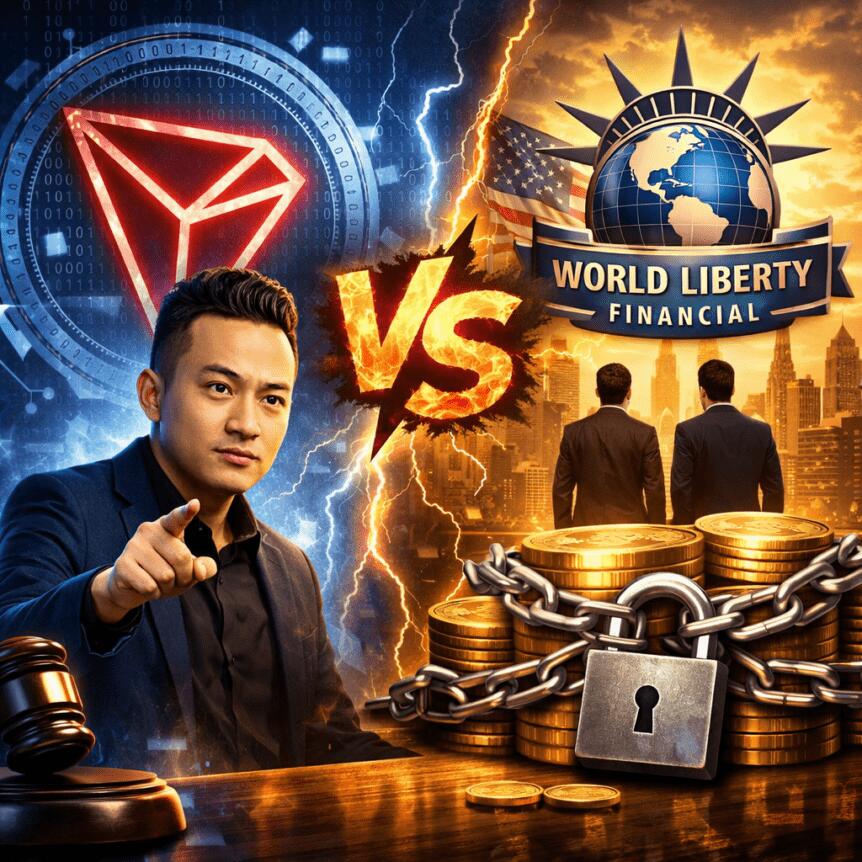
Justin Sun, the Tron founder and the largest individual investor in World Liberty Financial (WLFI), has filed a lawsuit in a California federal court to protect his rights as a WLFI token holder. Sun says WLFI froze his tokens and threatened to burn them “without any proper justification,” prompting the legal action after private attempts at resolution failed. He announced the filing in a post on X, explaining that he sought a court remedy only after WLFI’s project team refused to unfreeze his holdings and restore his rights as a token holder.
Sun’s complaint arrives amid a broader set of governance and liquidity concerns surrounding WLFI, a project closely tied to the Trump family. The investor has previously warned of potential litigation over long lockup periods for WLFI’s governance token and criticized a recent governance proposal for a perceived lack of transparency, pointing to the claim that more than 76% of voting tokens came from just 10 wallets. Sun’s case thus compounds questions about how WLFI balances token holder rights, governance mechanics, and project control.
Cointelegraph has reached out to both Sun’s camp and WLFI for comment on the lawsuit and ongoing governance disputes. In the meantime, Sun stated that the legal action does not alter his political views or his support for President Donald Trump and his administration’s crypto-friendly stance. He also asserted that some members of WLFI’s project team have operated in a way that diverges from Trump’s values.
One of the central questions surrounding the WLFI case is how token custody and governance controls are exercised within a project linked to a high-profile political figure. The founder’s suit underscores ongoing tensions between token holders’ rights and a project’s ability to manage its own token economics, especially when governance proposals suggest concentrated voting power. The dispute also highlights the practical frictions that can surface when a project seeks to implement lock-ups and incentive structures that impact token liquidity and voting influence.
In related background coverage, Cointelegraph previously examined WLFI’s governance mechanics and the token distribution landscape, noting concerns around transparency and concentration. For readers seeking broader context, earlier Cointelegraph reporting highlighted governance-related actions and the project’s response to those criticisms. See the coverage that detailed how a governance vote on WLFI’s stake-lock incentives unfolded and the subsequent reactions from project supporters and critics here. There is also prior reporting on WLFI’s token burn actions and price dynamics linked to those moves here.
Key takeaways
- Justin Sun filed a civil complaint in a California federal court to unfreeze WLFI tokens and protect his rights as a token holder, after private efforts to resolve the issue reportedly failed.
- The action follows Sun’s criticism of WLFI governance practices, including concerns about lock-up terms and the distribution of voting power (Sun cited that more than 76% of voting tokens originated from 10 wallets).
- WLFI defended itself publicly, calling the allegations baseless and stating that it has contracts and evidence, signaling that the matter could escalate in court.
- The dispute sits at the intersection of crypto governance, token rights, and high-profile political associations, potentially impacting investor trust and the perceived legitimacy of WLFI’s governance model.
- Observers will be watching for forthcoming court filings and WLFI’s responses as the legal process unfolds, with broader implications for governance-centric crypto projects tied to prominent figures.
Sun’s lawsuit and WLFI’s governance tensions at a glance
The core of Sun’s complaint is straightforward in legal terms: a request to unfreeze his WLFI tokens and restore his rights as a holder. The California filing comes after what Sun described as attempts to resolve the matter privately with WLFI’s project team were unsuccessful. The billionaire investor frames the suit as a necessary step to protect his property rights within the WLFI ecosystem and to ensure he can participate in governance on the same footing as other holders.
WLFI’s side has offered a counter-narrative in the public sphere. In a post on X, WLFI asserted that the allegations were baseless and claimed, “We have the contracts. We have the evidence. We have the truth. See you in court.” This rebuttal mirrors a broader pattern in crypto governance disputes, where project teams contest accusations of opacity while token holders push for clearer transparency and fairness in voting frameworks.
The earlier governance debate around WLFI remains relevant. Sun’s critique extended to a governance proposal that introduced lock-up incentives. He argued that the distribution of voting power—cited as concentrated in a small number of wallets—undermined the fairness and transparency essential to a legitimate decentralized governance process. The related coverage noted WLFI’s responses, illustrating a wider, ongoing struggle to balance incentive design with broad-based participation.
What WLFI’s case could mean for investors and the DeFi ecosystem
From an investor perspective, the lawsuit raises practical questions about how token-holder rights are protected when a project adopts governance-enabled economics. For Sun’s supporters, the action may be framed as a defense of property rights within a tokenized ecosystem that aspires to be governable by its holders. For critics, the case may amplify concerns about centralization of influence in governance and the risks of platform-driven token controls that can impact liquidity and voting power outcomes.
Beyond WLFI, the case touches on a broader regulatory and industry backdrop. As crypto projects increasingly deploy governance tokens and lock-up mechanisms, questions about transparency, custody, and accountability come into sharper focus. The legal action could serve as a bellwether for how courts interpret token-holder rights in similar contexts and how project teams balance incentives with broad-based participation.
For readers tracking regulatory and policy developments, Cointelegraph Magazine has previously explored how regulatory clarity can influence DeFi and governance structures, offering a broader lens on how a legal case like this might interact with evolving policy frameworks. The CLARITY Act, among other debates, remains a touchpoint for understanding the potential future landscape for crypto governance and non-custodial design, though readers should note that the current case centers on a specific dispute rather than a policy proposal.
What to watch next
The immediate next steps will revolve around the court’s timetable and the parties’ legal strategy. Investors and observers should monitor for upcoming filings, WLFI’s official responses, and any court-approved actions related to token custody or governance rights. As the case unfolds, the question will be whether Sun’s assertions can be substantiated in court and what remedies the judge may consider if WLFI’s actions are found wanting. The broader takeaway will hinge on whether this dispute signals a broader tension between centralized project control and decentralized governance in crypto projects linked to high-profile figures.
In the meantime, readers should keep an eye on how WLFI articulates its governance framework and token distribution practices, as well as whether the court’s rulings—or lack thereof—will influence similar projects’ approach to token custody, lock-ups, and holder rights.
This article was originally published as Justin Sun challenges World Liberty Financial in token lockup case on Crypto Breaking News – your trusted source for crypto news, Bitcoin news, and blockchain updates.


You May Also Like

Iran ready to negotiate if US lifts naval blockade, market odds drop

Binance Perpetual Futures Revolution: QQQ and Major US Stocks Enter Crypto Derivatives Market with 10x Leverage




