Strategy (formerly MicroStrategy) is the largest corporate holder of Bitcoin, owning 671,268 BTC, which represents over 3.2% of all Bitcoin in circulation. ThatStrategy (formerly MicroStrategy) is the largest corporate holder of Bitcoin, owning 671,268 BTC, which represents over 3.2% of all Bitcoin in circulation. That

Why MicroStrategy’s Collapse Could Be the Next Black Swan for Crypto in 2026

Strategy (formerly MicroStrategy) is the largest corporate holder of Bitcoin, owning 671,268 BTC, which represents over 3.2% of all Bitcoin in circulation. That makes the company a high-risk keystone in the Bitcoin ecosystem. 

If it falls apart, the impact could be larger than the 2022 FTX collapse. Here’s why that threat is real, what could trigger it, and how bad the fallout could be.

MicroStrategy Is a Leveraged Bitcoin Bet

MicroStrategy’s entire identity is now tied to Bitcoin. The company spent over $50 billion buying BTC, mostly using debt and stock sales. Its software business brings in just $460 million a year, which is a fraction of its exposure.

As of December 2025, its stock trades well below the value of its Bitcoin holdings. The market value is approximately $45 billion, but its BTC is worth around $59–60 billion. 
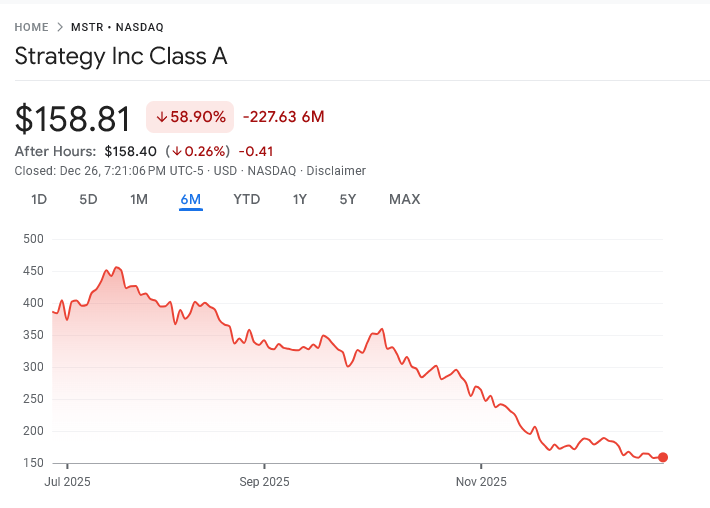
MicroStrategy’s Share Prices Over the Second Half of 2025. Source: Google Finance

Investors are discounting its assets because of concerns about dilution, debt, and sustainability. 

Its average BTC cost basis is around $74,972, and most of its recent buys were near Bitcoin’s peak in Q4 2025.

More than 95% of its valuation hinges on the price of Bitcoin. 

If BTC drops sharply, the company could be trapped — holding billions in debt and preferred equity with no way out. 

For instance, Bitcoin dropped 20% since October 10, but MSTR’s loss has been more than double in the same period. 
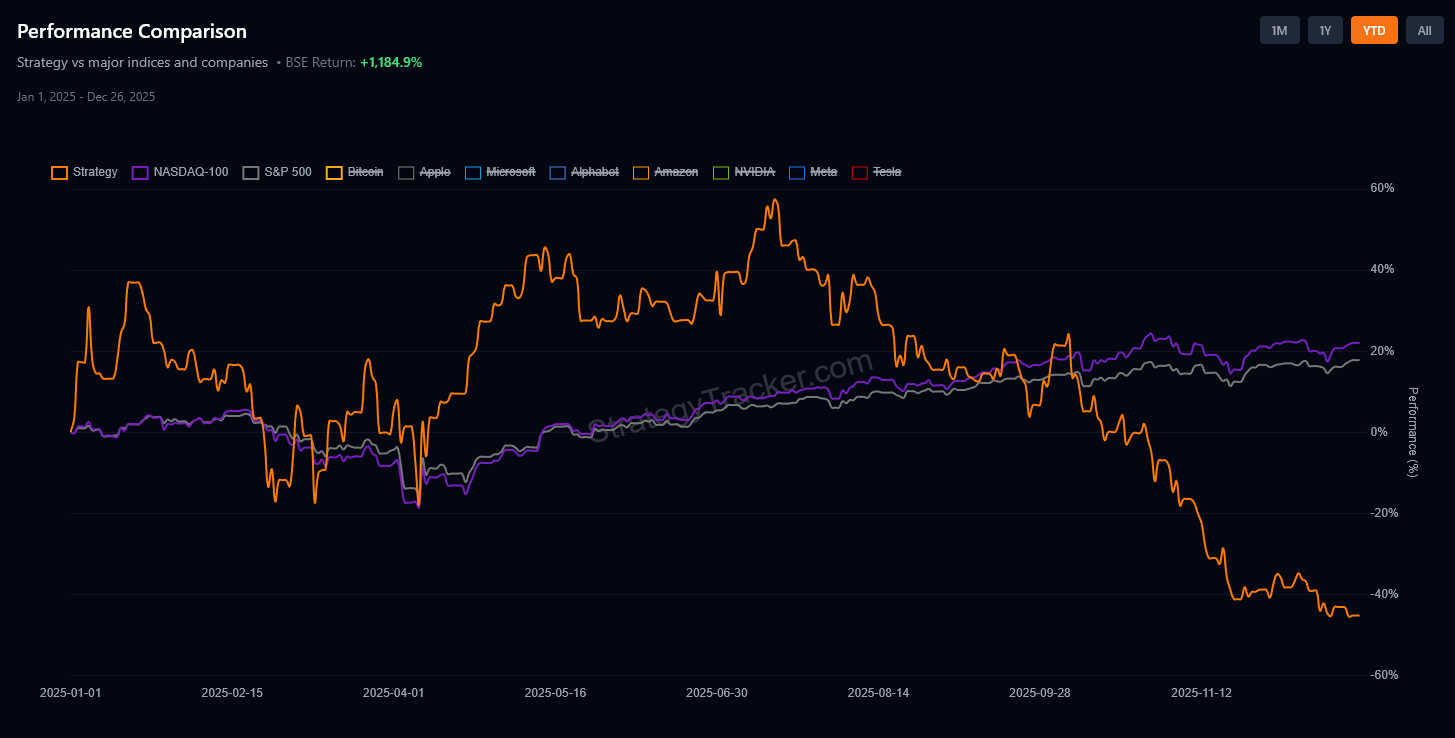
MSTR Stock Performance Comparison with NASDAQ-100 and S&P 500 in 2025. Source: Saylor Tracker

What Makes This a Black Swan Risk?

MicroStrategy used aggressive tactics to fund Bitcoin buys. It sold common stock and issued new types of preferred shares.

 It now owes over $8.2 billion in convertible debt and has more than $7.5 billion in preferred stock. These financial tools require large cash outflows: $779 million annually in interest and dividends.

At the current levels, if Bitcoin crashes below $13,000, MicroStrategy could become insolvent. That’s not likely in the near term, but BTC’s history shows that 70–80% drawdowns are common. 

A large crash, especially if paired with a liquidity crunch or ETF-driven volatility, could push the company into distress.
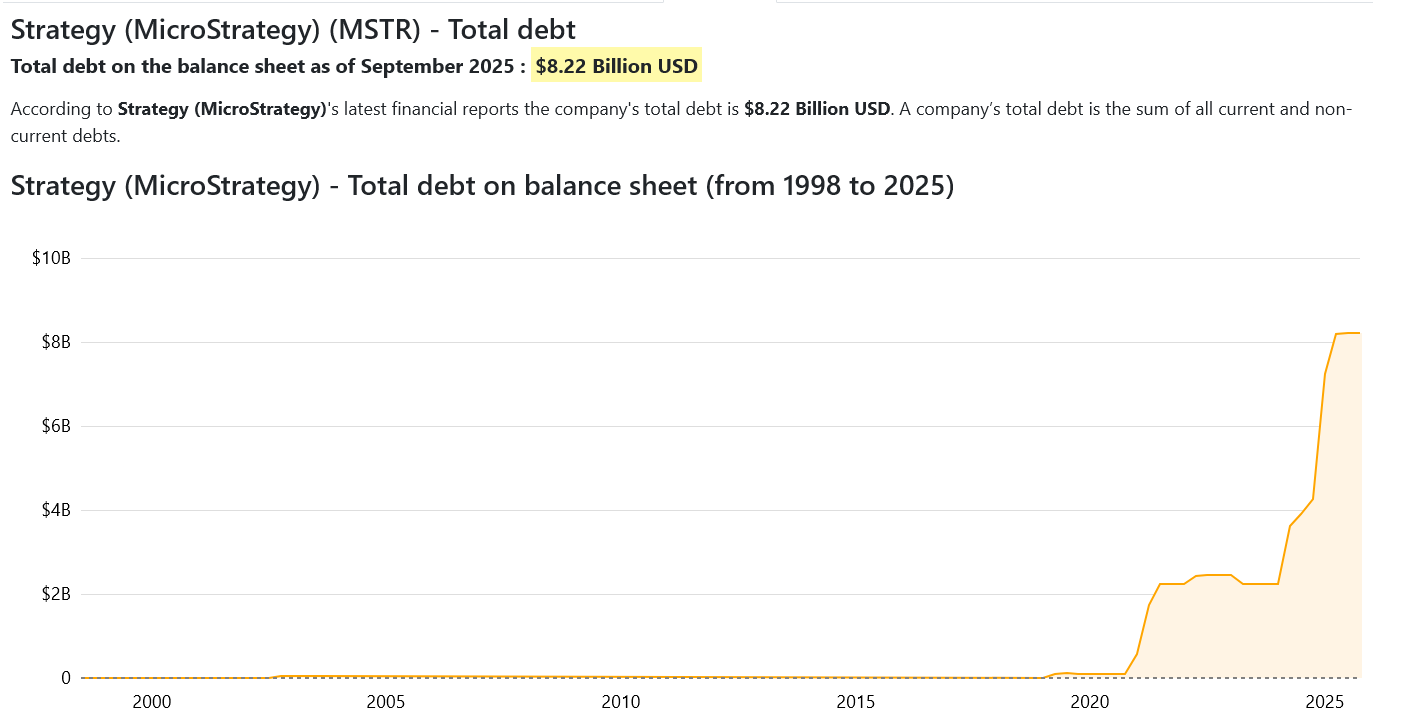
Strategy’s Total Debt as of Q3 2025. Source: Companies Market Cap

Unlike FTX, MicroStrategy is not an exchange. But the effect of its failure could be deeper. It owns more Bitcoin than any entity except a few ETFs and governments. 

Forced liquidation or panic over MicroStrategy’s collapse could drive BTC’s price down sharply — creating a feedback loop across crypto markets.

MicroStrategy has promised not to sell its BTC, but that depends on its ability to raise cash. 

As of late 2025, it holds $2.2 billion in reserves. This is enough to cover two years of payouts. But that buffer could vanish if BTC falls and capital markets close.

How Likely Is a Collapse for Michael Saylor’s Strategy?

Probability isn’t binary. But the risk is rising.

MicroStrategy’s current position is fragile. Its stock has fallen 50% this year. Its mNAV is below 0.8×. Institutional investors are shifting to Bitcoin ETFs, which are cheaper and less complex. 

Index funds may drop MSTR due to its structure, triggering billions in passive outflows.
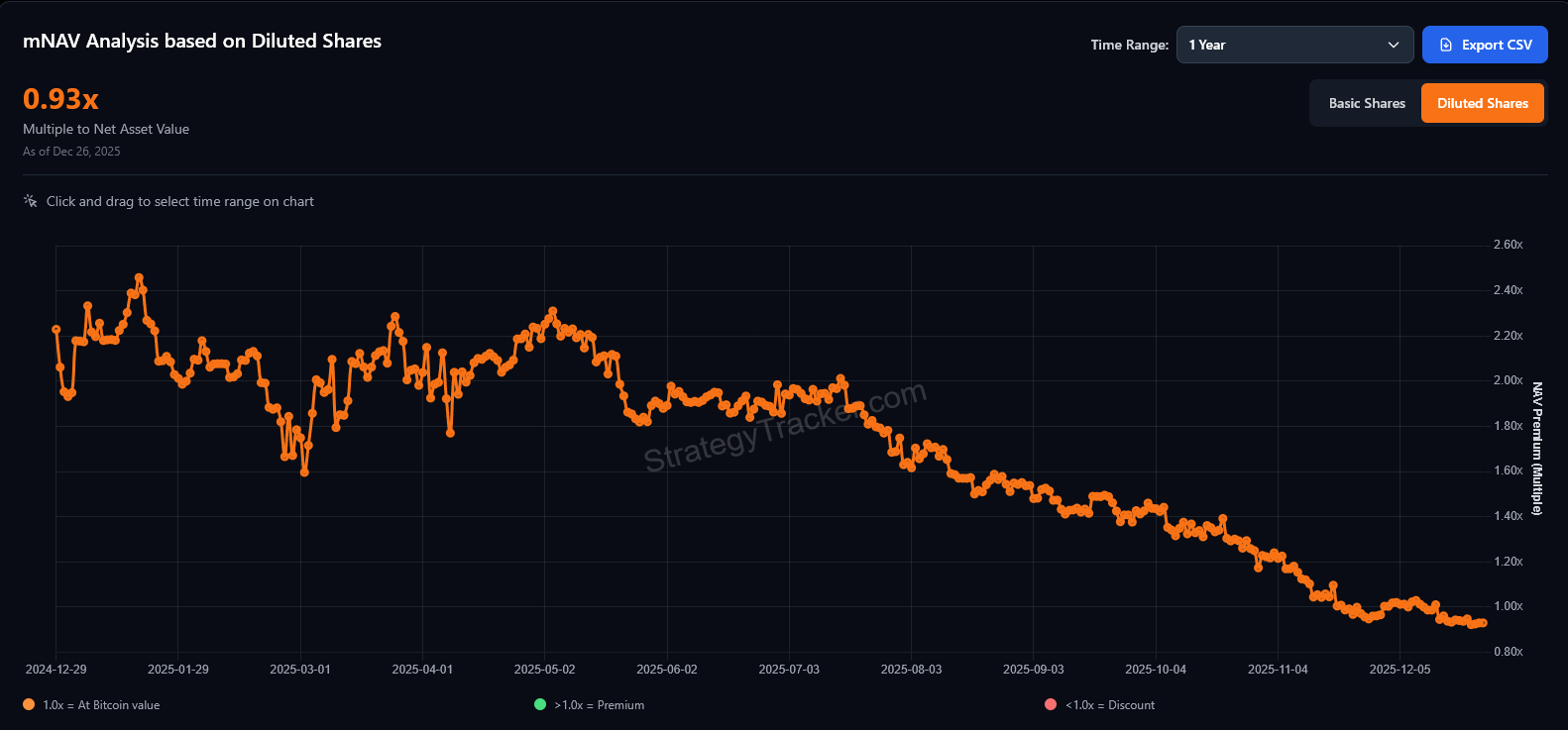
MicroStrategy mNAV. Source: Saylor Tracker

If Bitcoin falls below $50,000 and stays there, the company’s market cap could fall below its debt load. At that point, its ability to raise capital could dry up — forcing painful decisions, including asset sales or restructuring.

The odds of a total collapse in 2026 are low, but not remote. A rough estimate might place the probability between 10–20%, based on current balance sheet risk, market behavior, and Bitcoin volatility.

But if it does happen, the damage could exceed FTX’s collapse. FTX was a centralized exchange. MicroStrategy is a key holder of Bitcoin’s supply. 

If its holdings flood the market, Bitcoin’s price and confidence could be hit hard. This would potentially trigger a broader selloff across crypto.

Market Opportunity
WHY Logo
WHY Price(WHY)
$0.000000014
$0.000000014$0.000000014
0.00%
USD
WHY (WHY) Live Price Chart
Disclaimer: The articles reposted on this site are sourced from public platforms and are provided for informational purposes only. They do not necessarily reflect the views of MEXC. All rights remain with the original authors. If you believe any content infringes on third-party rights, please contact service@support.mexc.com for removal. MEXC makes no guarantees regarding the accuracy, completeness, or timeliness of the content and is not responsible for any actions taken based on the information provided. The content does not constitute financial, legal, or other professional advice, nor should it be considered a recommendation or endorsement by MEXC.

You May Also Like

Crucial Fed Rate Cut: October Probability Surges to 94%

Crucial Fed Rate Cut: October Probability Surges to 94%

BitcoinWorld Crucial Fed Rate Cut: October Probability Surges to 94% The financial world is buzzing with a significant development: the probability of a Fed rate cut in October has just seen a dramatic increase. This isn’t just a minor shift; it’s a monumental change that could ripple through global markets, including the dynamic cryptocurrency space. For anyone tracking economic indicators and their impact on investments, this update from the U.S. interest rate futures market is absolutely crucial. What Just Happened? Unpacking the FOMC Statement’s Impact Following the latest Federal Open Market Committee (FOMC) statement, market sentiment has decisively shifted. Before the announcement, the U.S. interest rate futures market had priced in a 71.6% chance of an October rate cut. However, after the statement, this figure surged to an astounding 94%. This jump indicates that traders and analysts are now overwhelmingly confident that the Federal Reserve will lower interest rates next month. Such a high probability suggests a strong consensus emerging from the Fed’s latest communications and economic outlook. A Fed rate cut typically means cheaper borrowing costs for businesses and consumers, which can stimulate economic activity. But what does this really signify for investors, especially those in the digital asset realm? Why is a Fed Rate Cut So Significant for Markets? When the Federal Reserve adjusts interest rates, it sends powerful signals across the entire financial ecosystem. A rate cut generally implies a more accommodative monetary policy, often enacted to boost economic growth or combat deflationary pressures. Impact on Traditional Markets: Stocks: Lower interest rates can make borrowing cheaper for companies, potentially boosting earnings and making stocks more attractive compared to bonds. Bonds: Existing bonds with higher yields might become more valuable, but new bonds will likely offer lower returns. Dollar Strength: A rate cut can weaken the U.S. dollar, making exports cheaper and potentially benefiting multinational corporations. Potential for Cryptocurrency Markets: The cryptocurrency market, while often seen as uncorrelated, can still react significantly to macro-economic shifts. A Fed rate cut could be interpreted as: Increased Risk Appetite: With traditional investments offering lower returns, investors might seek higher-yielding or more volatile assets like cryptocurrencies. Inflation Hedge Narrative: If rate cuts are perceived as a precursor to inflation, assets like Bitcoin, often dubbed “digital gold,” could gain traction as an inflation hedge. Liquidity Influx: A more accommodative monetary environment generally means more liquidity in the financial system, some of which could flow into digital assets. Looking Ahead: What Could This Mean for Your Portfolio? While the 94% probability for a Fed rate cut in October is compelling, it’s essential to consider the nuances. Market probabilities can shift, and the Fed’s ultimate decision will depend on incoming economic data. Actionable Insights: Stay Informed: Continue to monitor economic reports, inflation data, and future Fed statements. Diversify: A diversified portfolio can help mitigate risks associated with sudden market shifts. Assess Risk Tolerance: Understand how a potential rate cut might affect your specific investments and adjust your strategy accordingly. This increased likelihood of a Fed rate cut presents both opportunities and challenges. It underscores the interconnectedness of traditional finance and the emerging digital asset space. Investors should remain vigilant and prepared for potential volatility. The financial landscape is always evolving, and the significant surge in the probability of an October Fed rate cut is a clear signal of impending change. From stimulating economic growth to potentially fueling interest in digital assets, the implications are vast. Staying informed and strategically positioned will be key as we approach this crucial decision point. The market is now almost certain of a rate cut, and understanding its potential ripple effects is paramount for every investor. Frequently Asked Questions (FAQs) Q1: What is the Federal Open Market Committee (FOMC)? A1: The FOMC is the monetary policymaking body of the Federal Reserve System. It sets the federal funds rate, which influences other interest rates and economic conditions. Q2: How does a Fed rate cut impact the U.S. dollar? A2: A rate cut typically makes the U.S. dollar less attractive to foreign investors seeking higher returns, potentially leading to a weakening of the dollar against other currencies. Q3: Why might a Fed rate cut be good for cryptocurrency? A3: Lower interest rates can reduce the appeal of traditional investments, encouraging investors to seek higher returns in alternative assets like cryptocurrencies. It can also be seen as a sign of increased liquidity or potential inflation, benefiting assets like Bitcoin. Q4: Is a 94% probability a guarantee of a rate cut? A4: While a 94% probability is very high, it is not a guarantee. Market probabilities reflect current sentiment and data, but the Federal Reserve’s final decision will depend on all available economic information leading up to their meeting. Q5: What should investors do in response to this news? A5: Investors should stay informed about economic developments, review their portfolio diversification, and assess their risk tolerance. Consider how potential changes in interest rates might affect different asset classes and adjust strategies as needed. Did you find this analysis helpful? Share this article with your network to keep others informed about the potential impact of the upcoming Fed rate cut and its implications for the financial markets! To learn more about the latest crypto market trends, explore our article on key developments shaping Bitcoin price action. This post Crucial Fed Rate Cut: October Probability Surges to 94% first appeared on BitcoinWorld.
Share
Coinstats2025/09/18 02:25
Gold continues to hit new highs. How to invest in gold in the crypto market?

Gold continues to hit new highs. How to invest in gold in the crypto market?

As Bitcoin encounters a "value winter", real-world gold is recasting the iron curtain of value on the blockchain.
Share
PANews2025/04/14 17:12
Understanding Ethereum and Solana’s Place in Crypto

Understanding Ethereum and Solana’s Place in Crypto

The post Understanding Ethereum and Solana’s Place in Crypto appeared on BitcoinEthereumNews.com. Ethereum hosts most high-value crypto assets, including NFTs,
Share
BitcoinEthereumNews2025/12/28 03:51