

Iran’s Strategic Gambit: Considering Controversial Tolls for Oil Tankers in Persian Gulf
BitcoinWorld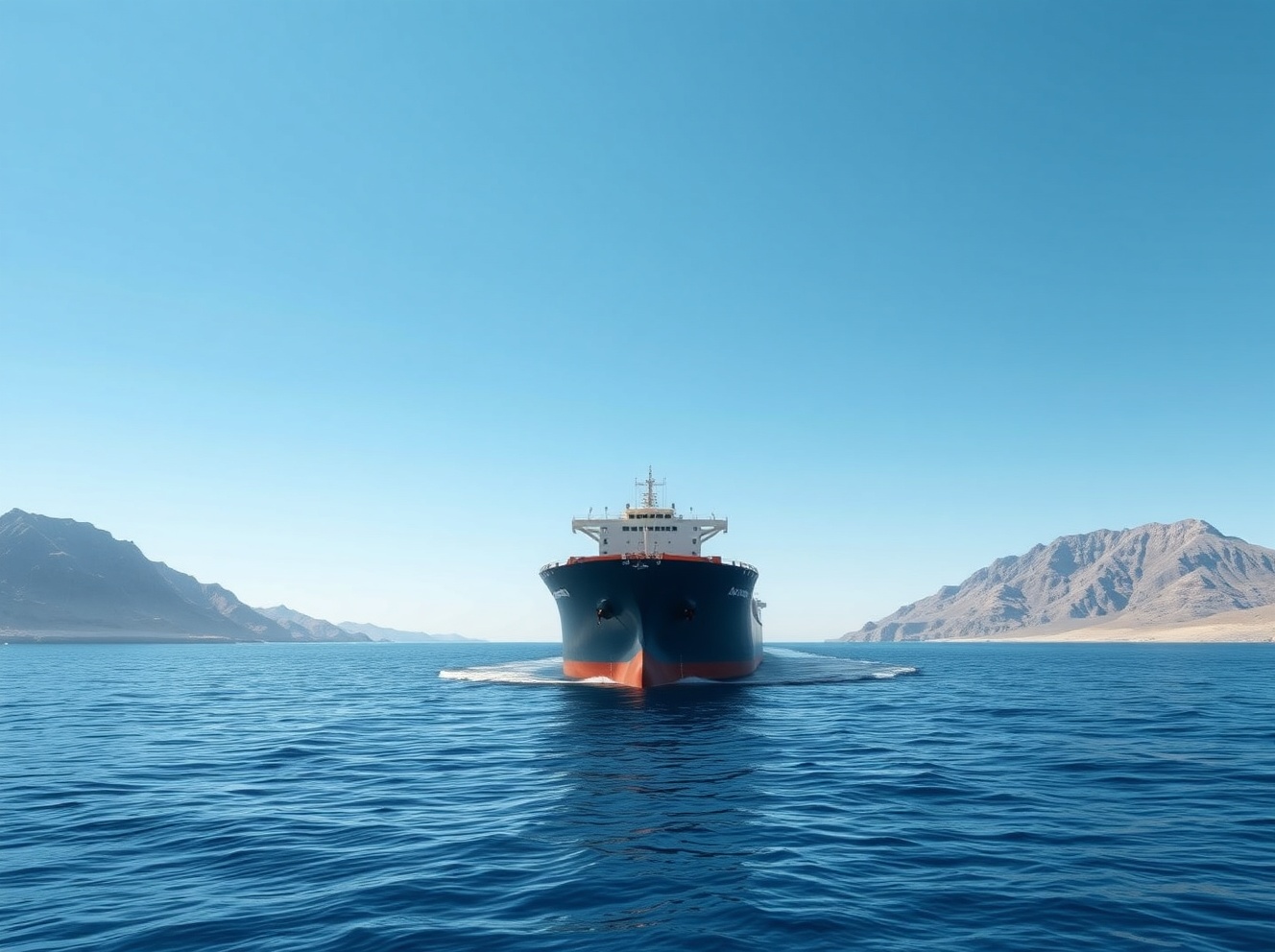
Iran’s Strategic Gambit: Considering Controversial Tolls for Oil Tankers in Persian Gulf
TEHRAN, Iran – In a development with profound implications for global energy markets, Iran is reportedly considering a plan to impose tolls on oil tankers passing through the strategic Persian Gulf, according to a report from DB News. This potential policy shift represents a significant geopolitical maneuver by Tehran, directly targeting one of the world’s most critical maritime chokepoints for crude oil exports. Consequently, the global shipping and energy industries are closely monitoring the situation for its potential to disrupt established trade flows and increase costs. The Persian Gulf, and specifically the narrow Strait of Hormuz, serves as a transit route for approximately 21 million barrels of oil per day, representing nearly a quarter of global petroleum consumption. Therefore, any new fee structure could have immediate ripple effects on international oil prices and shipping logistics.
Analyzing Iran’s Proposed Oil Tanker Tolls
The core proposal, as reported, involves Iran levying transit fees on commercial vessels, primarily oil tankers, navigating its territorial waters in the Persian Gulf. Historically, the principle of ‘innocent passage’ under the United Nations Convention on the Law of the Sea (UNCLOS) has governed these waterways, generally allowing ships to pass through territorial seas without charge. However, Iran’s consideration of tolls suggests a reinterpretation or assertion of its sovereign rights over these waters. Maritime law experts note that while coastal states can regulate passage for safety and environmental reasons, imposing direct fees for transit is uncommon and often contentious. This move follows a pattern of Iran leveraging its geographic position to exert pressure and generate revenue, particularly in the context of ongoing international sanctions. For instance, the country has previously conducted military exercises in the region and seized vessels to underscore its strategic control.
The Strategic Importance of the Persian Gulf
The Persian Gulf’s geography makes it an irreplaceable artery for global energy supplies. The Strait of Hormuz, at its mouth, is only 21 nautical miles wide at its narrowest point, with shipping lanes that fall within the territorial waters of Iran and Oman. Every day, hundreds of tankers from producers like Saudi Arabia, Iraq, the United Arab Emirates, Kuwait, and Qatar must pass through this bottleneck. A disruption or added cost here impacts markets instantly. Furthermore, the region’s security dynamics are perpetually tense, with periodic incidents involving tanker seizures or attacks. Iran’s proposed tolls introduce a new, financial dimension to this existing geopolitical friction. Shipping companies and national oil exporters must now factor in potential new operating costs, which could influence route planning and chartering decisions, albeit within limited alternatives.
Expert Analysis on Feasibility and Impact
Maritime policy analysts offer a spectrum of views on the proposal’s practicality. Some experts argue that unilateral imposition would face fierce legal and diplomatic challenges from other nations and major shipping associations. “The international community is unlikely to accept a precedent where a single state monetizes a global commons chokepoint,” stated a former legal advisor to the International Maritime Organization, who spoke on background. Conversely, other analysts suggest Iran could frame fees within existing frameworks for services like navigation aids or environmental protection, making them harder to legally contest. The economic impact would be twofold: a direct increase in shipping costs, potentially adding cents per barrel to oil prices, and a longer-term risk premium due to heightened geopolitical uncertainty. Major importers in Asia and Europe would bear these costs, which could marginally contribute to inflationary pressures.
Historical Context and Regional Precedents
While novel for the Persian Gulf, the concept of transit tolls exists elsewhere. The most famous analogous systems are the canal transit fees for the Suez Canal (Egypt) and the Panama Canal. However, these are fees for using a man-made canal that provides a significant shortcut, not for passing through a natural international strait. A closer, though not identical, precedent might be Russia’s regulation of the Northern Sea Route along its Arctic coastline. Iran’s move could be seen as testing the boundaries of maritime law in a strategically vital location. Historically, Iran has threatened to close the Strait of Hormuz during periods of heightened tension, but a toll system represents a more calibrated, continuous form of economic leverage. This shift from military threat to fiscal policy indicates a potential long-term strategy to institutionalize its geographic advantage.
The regional reaction will be critical. Gulf Cooperation Council (GCC) states, whose economies are overwhelmingly dependent on hydrocarbon exports via the Gulf, would likely oppose any measure that increases costs or complexity for their shipments. However, their ability to counter the move is complicated by ongoing diplomatic engagements with Tehran. Internationally, the United States and its allies, which maintain naval forces in the region to ensure freedom of navigation, would view such tolls as a provocative challenge to established norms. The table below outlines key potential impacts:
Immediate Sector Impacts of Proposed Tolls
- Shipping & Logistics: Increased voyage costs, potential renegotiation of charter party agreements, and new insurance considerations.
- Oil Markets: Introduction of a new basis for price volatility, potential for a small but persistent ‘Hormuz toll premium’ in crude benchmarks.
- International Relations: Legal disputes at the International Court of Justice (ICJ) or International Tribunal for the Law of the Sea (ITLOS), and heightened diplomatic friction.
- Iran’s Economy: A potential new revenue stream, but risk of further alienating trading partners and strengthening enforcement of existing sanctions.
Legal and Diplomatic Pathways Forward
The road from consideration to implementation is fraught with obstacles. Firstly, Iran would need to draft and formalize specific legislation, defining the fee structure, applicable vessel types, and collection mechanisms. This process alone would attract intense scrutiny. Secondly, the country would have to establish a credible means of enforcement, which could involve its naval or coast guard forces, raising the risk of incidents at sea. Diplomatically, other signatories to UNCLOS would almost certainly challenge the legality of the tolls. The situation could escalate to formal arbitration or adjudication. Alternatively, behind-the-scenes negotiations might seek a compromise, perhaps linking the issue to broader regional security talks or sanctions relief. The ultimate implementation will depend heavily on Iran’s assessment of the risk-reward calculus and the unity of the international response.
Conclusion
Iran’s consideration of tolls for oil tankers in the Persian Gulf marks a pivotal moment for global energy security and maritime law. This strategic gambit leverages Iran’s commanding geographic position to potentially extract economic value and political leverage from the world’s most important oil transit route. While the proposal remains in its early stages, its mere announcement injects new uncertainty into energy markets and regional diplomacy. The international community now faces the challenge of responding to a move that tests the boundaries of free navigation. The evolution of this proposal will be a key indicator of Iran’s foreign policy direction and the resilience of the international rules-based order at sea. Consequently, stakeholders from boardrooms to foreign ministries are preparing for a scenario where the cost of oil includes a new line item: the Persian Gulf transit toll.
FAQs
Q1: What exactly is Iran proposing?
Iran is reportedly considering a plan to impose transit fees or tolls on commercial vessels, primarily oil tankers, passing through its territorial waters in the Persian Gulf, specifically near the Strait of Hormuz.
Q2: Can Iran legally charge tolls in the Persian Gulf?
The legal basis is highly contested. While coastal states have sovereignty over their territorial waters, international law, specifically the UN Convention on the Law of the Sea (UNCLOS), guarantees the right of ‘innocent passage’ through such waters, which traditionally does not include paying fees. Any toll would likely face immediate legal challenges.
Q3: How would this affect global oil prices?
Analysts suggest it could introduce a small but persistent premium on oil prices, as shipping costs would rise. The exact impact would depend on the fee level, but the greater effect may be increased market volatility due to geopolitical risk.
Q4: Have other countries done this?
Not in an identical manner. Fees are charged for using man-made canals like Suez and Panama. Charging for passage through a natural, international strait used for global navigation would set a significant new precedent.
Q5: What are the alternatives for oil shippers?
Alternatives are extremely limited. Some oil could be rerouted via pipelines within the Arabian Peninsula to ports outside the Gulf, like on the Red Sea, but capacity is finite. The vast majority of Gulf oil exports have no viable alternative to the Strait of Hormuz.
This post Iran’s Strategic Gambit: Considering Controversial Tolls for Oil Tankers in Persian Gulf first appeared on BitcoinWorld.
You May Also Like

Nasdaq Launches Equity Token Design With Kraken

Video Marketing Technology: Platform Selection, Distribution and Performance Measurement
