Sahara AI’s $SAHARA token shocked many on November 29 when it plummeted by over 50% within minutes, prompting speculation from community members about what happened.  More information has come out since then, with most of the blame being focused on an unnamed market maker, as the project’s founder, Sean Ren, put forward a statement containing updates on X.  According to the post, the team has reviewed and confirmed that all token smart contracts and core infrastructures have been secure, with no signs of exploits or breaches. How the Sahara AI team is dealing with the price crash The post also reassured readers that the price drop was not caused by token unlock or selling. “Our TGE happened in June 2025. Unlock of core contributors & early backer tokens will not happen until  a year later (June 2026), as per the unlock schedule: saharaai.com/blog/sahara-to…,” Ren wrote on X.  He claims Sahara’s fundamentals remain unchanged, which means that all operations, product development, and strategic priorities will continue as planned with the aim of creating an agentic AI economy with fair value flow.  As for what it has planned for next year, Sahara says it will continue to strengthen its AI infrastructure for professional services while expanding its business in data labeling and domain-specific agents.  It will also focus on developing agentic protocols to power next-generation agent-to-agent interaction and revenue sharing and deploy “killer” crypto x AI applications to remove frictions in crypto UX. What happened to the $SAHARA token? Since Sahara AI’s $SAHARA launched earlier this year on major exchanges, the token has seen its own fair share of ups and downs. However, this recent drop is its most serious in some time.  According to CoinGecko data, the token fell from an intraday high of $0.081 to a low of $0.0346. At the time of this publication, the price was hovering in the $0.043 to 0.044 range, down 42-45% in the last 24 hours, with a market cap of $107-108 million and 24-hour trading volume exceeding $378 million.  According to Crypto Fearless, the sharp drop happened amid the unwind of a large, active market maker‘s book and signaled a liquidity stress event as risk controls were triggered and positions liquidated, amplifying selling pressure on the token. The market maker reportedly had exposure to several notable tokens, including MMT and SAHARA. After the exchange flagged what it called unusual market making in one project, linked addresses were identified and restricted. The firm’s positions were also liquidated in respect to the exchange’s risk governance framework, and analysts claim this greatly contributed to the post‑event price move. The incident has shown that while strengthened oversight and disciplined risk controls can mitigate cascading moves, traders still need to remain mindful of counterparty risk and token liquidity in volatile conditions. Sharpen your strategy with mentorship + daily ideas - 30 days free access to our trading programSahara AI’s $SAHARA token shocked many on November 29 when it plummeted by over 50% within minutes, prompting speculation from community members about what happened.  More information has come out since then, with most of the blame being focused on an unnamed market maker, as the project’s founder, Sean Ren, put forward a statement containing updates on X.  According to the post, the team has reviewed and confirmed that all token smart contracts and core infrastructures have been secure, with no signs of exploits or breaches. How the Sahara AI team is dealing with the price crash The post also reassured readers that the price drop was not caused by token unlock or selling. “Our TGE happened in June 2025. Unlock of core contributors & early backer tokens will not happen until  a year later (June 2026), as per the unlock schedule: saharaai.com/blog/sahara-to…,” Ren wrote on X.  He claims Sahara’s fundamentals remain unchanged, which means that all operations, product development, and strategic priorities will continue as planned with the aim of creating an agentic AI economy with fair value flow.  As for what it has planned for next year, Sahara says it will continue to strengthen its AI infrastructure for professional services while expanding its business in data labeling and domain-specific agents.  It will also focus on developing agentic protocols to power next-generation agent-to-agent interaction and revenue sharing and deploy “killer” crypto x AI applications to remove frictions in crypto UX. What happened to the $SAHARA token? Since Sahara AI’s $SAHARA launched earlier this year on major exchanges, the token has seen its own fair share of ups and downs. However, this recent drop is its most serious in some time.  According to CoinGecko data, the token fell from an intraday high of $0.081 to a low of $0.0346. At the time of this publication, the price was hovering in the $0.043 to 0.044 range, down 42-45% in the last 24 hours, with a market cap of $107-108 million and 24-hour trading volume exceeding $378 million.  According to Crypto Fearless, the sharp drop happened amid the unwind of a large, active market maker‘s book and signaled a liquidity stress event as risk controls were triggered and positions liquidated, amplifying selling pressure on the token. The market maker reportedly had exposure to several notable tokens, including MMT and SAHARA. After the exchange flagged what it called unusual market making in one project, linked addresses were identified and restricted. The firm’s positions were also liquidated in respect to the exchange’s risk governance framework, and analysts claim this greatly contributed to the post‑event price move. The incident has shown that while strengthened oversight and disciplined risk controls can mitigate cascading moves, traders still need to remain mindful of counterparty risk and token liquidity in volatile conditions. Sharpen your strategy with mentorship + daily ideas - 30 days free access to our trading program

How the Sahara AI team is dealing with the price crash

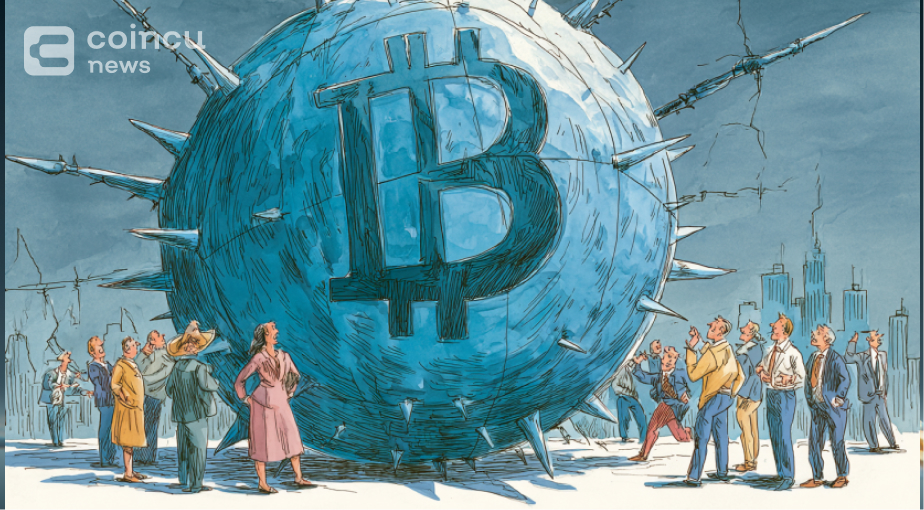
Sahara AI’s $SAHARA token shocked many on November 29 when it plummeted by over 50% within minutes, prompting speculation from community members about what happened. 

More information has come out since then, with most of the blame being focused on an unnamed market maker, as the project’s founder, Sean Ren, put forward a statement containing updates on X. 

According to the post, the team has reviewed and confirmed that all token smart contracts and core infrastructures have been secure, with no signs of exploits or breaches.

How the Sahara AI team is dealing with the price crash

The post also reassured readers that the price drop was not caused by token unlock or selling. “Our TGE happened in June 2025. Unlock of core contributors & early backer tokens will not happen until  a year later (June 2026), as per the unlock schedule: saharaai.com/blog/sahara-to…,” Ren wrote on X. 

He claims Sahara’s fundamentals remain unchanged, which means that all operations, product development, and strategic priorities will continue as planned with the aim of creating an agentic AI economy with fair value flow. 

As for what it has planned for next year, Sahara says it will continue to strengthen its AI infrastructure for professional services while expanding its business in data labeling and domain-specific agents. 

It will also focus on developing agentic protocols to power next-generation agent-to-agent interaction and revenue sharing and deploy “killer” crypto x AI applications to remove frictions in crypto UX.

What happened to the $SAHARA token?

Since Sahara AI’s $SAHARA launched earlier this year on major exchanges, the token has seen its own fair share of ups and downs. However, this recent drop is its most serious in some time. 

According to CoinGecko data, the token fell from an intraday high of $0.081 to a low of $0.0346. At the time of this publication, the price was hovering in the $0.043 to 0.044 range, down 42-45% in the last 24 hours, with a market cap of $107-108 million and 24-hour trading volume exceeding $378 million. 

According to Crypto Fearless, the sharp drop happened amid the unwind of a large, active market maker‘s book and signaled a liquidity stress event as risk controls were triggered and positions liquidated, amplifying selling pressure on the token.

The market maker reportedly had exposure to several notable tokens, including MMT and SAHARA. After the exchange flagged what it called unusual market making in one project, linked addresses were identified and restricted. The firm’s positions were also liquidated in respect to the exchange’s risk governance framework, and analysts claim this greatly contributed to the post‑event price move.

The incident has shown that while strengthened oversight and disciplined risk controls can mitigate cascading moves, traders still need to remain mindful of counterparty risk and token liquidity in volatile conditions.

Sharpen your strategy with mentorship + daily ideas - 30 days free access to our trading program

Market Opportunity
SaharaAI Logo
SaharaAI Price(SAHARA)
$0.02216
$0.02216$0.02216
-5.05%
USD
SaharaAI (SAHARA) Live Price Chart
Disclaimer: The articles reposted on this site are sourced from public platforms and are provided for informational purposes only. They do not necessarily reflect the views of MEXC. All rights remain with the original authors. If you believe any content infringes on third-party rights, please contact service@support.mexc.com for removal. MEXC makes no guarantees regarding the accuracy, completeness, or timeliness of the content and is not responsible for any actions taken based on the information provided. The content does not constitute financial, legal, or other professional advice, nor should it be considered a recommendation or endorsement by MEXC.

You May Also Like

Bitcoin ETFs Surge with 20,685 BTC Inflows, Marking Strongest Week

Bitcoin ETFs Surge with 20,685 BTC Inflows, Marking Strongest Week

TLDR Bitcoin ETFs recorded their strongest weekly inflows since July, reaching 20,685 BTC. U.S. Bitcoin ETFs contributed nearly 97% of the total inflows last week. The surge in Bitcoin ETF inflows pushed holdings to a new high of 1.32 million BTC. Fidelity’s FBTC product accounted for 36% of the total inflows, marking an 18-month high. [...] The post Bitcoin ETFs Surge with 20,685 BTC Inflows, Marking Strongest Week appeared first on CoinCentral.
Share
Coincentral2025/09/18 02:30
XAG/USD retreats toward $113.00 on profit-taking pressure
XAG/USD retreats toward $113.00 on profit-taking pressure

The post XAG/USD retreats toward $113.00 on profit-taking pressure appeared on BitcoinEthereumNews.com. Silver price (XAG/USD) halts its seven-day winning streak
Share
BitcoinEthereumNews2026/01/30 10:21
BTC Leverage Builds Near $120K, Big Test Ahead

BTC Leverage Builds Near $120K, Big Test Ahead

The post BTC Leverage Builds Near $120K, Big Test Ahead appeared on BitcoinEthereumNews.com. Key Insights: Heavy leverage builds at $118K–$120K, turning the zone into Bitcoin’s next critical resistance test. Rejection from point of interest with delta divergences suggests cooling momentum after the recent FOMC-driven spike. Support levels at $114K–$115K may attract buyers if BTC fails to break above $120K. BTC Leverage Builds Near $120K, Big Test Ahead Bitcoin was trading around $117,099, with daily volume close to $59.1 billion. The price has seen a marginal 0.01% gain over the past 24 hours and a 2% rise in the past week. Data shared by Killa points to heavy leverage building between $118,000 and $120,000. Heatmap charts back this up, showing dense liquidity bands in that zone. Such clusters of orders often act as magnets for price action, as markets tend to move where liquidity is stacked. Price Action Around the POI Analysis from JoelXBT highlights how Bitcoin tapped into a key point of interest (POI) during the recent FOMC-driven spike. This move coincided with what was called the “zone of max delta pain”, a level where aggressive volume left imbalances in order flow. Source: JoelXBT /X Following the test of this area, BTC faced rejection and began to pull back. Delta indicators revealed extended divergences, with price rising while buyer strength weakened. That mismatch suggests demand failed to keep up with the pace of the rally, leaving room for short-term cooling. Resistance and Support Levels The $118K–$120K range now stands as a major resistance band. A clean move through $120K could force leveraged shorts to cover, potentially driving further upside. On the downside, smaller liquidity clusters are visible near $114K–$115K. If rejection holds at the top, these levels are likely to act as the first supports where buyers may attempt to step in. Market Outlook Bitcoin’s next decisive move will likely form around the…
Share
BitcoinEthereumNews2025/09/18 16:40