

TRM Labs On-chain Evidence Key to Convicting 3 Terrorism Financiers
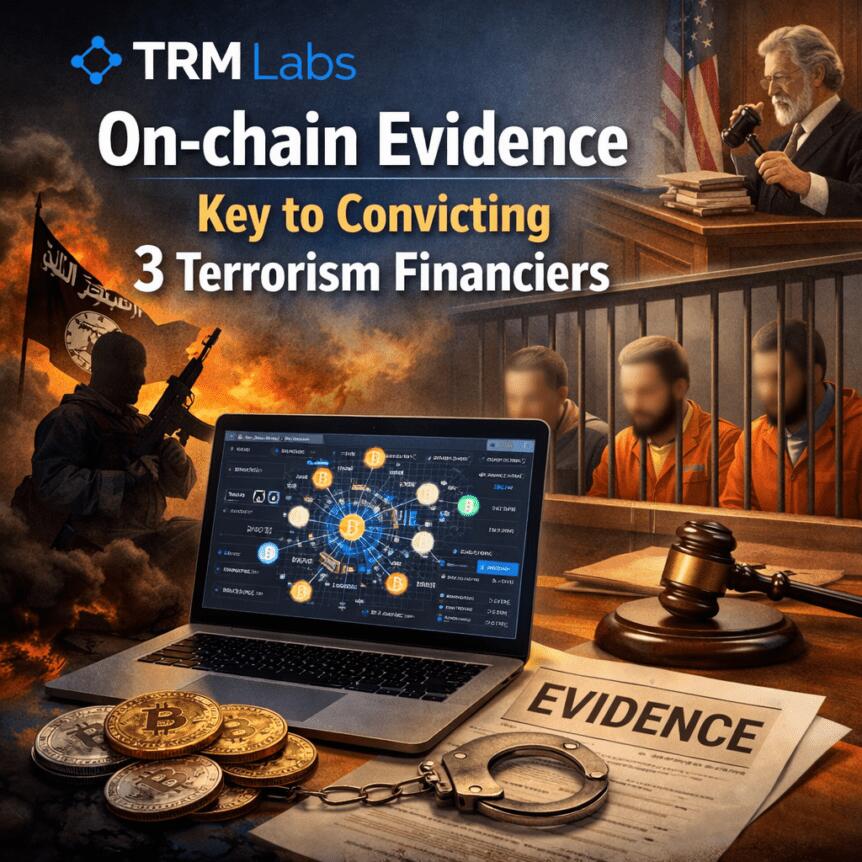
Indonesia’s courts are increasingly accepting on-chain evidence as a legitimate basis for terrorism-financing prosecutions, marking a notable shift in how blockchain data is treated in legal proceedings. In cases resolved in 2024 and 2025, authorities relied on wallet addresses, transaction histories, and on-chain flows to build the narrative of illicit funding, a development highlighted by TRM Labs as a sign that crypto traces are becoming a cornerstone of prosecutorial work.
“Indonesian courts have demonstrated that cryptocurrency evidence — wallet addresses, transaction histories, on-chain flows — is not only admissible but can anchor a terrorism financing prosecution,” said TRM Labs in a statement. The firm adds that these cases reflect a broader trend in which regulators and law-enforcement agencies are nearing parity with traditional financial channels when pursuing illicit financing.
TRM noted that terrorism-financing networks have increasingly used cryptocurrency as a movement mechanism, partially because authorities have historically scrutinized fiat channels more intensively. However, the framework is evolving, with courts and investigators reportedly closing the gap between digital traces and real-world consequences.
In Indonesia, one defendant allegedly sent more than $49,000 in USDt across 15 transactions from a domestic exchange to a foreign platform, with funds later routed to an ISIS-linked fundraising campaign in Syria, according to blockchain analytics cited by TRM Labs. The tracing work was conducted by Indonesia’s financial intelligence unit and the counterterrorism police unit, Densus 88, who presented the findings to the courts. The blockchain data was deemed a pivotal piece of evidence in each of the three cases.
TRM Labs emphasized that the Indonesian case underscores a broader Southeast Asian push to harness blockchain intelligence in criminal investigations, as authorities increasingly view crypto-forensics as a critical enforcement tool.
Beyond Indonesia, regional authorities are building capacity to trace cryptocurrency flows. TRM noted that Singapore and Malaysia’s financial-intelligence units and law-enforcement agencies are expanding technical capabilities to follow crypto activity across borders, reflecting a growing regional emphasis on digital-forensics as part of anti-financial-crime strategies.
These developments sit against a broader backdrop of regional enforcement and cases that illustrate the expanding role of crypto-tracing tools in Southeast Asia. In April, Cambodian and Chinese authorities extradited Li Xiong, a leader of the Huione Group, to China to face fraud and money-laundering charges connected to the organization’s scam operations. The move followed the earlier arrest of Chen Zhi, the head of Prince Group, which operates the Huione network. Separately, TRM’s data from 2025 showed a surge in illicit stablecoin activity, with about $141 billion worth of stablecoins flowing to illicit entities, marking a five-year high in this space.
Key takeaways
- Indonesian courts are increasingly accepting on-chain data — including wallet addresses and transaction histories — as admissible and pivotal evidence in terrorism-financing prosecutions.
- A concrete case linked more than $49,000 in USDt moved across 15 transactions from a local exchange to a foreign platform, with funds ultimately directed to ISIS-linked fundraising in Syria.
- Regional significance is growing: Southeast Asian authorities are expanding blockchain-forensics capabilities and fostering cross-sector collaboration to tackle illicit crypto activity.
- TRM data points to a broader scale of illicit crypto use in 2025, including a substantial surge in illicit stablecoin activity, underscoring why forensics capacity matters for regulators and law enforcement.
Courts and crypto traces: what changed in Indonesia
Central to the Indonesian cases was the application of blockchain analytics by the country’s financial intelligence unit in tandem with Densus 88, the national counterterrorism police unit. By correlating on-chain activity with exchange flows and cross-border transfers, investigators constructed a continuous chain of custody from a domestic source to an international donor and ultimately to a fundraising operation tied to ISIS. The courts’ acceptance of these traces signals a shift in evidentiary standards, aligning digital footprints with traditional investigative records.
TRM’s analysis frames this development as part of a wider trend in which prosecutors are learning to treat crypto evidence not as an adjunct but as a core element of financial-crime cases. The implications for investors and operators are nuanced: while the cases demonstrate that crypto-era enforcement is moving toward greater scrutiny, they also underscore the increasing value of transparent, auditable on-chain activity as a legal tool.
Regional momentum and what it means for the market
The Indonesian trajectory is occurring amid a regional mobilization to fortify crypto-forensics. Southeast Asia is seeing a push to scale capabilities that can trace crypto flows across borders, with Singapore and Malaysia cited as examples of jurisdictions expanding their analytical arsenals and public-private collaboration. For market participants, the trend translates into a more predictable regulatory environment around digital-asset tracing, even as enforcement remains vigilant against abuse.
From an investor perspective, the trend raises several practical considerations. First, the integrity of on-chain evidence can influence case outcomes, potentially elevating the risk-reward calculus for illicit actors and increasing the likelihood of sanctions or asset seizures in connected networks. Second, as authorities invest in blockchain intelligence tools, exchanges and custodians may be called upon to provide faster or more granular data, which could affect due-diligence timelines and compliance costs. Third, the regional emphasis on cross-border cooperation could help standardize some investigative approaches, reducing ambiguity for global firms operating in multiple markets.
Broader enforcement context and ongoing developments
The Southeast Asian enforcement narrative extends beyond Indonesia. In a related development, Li Xiong, a leader of the Huione Group, was captured in Cambodia and China and extradited to China to face fraud and money-laundering charges tied to scam operations. This came three months after the arrest of Chen Zhi, head of the Prince Group, which operates Huione. In parallel, TRM reported that illicit stablecoins activity reached about $141 billion in 2025, signaling a five-year high and reinforcing the importance of robust tracing capabilities for regulators and financial institutions alike.
Taken together, these pieces illustrate a broader pattern: as crypto tracing tools mature and cross-border cooperation intensifies, authorities appear increasingly confident in leveraging on-chain data to pursue financial crime, including terrorism financing. For market participants, that means continuing attention to compliance, transparent corporate disclosures, and readiness to respond to regulatory expectations around crypto-asset flows.
Readers should monitor ongoing capacity-building efforts among Southeast Asian FIUs and law-enforcement agencies, as well as any new court rulings that further define the role of on-chain evidence in criminal cases. The evolving landscape will shape both risk and opportunity for exchanges, wallets, and institutional actors operating in the region.
This article was originally published as TRM Labs On-chain Evidence Key to Convicting 3 Terrorism Financiers on Crypto Breaking News – your trusted source for crypto news, Bitcoin news, and blockchain updates.


You May Also Like

Target (TGT) Stock Surges After Wolfe Research Elevates Rating to Outperform
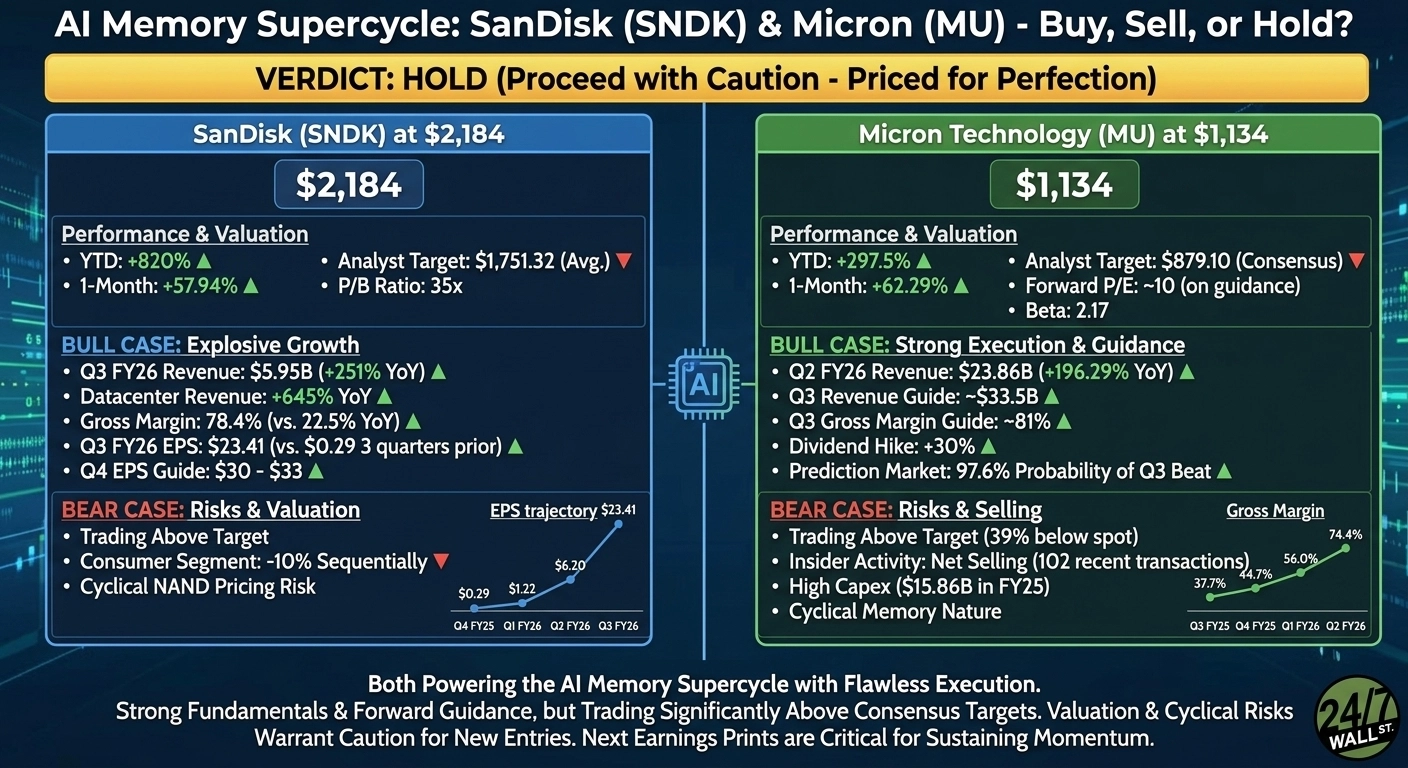
Buy, Sell, or Hold: SanDisk at $2,184 and Micron at $1,134

How Crypto Casinos Get Licensed in 2026: The Anjouan Route



