 As energy costs continue to fluctuate and environmental awareness grows, homeowners and builders alike are constantly searching for innovative ways to make buildings more energy-efficient. Traditionally, achieving top-tier insulation meant tearing down walls to install bulky rolls of fibreglass, injecting expanding foams into cavity spaces, or fitting thick, space-consuming rigid boards. While these methods are undeniably effective, they are often disruptive, expensive, and completely unsuited for historic properties or homes with solid walls. Enter a remarkably modern and aesthetically pleasing solution that is transforming the construction and renovation sectors: thermal paint.
Thermal paint represents a brilliant convergence of advanced chemical engineering and everyday home decoration. It offers the unique promise of improving a building’s thermal envelope simply through the stroke of a brush or the spray of a nozzle. By acting as a microscopic radiant barrier, this specialist coating reflects heat rather than absorbing it, helping to keep interiors warm during the bitter winter months and refreshingly cool at the height of summer. Best of all, it allows property owners to upgrade their insulation without sacrificing an inch of living space, proving that ultimate heat insulation can indeed be a colourful, elegant, and highly practical endeavour.
What is Thermal Paint and How Does it Work?
At first glance, thermal paint looks and applies just like any premium standard emulsion or masonry paint you might find in a high-street DIY shop. However, the secret to its insulating prowess lies hidden within its chemical composition. True thermal paint is infused with millions of microscopic, vacuum-filled ceramic or glass hollow spheres. Originally inspired by the cutting-edge heat-reflective coatings developed by NASA to protect the space shuttle during atmospheric re-entry, these microspheres fundamentally alter how the painted surface interacts with thermal energy.
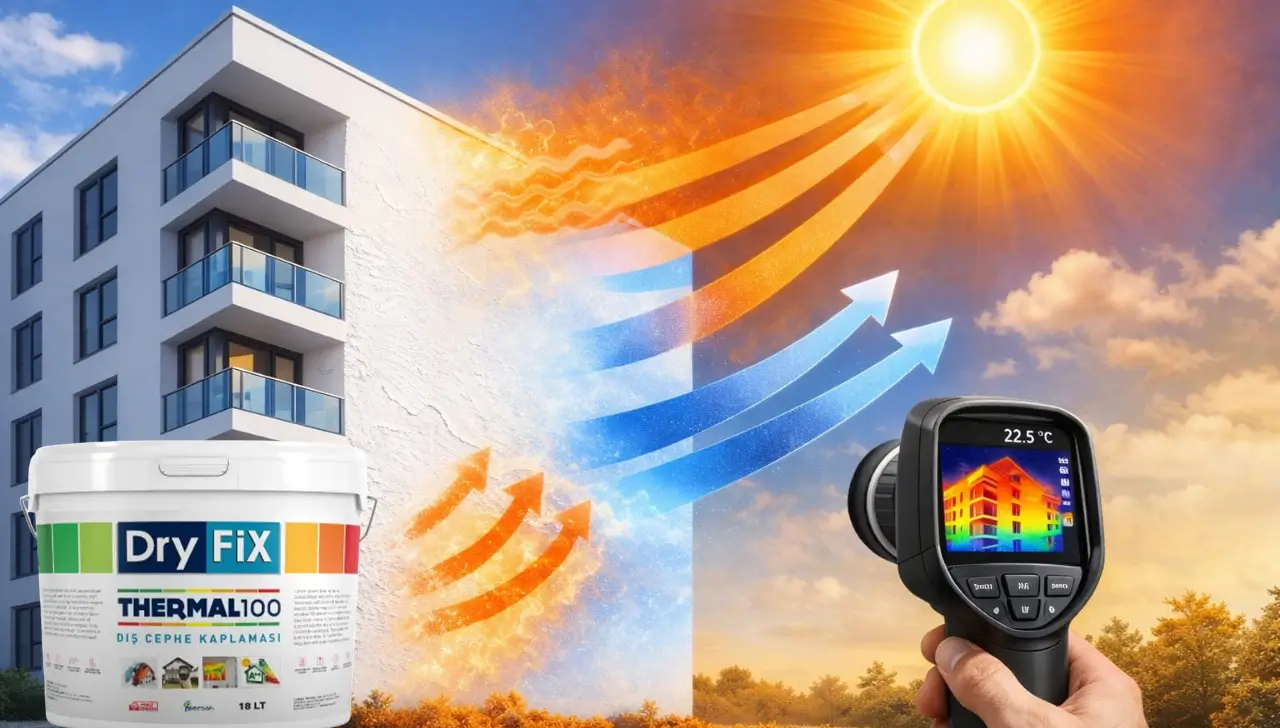
When heat energy—whether from your central heating system indoors or the glaring sun outdoors—hits a wall coated with thermal paint, the vacuum-filled spheres act as a dense radiant barrier. Instead of allowing the thermal energy to conduct through the brickwork or plaster, the paint reflects a significant percentage of it back towards the source.
Furthermore, this formulation severely limits thermal conductivity. Because a vacuum is a notoriously poor conductor of heat, the tightly packed layer of microspheres prevents thermal bridging. The result is a highly effective, micro-thin layer of insulation that works tirelessly to regulate temperatures, managing to do in mere millimetres what traditional insulating materials attempt to achieve in inches.
Internal vs. External Thermal Coatings
When planning to upgrade your property’s thermal efficiency, it is crucial to understand the distinct roles played by internal and external thermal coatings. While both utilise similar microsphere technology to manage heat transfer, they are formulated differently to tackle specific environmental challenges and yield distinct benefits. The table below outlines the primary differences to help you make an informed decision for your project.
| Feature | Internal Thermal Coating | External Thermal Coating |
|---|---|---|
| Primary Function | Reflects indoor heat back into the room to reduce heating demand. | Reflects solar radiation away from the building to prevent overheating. |
| Secondary Benefits | Significantly reduces condensation, prevents mould growth, and improves air quality. | Provides heavy-duty weatherproofing and protects masonry from rain and frost. |
| Durability Needs | Needs to withstand everyday household wear, cleaning, and minor scuffs. | Must possess high UV resistance, elasticity, and cope with severe weather changes. |
| Best Used For | Solid wall properties, combating damp rooms, and preserving historic exteriors. | Sun-facing façades, weather-beaten walls, and upgrading overall building envelopes. |
Ideally, for the ultimate insulating shield, property owners should consider a dual approach. Applying thermal paint to both the interior and exterior creates a highly robust thermal envelope, tackling heat loss from the inside and heat gain from the outside simultaneously.
Dryfix Thermal Paint: The Ultimate Shield for Brilliant Heat Insulation
When discussing top-tier solutions in the market, DryFİX Thermal Paint THERMAL 100 stands out as a new generation exterior coating product. Developed following extensive R&D studies, it was introduced into the construction sector leveraging advanced know-how from the USA. It boasts a water-based, eco-friendly formulation that delivers exceptionally high performance without harming the environment. With its superb UV resistance, DryFiX THERMAL 100 can be safely applied not just to building exteriors, but to virtually all plastered and painted surfaces, instantly giving your property a modern appearance whilst wrapping it in a durable protective layer.
Dryfix Thermal Paint Thermal 100 is highly versatile and comes packed with features that elevate it above standard masonry paints:
- Bridging Hairline Cracks: Thanks to its high elasticity, it effortlessly stretches to cover small cracks, protecting the exterior against natural ground movements and thermal expansions.
- Lightweight & Non-Invasive: It adds no significant load to your building’s structure. Because it is applied exactly like a paint—without the need for mechanical dowels or fixings—it preserves the integrity of your walls.
- Safety & Environment: It features high fire resistance, is completely water-based, contains zero petroleum products, and is virtually odourless during application.
- Moisture Control: Its waterproof structure actively prevents rain and water leakage on façades, while its clever breathability prevents moisture build-up and dampness on interior walls.
- Economical Maintenance: Should any damage occur during its lifespan, repairs are remarkably straightforward and highly economical to carry out.
Is Thermal Paint a Real Alternative to Traditional Insulation?
A common question among homeowners is whether a product as thin as a coat of paint can genuinely replace thick rolls of fibreglass or rigid PIR insulation boards. The most honest and accurate answer is that thermal paint should be viewed as a powerful supplementary technology rather than a complete, standalone replacement for traditional building regulations-standard insulation. If you are building a new home from scratch or have accessible cavity walls, installing thick, traditional insulation remains the gold standard for achieving maximum thermal resistance (U-values).
However, thermal paint becomes a highly viable, real alternative in scenarios where traditional insulation is utterly impractical or financially prohibitive. For instance, in the UK, millions of older Victorian or Edwardian properties feature solid brick walls. Insulating these with traditional methods requires either sacrificing precious internal floor space to build a false wall or altering the historic external character of the building with bulky cladding. In these specific cases, applying a high-quality thermal coating is an absolute game-changer, offering a significant thermal upgrade without altering the building’s footprint or architectural heritage.
Can Thermal Paint Lower Your Energy Bills?
The ultimate appeal of any insulation product lies in its ability to reduce monthly outgoings, and thermal paint certainly delivers on this front. By actively reflecting heat back into your living spaces during the colder months, rooms warm up much faster when the central heating is switched on. More importantly, they retain that warmth for noticeably longer periods after the radiators have been turned off. This means your boiler does not have to work nearly as hard or as long to maintain a comfortable temperature, leading directly to a reduction in gas or electricity consumption.
Conversely, during summer heatwaves, exterior thermal coatings reflect the sun’s radiant energy away from the brickwork. This prevents the building from absorbing and storing heat like a giant storage heater, thereby reducing the need for electric fans or air conditioning units to keep the indoors cool. While the exact financial savings will always depend on the specific construction of your home, the severity of the climate, and your baseline energy usage, homeowners who properly apply premium thermal paints consistently report a noticeable decrease in their annual energy bills, ensuring a steady return on their initial decorating investment over time.