

Ethereum Whale Awakens After 7 Years, Begins Massive Sell-Off Worth Millions
A long-dormant Ethereum whale has suddenly returned to activity after seven years of inactivity, triggering renewed attention across the cryptocurrency market as the investor begins liquidating a significant portion of its holdings.
Blockchain data shows that the whale, which originally acquired 27,586 ETH for approximately 5.72 million dollars, has now started cashing out part of its position at a substantial profit after years of holding through multiple market cycles.
So far, the wallet has sold 4,654 ETH, receiving nearly 7.9 million dollars in USDS stablecoins. Despite the partial sell-off, the wallet still holds 22,932 ETH, with additional tokens reportedly approved for sale through decentralized exchange routing platform CoW Swap.
The sudden reactivation of a long-inactive whale wallet has sparked discussion across the crypto community, as traders assess whether the move signals broader profit-taking behavior among early Ethereum investors or represents an isolated liquidation event.
The activity was widely circulated on social media platform X, including by crypto-focused analysts such as @coinbureau, who highlighted the scale and timing of the whale’s return to the market after years of dormancy.
A Seven-Year Silence Broken
The whale wallet had remained completely inactive for approximately seven years, dating back to a period when Ethereum was trading at a fraction of its current valuation.
During the original accumulation phase, Ethereum was still in its early stages of adoption, with limited institutional participation and significantly lower market capitalization compared to today.
The initial investment of 5.72 million dollars into 27,586 ETH represents what has since become one of the most profitable long-term holdings in the Ethereum ecosystem.
After years of holding through multiple bull and bear cycles, the wallet’s recent activity marks a significant shift in behavior.
Blockchain analysts tracking the address noted that the first major movement occurred when the wallet transferred a portion of its holdings to execution platforms designed for decentralized trading.
The decision to sell after such a long period of dormancy has raised questions about the investor’s strategy and timing.
Large-Scale Profit Realization Underway
The sale of 4,654 ETH for nearly 7.9 million dollars reflects substantial profit realization, given the original purchase value of the entire position.
At current market levels, the whale’s remaining holdings still represent a significantly larger unrealized profit compared to the initial investment.
With 22,932 ETH still in possession, the wallet continues to hold a position worth tens of millions of dollars depending on current Ethereum market prices.
Blockchain data also indicates that additional portions of the remaining holdings have been approved for sale through CoW Swap, a decentralized trading protocol that aggregates liquidity across multiple sources to optimize execution prices.
This suggests that the whale may continue gradually offloading its position rather than executing a single large transaction.
Such staggered liquidation strategies are commonly used by large holders to minimize market impact and reduce price slippage.
Market analysts note that while the sale volume is significant, it remains relatively small compared to Ethereum’s daily trading activity across global exchanges.
Still, the psychological impact of whale movements often extends beyond actual market volume, influencing trader sentiment and short-term volatility.
Market Reaction and Investor Sentiment
The reactivation of a long-dormant whale wallet has generated mixed reactions across the cryptocurrency community.
Some investors interpret the move as a natural step for early adopters taking profits after years of holding through extreme volatility.
Others view large-scale sell-offs from early Ethereum investors as potential signals of caution, particularly during periods of uncertain macroeconomic conditions.
Ethereum has experienced heightened price sensitivity in recent months due to shifting interest rate expectations, regulatory developments, and broader market volatility.
Whale movements are often closely monitored by traders because they can indicate potential shifts in long-term sentiment among large holders.
However, analysts caution against overinterpreting single-wallet activity, noting that early investors frequently diversify or rebalance portfolios after long holding periods.
 |
| Source: Xpost |
Despite this, large transactions tend to attract attention because they can influence short-term trading behavior, especially in leveraged markets.
Ethereum’s Long-Term Holders Still Dominant
Despite this recent sell-off, data suggests that long-term holders continue to control a significant portion of Ethereum’s circulating supply.
Many early investors have maintained positions since Ethereum’s inception, contributing to the network’s relatively stable distribution among long-term participants.
Over time, Ethereum has evolved from a niche blockchain experiment into one of the largest digital asset ecosystems in the world, supporting decentralized finance, NFTs, and a growing range of Web3 applications.
Institutional adoption has also increased significantly, with hedge funds, asset managers, and corporate treasuries gradually gaining exposure to ETH as part of broader digital asset strategies.
This diversification of ownership has reduced the relative influence of individual whales compared to earlier stages of the network’s development.
However, large dormant wallets still carry symbolic weight in the market due to their historical significance and potential impact during sudden movements.
Why Whale Activity Matters to Traders
In cryptocurrency markets, whale activity is closely monitored because large holders can influence liquidity and price dynamics.
When significant amounts of tokens are moved or sold, traders often interpret these actions as signals of potential market direction.
While not always predictive, whale movements can contribute to short-term volatility, particularly in thinner trading conditions.
In Ethereum’s case, the ecosystem’s deep liquidity generally absorbs large transactions more efficiently than smaller altcoins.
However, psychological effects remain important, as market participants often react to perceived changes in supply dynamics.
This has led to increased use of blockchain analytics tools that track wallet activity, exchange inflows, and on-chain behavior in real time.
Such tools have become essential for traders attempting to anticipate market trends based on large-scale investor behavior.
Ethereum Market Context
The whale activity comes at a time when Ethereum continues to navigate a complex market environment shaped by macroeconomic uncertainty and evolving regulatory conditions.
Ethereum remains the second-largest cryptocurrency by market capitalization and continues to play a central role in decentralized finance and smart contract infrastructure.
However, competition from alternative blockchain networks has intensified in recent years, with platforms offering faster transaction speeds and lower fees.
Despite this competition, Ethereum maintains a dominant position in terms of developer activity, total value locked in DeFi protocols, and institutional interest.
Market analysts believe that long-term price performance will depend heavily on network upgrades, scalability improvements, and broader adoption trends.
Whale movements such as this serve as reminders of Ethereum’s long investment history and the significant gains realized by early participants.
The Broader Implications
The return of a seven-year dormant whale highlights the long-term nature of cryptocurrency investment cycles.
Unlike traditional financial markets, where holding periods are often measured in months or years, crypto assets frequently see investors holding positions across entire technological eras.
Early Ethereum investors have witnessed dramatic transformations in valuation, adoption, and market structure since the network’s launch.
The decision to begin selling after such a long period may reflect portfolio diversification, risk management strategies, or personal financial planning considerations.
It also underscores the maturity of the crypto market, where early speculative positions are gradually transitioning into realized wealth events.
As the market continues to evolve, analysts expect more dormant wallets from early blockchain eras to re-emerge periodically, especially during periods of high liquidity or favorable pricing conditions.
Conclusion
The sudden reactivation of a seven-year dormant Ethereum whale has added a new layer of intrigue to an already volatile crypto market.
While the current sell-off represents only a fraction of the wallet’s total holdings, the move highlights the significant unrealized gains accumulated by early Ethereum investors.
As the remaining ETH continues to sit in the wallet, market participants will be watching closely to see whether further sales follow or whether this represents a one-time profit realization event.
For now, Ethereum traders remain focused on broader market conditions, while whale activity continues to serve as a reminder of the long and complex journey of digital assets from early adoption to global financial relevance.
hoka.news – Not Just Crypto News. It’s Crypto Culture.
Writer @Victoria
Victoria Hale is a writer focused on blockchain and digital technology. She is known for her ability to simplify complex technological developments into content that is clear, easy to understand, and engaging to read.
Through her writing, Victoria covers the latest trends, innovations, and developments in the digital ecosystem, as well as their impact on the future of finance and technology. She also explores how new technologies are changing the way people interact in the digital world.
Her writing style is simple, informative, and focused on providing readers with a clear understanding of the rapidly evolving world of technology.
Disclaimer:
The articles on HOKA.NEWS are here to keep you updated on the latest buzz in crypto, tech, and beyond—but they’re not financial advice. We’re sharing info, trends, and insights, not telling you to buy, sell, or invest. Always do your own homework before making any money moves.
HOKA.NEWS isn’t responsible for any losses, gains, or chaos that might happen if you act on what you read here. Investment decisions should come from your own research—and, ideally, guidance from a qualified financial advisor. Remember: crypto and tech move fast, info changes in a blink, and while we aim for accuracy, we can’t promise it’s 100% complete or up-to-date.
Stay curious, stay safe, and enjoy the ride! hokan


You May Also Like

New Cryptocurrency 2026: 540K Tokens Die, Pepeto Listing Nears
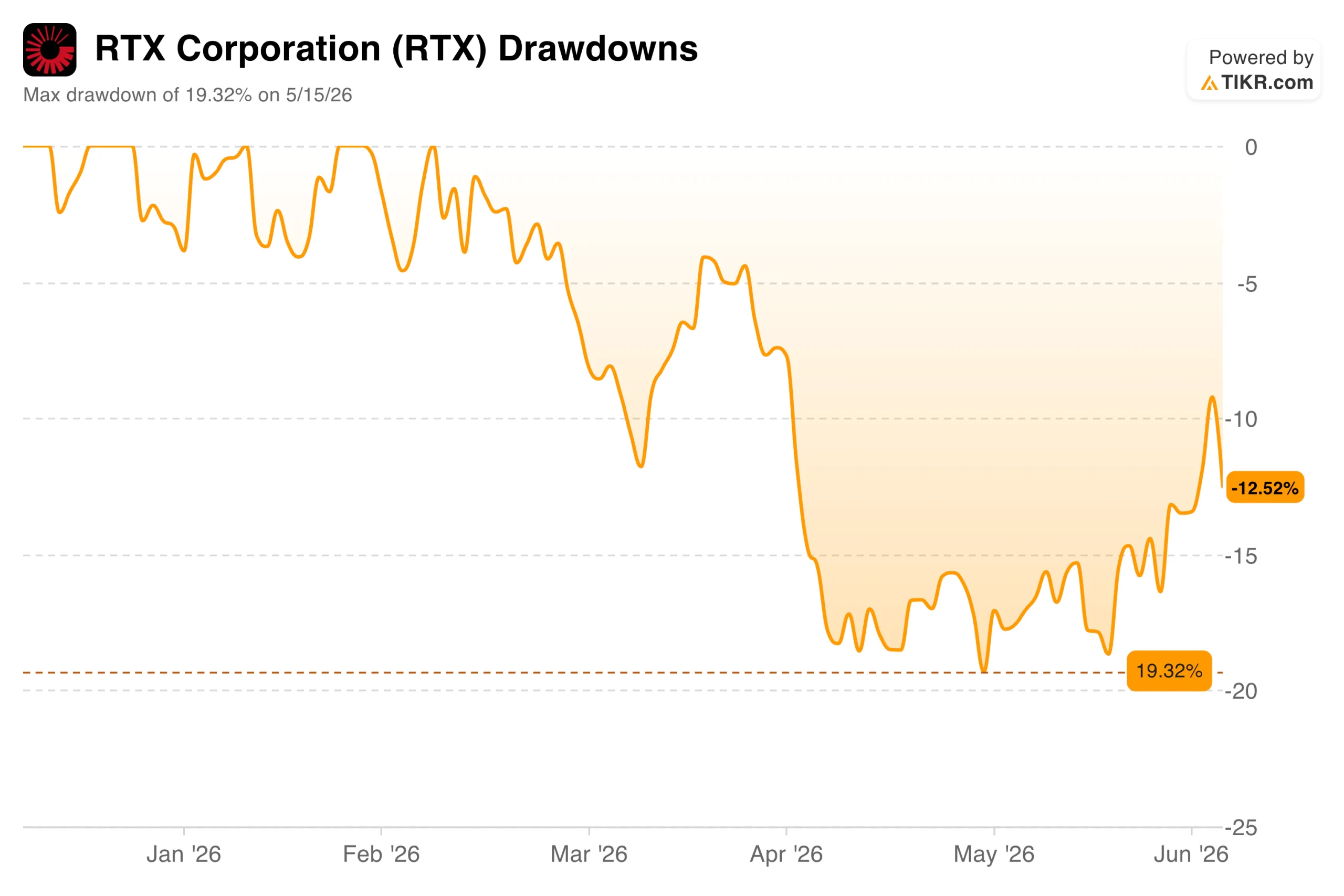
RTX Stock Has a $271 Billion Backlog and a 19% Drawdown. Does the Defense Supercycle Justify Buying at $186?

European Union’s ESMA Orders Unlicensed Crypto Firms to Exit EU Market as MiCA Deadline Arrives



