

New jobs data reveals troubling wave of cuts at retail and restaurant chains
The U.S. job market is still expanding, as it appeared after the much-hyped May jobs report, which reported the addition of 172,000 jobs to the US economy.
But, as TheStreet covered, many of those jobs were concentrated in the travel and leisure sector.
And now, the latest June report from the Bureau of Labor Statistics, along with steep downward revisions to those May numbers, shows precisely why many workers and shoppers may still not feel much relief.
A low unemployment rate usually gives consumers more confidence to spend on groceries, restaurants, clothes, travel, home goods, and everyday services.
However, the June jobs report showed a more complicated reality: weaker hiring, downward revisions, fewer people in the labor force, and job losses in some of the most consumer-facing parts of the economy.
Bank of America notes that while the report was soft, but not weak enough to suggest the labor market is breaking.
Hiring slows sharply as BLS slashes prior data
U.S. employers added just 57,000 nonfarm payroll jobs in June, while the unemployment rate changed little at 4.2%, according to the Bureau of Labor Statistics.
This was a sharp slowdown from the prior two months, especially May, which reported 172,000 job additions.
More Economy:
- JPMorgan doubles down on economy, inflation outlook
- Central bankers grow nervous about AI funding
- BofA sees new trends forming in the K-shaped economy
Further compounding the soft June data, the BLS revised April and May job gains lower by a combined 74,000.
- April was revised down to 148,000 (from 179,000)
- May was revised down to 129,000 (from 172,000)
Those revisions matter because recent jobs reports had suggested the labor market was holding up better than expected.
TheStreet previously covered how the April jobs report looked strong on the surface, even as some economists warned that the details were more mixed.
The June report makes that mixed picture harder to ignore.
The labor force participation rate fell to 61.5% from 61.8%, while the employment-population ratio slipped to 59.0%. The number of people not in the labor force rose by 832,000.
The number of long-term unemployed workers, or those jobless for 27 weeks or more, was little changed at 1.9 million, but it was up by 286,000 from a year earlier.
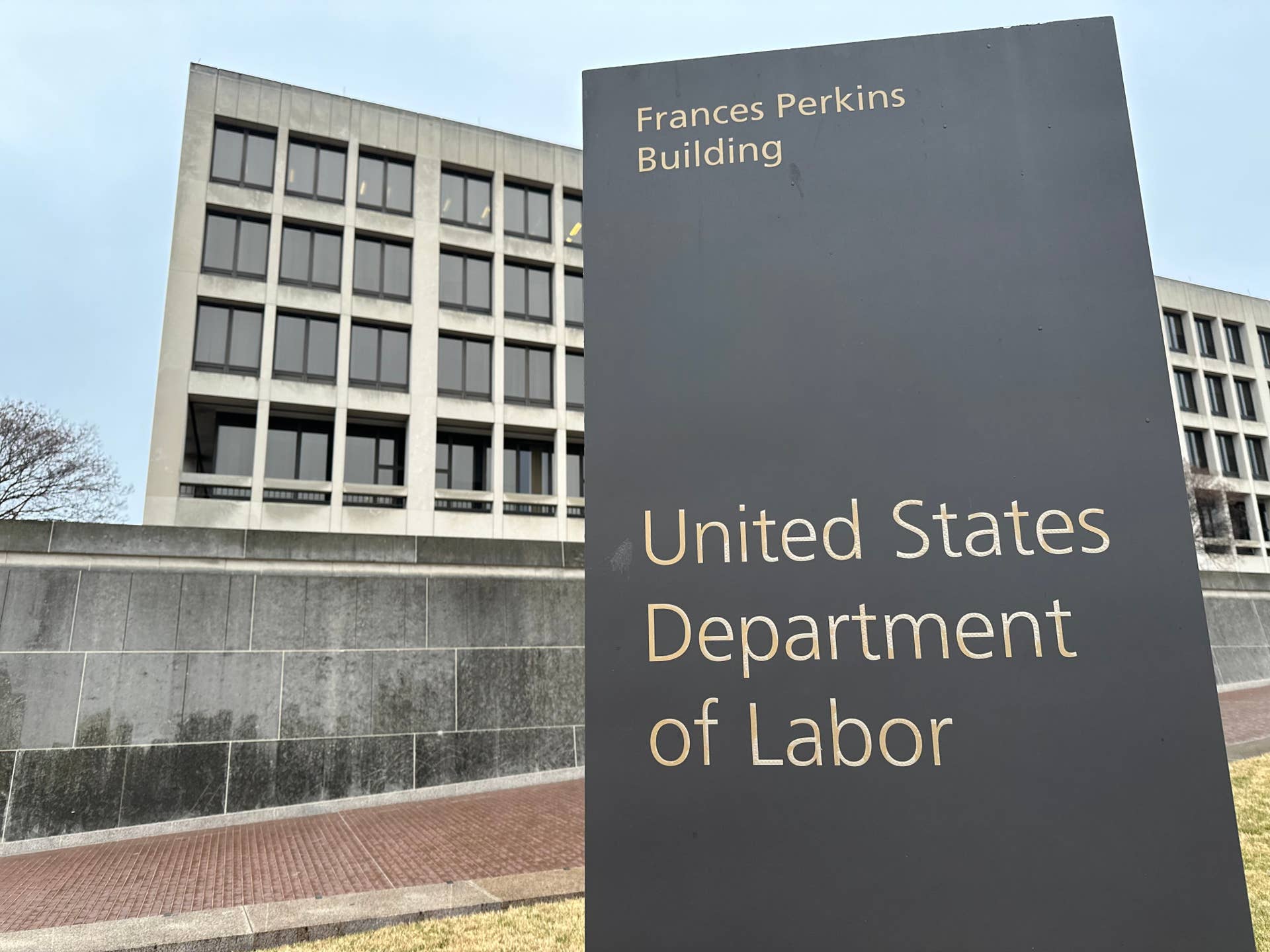 The US Department of Labor announced the June jobs report.
Douglas Rissing &sol Getty Images
Bank of America says: It's not all bad news
While the data may look bleak at first glance, Bank of America provided important context.
In a note emailed to TheStreet, the firm described the June jobs report as “soft on balance,” but “not as dovish as market reaction suggests.”
The firm said the downside surprise was heavily concentrated in leisure and hospitality, which lost 61,000 jobs in June.
BofA said the weakness likely reflected summer seasonality and followed earlier sector strength.
BofA also noted that the three-month average for job growth remained solid at 111,000, while private payroll growth averaged 99,000.
This distinction is critical for investors.
A single weak month can make the labor market look worse than it actually is, especially if job losses are concentrated in a single industry.
Yet, for workers and consumers, the industry breakdown still matters because restaurants, hotels, retailers, and entertainment businesses are tied directly to discretionary everyday spending.
On the policy front, BofA said wage growth remains positive for consumption but did not signal an inflationary labor market.
However, despite the cooling headline numbers, the firm surprisingly maintained its hawkish call for three 25-basis-point rate hikes this year, starting in September.
While a soft jobs report normally encourages the Federal Reserve to cut interest rates, BofA argues that core inflation and a low 4.2% unemployment rate mean the Fed will keep raising borrowing costs.
Simply put, BofA expects the Fed to increase interest rates this year.
And for consumers, this is critical, as it means higher interest rates will continue the pressure on credit card, auto loan, and mortgage rates rather than bringing immediate relief.
Retailers and restaurants cut jobs
The consumer-facing parts of the jobs report were weaker:
- Retail trade employment fell by 7,500 jobs in June.
- General merchandise retailers cut 4,900 jobs, including a 6,500-job decline at warehouse clubs, supercenters, and other general merchandise retailers.
These businesses are closely tied to household spending patterns, so if retailers are slowing hiring or trimming staff, it can suggest that companies are watching costs more carefully as shoppers become more selective.
TheStreet previously covered how retail layoffs are not only coming from store closures, but also through changes to distribution and fulfillment networks.
Levi Strauss recently announced plans to close a Kentucky distribution center and cut 303 jobs, underscoring how consumer brands are reworking the systems behind stores and online orders.
Restaurants and leisure businesses also showed weakness in June.
Leisure and hospitality employment fell by 61,000 jobs, the BLS said, reflecting weaker-than-usual seasonal hiring.
- Accommodation and food services cut 54,600 jobs
- Food services and drinking places lost 32,900 jobs
That is a notable signal for consumers, as restaurants are often among the first places households pull back when budgets get tighter.
Worker hours show another pressure point
Average hourly earnings for all private-sector workers rose 0.3% in June to $37.64 and were up 3.5% from a year earlier.
But while it may look positive on the surface, a deeper look reveals that overall, it was not advantageous to the workers.
Because, for retail workers, average weekly hours slipped to 29.9 in June from 30.1 in May.
So, the average hourly earnings for retail workers rose to $26.35, but average weekly earnings fell to $787.87 from $789.22 because the workweek got shorter.
For production and nonsupervisory retail workers, average hourly earnings fell slightly to $22.20 from $22.22, while weekly earnings dropped to $679.32 from $682.15.
This is the kind of detail workers may feel directly.
A person can still have a job, but fewer hours can mean less money for groceries, gas, rent, restaurants, and discretionary purchases.
White-collar hiring offers one bright spot
The strongest parts of the June report were outside the most direct consumer-spending categories.
Professional and business services added 36,000 jobs, and Social assistance added 25,000 jobs, led by individual and family services.
Health care added 22,000 jobs, though that was much below its average monthly gain of 38,000 over the prior 12 months.
BofA said white-collar job growth has improved despite concerns that artificial intelligence could hurt office hiring. So that is definitely optimistic, especially with the number of job cuts driven by AI adoption.
Professional and business services have now added jobs for six straight months after losing jobs in 10 of 12 months in 2025, according to the firm.
That is a more encouraging signal for the broader economy.
But for consumers, the June jobs report still shows a split labor market.
While higher-paying white-collar jobs are improving, health care and social assistance are still adding workers, and income growth remains supportive.
But restaurants, hotels, and retailers are showing strain.
The report does not suggest that the job market is breaking, but it does show that the parts of the economy closest to everyday shoppers are under pressure.
Related: Beloved breakfast restaurant chain closes 150 troubled locations


You May Also Like

Bitcoin, Gold, and U.S. Stocks Dive as Trump Pledges to Hit Iran ‘Extremely Hard’

TV anchors cut off mid-sentence and evacuate as nearby building threatens collapse

Funding: African startups raised $1.4 billion in H1 2026 off a $515 million windfall in June



