

Iran Fires Missiles at Ships in Strait of Hormuz, Sending Oil Prices Higher
TLDR
- Iran fired at least two missiles at commercial ships in the Strait of Hormuz on Monday night
- Brent crude rose 1.6% to $73.10 a barrel; WTI futures up 1.5% to $69.60 a barrel
- A one-week U.S.-Iran agreement to suspend attacks in the strait has expired
- OPEC+ agreed to raise production targets by 188,000 barrels per day from August
- Saudi Aramco cut August selling prices for Arab Light crude to a discount for the first time since 2020
Oil prices climbed on Tuesday after Iran fired missiles at commercial ships passing through the Strait of Hormuz, raising fresh concerns about shipping safety in one of the world’s most important oil routes.
Brent crude rose 1.6% to $73.10 a barrel in early European trade. U.S. West Texas Intermediate futures were up 1.5% to $69.60 a barrel.
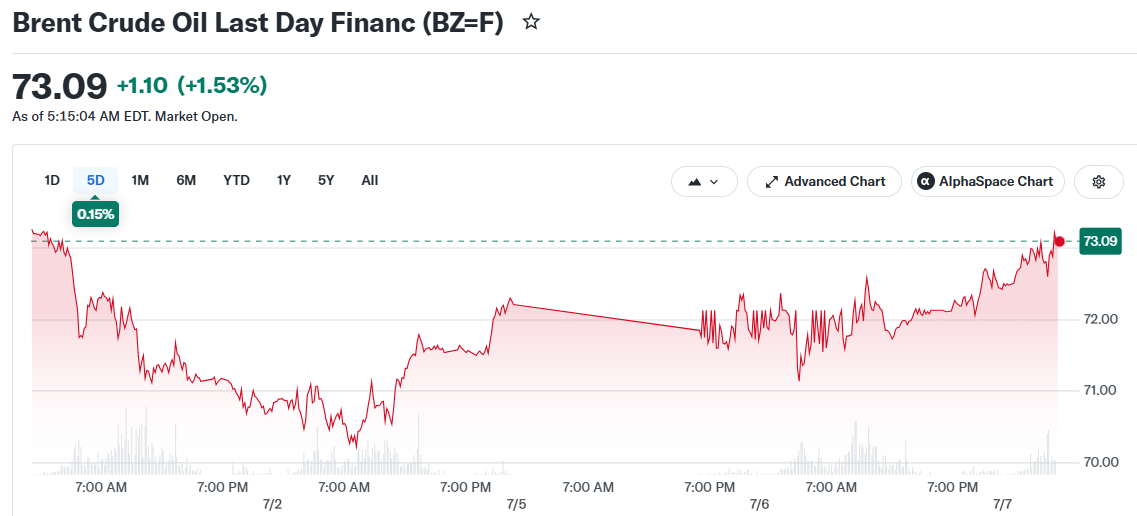 Brent Crude Oil Last Day Financ (BZ=F)
Iran’s military fired at least two missiles at ships in the strait on Monday night, according to Axios, which cited two U.S. officials. The attacks ended a week-long pause that had been part of a U.S.-Iran understanding.
The U.K. Maritime Trade Operations agency also reported that a tanker traveling near the Omani coast was hit by an unidentified projectile, causing a fire. Iran has not officially claimed responsibility, but anonymous sources on Iranian state television suggested the target was a tanker carrying natural gas from Qatar.
Diplomatic Deal at Risk
The attacks came just as a one-week agreement between Washington and Tehran to halt strikes in the strait expired. That deal was tied to a broader memorandum of understanding signed less than three weeks ago, which now appears to be under strain.
Iran has said ships passing through the strait must use Tehran-approved routes. It warned that any U.S. interference would be met with “a rapid and decisive action.”
Crude prices had fallen back to pre-conflict levels after a peace deal was signed in June. Earlier in the conflict, which began in late February, oil prices had surged past $110 a barrel.
Deutsche Bank analysts noted that while prices have returned to pre-war levels, shipping through the strait is still only a fraction of normal. “There is still supply-chain stress here,” they wrote.
OPEC+ Adds Supply as Gulf Exports Recover
Gains in oil prices were kept in check by rising supply. OPEC+ agreed on Sunday to increase production targets by 188,000 barrels per day starting in August. This follows similar increases already made in June and July.
The United Arab Emirates, which left the OPEC+ quota system in May, said it pumped more than 3.8 million barrels per day in June, topping its pre-war output levels.
Saudi Aramco also cut the official selling price for its Arab Light crude to Asian buyers. It is the first time the price has been set at a discount to the regional benchmark since 2020, reflecting rising competition for market share as Gulf exports recover.
The situation in the strait remains fluid, with peace negotiations still ongoing and control of the waterway a central sticking point between Iran and the U.S.
The post Iran Fires Missiles at Ships in Strait of Hormuz, Sending Oil Prices Higher appeared first on CoinCentral.


You May Also Like

OpenVPP accused of falsely advertising cooperation with the US government; SEC commissioner clarifies no involvement

Robotics Automation Prototyping: Engineering Kinetic Agility into End-Effectors
This is One of The Best AI Stocks to Own In 2026



