The post US Dollar Index strengthens above 99.00 on robust US Retail Sales appeared on BitcoinEthereumNews.com. The US Dollar Index (DXY), an index of the valueThe post US Dollar Index strengthens above 99.00 on robust US Retail Sales appeared on BitcoinEthereumNews.com. The US Dollar Index (DXY), an index of the value

US Dollar Index strengthens above 99.00 on robust US Retail Sales

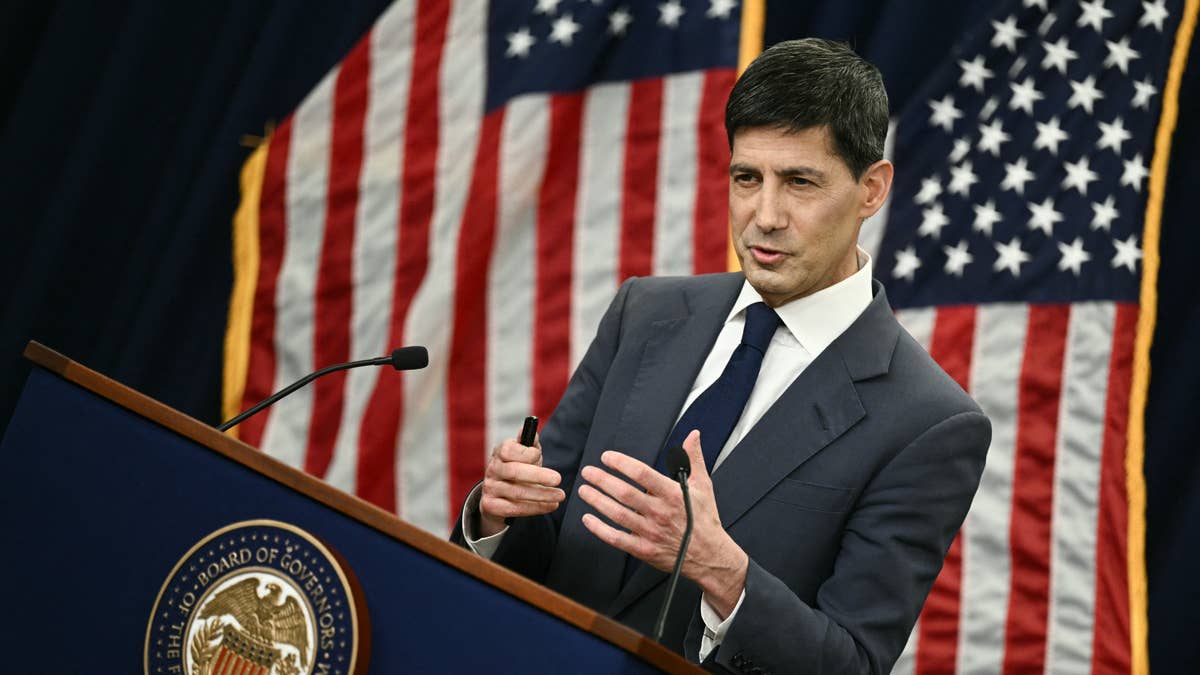
The US Dollar Index (DXY), an index of the value of the US Dollar (USD) measured against a basket of six world currencies, trades on a positive note around 99.15 during the early European session on Thursday. The weekly US Initial Jobless Claims report will be published later on Thursday. The Federal Reserve policymakers are also set to speak, including Raphael Bostic, Michael Barr, Thomas Barkin, and Jeff Schmid. 

Data released by the US Census Bureau on Wednesday showed that Retail Sales in the US rose 0.6% MoM in November, following the 0.1% contraction seen in October. This figure came in above the market expectation of a 0.4% increase.

Meanwhile, the US Producer Price Index (PPI) climbed 3.0% YoY in November versus 2.8% prior, according to the Bureau of Labour Statistics (BLS). This print came in above the estimates of 2.7%. Stripping out food and energy, core Producer Prices were also up 3.0% over the year in November, compared to 2.9% in October, beating the forecast of 2.7%. 

The DXY has received some support from rising expectations that the Fed will keep rates on hold for the next several months. According to the CME FedWatch tool, financial markets are pricing in nearly a 5.0% probability that the US central bank will cut interest rates at its next meeting in January.

The upside for the US dollar might be limited amid concerns over the Fed’s independence. Fed Chair Jerome Powell called out the US President Donald Trump administration’s decision to subpoena him, saying it amounted to intimidating the US central bank into delivering easier monetary policy. 

Trump stated on Wednesday that he has no plans to fire Powell despite the Justice Department’s criminal investigation into the Fed Chair, but it was “too early” to say what he would ultimately do.  

US Dollar FAQs

The US Dollar (USD) is the official currency of the United States of America, and the ‘de facto’ currency of a significant number of other countries where it is found in circulation alongside local notes. It is the most heavily traded currency in the world, accounting for over 88% of all global foreign exchange turnover, or an average of $6.6 trillion in transactions per day, according to data from 2022.
Following the second world war, the USD took over from the British Pound as the world’s reserve currency. For most of its history, the US Dollar was backed by Gold, until the Bretton Woods Agreement in 1971 when the Gold Standard went away.

The most important single factor impacting on the value of the US Dollar is monetary policy, which is shaped by the Federal Reserve (Fed). The Fed has two mandates: to achieve price stability (control inflation) and foster full employment. Its primary tool to achieve these two goals is by adjusting interest rates.
When prices are rising too quickly and inflation is above the Fed’s 2% target, the Fed will raise rates, which helps the USD value. When inflation falls below 2% or the Unemployment Rate is too high, the Fed may lower interest rates, which weighs on the Greenback.

In extreme situations, the Federal Reserve can also print more Dollars and enact quantitative easing (QE). QE is the process by which the Fed substantially increases the flow of credit in a stuck financial system.
It is a non-standard policy measure used when credit has dried up because banks will not lend to each other (out of the fear of counterparty default). It is a last resort when simply lowering interest rates is unlikely to achieve the necessary result. It was the Fed’s weapon of choice to combat the credit crunch that occurred during the Great Financial Crisis in 2008. It involves the Fed printing more Dollars and using them to buy US government bonds predominantly from financial institutions. QE usually leads to a weaker US Dollar.

Quantitative tightening (QT) is the reverse process whereby the Federal Reserve stops buying bonds from financial institutions and does not reinvest the principal from the bonds it holds maturing in new purchases. It is usually positive for the US Dollar.

Source: https://www.fxstreet.com/news/us-dollar-index-strengthens-above-9900-on-robust-us-retail-sales-202601150442


Market Opportunity
Talus Logo
Talus Price(US)
$0.00685
$0.00685$0.00685
+5.22%
USD
Talus (US) Live Price Chart
Disclaimer: The articles reposted on this site are sourced from public platforms and are provided for informational purposes only. They do not necessarily reflect the views of MEXC. All rights remain with the original authors. If you believe any content infringes on third-party rights, please contact service@support.mexc.com for removal. MEXC makes no guarantees regarding the accuracy, completeness, or timeliness of the content and is not responsible for any actions taken based on the information provided. The content does not constitute financial, legal, or other professional advice, nor should it be considered a recommendation or endorsement by MEXC.

You May Also Like

Saudi Awwal Bank Adopts Chainlink Tools, LINK Near $23

Saudi Awwal Bank Adopts Chainlink Tools, LINK Near $23

The post Saudi Awwal Bank Adopts Chainlink Tools, LINK Near $23 appeared on BitcoinEthereumNews.com. SAB adopts Chainlink’s CCIP and CRE to expand tokenization and cross-border finance tools. SAB and Wamid target $2.32T Saudi capital markets with blockchain-based tokenization plans. LINK price falls 2.43% to $22.99 despite higher trading volume and steady liquidity ratios. Saudi Awwal Bank has added Chainlink’s Cross-Chain Interoperability Protocol (CCIP) and the Chainlink Runtime Environment (CRE) to its digital strategy. CCIP links assets and data across multiple blockchains, while CRE provides banks with a controlled framework to test and deploy new financial applications. The lender, with more than $100 billion in assets, is applying the tools to tokenized assets, cross-border settlement, and automated credit platforms. The move signals that Chainlink’s infrastructure is being adopted at scale inside regulated finance. Related: Chainlink’s Deal with SBI Is a Major Win, But Chart Shows LINK’s Battle at $27 Resistance Wamid Partnership Aims at $2.32 Trillion Markets In parallel, SAB signed an agreement with Wamid, a subsidiary of the Saudi Tadawul Group, to pilot tokenization of the Saudi Exchange’s $2.32 trillion capital markets. The focus is on equities and debt products, opening the door for blockchain-based issuance and settlement. SAB has already executed the world’s first Islamic repo on distributed ledger technology, in collaboration with Oumla earlier this year. That transaction gave regulators a template for compliant on-chain contracts. The Wamid deal builds directly on that precedent, shifting from single-instrument pilots toward broader capital markets integration. Saudi Blockchain Buildout Gains Pace Saudi institutions are building multiple layers of digital infrastructure. Oumla is working with Avalanche to develop the Kingdom’s first domestically hosted Layer 1 blockchain. SAB’s Chainlink adoption adds an interoperability and execution layer on top. Together, these projects are shaping a domestic framework for tokenization, with global connectivity added only where liquidity requires it. LINK Price and Liquidity Snapshot While institutional adoption progresses, Chainlink’s…
Share
BitcoinEthereumNews2025/09/18 08:49
What is the 80 20 rule for Airbnb? A practical guide for hosts

What is the 80 20 rule for Airbnb? A practical guide for hosts

This article explains the 80 20 idea as a practical heuristic for Airbnb hosts and shows how it links to realistic, low-cash ways people gain control of short-term
Share
Coinstats2026/01/31 08:42
Why ZKP Ranks Among the Best New Cryptos to Buy With Fair Design and Private Compute

Why ZKP Ranks Among the Best New Cryptos to Buy With Fair Design and Private Compute

While many investors focus on the latest trending tokens, ZKP has been steadily building a foundation with lasting value. By combining real hardware, verifiable
Share
Techbullion2026/01/31 09:00