

Bybit Offers 800,000 USDC for Traders and Stakers
Bybit is rolling out a new USDC campaign that puts 800,000 USDC on the line for users who trade or stake USDC on the exchange through March 6, 2026.
Key Takeaways
- Bybit launched a USDC campaign with an 800,000 USDC prize pool running until March 6, 2026.
- Users can join the Trade Team or Stake Team, earn points, and share rewards based on relative performance.
- Stakers can earn a fixed 6% APR while also competing for campaign rewards.
- The campaign is designed to support two exchange priorities: trading volume and assets held on platform.
What Happened?
Bybit announced a new promotion that rewards eligible users for trading or staking USDC, with rewards distributed from a total 800,000 USDC pool. Participants register for the campaign, choose a team, and earn points that determine their share of rewards.
The initiative combines a simple points system with a team format, allowing users to participate as active traders, yield focused holders, or both.
How Bybit’s USDC Campaign Works?
Bybit’s campaign is split into two tracks that mirror two common stablecoin behaviors in crypto markets: turning capital over through trading, or parking capital to earn yield.
After registering, participants choose a team, and each team has its own portion of the overall 800,000 USDC reward pool. Rewards are not fixed per person. Instead, distribution is proportional, meaning your outcome depends on how many points you earn relative to other participants on the same team.
Trade Team: Points for Volume
Users who join the Trade Team earn Trade Points by trading USDC on Bybit. The campaign awards:
- 1 Trade Point for every 500 USDC traded
This design clearly pushes one metric exchanges care deeply about: volume. It rewards users who generate turnover, which can deepen liquidity and help tighten spreads in active markets, especially when stablecoins are used heavily as a quote asset.
Users who join the Stake Team earn Stake Points by staking USDC through Bybit products that lock funds for a defined term or strategy. The campaign awards:
- 1 Stake Point for every 100 USDC staked
Staking options named in the campaign include Bybit’s Fixed Savings product with a 21 day term and the MNT and USDC Alpha Farming pool.
Beyond campaign points, Bybit also offers a fixed 6% APR for USDC staking during the term. That creates a dual incentive for yield oriented users: baseline returns plus a shot at a larger reward share if they rank well against other stakers.
Users Can Trade and Stake
A key detail is flexibility. Participants are not forced to choose a single approach for the full campaign period. Users can trade and stake, earning points and competing for rewards in both pools, depending on their activity.
Why USDC Is the Focus?
USDC has become one of the most important stablecoins in crypto markets, widely used for trading, settlement, collateral, and capital parking. The stablecoin is issued by Circle and is described in the campaign materials as fully reserved against the US dollar, a positioning that supports its use as a lower volatility tool compared with traditional crypto assets.
For exchanges, deeper stablecoin liquidity is not just a user feature. It is infrastructure. Strong USDC order books can improve execution quality, and stablecoin balances held on platform can support margin efficiency across derivatives and other products.
What Bybit Gains From This Structure?
This campaign boosts two performance indicators that matter to large exchanges: reported trading activity and assets retained on platform.
Volume based incentives can lift turnover during slower periods, while staking incentives can increase platform held balances and reduce outflows. The team format adds a light layer of gamification without making the mechanics hard to understand, which can help participation.
Bybit also noted that terms and conditions apply and that users should refer to the official campaign landing page for eligibility rules and restrictions, which is a standard requirement for promotions of this type.
CoinLaw’s Takeaway
In my experience, this is the kind of campaign that tells you what an exchange wants more of right now: stablecoin liquidity and stickier capital. I found the structure pretty smart because it does not force one behavior. It rewards both the high activity trader and the user who just wants a predictable yield.
If you are already using USDC, the math is straightforward. Traders get rewarded for volume, stakers get a 6% APR plus a chance at extra rewards, and Bybit gets more USDC activity inside its ecosystem. The bigger signal for me is that stablecoins are no longer treated as idle cash. Exchanges are treating them as a growth engine.
The post Bybit Offers 800,000 USDC for Traders and Stakers appeared first on CoinLaw.
You May Also Like

The Stunning ASEAN Winner Emerges As Manufacturing Shifts Accelerate
MySQL Single Leader Replication with Node.js and Docker
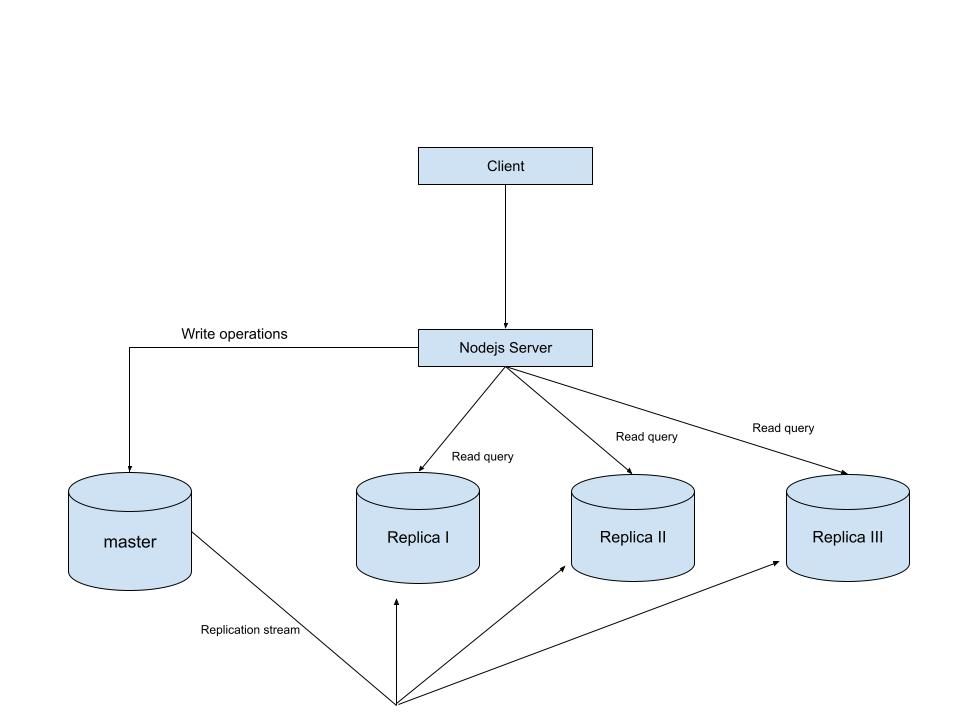
command: --server-id=1 --log-bin=ON The --server-id option gives each MySQL server in your replication setup its own name tag. Each one has to be unique and without it, replication won’t work at all. Another cool option not included here is binlog_format=ROW. This tells MySQL how to keep track of changes before passing them along to the replicas. By default, MySQL already uses row-based replication, but you can explicitly set it to ROW to be sure or switch it to STATEMENT if you’d rather log the actual SQL statements instead of row-by-row changes. \ Run our containers on docker Now, in the terminal, we can run the following command to spin up our database containers: docker-compose up -d \ Setting Up Our Master (Primary) Server To configure our master server, we would have to first access the running instance on docker using the following command docker exec -it mysql-master bash This command opens an interactive Bash shell inside the running Docker container named mysql-master, allowing us to run commands directly inside that container. \ Now that we’re inside the container, we can access the MySQL server and start running commands. type: mysql -uroot -p This will log you into MySQL as the root user. You’ll be prompted to enter the password you set in your docker-compose.yml file. \ Next, we need to create a special user that our replicas will use to connect to the master server and pull data. Inside the MySQL prompt, run the following commands: \ CREATE USER 'repl_user'@'%' IDENTIFIED BY 'replication_pass'; GRANT REPLICATION SLAVE ON . TO 'repl_user'@'%'; FLUSH PRIVILEGES; Here’s what’s happening: CREATE USER makes a new MySQL user called repl_user with the password replication_pass. GRANT REPLICATION SLAVE gives this user permission to act as a replication client. FLUSH PRIVILEGES tells MySQL to reload the user permissions so they take effect immediately. \ Time to Configure the Replica (Secondary) Servers a. First, let’s access the replica containers the same way we did with the master. Run this command in your terminal for each of the replica containers: \ docker exec -it <replica_container_name> bash mysql -uroot -p <replica_container_name> should be replace with the name of the replica container you are trying to setup b. Now it’s time to tell our replica where to get its data from. While inside the replica’s MySQL shell, run the following command to configure replication using the master’s details: CHANGE REPLICATION SOURCE TO SOURCE_HOST='mysql-master', SOURCE_USER='repl_user', SOURCE_PASSWORD='replication_pass', GET_SOURCE_PUBLIC_KEY=1; With the replication settings in place, let’s fire up the replica and get it syncing with the master. Still inside the MySQL shell on the replica, run: START REPLICA; This starts the replication process. To make sure everything is working, check the replica’s status with:
SHOW REPLICA STATUS\G; Look for Replica_IO_Running and Replica_SQL_Running — if both say Yes, congratulations! 🎉 Your replica is now successfully connected to the master and replicating data in real time.
Testing Our Replication Setup from the Node.js App Now that our replication is successfully set up, we can configure our Node.js server to observe the real-time effect of data being replicated from the master server to the replica server whenever we write to it. We start by installing the following dependencies:
npm i express mysql2 sequelize \ Now create a folder called src in the root directory and add the following files inside that folder connection.js, index.js and model.js. Our current directory should look like this We can now set up our connections to our master and replica server in the connection.js file as shown below
const Sequelize = require("sequelize"); const sequelize = new Sequelize({ dialect: "mysql", replication: { write: { host: "127.0.0.1", username: "root", password: "master", database: "replicaDb", }, read: [ { host: "127.0.0.1", username: "root", password: "slave", database: "replicaDb", port: 3307 }, { host: "127.0.0.1", username: "root", password: "slave", database: "replicaDb", port: 3308 }, { host: "127.0.0.1", username: "root", password: "slave", database: "replicaDb", port: 3309 }, ], }, }); async function connectdb() { try { await sequelize.authenticate(); } catch (error) { console.error("❌ unable to connect to the follower database", error); } } connectdb(); module.exports = { sequelize, }; \ We can now create a User table in the model.js file
const {DataTypes} = require("sequelize"); const { sequelize } = require("./connection"); const User = sequelize.define("User", { name: { type: DataTypes.STRING, allowNull: false, }, email: { type: DataTypes.STRING, unique: true, allowNull: false, }, }); module.exports = User \ and finally in our index.js file we can start our server and listen for connections on port 3000. from the code sample below, all inserts or updates will be routed by sequelize to the master server. while all read queries will be routed to the read replicas.
const express = require("express"); const { sequelize } = require("./connection"); const User = require("./model"); const app = express(); app.use(express.json()); async function main() { await sequelize.sync({ alter: true }); app.get("/", (req, res) => { res.status(200).json({ message: "first step to setting server up", }); }); app.post("/user", async (req, res) => { const { email, name } = req.body; let newUser = await User.build({ name, email, }); // This INSERT will go to the write (master) connection newUser = newUser.save({ returning: false }); res.status(201).json({ message: "User successfully created", }); }); app.get("/user", async (req, res) => { // This SELECT query will go to one of the read replicas const users = await User.findAll(); res.status(200).json(users); }); app.listen(3000, () => { console.log("server has connected"); }); } main(); When you make a POST request to the /users endpoint, take a moment to check both the master and replica servers to observe how data is replicated in real time. Right now, we are relying on Sequelize to automatically route requests, which works for development but isn’t robust enough for a production environment. In particular, if the master node goes down, Sequelize cannot automatically redirect requests to a newly elected leader. In the next part of this series, we’ll explore strategies to handle these challenges
