

How this US-based Ghanaian engineer is automating the study abroad process with GoScholar for African students
For decades, global study opportunities for African students have been riddled with challenges that have denied deserving students life-changing opportunities, from massive financial demands to informational gatekeeping and an expensive traditional consulting industry. In major hubs like Lagos and Accra, brick-and-mortar study-abroad agencies routinely charge anywhere from $2,000 to $5,000 just to guide applicants through the process. For the brilliant but “poor” student who needs a scholarship the most, these upfront costs form an insurmountable barrier to entry.
This is the very problem Ebenezer Ayisi, the Ghanaian-born software engineer, is solving using artificial intelligence to dismantle the historic gatekeeping system. As the founder and CEO of GoScholar.ai, Ayisi has built a platform designed to do in two minutes what traditionally took months of expensive, manual research: match African students with fully funded, lesser-known institutional gems across the United States.
Operating from his apartment in Dallas, Texas, Ayisi is bridging the massive gap between talent and opportunity, driven by his own bruising encounter with the system.
From 50 rejections to a full ride
Like many founders, Ayisi’s startup is born out of intense personal frustration. Long before he was a software engineer in Dallas, he spent two gruelling years attempting to navigate the labyrinth of US university admissions from Ghana. Coming from a humble background without the means to pay thousands of dollars to local application consultants, he relied on the only information available to him: public rankings and word-of-mouth.
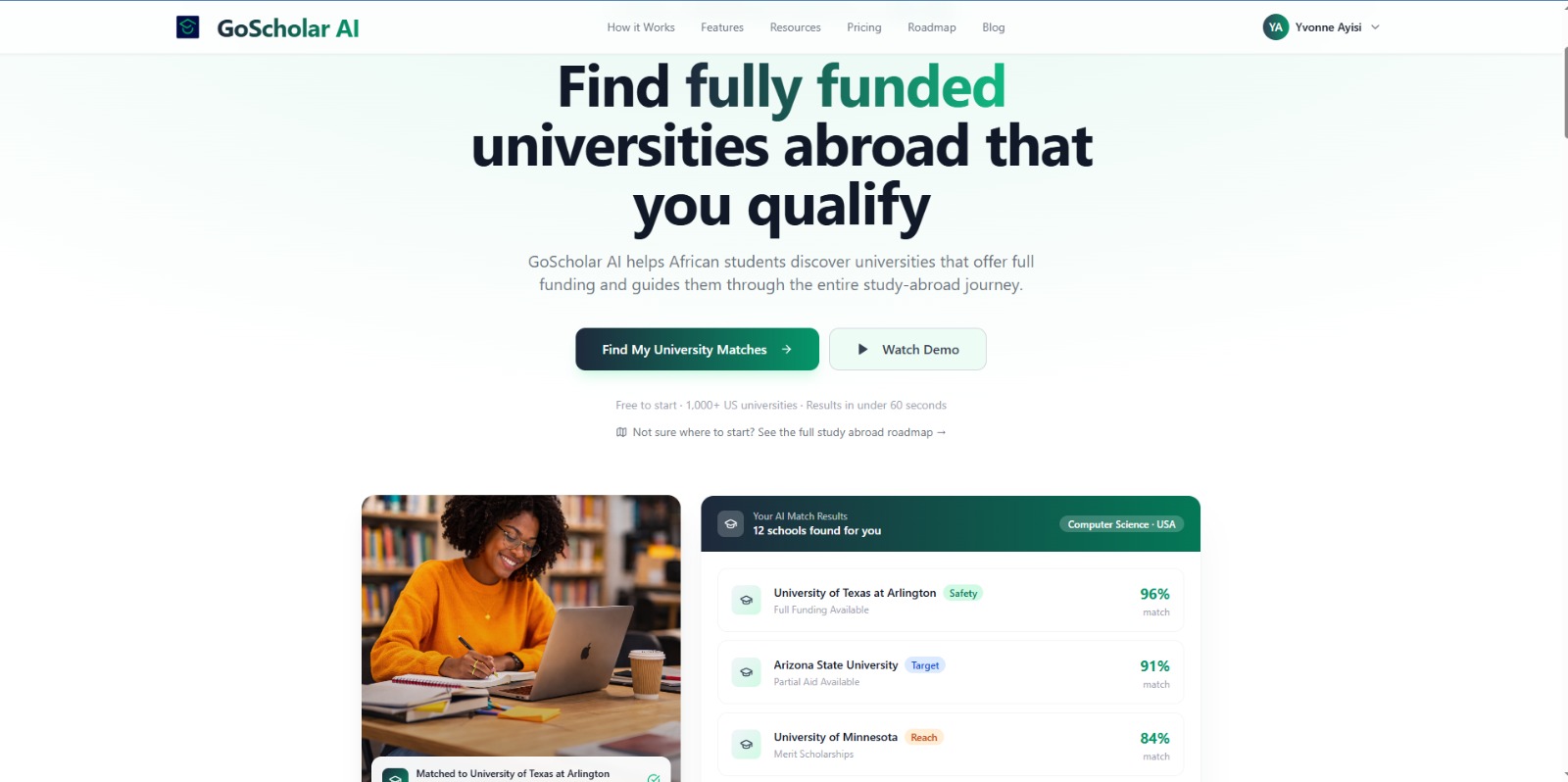 GoScholar
“The biggest misconception I had was thinking that only the most popular schools offer funding or full scholarships,” Ayisi recalls, looking back at the late nights spent refreshing his email inbox. “I would see schools being talked about online or on YouTube, common ones like Stanford or Columbia, and I would just apply to them, thinking they were the only ones that would fund me. I got rejected for two years applying to all these popular schools.”
The turning point came when Ayisi abandoned the prestige chase and looked toward the periphery of mainstream digital media. He dug deeper into institutional datasets to identify US colleges that actively sought international diversity but lacked the global brand recognition of the Ivy League. This strategic pivot led him to Berea College, a liberal arts institution in Kentucky. Ayisi secured a full ride, an opportunity that completely altered his life trajectory and saw him intern on Wall Street with Goldman Sachs before entering the corporate tech sector.
But as he looked back at the ecosystem he left behind, he realised his success was an anomaly born of sheer luck and exhaustive manual digging. “There are schools in small US towns that actively want international and African students, and they offer full scholarships, but nobody knows about them,” Ayisi says. “An African from Ghana or Nigeria may not know the name of that school. GoScholar is going to solve that problem in like two minutes when they just upload their profile.”
The technical core of GoScholar rests on matching profiles to highly specific, vetted institutional funding data. However, locating a school is only half the battle; the real hurdle lies in the intensive documentation required by Western universities. Admissions committees demand highly targeted Statements of Purpose (SOPs) and deeply tailored CVs.
In an era where generic AI tools have commoditised writing, the market has been flooded with predictable, robotic essays that admissions committees easily spot and reject. Ayisi’s primary engineering challenge was to build an AI assistant that serves as an authentic reflection of the student rather than a generic text generator.
“Instead of just generating a generic document, our AI first asks students a series of specific questions about their background, their research experience, and their goals,” Ayisi explains. “The results will sound like the students themselves.”
By forcing the underlying model to draw strictly from a highly structured personal interview questionnaire and grounding it with rigorous constraints, GoScholar completely avoids the telltale linguistic markers of standard large language models. The platform systematically strips out cliché opening lines and overly dense vocabulary. Furthermore, the platform advises students on where to manually inject personal anecdotes, providing a collaborative framework that ensures the final document easily withstands algorithmic AI checks.
To further safeguard authenticity, Ayisi plans to implement a human-in-the-loop validation model. This feature will securely link African applicants with successful international students already on the ground in the US to provide manual, peer-to-peer editorial reviews. “Even with advanced AI, you still need a human in the loop,” he notes.
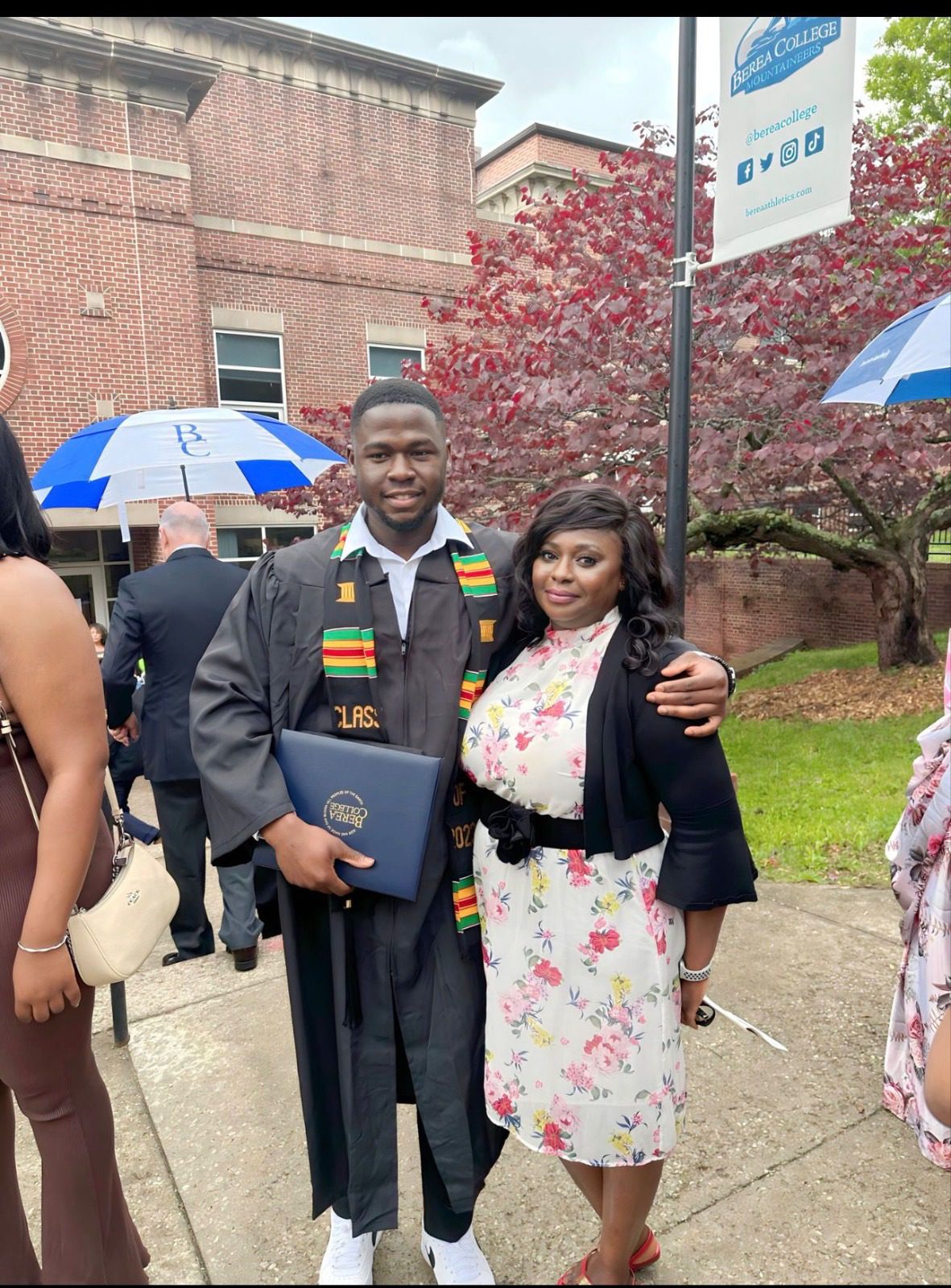 Ebenezer Ayisi, founder and CEO of GoScholar.AI during his graduation
Beyond document generation, GoScholar is addressing application fatigue through Apply Assist, a proprietary browser extension currently in beta testing. For an applicant targeting 15 to 20 universities, manually entering the same historical data across highly fragmented university portals is a major operational headache. Apply Assist maps approximately 500 distinct, hand-curated data fields to automate form-filling locally on the user’s browser, ensuring absolute user data privacy by keeping sensitive personal records off GoScholar’s central servers.
Combined with an integrated Application Tracker that pushes automated deadline notifications to prevent users from missing crucial funding cut-offs, the startup is steadily transforming a historically chaotic workflow into a structured, unified dashboard.
How GoScholar is fast replacing global study consultants
By shifting the infrastructure of study-abroad consulting from physical offices to an automated, freemium cloud architecture, GoScholar is forcing an aggressive paradigm shift in the traditional consulting industry. The legacy model relies heavily on high-margin, low-volume operations, charging thousands of dollars to service a maximum of 50 students per agency each year. GoScholar, by contrast, operates on high-volume accessibility, serving over 27,000 unique users in a single 30-day period.
This level of disruption has caught the attention of local ecosystem players. “The reaction has been interesting with most consultants,” Ayisi notes. “Some have reached out to me genuinely curious about what I’m building. Others are concerned. One consultant that I spoke to recently told me he’s also building his own app since he has seen GoScholar. That tells me everything about how the industry is reacting. When your competitors start copying your direction, then you know you’re doing something right.”
To keep the platform highly accessible to lower-income applicants, GoScholar relies on a micro-transactional, pay-as-you-go credit framework after initial free credits are exhausted. Users can purchase extended feature access for as little as $1, scaling up to specialised $10 and $20 value packs. This completely flips the financial model of legacy consultancies on its head.
Also read: A chat with Prembly’s Lanre Ogungbe on weaponising shared intelligence with FraudLens
How Nigerian scholars can handle the US visa ban
Despite a product architecture designed for scale, regional adoption patterns reflect the stark realities of West African migration politics. Currently, Ghana accounts for 62% of GoScholar’s active user base, while Nigeria sits at 15%, a surprising inversion given Nigeria’s larger population and intense ‘japa’ migration waves.
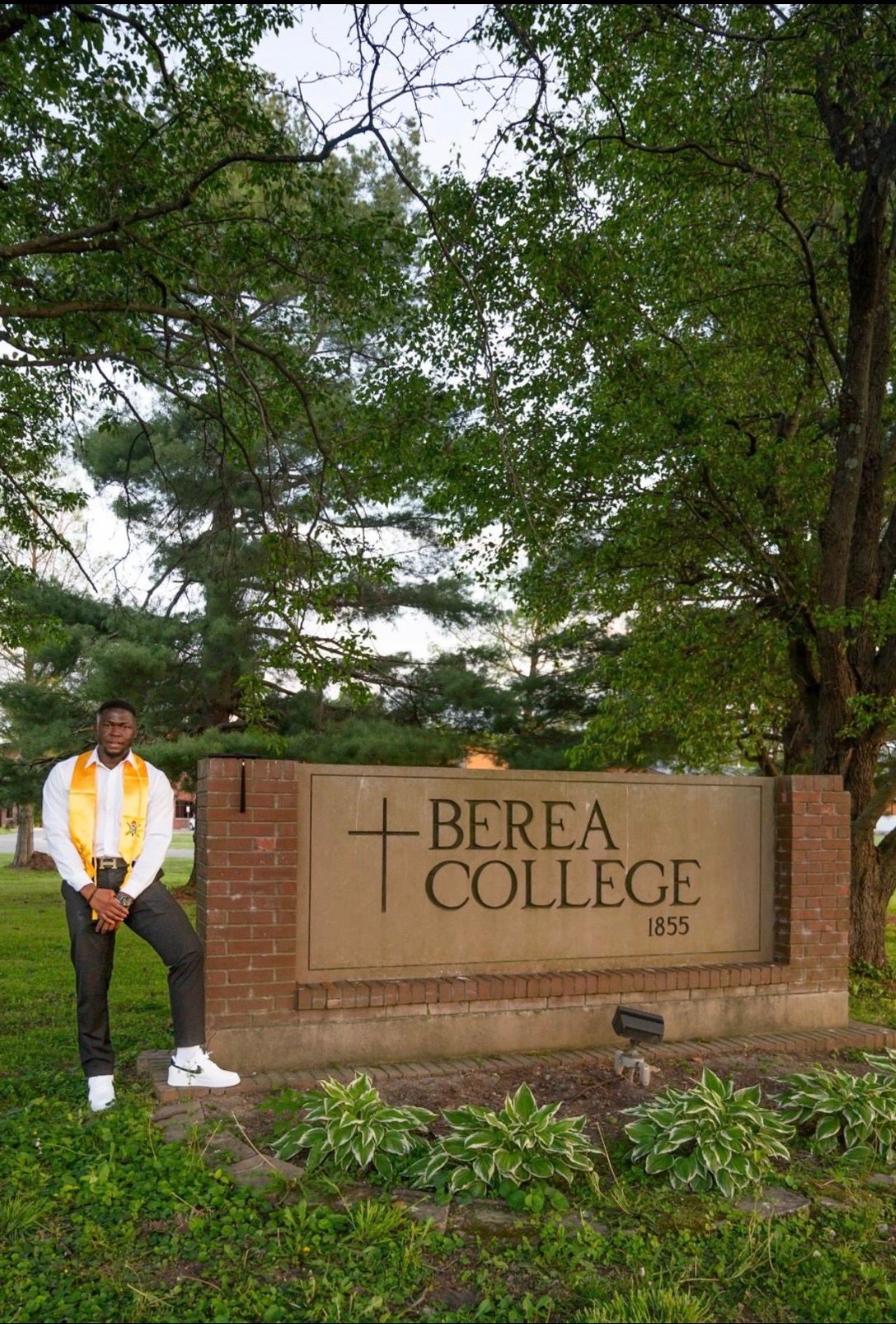 Ebenezer Ayisi, founder and CEO of GoScholar.AI
Ayisi attributes this distribution pattern partly to early word-of-mouth velocity within Ghanaian networks but also to a deeper structural anxiety gripping Nigerian graduates: shifting geopolitical visa policies.
“One thing we need to address directly is the reason why Nigerian users are slow is because of the US visa restriction on Nigerian students,” Ayisi explains. “That has put a real fear into students who want to apply to US schools. But currently, we are actively helping most of our Nigerian students to understand that the ban is temporary. The smart move right now is to apply to the schools, go through the process, and get a full scholarship. If the ban is still there, they can defer their enrolment and wait for the restriction to be lifted.”
As GoScholar transitions from an engineer’s weekend passion project into a structured, full-time operation, Ayisi is facing the unique corporate hurdles common to immigrant founders in the US tech ecosystem. Balancing a demanding corporate engineering job with a viral startup requires immense discipline. Additionally, operating on an H-1B visa places legal constraints on formal executive transitions, forcing Ayisi to map out a transition strategy involving specialised legal advisory teams and an O-1 visa pathway for extraordinary ability.
Looking at a five-year horizon, Ayisi does not view GoScholar merely as a tool for US admissions. The long-term blueprint includes direct university partnerships, expanding the database to map out fully funded educational pathways across the United Kingdom, Canada, Europe, and Australia, before ultimately building a corporate talent pipeline.
“We want GoScholar to be known by any African student who wants to study abroad,” Ayisi states. “In five years, we want to build a robust GoScholar alumni network. We don’t just want to help students study abroad; we want to assist them in transitioning directly into the corporate world through internships and full-time global job placements. Africa has the youngest population on the planet. Our ultimate goal is to build, nurture, and scale the next generation of global talent.”


추천 콘텐츠

200+ Firms Urge Senate to Enact CLARITY Act for Crypto Regulation

Gold continues to hit new highs. How to invest in gold in the crypto market?

Why The Green Bay Packers Must Take The Cleveland Browns Seriously — As Hard As That Might Be



