

👨🏿🚀TechCabal Daily – MTN wants to be your One TV
Wazzup. 
Everybody is catching the IPO flu in the United States, and even Bending Spoons has come down with it. Yes, the company I once joked nobody really understands after it acquired Eventbrite is now going public.
It’s a curious business to take seriously. Over the years, it has acquired more than 50 startups, including Vimeo, Evernote, WeTransfer, and AOL, building a portfolio of Internet-era brands under one roof. So when it eventually lists, the question practically writes itself: what exactly are investors buying?
A software company, a holding company, or something closer to a permanent second life for struggling Internet products that refuse to die?
Interesting times!
—Emmanuel
In another edition publishing today at 12 PM WAT, we’re running an exclusive interview with Kim Tran, chief executive officer of Trenderz, the Abidjan-based startup tackling Africa’s broken creator economy payments and building new rails for how creators get paid across Francophone Africa.
- United Capital secures Ethiopian licence
- MTN revives streaming ambition
- Stanbic Bank mulls Ethiopia entry
- Kenyan SMEs face June 30 deadline for invoice filing
- World Wide Web 3
- Opportunities
Banking
United Capital becomes the first foreign investment bank licenced in Ethiopia
 Image Source: Giphy
For half a century, Ethiopia’s banking sector was the party everybody wanted an invitation to, but nobody could get past the gate.
A little back story: Following a 1974 Marxist revolution, the state nationalised the financial system and banned foreign banks. In December 2024, the Ethiopian Parliament approved the Banking Business Proclamation, which created clear pathways for foreign banks to enter the Ethiopian market.
A new dawn: United Capital, the Nigerian investment banking and financial services group, has received Ethiopia’s first foreign investment banking licence, allowing it to establish operations in Addis Ababa through a local subsidiary. It didn’t come cheap, as the company noted that it committed more than $1.5 million in capital to support its Ethiopian operations.
What does this unlock? Investment banks help companies raise money, structure deals, advise on mergers and acquisitions, issue securities, and connect businesses to investors. As Ethiopia builds a functioning capital market, it needs institutions that know how those systems work. The licence itself will not transform Ethiopia overnight, but it sure is a signal for other foreign institutions that entering Ethiopia is now possible.
Why this is big news: Ethiopia has spent the last few years slowly building the foundations of a modern capital market. In January 2025, the country officially launched the Ethiopian Securities Exchange (ESX). Since then, regulators have been trying to attract the institutions, expertise, and capital needed to make that market work. Attracting an investment bank with ₦2.03 trillion ($1.5 billion) in assets under management could be a strong beacon for sending a signal to other foreign operators to stop dancing around the ring and enter the stage.
We Have Secured the Bank of Ghana EPSP Licence.
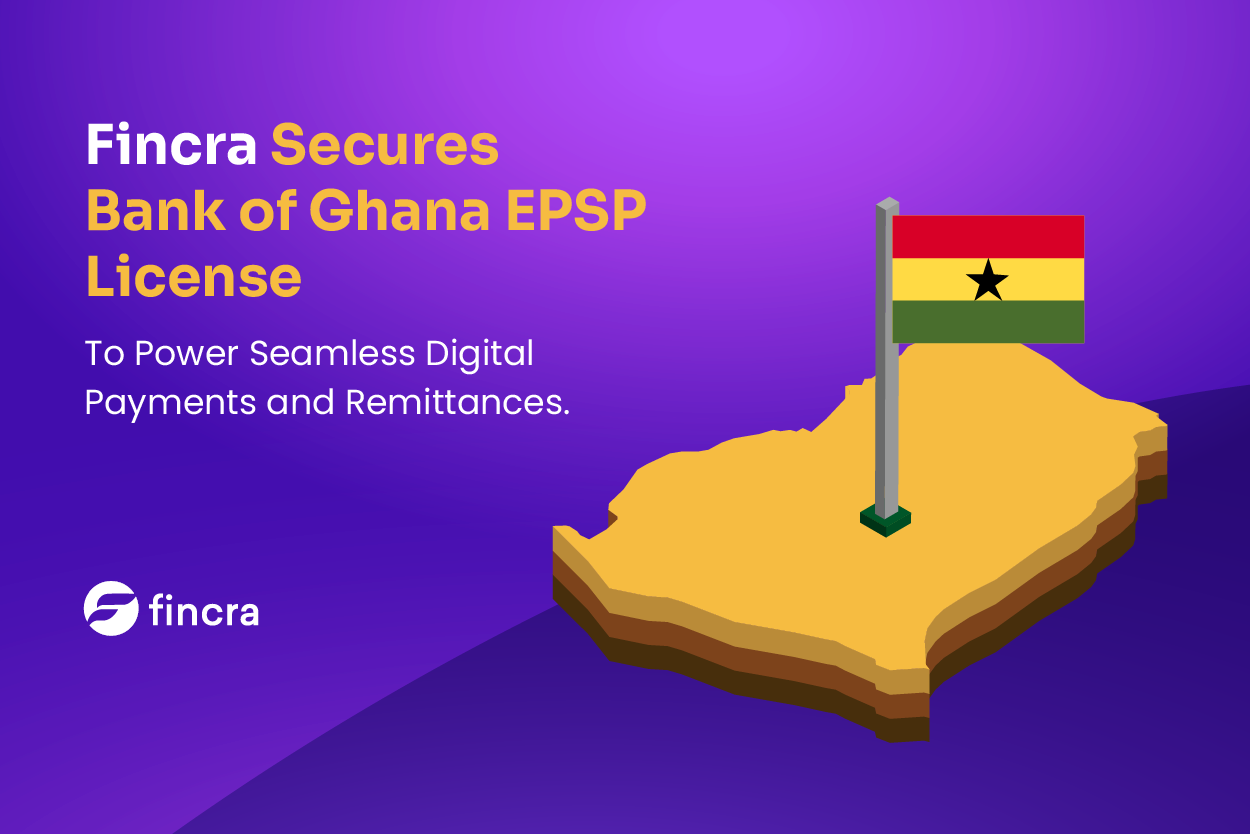
Fincra has officially secured its Enhanced Payment Service Provider licence. This regulatory milestone authorizes Fincra to directly collect, process, and settle payments in Ghanaian Cedis, offering a highly streamlined financial pipeline for businesses operating within the region. Start here.
Streaming
MTN has launched a streaming platform
 Image Source: Giphy
When it doesn’t work the first time, you try again. Nearly a decade after FrontRow, its South Africa-focused streaming platform, shut down in 2017, MTN is making another play for video entertainment. This time, it wants to go pan-African.
Not long ago, MTN was simply a telecoms operator. Then it expanded into mobile money and fintech, data centres, and fibre infrastructure. Now it has added streaming to the list. At this rate, MTN is collecting industries like infinity stones.
On Monday, MTN Group, Africa’s largest mobile network operator, announced the launch of MTN One TV, a new video-streaming platform that will offer a mix of local content, live channels, international programming, and market-specific entertainment options across its 17 African markets.
How it will work: Depending on the country, users may be able to watch content for free, pay per view, subscribe, or access ad-supported content. Payments can also be made through airtime, mobile money, and other local payment methods. The company also plans to build the platform through content partnerships and local market collaborations, although it has not yet disclosed the studios, broadcasters, or major content providers that will populate the service.
MTN got the timing: The launch comes at an interesting moment for African streaming. In April, MultiChoice shut down Showmax, its streaming arm, and began offering former subscribers discounted access to DStv Stream packages in markets like Kenya. MTN has also just entered a space already occupied by Netflix, Prime Video, YouTube, and other local platforms. What’s interesting is that MTN is not the first telecom company to launch a streaming platform. In February, Ethio Telecom, the state-owned telecoms provider in Ethiopia, launched teleStream, its own fibre streaming platform.
But MTN enters the market serving over 300 million subscribers. If One TV succeeds, MTN gets another way to keep customers in its ecosystem of connectivity, payments, infrastructure, and now entertainment.
Naira Life 2026 is here!

The theme for this year’s Naira Life Conference by Zikoko is “All About Wealth.”
Join 2,000+ in Lagos on August 22 for a day of practical money conversations and workshops designed to move you from simply earning an income to building lasting wealth. Get 15% off early bird tickets.
Banking
Stanbic Bank weighs Ethiopia entry without an acquisition
 How Stanbic Bank is eyeing the Ethiopian market. Image Source: Zikoko Memes
In more Ethiopian news, Stanbic Bank, the subsidiary backed by parent Standard Bank Group with $219 billion in assets, has said it is considering launching greenfield operations in Ethiopia, more than a year after the country opened its banking sector to foreign operators.
On Monday, Joshua Oigara, the bank’s regional chief executive officer, told local publication Business Daily that Stanbic is exploring setting up a wholly owned operation rather than acquiring a local bank. The strategy would allow it to bypass Ethiopia’s rule requiring local investors to retain a 51% stake when foreign lenders enter through acquisitions.
For Stanbic, ownership appears to be the sticking point. Several regional rivals have already expressed interest in Ethiopia, but the market’s ownership rules have complicated their plans. KCB Group, Kenya’s largest bank, and FirstBank, a tier-1 Nigerian lender, have previously signalled interest in entering through acquisitions, while Equity Group, Kenya’s second-largest bank, has been discussing the conditions for entry.
The interest is hardly surprising. Ethiopia has 32 banks serving a population of more than 130 million people. The sector is anchored by the state-owned Commercial Bank of Ethiopia (CBE) and Awash Bank, the country’s largest private lender, which listed on the Ethiopian Securities Exchange (ESX) in April. Since launching in 2025, the ESX has attracted listings from three banks and Ethio Telecom, the country’s state-owned telco, highlighting the outsized role financial institutions play in the country’s capital markets.
More importantly, foreign lenders are looking beyond the current market structure and betting on future growth. In the year ended June 2025, CBE held ETB 167 trillion ($10.5 billion) in customer deposits, according to its latest financial report. By comparison, KCB held KES 1.14 trillion ($8.8 billion) in Kenyan customer deposits in its 2025 financial year.
Zoom out: Despite Kenya’s more mature banking sector and deeper regional footprint, Ethiopia’s largest bank already holds a larger deposit base. For banks eyeing the market, that is a reminder that Ethiopia’s appeal lies not just in its size today, but in how much larger it could become as competition gradually opens up.
Register to attend Digital Pay Expo 2026

What happens when regulators, fintech leaders, investors, financial institutions, payment providers, and technology innovators come together in one room?
Digital PayExpo 2026.
Date: June 17–18, 2026
Location: Landmark Centre, Lagos
Register now.
Regulation
Kenya’s taxman sets a June 30 deadline for Kenyan businesses to file 2025 income tax returns
 Image Source: Tenor
Kenya’s taxman wants more businesses to pay their taxes, but getting them to show up has been a different story entirely.
After multiple missed deadlines and softened stances, the Kenya Revenue Authority (KRA) has set a June 30 deadline for all eligible businesses to file their 2025 income tax returns, while granting temporary relief on its electronic Tax Invoice Management System (eTIMS) requirements. For now, businesses can declare expenses without eTIMS-backed invoices, which the KRA will validate after submission. From 2026, that flexibility disappears entirely.
Catch up: The KRA launched its electronic invoicing mandate in 2021, expanded it to every business in Kenya by 2023, and made the rule simple: no valid eTIMS invoice, no tax deduction. As a business, if an expense is not backed by a valid eTIMS invoice, it cannot be deducted from your taxable income, meaning you pay tax on money you may have genuinely spent.
By 2025, the KRA had onboarded over 500,000 taxpayers onto eTIMS. Only half of them were actively using it. For a mandate that had been running for three years, that is a damning number.
Between the lines: The KRA has now blinked for a third time. Rather than penalising businesses that filed without eTIMS invoices, it is allowing 2025 returns to go through with unverified expenses, which the KRA will sort out later. From 2026, that flexibility disappears entirely. The penalty for ignoring the system is up to KES 1 million ($7,700) or 10% of the tax involved, but that only hurts if KRA actually enforces it, which so far it has struggled to do consistently.
Part of the adoption problem is structural: Many small Kenyan businesses lack reliable Internet or compatible devices, making compliance genuinely difficult rather than simply unwilling. In April, KRA launched Shuru, a WhatsApp-based filing platform, to ease the process, which is either a sign of genuine innovation or an admission that the original system was too complicated, depending on how you look at it.
Zoom out: The KRA is targeting KES 3 trillion ($23 billion) in revenue this year, and eTIMS is its primary tool for pulling more businesses into the tax net beyond the large, compliant taxpayers. June 30 is the first real test of whether three years of announce-and-retreat have finally produced a system that works, or whether the concessions will keep coming.
Showcase Your Brand at Moonshot by TechCabal

Founders. Investors. Policymakers. Enterprise leaders. Moonshot 2026 brings together the people shaping Africa’s technology ecosystem across AI, commerce, climate, enterprise, and culture. Spotlight your brand today.
CRYPTO TRACKER
The World Wide Web3
Source:

|
Coin Name |
Current Value |
Day |
Month |
|---|---|---|---|
| Bitcoin | $63,040 |
– 0.19% |
– 21.52% |
| Ether | $1,685 |
+ 0.03% |
– 27.51% |
| Humanity | $0.08210 |
– 87.35% |
– 58.61% |
| Solana | $66.65 |
+ 0.70% |
– 28.50% |
* Data as of 01.00 AM WAT, June 9, 2026.
Opportunities
- The Stellar Development Foundation has launched its first accelerator programme targeting Europe, the Middle East, and Africa, partnering with blockchain venture firm CV Labs to back ten early-stage startups building payments infrastructure, tokenised assets, and decentralised finance applications. The 12-week programme, beginning August 2026, will run primarily remotely but includes an on-site component in Cape Town and concludes with a demo day at Stellar’s Meridian conference in Lisbon in October. Each selected startup can receive up to $150,000 in XLM, Stellar’s native token, in initial funding. Apply by July.
- The Future Investment Initiative Institute (FII), in partnership with MIT Solve, has launched the 2026 FII Innovators Pitch, inviting startups building with AI and frontier technologies to apply. The programme targets solutions across sustainability, healthcare, AI & robotics, and education. Selected startups will pitch live at the 10th Future Investment Initiative in Riyadh, Saudi Arabia, this October (all expenses covered) and join the FII Ventures Programme, gaining access to investors, policymakers, and global partners to support their growth. Apply here.
- The CBN has a big plan for payments by 2028. 13 things worth knowing.
- Follow the Money: Nigerian banks found growth in Kenya. Now they need profits.
- Kenya moves to implement KES 207 billion health deal with the US
- European DFIs lead Africa’s private capital funds
Written by: Yemi Kareem and Zia Yusuf
Edited by: Emmanuel Nwosu and Ganiu Oloruntade
Want more of TechCabal?
Sign up for our insightful newsletters on the business and economy of tech in Africa.
- The Next Wave: futuristic analysis of the business of tech in Africa.
- Francophone Weekly by TechCabal: insider insights and analysis of Francophone’s tech ecosystem
P:S If you’re often missing TC Daily in your inbox, check your Promotions folder and move any edition of TC Daily from “Promotions” to your “Main” or “Primary” folder and TC Daily will always come to you.



추천 콘텐츠
cirBTC Goes Live as Circle Eyes WBTC’s 85% Share

Zcash Ironwood Upgrade Locks In Consensus Rules, Eyes Late July Activation

Gov’t bolsters social protection


인기 뉴스
더보기
