

JPMorgan sends another message on strait of Hormuz, oil prices
Three months into the Iran war, one of the most discussed mysteries in global finance is why oil prices have not done what everyone said they would. The Strait of Hormuz has been effectively paralyzed since late February, with visible tanker traffic sitting at roughly 15% of pre-war levels, according to CNN.
On paper, that is the nightmare scenario that oil market analysts have spent decades warning about. In practice, prices have stayed below their worst-case projections. JPMorgan has a specific explanation for that disconnect, and a warning about what happens next.
Why oil prices have stayed surprisingly calm despite the near-blockade
The answer to the stability puzzle is not that the crisis is less severe than it looks. It is that supply is escaping through routes that do not appear in the visible data. Experts estimate approximately 2 million barrels of oil per day are moving through clandestine flows and alternate corridors, according to the New York Post.
Those hidden flows, combined with inventory drawdowns and Saudi Arabia's East-West pipeline running at capacity, have bought the market time.
More Oil and Gas:
- Early Chevron stock investors now earn 12.1% dividend yield
- Chevron, Shell ink more surprising Venezuela deals
- AAA gas prices reveal a new trend for Americans
The critical word is time. The Brookings Institution published a detailed supply analysis in late May, warning that the shortfall will build as those temporary buffers are depleted.
Brookings projected Brent crude could reach $120 per barrel if the strait does not reopen by the end of June, according to the Brookings Institution. That is not a tail-risk scenario. That is the base-case arithmetic if the current situation holds for three more weeks.
What JPMorgan's specific numbers say about the Hormuz risk
JPMorgan has been among the most specific institutions in mapping what a sustained disruption means for prices. In April, analyst Parsley Ong warned that flows resuming only by July would introduce $15 to $20 per barrel of upside risk, according to Bloomberg.
That was in April, when the assumption was that flows would partially recover by May. They have not.
The bank's updated view is more severe. JPMorgan commodity analysts have warned that Brent could spike to $120 to $130 per barrel near term, with prices potentially overshooting toward $150 if disruptions persist.
"A de facto blockade lasting another full month would be consistent with Brent crude climbing toward $150," said Bruce Kasman, JPMorgan's global head of economics, adding that such a scenario would force constraints on industrial energy users.
The bank separately projected that OECD inventories could hit operational stress levels as early as early June if the strait stays closed, reaching an operational minimum floor by September.
The baseline assumption in JPMorgan's modeling is that the disruption ultimately resolves through negotiations after a period of supply strain and inventory drawdowns. The risk scenario is that it does not resolve quickly enough, and the hidden flows and inventory buffers that have kept prices in check run out before the strait reopens.
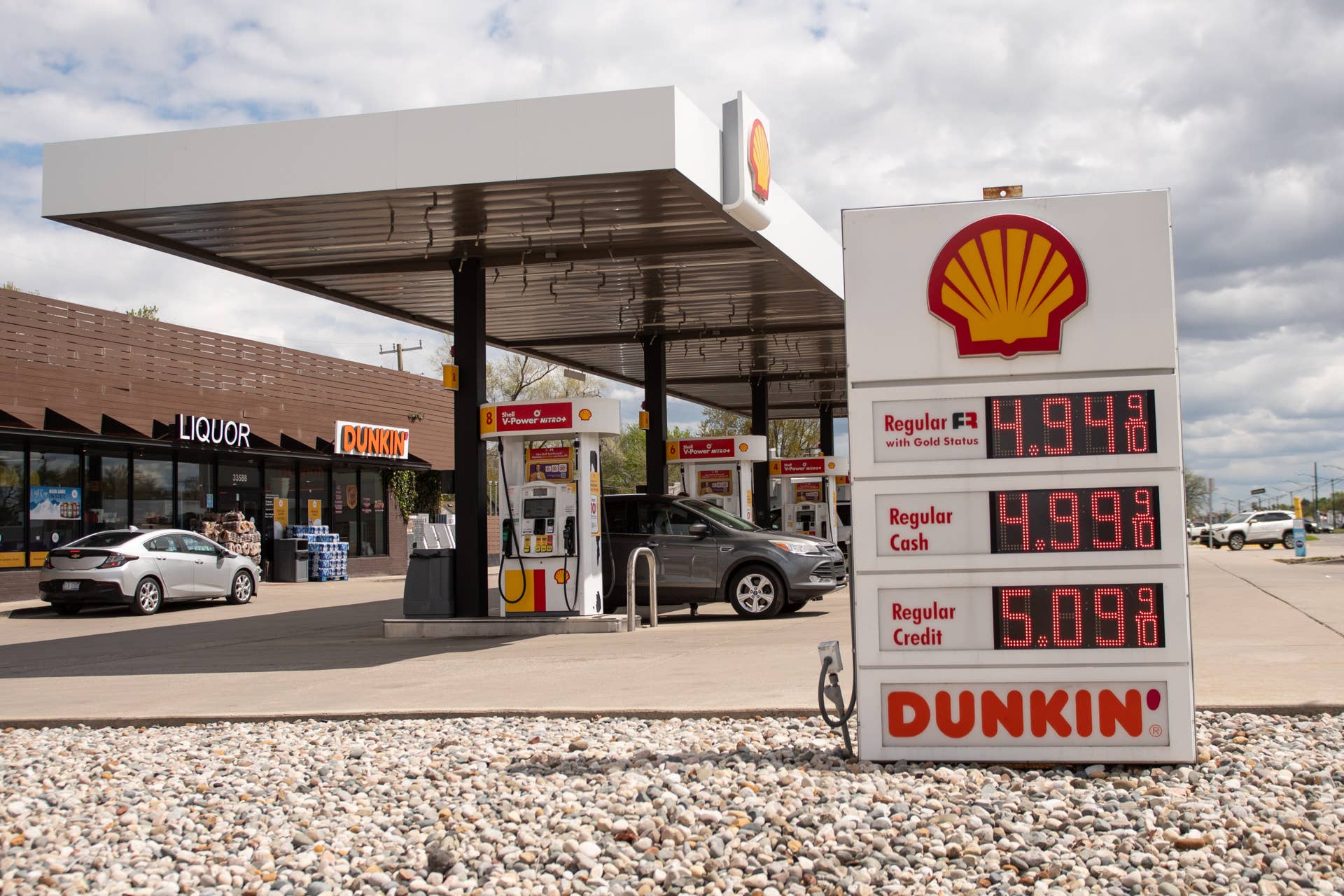 Three months into the Iran war, one of the most discussed mysteries in global finance is why oil prices have not done what everyone said they would
J&periodDewey&solGetty Images
What a $120 to $150 oil scenario means for the US economy and the Fed
The reason this matters beyond energy markets is the impact on inflation.
US CPI rose 4.2% year-over-year in May, the highest reading since April 2023, driven in part by energy price increases accumulating since the war began. A second leg higher in crude would flow directly into gasoline, transportation, and manufacturing costs within weeks.
Goldman Sachs removed its 2026 Federal Reserve rate cut calls entirely in June, now forecasting the first cut in June 2027 at the earliest.
Fed Governor Lisa Cook said in early June that she is prepared to hike rates if inflation data warrants it.
An oil shock pushing Brent toward $130 or $150 would land directly into that debate and strengthen the case for the rate hike that markets have been reluctant to fully price in.
The connection is direct. Higher crude pushes gasoline higher, higher gasoline pushes headline CPI higher, and higher CPI makes it harder for the Fed to stand pat, let alone cut.
Every week the strait remains at 15% of normal capacity is a week that risk accumulates in the inflation outlook. That accumulation is not linear , it accelerates as inventories fall.
What investors should watch and why JPMorgan says the risk is underpriced
JPMorgan's core argument is not that catastrophe is inevitable. It is that markets are pricing a benign resolution with more confidence than the underlying supply data justifies.
Visible tanker traffic at 15% of pre-war normal is not a situation that typically produces calm oil markets. The relative price stability is a function of hidden flows and inventory draws that cannot continue indefinitely.
The data points investors should be tracking are specific: whether Saudi Arabia's East-West pipeline can continue absorbing rerouted flows, whether the 2 million barrels per day of clandestine traffic holds, and whether OECD inventory levels hit the operational stress threshold JPMorgan flagged for early June.
Whether diplomatic progress materializes before the September operational minimum arrives is the variable that determines which scenario plays out.
The short answer from JPMorgan is that the market has bought itself time but not solved the problem. If the strait does not substantially reopen in the next several weeks, the gap between current prices and what the supply math implies will close, and it will close quickly.
Related: Exxon CEO delivers blunt message on oil prices and the economy


추천 콘텐츠

Bitcoin treasury sell-off accelerates as Riot, Bhutan, and public companies exit positions

Robotics Automation Prototyping: Engineering Kinetic Agility into End-Effectors

Craving work-life balance is a huge red flag, says Fortune 500 Europe CEO—and like Barack Obama, he happily works through weekends


인기 뉴스
더보기
