

JPMorgan has stark message for oil, stock investors
For three months, the story coming out of JPMorgan has been about how little room oil markets have left. The bank has tracked inventory drawdowns, flagged the risk of prices spiking toward $150, and warned that the world has been running on stockpiles rather than fresh supply.
On June 15, one of the bank's own strategists described a scenario that runs in the opposite direction entirely, just hours before that scenario started playing out in real time.
Oil could fall to $70 a barrel within weeks, according to Karen Ward, JPMorgan Asset Management's chief market strategist for Europe, the Middle East, and Africa, who pointed to an emerging U.S.-Iran agreement that would unfreeze Iranian assets and add supply back into global markets.
The deal that sparked hopes of an oil price decline
Ward's comments landed just before the agreement she described became official. President Donald Trump and Iranian officials confirmed a deal on June 14 to end the war and reopen the Strait of Hormuz, with both sides set to formally sign the agreement on June 19 in Switzerland, CBS News reported.
The market reaction was immediate. Brent crude fell $4.22, or 4.8%, to $83.11 a barrel, while West Texas Intermediate dropped $4.41, or 5.2%, to $80.47, CBS News noted. The S&P 500 jumped 1.5% to a new high near 7,543, the Dow gained more than 600 points to a record above 51,700, and the Nasdaq surged 2.2%, according to CNBC.
Why an oil price drop would be the catalyst, not the casualty
Ward's argument inverts how falling oil prices are usually read. For most of 2026, declining crude has signaled weakening demand or a slowing economy, a negative for stocks. Ward's case was that a decline driven by supply and diplomacy would mean something different entirely, and the trading session on Monday, June 15, backed that up directly.
The terms of the deal go beyond a simple ceasefire. A draft memorandum reportedly includes releasing roughly $24 billion of Iran's frozen assets over a 60-day negotiation period, with half available immediately, and suspending sanctions on Iran's oil and petrochemical exports, CBC News said.
Vice President JD Vance told CNBC the strait is expected to reopen "in a toll-free way for the long term."
More Oil:
- Oil executives send a blunt message to Americans on gas prices
- Goldman Sachs quietly resets oil price forecast for 2027
If that supply materializes as expected, Ward believes it could reignite a market rally that was "abruptly derailed" by the outbreak of the Iran conflict in February.
The rally she described is the broadening of gains beyond mega-cap technology stocks into sectors and regions that have lagged for most of the year, and beaten-down technology companies led the June 15 gains, CNBC noted, exactly as Ward had described.
The inflation mechanism behind JPMorgan's stock call
The link between oil prices and equities runs through inflation and interest rates. Energy costs feed directly into transportation, manufacturing, and consumer prices, and JPMorgan's own research has tied elevated oil prices to higher inflation readings and a Federal Reserve that stays on hold longer as a result.
A move toward $70 would work in reverse. Lower energy costs could allow inflation to cool more quickly than current forecasts assume, giving central banks more room to cut rates. Treasury yields already fell on June 15 as bets on Fed rate hikes receded, Bloomberg reported.
The scale of that potential reversal matters. As recently as May, JPMorgan was warning that U.S. gas prices had risen more than 40% since the start of the U.S.-Iran conflict, with headline inflation climbing toward 4% before easing, a path that kept the Fed on hold well into 2027 across all three of the bank's own scenarios.
A drop toward $70 would not just slow that inflation path. It would potentially reverse the input that was driving it in the first place.
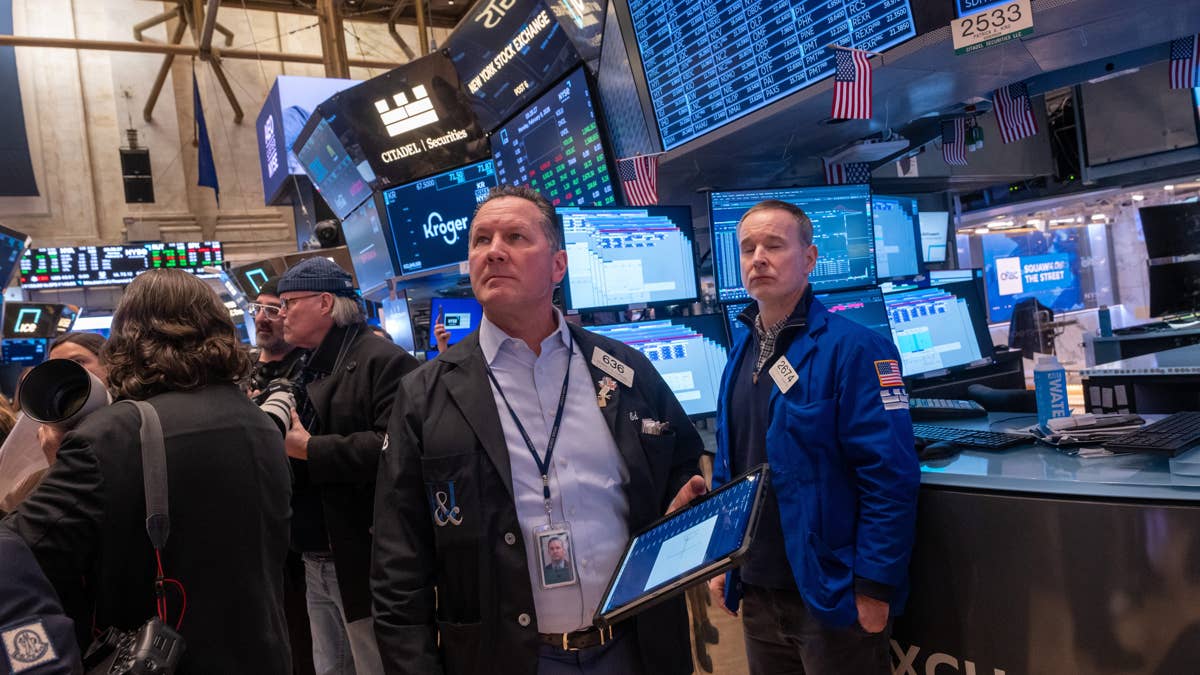 Ward's argument inverts how falling oil prices are usually read.
Platt&solGetty Images
Why Europe could benefit most falling oil prices
The most specific part of Ward's call is geographic. She argues that Europe stands to benefit disproportionately from falling oil prices because the region remains a significant net energy importer, unlike the United States.
That thesis also found early support on June 15, when Europe's Stoxx 600 index hit a fresh record high, rising nearly 1%, according to NBC News.
European equities have lagged their American counterparts for most of 2026, and investor sentiment toward the region has remained cautious. Ward's view is that this pessimism leaves room for a larger reaction if oil prices fall and energy costs ease for European consumers and businesses, since expectations are already set low.
That asymmetry is the core of the European case. Markets tend to move more on the gap between expectations and reality than on the reality itself.
If European growth forecasts have already priced in elevated energy costs as a persistent drag, then even a partial decline toward $70 could outperform what investors are currently bracing for, generating a larger relative reaction in European equities than the same oil move would produce in the U.S.
What this means for the energy trade that has dominated 2026:
- The shift Ward describes already showed up in sector performance on Monday, June 15. Energy stocks tumbled as crude prices fell, while Europe's carmakers, airlines, and defense companies all advanced, with the region's oil majors retreating as the only notable decliners, CNBC reported.
- Not everyone is convinced the oil decline will be sustained. Société Générale strategist Kit Juckes told NBC News that a full return to normal flows through Hormuz is likely months away, even with the deal in place, comparing the situation to a broken egg that cannot simply be put back together.
- The agreement does not resolve everything at once. The two sides are set to formally sign only an interim deal on June 19, and a lack of detail about its final terms is keeping shipowners and tanker operators wary, Yahoo Finance noted.
- The inventory dynamics that JPMorgan has been flagging for months, including record gasoline drawdowns and historic SPR withdrawals, would not disappear overnight even with a toll-free Hormuz, meaning the transition from "tank bottom" to $70 oil would not be instantaneous.
What would still need to go right for oil to hit $70 a barrel
Ward's $70 scenario depends on a chain of events that has started but not finished. The agreement shared on June 14 is a memorandum of understanding rather than a final settlement, with a 60-day negotiation period still ahead covering the release of the remaining frozen assets and Iran's nuclear program.
For investors, the practical takeaway is less about whether oil hits exactly $70 and more about the direction from which the next move comes. After months of warnings about supply running out, one of JPMorgan's own strategists described a scenario where the bigger risk to current positioning was prices falling, not rising, hours before markets began pricing in exactly that.
The whiplash quality of the past few months is itself part of the story. Oil markets moved from warnings of $150 crude and historic inventory drawdowns to a strategist at the same bank describing $70 as plausible within weeks. It happened all inside a single quarter, and the first leg of that move unfolded within hours of her comments.
That volatility reflects how much of the oil price had been geopolitical risk premium rather than a reflection of underlying supply and demand, and how quickly that premium can unwind once the diplomatic picture shifts.
Investors positioned for one direction found the other scenario arriving faster than almost anyone expected.
Related: Oil executives send a blunt message to Americans on gas prices


추천 콘텐츠
DCodex Officially Launches DPay, a Visa-Powered USDT Payment Card Bridging Crypto Assets and Real-World Spending

Western Digital Jumps 7% on Morgan Stanley’s 33% Price-Target Hike, Seagate Gains 5% as the AI Storage Boom Rolls On
'Why even bother?' Trump stuns after casually folding on 'his main justification' for war


인기 뉴스
더보기
