

Chevron CFO reveals why gas prices are stuck
Gasoline prices were expected to be the easy part of the oil market cooldown.
With crude prices falling from April highs and moving closer to pre-war levels, consumers expected faster relief at the pump. Instead, gasoline prices have stayed sticky, turning a market move into a political fight.
President Trump accused major oil companies of gouging consumers by failing to lower prices quickly enough.
Chevron (CVX) CFO Eimear Bonner offered a different explanation in a CNBC interview, saying prices should come down as Middle East oil flows normalize.
However, she also made it clear that there isn’t a quick fix.
Chevron is looking to expand production this year, but pump prices depend on more than today’s crude quote.
For perspective, according to Reuters on June 26, Brent crude traded at $71.99 a barrel, while U.S. WTI crude was at $69.23, after oil fell over 3% as Hormuz traffic improved and supply-disruption fears eased.
However, that relief might already be under threat again.
According to Reuters on June 27, fresh U.S.-Iran strikes and renewed tanker attacks near the Strait of Hormuz tested the fragile ceasefire, stoking oil-price pressures again.
Consequently, consumers face a frustrating gap between falling oil prices and sluggish relief at the pump.
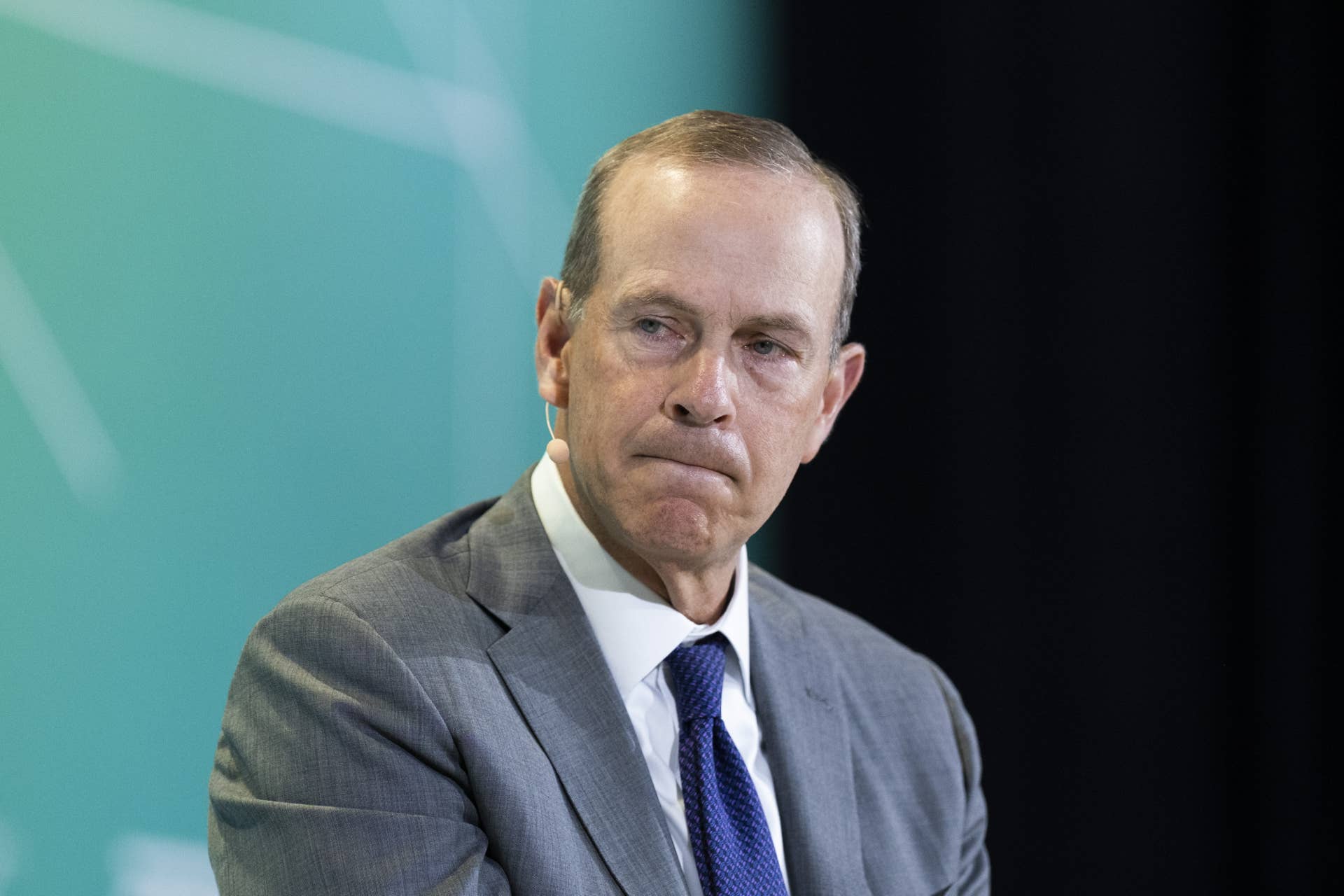 Chevron CFO Eimear Bonner says pump-price relief will take more time
F&period Carter Smith&solBloomberg via Getty Images
What Chevron says is keeping gas prices high
Chevron CFO Eimear Bonner said consumers should see gasoline prices decline if Middle East oil exports continue to normalize, but she warned the move will not be immediate.
More Oil and Gas:
- Goldman Sachs quietly resets oil price forecast for 2027
- JPMorgan sends another message on strait of Hormuz, oil prices
- Exxon CEO delivers blunt message on oil prices and the economy
Her argument is that lower crude prices don’t exactly flow straight to the pump in real time.
Bonner told CNBC that energy companies are “doing everything we can” to ease the pressure, including Chevron’s plan to increase production by 7% to 10% this year.
However, she pushed back on the idea that oil majors can instantly force pump prices lower after crude prices decline.
“We’re all concerned about prices, so there is a lot of empathy,” Bonner said. “It’s going to take time, though.”
Her core argument is that gasoline prices tend to lag crude prices, especially after a major disruption, so consumers might have to wait longer for relief.
Why gas prices lag crude oil in the U.S.
Pump prices typically lag crude oil, as gasoline prices aren’t priced off today’s oil market alone.
According to the American Petroleum Institute, gasoline prices don’t exactly move in lockstep with crude, especially after a major disruption affecting supply, refining, and inventories.
Crude is only one input. Refiners still have to process it, distributors have to move it, and local stations price fuel based on replacement costs, inventory levels, and regional demand.
History shows us that the crude-to-gasoline lag isn’t an unusual occurrence.
According to the Minneapolis Fed, gasoline prices jumped 46 cents in one week after Hurricane Katrina in 2005, as refinery and pipeline damage hit supply (it mattered more than crude).
Moreover, in 2008, according to the Congressional Research Service, crude fell 22% from July through September, while gasoline dropped only about 9%.
The key numbers behind oil’s war-driven surge
- According to Trading Economics, Brent crude traded at $71.99 on June 26, still 7.77% higher than a year earlier despite the late-June pullback.
- According to the IEA’s March 12 oil report, benchmark crude prices surged by $20 a barrel to $92 after hostilities began on Feb. 28.
- According to Reuters on June 24, Brent later fell to $73.74 and WTI to $70.34, their lowest levels since before the war started on Feb. 27.
- According to the BEA’s June 25 PCE report, May inflation rose 4.1% year over year, while core PCE climbed 3.4%.
- According to Reuters, the oil shock pushed rate-cut expectations further away. A June 26 Reuters poll showed more than three-quarters of economists expected the Fed to hold rates through 2026.
What Exxon and Chevron are signaling about gas prices
Exxon and Chevron executives have been making a similar argument since the Iran war began, saying its aftereffects are likely to continue playing a major role in oil markets.
According to Fortune, on May 1, ExxonMobil CEO Darren Woods said the market has not absorbed the full impact of the war in Iran and the disruption to the Strait of Hormuz.
“The market hasn’t seen the full impact of that yet,” Woods said, adding that “there’s more to come if the strait remains closed.”
He argued that prices had been effectively cushioned by oil already in transit, strategic reserve releases, and commercial inventory drawdowns. Once we see that buffer going away, the pain will move more directly into crude, gasoline, diesel, and jet fuel.
Chevron CEO Mike Wirth has struck a similar tone.
TheStreet’s Mwangi Enos covered the news, citing Wirth as saying that "the buffers and the shock absorbers are being steadily drawn down", warning that upward pressure could potentially flow through in June and July.
Given the conditions, Chevron stock has actually performed better over the past six months than it has over the past three years, according to Seeking Alpha, delivering a 14% return compared with an 11% three-year return.
On top of that, the stock offers a forward dividend yield of 4.2%, slightly above its five-year average, adding another sweetener for investors according to Seeking Alpha.
What sticky pump prices mean for the economy
Sticky gas prices can potentially reshape the entire economy as fuel touches almost everything consumers buy.
When gasoline stays high, households feel it first at the pump.
Naturally, that leaves a lot less room for restaurants, travel, shopping, and other discretionary spending. For lower- and middle-income consumers, the effects can be even sharper.
Businesses feel it too. Airlines, retailers, delivery companies, and manufacturers all face higher transportation and logistics costs. Some are able to absorb the pressure through weaker margins. Others pass it on, keeping prices elevated for consumers.
For markets, the risk is that sticky fuel costs will drag on consumer demand and complicate the Fed’s inflation fight.
Related: Wall Street veteran warns of epic stock market crash
추천 콘텐츠

Report: Q2 2026 Becomes Worst Quarter Ever for Crypto Hacks
Supreme Court quietly doubling its police force — and 'loathes' acknowledging it: report
SUI Price Holds Near $0.70 as Analysts Target a Recovery Toward $0.84
인기 뉴스
더보기
