From hundreds to two: The sapateros fighting to save the Pateros alfombra
While setting up his tools, he jokes about himself — “Nangangamoy lupa na ako (I smell like the earth)” — a subtle confession of how long he has been making footwear, even as his hands fall into the familiar routine of the craft.
Francisco Casiñas, known among locals of Pateros as “Kuya Jack,” begins his morning the way his body has been falling into routine for years: opening his eyes at roughly 6 am, tucking his folding bed behind his work chair, and starting the day with a cup of coffee and a morning prayer.
“Pasalamat sa Diyos, ‘yan talaga pagkagising, bago matulog. Ganoon naman talaga e. Salamat sa kalakasan,” Kuya Jack said. (I give thanks to God, that is really the first thing I do upon waking up and before going to sleep. That is just how it is. Being thankful for the strength given.)
The 64-year-old has been in the shoe industry for four decades.
His siblings introduced him to the craft in Marikina, back when it thrived as the city’s local legacy, and for the past 20 years, AlphaFootprint — a 41-year-old family business along E. Ragas St. — has been a home for Kuya Jack.
In this small, brick corner shop, the boundary between where he rests and works is nearly unrecognizable. His workspace is a table marked by years of deep cuts and the weight of his tools.
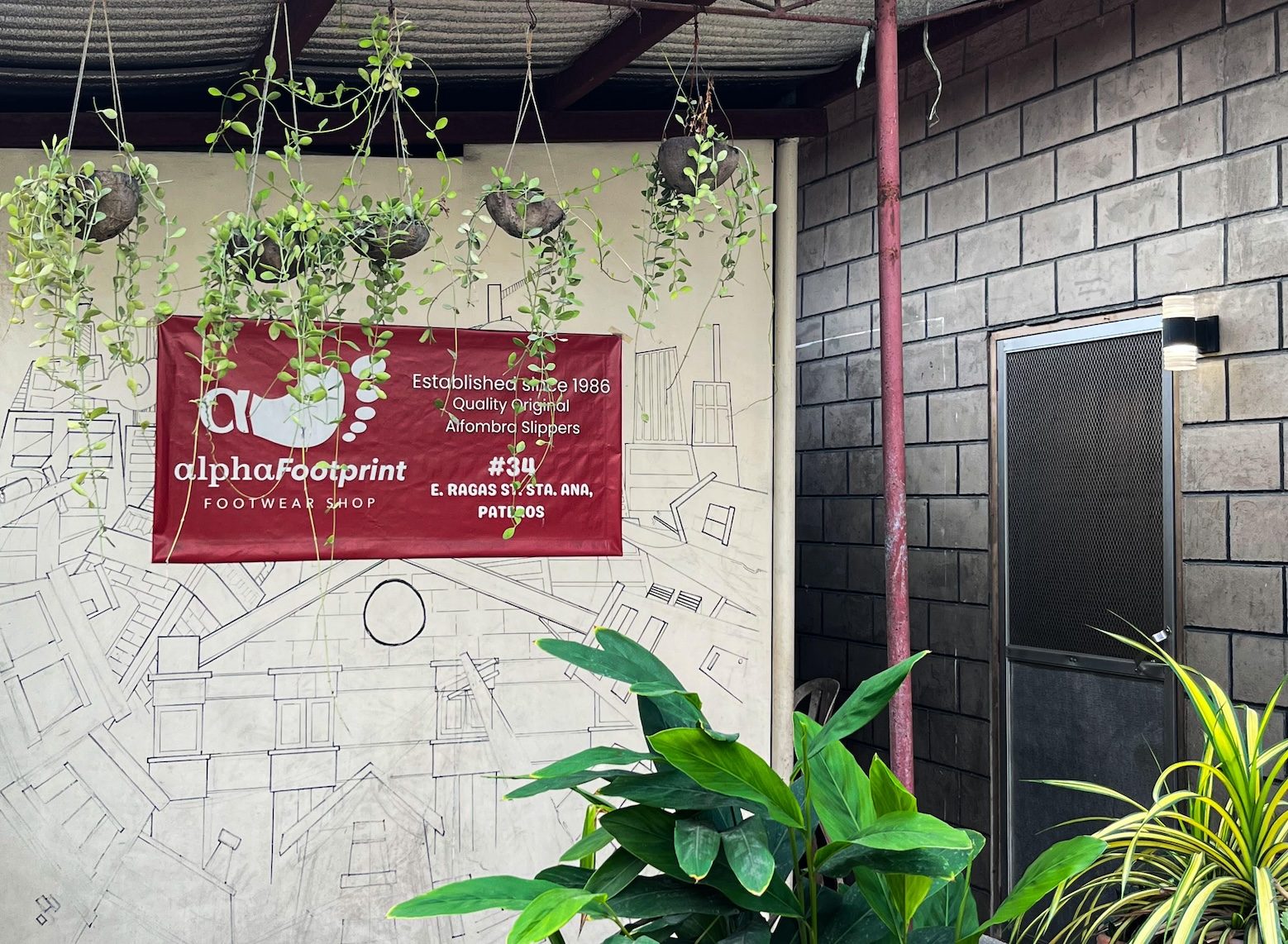 STILL STANDING. AlphaFootprint, a corner house along E. Ragas St. Photo by Ron Carlo Almestas
The workshop was once a full house of scattered tools, long tables, and sapateros (shoemakers) bustling through the space.
Men with hands roughened by labor shaped the alfombra’s soles, while women sewed the entrada — the arch of the slippers — adorned with braided patterns or colorful beads.
Now a senior, Kuya Jack once felt disillusioned about continuing, noting how it was hard to persist in a craft the town of Pateros itself seemed to be outgrowing. It made him wonder if he was stitching a legacy that no one was left to wear.
Currently, there is no one left at the shop for him to mentor, as he notes that there would be no point in teaching it to someone who is not interested to begin with.
“Wala nang may hilig. At saka mahirap magturo; hindi magpo-focus sa’yo. Kung talagang gustong matuto, po-focus sa’yo,” Kuya Jack said. (No one is interested. Plus, it’s hard to teach; they won’t focus on you. If they really want to learn, they’ll focus on you.)
At present, the rows of sapateros in town have disappeared, replaced by old furniture shoved to the side; the sewing machines once used by seamstresses are already sold, and the customers who used to fill the shop now arrive only in small waves.
“Minsan, malakas. Minsan, talagang humihina (Sometimes, sales are strong. Sometimes, it’s weak),” Kuya Jack said, describing the sales of their alfombra in recent years.
With inconsistent cash flow for most of the year, Kuya Jack has had to tighten his belt, sometimes not even having enough money to buy meat.
Back in 2022, the shop averaged a monthly revenue of P10,000 to P30,000. Now, AlphaFootprint generates significant income only during the festivals of Santa Marta de Pateros in February and during Christmas, but sales are “weak” on regular days.
(Sa)Pateros
Home to roughly 67,319 people, Pateros is the smallest and sole municipality in Metro Manila, renowned for its classic balut and historic alfombra slippers. The alfombra-making craft is unique to the town, setting its methods apart from footwear practices elsewhere in the country.
These carpet-patterned slippers reached the height of their popularity in the ’80s and ’90s, famously recognized as the footwear of choice for grandmothers at home.
In the early days of the industry, alfombras were made as “straight last” shoes because specific shoe molds were unavailable.
Instead, artisans used family-size soda bottles to shape the slippers, according to Noel Box, a technical consultant for the Office of the Marikina Mayor.
In the book Pateros by Elmer Nocheseda, the footwear is generally called alfombra — the Spanish word for “carpet.” Ironically, the name refers only to the suelas, or the slipper’s sole, rather than the rest of the material.
Box noted that hard rubber was the primary material for the soles due to its abrasion-resistant quality. This sturdiness earned them the nickname “kaladkad slippers.”
Before World War II, Pateros was already known across the Philippines as a producer of robust, handcrafted footwear. Shoemakers of that era were considered visionaries in crafting durable goods, a reputation that gave rise to the term “(sa)pateros.”
In the ’70s and ’80s, alfombras sold for only P18. Today, a classic pair runs from P270 to P480.
As the industry declined in the 2000s, many shoemakers relocated across Metro Manila as the craft became financially unsustainable amid imported rivals.
Currently, only two registered alfombra stores remain in Pateros: Hanakuchichi and AlphaFootprint — a staggering drop from the 277 registered shops reported by the Pateros local government unit (LGU) in 1998, according to the Municipality of Pateros’ website.
Those who remain in operation face rising material costs, high commercial rents, and a decline in buyers who now favor cheaper, branded alternatives.
AlphaFootprint’s current owner, Gilliane Teylan, recalled the business’s peak, when they operated nine stores, one for each child of the founder, Simeon Teylan Sr. The business expanded from Macario Almeda St. to branches in the cities of Pasig and Taguig.
Teylan pointed to a photograph of her grandmother on the shop’s wall, recalling how she once urged the family not to close down despite the loss of the eight other branches. Footprint — the shop’s original name — served as a legacy that provided a livelihood for the family and their workers.
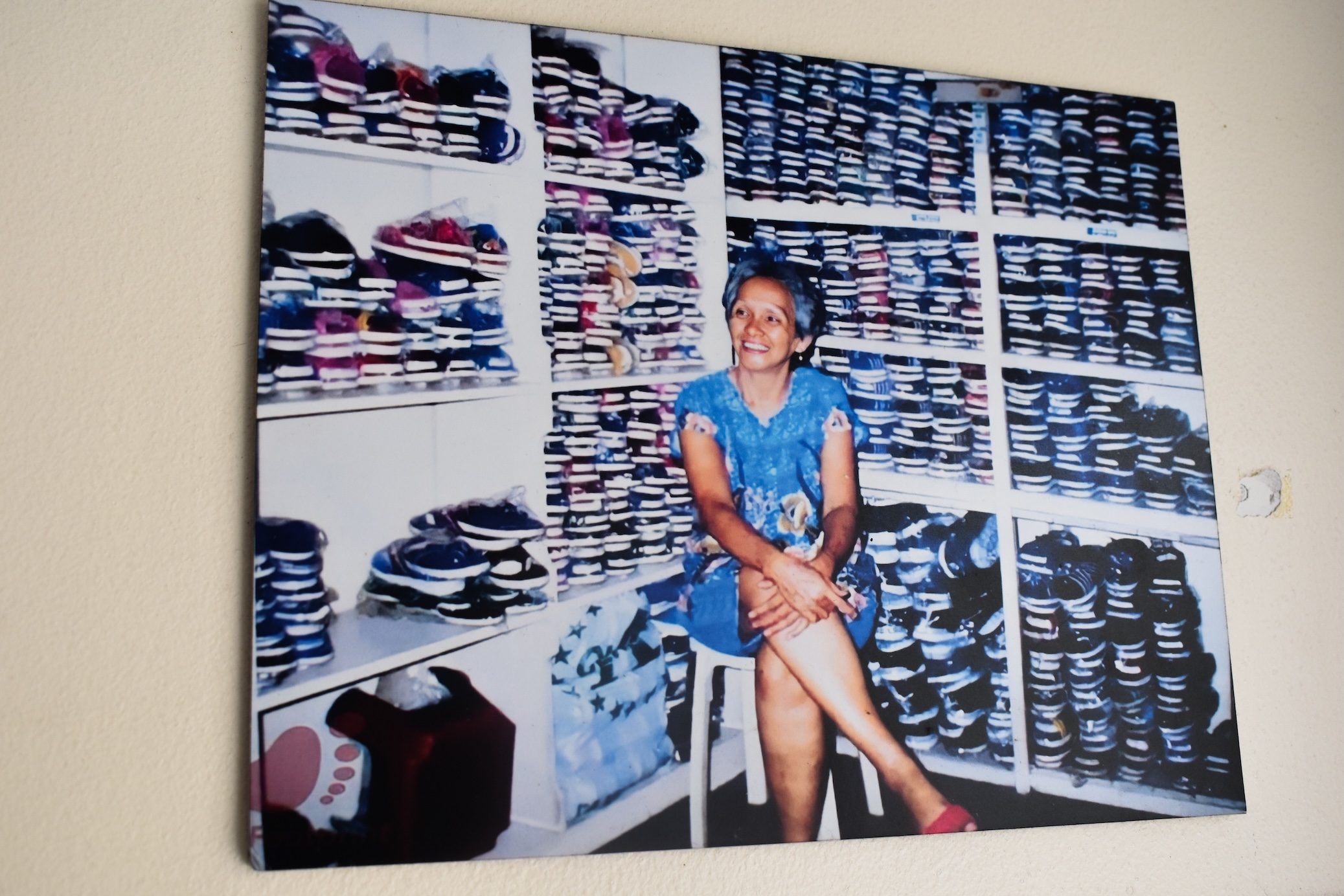 PRIDE AND JOY. Portrait of Gilliane Teylan’s grandmother in the shop’s interior. Photo by Ron Carlo Almestas
“‘Yun talaga bumuhay sa amin (The shop kept us afloat),” Teylan said. “Maraming natulungan (It helped many people).”
One of the people who helped shape AlphaFootprint’s legacy was Kuya Jack.
The family hired him through a colleague from his hometown — the same person who taught him how to craft alfombras traditionally. For Kuya Jack, the work became more than just a job; it became his identity as one of the few remaining traditional crafters in Pateros.
Price of imports
Over time, cheap, factory-made rubber footwear flooded the market.
Because handmade alfombras took longer to produce and cost more, local shops could not compete with the low prices and high volume of mass-produced imports.
Box noted that the imported rubber from China is relatively thinner than the original materials once used in the craft.
Historically, Adidas Germany partnered with Rubberworld Philippines Inc., a move that dominated the market by distributing the Adidas brand while producing high-quality, affordable local brands like Kaypee.
Endorsed by Filipino basketball stars Alvin Patrimonio and Ramon Fernandez, Kaypee became a household name.
However, the end of Rubberworld’s Adidas partnership in 1994 left a void, erasing the public’s choice for high-quality, budget-friendly footwear.
While Adidas eventually set up its own office in the Philippines, the higher price point turned the shoes into pamporma — items worn sparingly for fear of damage. This left customers with a stark choice: expensive, high-quality brands or affordable, low-quality imports.
Alfombra shops now depend primarily on raw materials imported from China — materials that were once sourced and produced locally in Pateros. This reliance has disrupted what was once a self-sustaining system.
Crafters in Cainta, Rizal, used to weave alfombra fabric locally, but shoemakers have since switched to imported fabrics from neighboring Asian countries.
“But it is more commonly made in India, Bangladesh, [and] Pakistan because they use it for their carpets,” Box said in a mix of English and Filipino, noting that these countries are now the leading manufacturers of the fabrics used for the slippers.
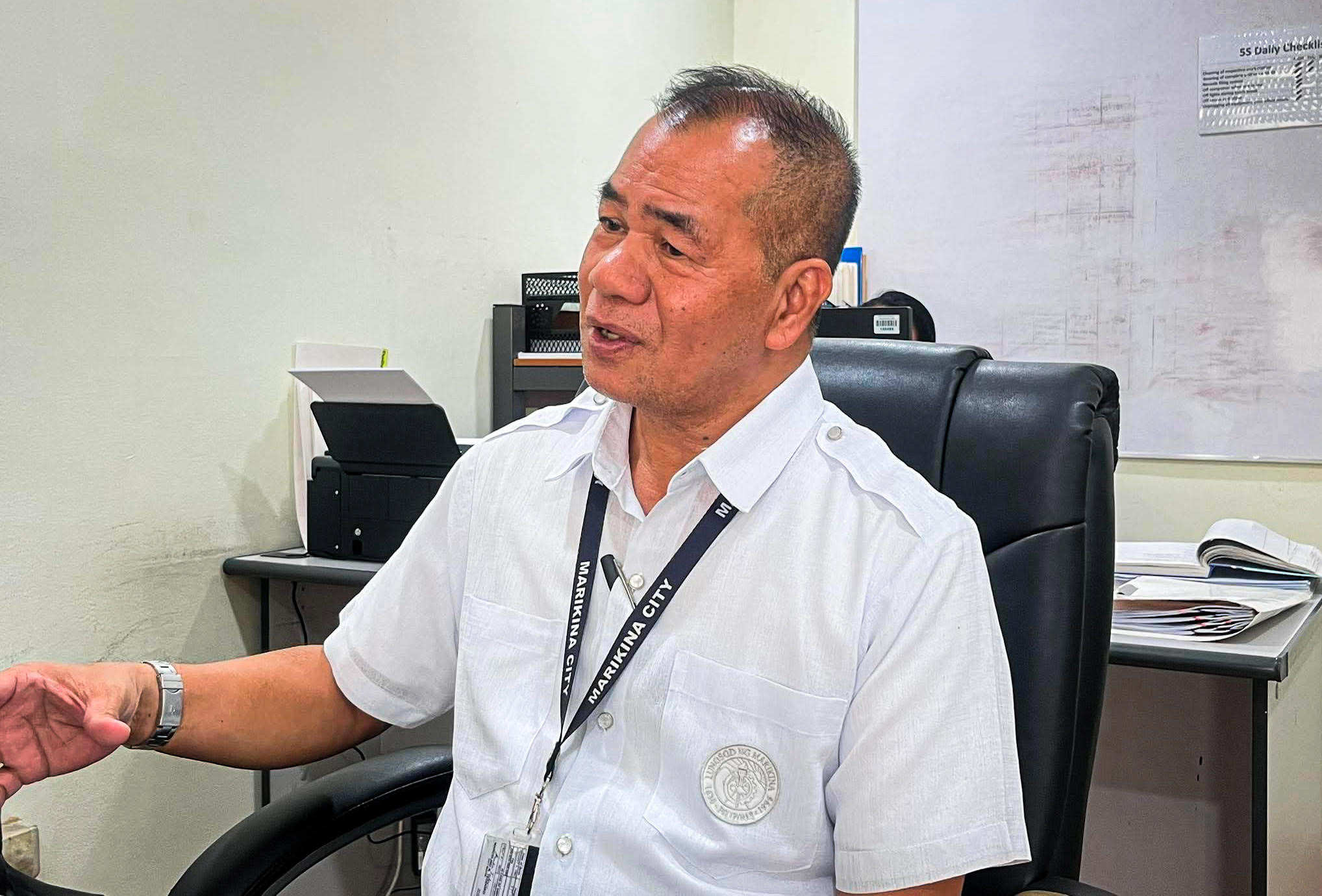 CULTURE. Noel Box of the Marikina Shoe Industry Development Office. Photo by Ron Carlo Almestas
“‘Yun, nasira (That’s what broke it),” Kuya Jack said, pointing to the emergence of China-imported products under the Free Trade Agreement as the catalyst that reshaped the market.
Up until now, shoemakers and business owners have struggled with the effects of globalization, yet their products remain, said Renato Bade, the tourism officer and museum administrator of Pateros.
Aside from its famous balut sa puti, Pateros has included alfombra slippers in the “Flavors of NCR” showcase — an event where cities display and sell local delicacies.
Despite being the only nonconsumable product in the showcase, the alfombra surprisingly ranks as a top seller.
“We were struggling then. And still, up to now, we’re still struggling, but we managed to keep the product. I didn’t give up on it. We earned a little — that’s how we are, right? Persistent. Even if we only earn a little,” Bade said in a mix of English and Filipino.
Today, consumers often prefer branded footwear that breaks easily over locally produced footwear that lasts for years.
The alfombra’s final stand
Consumers switched to commercial products partly because of their greater versatility.
Despite this downside, alfombras offer unmatched quality that commercial alternatives lack, capable of surviving years of use and abuse — just like Kuya Jack’s pair of well-preserved alfombras, clothed with dust under his cabinet.
A dip in sales shaped a larger shift in culture and consumer behavior, said Shannen Bolivar, a research analyst who co-authored a thesis on the competitiveness of alfombra with Jessielyn Malapote and Immanuel Rivera.
In their findings, Bolivar and her co-authors discovered an e-commerce platform based in Pateros that exported alfombra abroad. The retailer referred them to their wholesaler, who created a new entrada design of slippers using bandana scarves.
AlphaFootprint would accept invitations from the Department of Tourism and the Department of Trade and Industry (DTI) to local bazaars in an effort to keep the alfombra business the talk of the town.
To help local shoemaking businesses and start-ups survive, the DTI National Capital Regional Office Center for Innovation and Technology for Enterprises (DTI-NCRO, CITE) offers a Shared Service Facility for High Value Custom-Made Footwear and Leathergoods program designed to help micro, small, and medium enterprises (MSMEs), such as small-scale shoemakers, with affordable access to industrial-grade machinery, enabling them to increase their production capacity at a minimal fee.
The DTI procures the machine, which is accessible to manufacturers and MSMEs nationwide.
They also mentioned the Kapatid Mentor Me Program, a mini-masteral program for MSMEs that focuses on business operations, which provides a free 10-module mentorship program to strengthen entrepreneurs by providing access to mentorship, money, and market.
Meanwhile, the Philippine Creative Industries Development Council Secretariat offers the Malikhaing Pinoy Program, which mandates and assists MSMEs and manufacturers before they open their online stores, such as the DTI Bagong Pilipinas Marketplace.
The DTI-NCRO CITE noted that establishing an online presence enables local manufacturers to connect directly with potential international buyers.
Once shoemakers refine the product development and business operations, the DTI facilitates market testing by organizing trade fairs at the local and international levels.
As for Marikina’s footwear industry, Box shared that San Roque National High School and Marikina High School offer shoemaking courses in their senior high school programs as part of the technical-vocational-livelihood strand.
He added that a college in Marikina also offers a four-year professional shoemaking course.
For Bolivar, she emphasized that boosting domestic awareness for the alfombra craft is crucial.
She pointed out that “it will be a loss of cultural heritage” if the alfombra craft stopped production, as Bolivar believes it should be “the face of Pateros.”
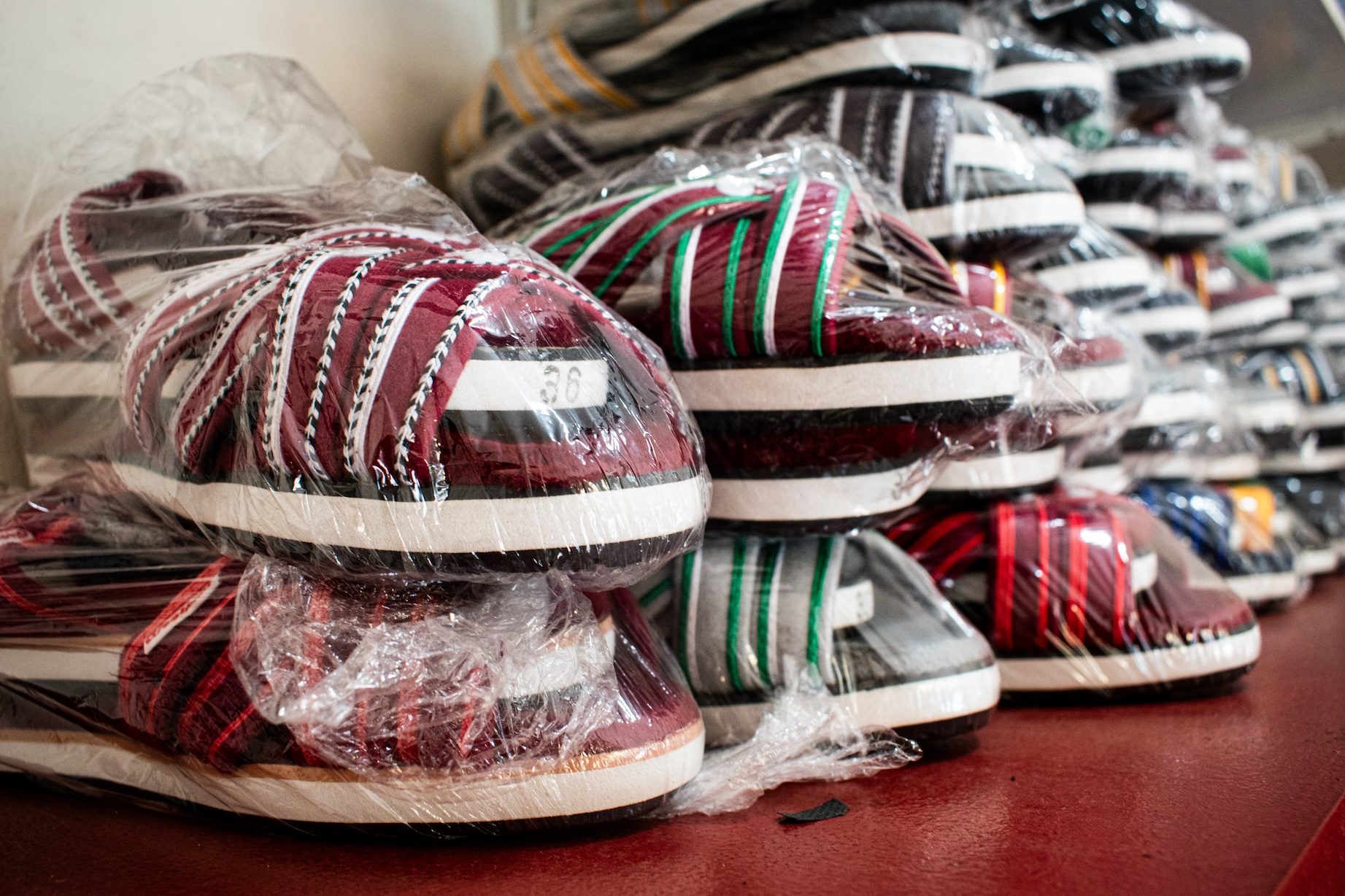 STOCK. AlphaFootprint alfombra products stored on their shelves. Photo by Ron Carlo Almestas
There are ongoing initiatives, such as the proposed alfombra festival and an approved ordinance to build a landmark in front of the museum — one that will showcase both balut and alfombra.
“Tayo kasi walang identity e…. Makikilala ka lang na nandito ka kapag may hawak ka nang balut,” said Bade. (We don’t have our own identity…. People will only know you’re here if you’re holding a balut.)
The LGU’s support permits shoemakers and small business owners to operate for free in front of the museum grounds, the municipality’s local heritage site.
Despite multiple turnovers in city hall leadership, assistance to the alfombra industry will not stop, Bade said.
“Hindi bibitawan ‘yan (They won’t give that up),” said Bade, noting that in his experience, every mayor has continued and contributed to support the local products, with councilors also ensuring that these efforts remain sustained.
Finished product
Many people pass by Kuya Jack’s workshop wearing foreign brands, slowly treading over their town’s cultural footprint.
When the time comes that he can no longer bear the pain in his frozen shoulder, it will be over for the sapatero — a job he admits is “not for a lifetime,” evidenced by the rugby-smeared surfaces of the would-be slippers.
While alfombra shops are now few in number, the master sapatero still lights up whenever people buy his work — especially when he sees them in use. Local tricycle drivers wear them as they step on their pedals around the corner.
After walking back and forth to sand the rough sides of the slipper, Kuya Jack returns to his work chair to glue on the braided patterns. He lightly hammers the alfombra to ensure the pieces bond well.
Kuya Jack then paints the underside with black toplak to give it a shine, and leaves the pair flipped to dry.
After just 10 minutes, he picks up the pair and claps them together, creating a sound like applause.
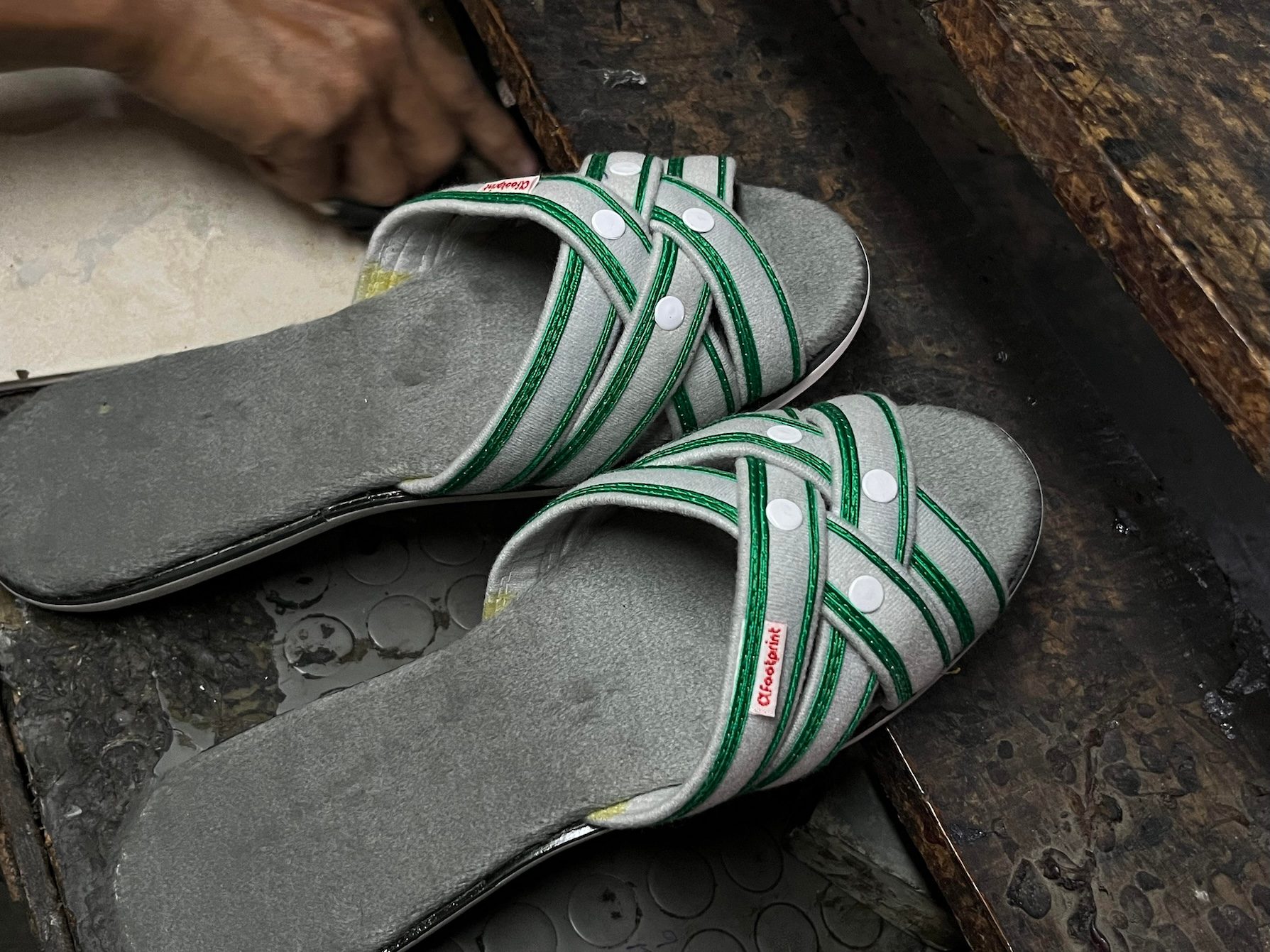 FINISHED PRODUCT. Kuya Jack’s newly finished, traditionally handcrafted alfombra set. Photo by Ron Carlo Almestas
Tuk, tuk, tuk. “‘Yan (There). Finished product.”
As the pair is stored on the shelves of one of Pateros’ last remaining stores, the workshop falls quiet. With the machines turned off, his weathered hands finally rest, and the day ends with his own feet tucked into his slippers. – Rappler.com


You May Also Like

BlackRock Bitcoin Sales Spark Institutional Market Debate

Ripple ETFs Record Best Week Since December: So Why Is XRP Still Failing?