

Bank of America resets Amazon stock forecast on key service launch
Amazon, the e-commerce and tech giant, has spent years building massive systems for itself, then turning those systems into businesses for everyone else.
This move helped create AWS from Amazon’s own technology infrastructure, turning it into a multi-billion-dollar cloud computing infrastructure.
Then, it helped turn the company’s warehouses and delivery network into a service for outside sellers. More recently, it has been shaping Amazon’s push to make its supply chain available to other businesses.
TheStreet previously covered that shift in May, when Amazon launched Amazon Supply Chain Services as part of a broader fight with Walmart to turn internal logistics networks into new revenue streams.
Now Amazon is expanding that strategy again.
Amazon enters the freight market
The e-commerce giant on June 10 announced “less-than-truckload freight” offering under its Amazon Supply Chain Services to all U.S. businesses.
It will allow companies to move goods to third-party warehouses, distribution centers, retail partners, and other commercial destinations.
The move pushes Amazon deeper into a freight market long served by carriers, brokers, and third-party logistics companies such as FedEx Freight.
More Wall Street:
- JPMorgan resets S&P 500 price target for the rest of 2026
- Vanguard challenges the S&P 500 as a one-stop strategy
- Goldman Sachs resets Broadcom stock forecast
And Wall Street is noticing this new direction.
In a June 11 note shared with TheStreet, Bank of America lead analyst Justin Post maintained a Buy rating on Amazon and a $310 price target.
Analyst Justin Post stood by a bullish target following the freight launch, implying about 30% upside from Amazon's $238 stock price.
Post said Amazon’s expanded less-than-truckload, or LTL, offering could bring more outside freight into Amazon’s network, though the near-term revenue impact may be limited.
Less-than-truckload shipping is used when a business needs to move freight by pallet but does not need an entire truck.
Amazon said its expanded service is designed for shipments usually ranging from one to six pallets, or between 150 and 15,000 pounds.
The company said the service includes:
- Next-day live pickup for orders placed by 5 p.m.
- Same-day pickup through drop trailer service
- Standing daily pickups for high-volume shippers
- Real-time GPS tracking
- Automated appointment scheduling, and
- Electronic proof of delivery
“Now Amazon LTL can move your freight wherever it needs to go, servicing destinations nationwide for businesses of all sizes. With LTL, shippers get cost-effective freight shipping while still benefitting from the real-time tracking and dependability they expect from Amazon,” said Jim Ruiz, director of Amazon Freight.
The company added that the service is backed by more than 80,000 trailers and 24,000 intermodal containers, highlighting its existing expansive fleet.
And this scale is why the announcement matters beyond one new shipping product.
Amazon has spent years building a logistics network for its own retail business and marketplace sellers. Now it is trying to sell more of that infrastructure to outside businesses.
The move builds on Amazon’s broader push beyond traditional retail, and also comes as Amazon and Walmart continue fighting to turn logistics, delivery, and fulfillment into new revenue streams, a trend TheStreet covered in Amazon doubles down on fast delivery to beat rivals, and Walmart makes quiet move as Amazon delivery threat grows.
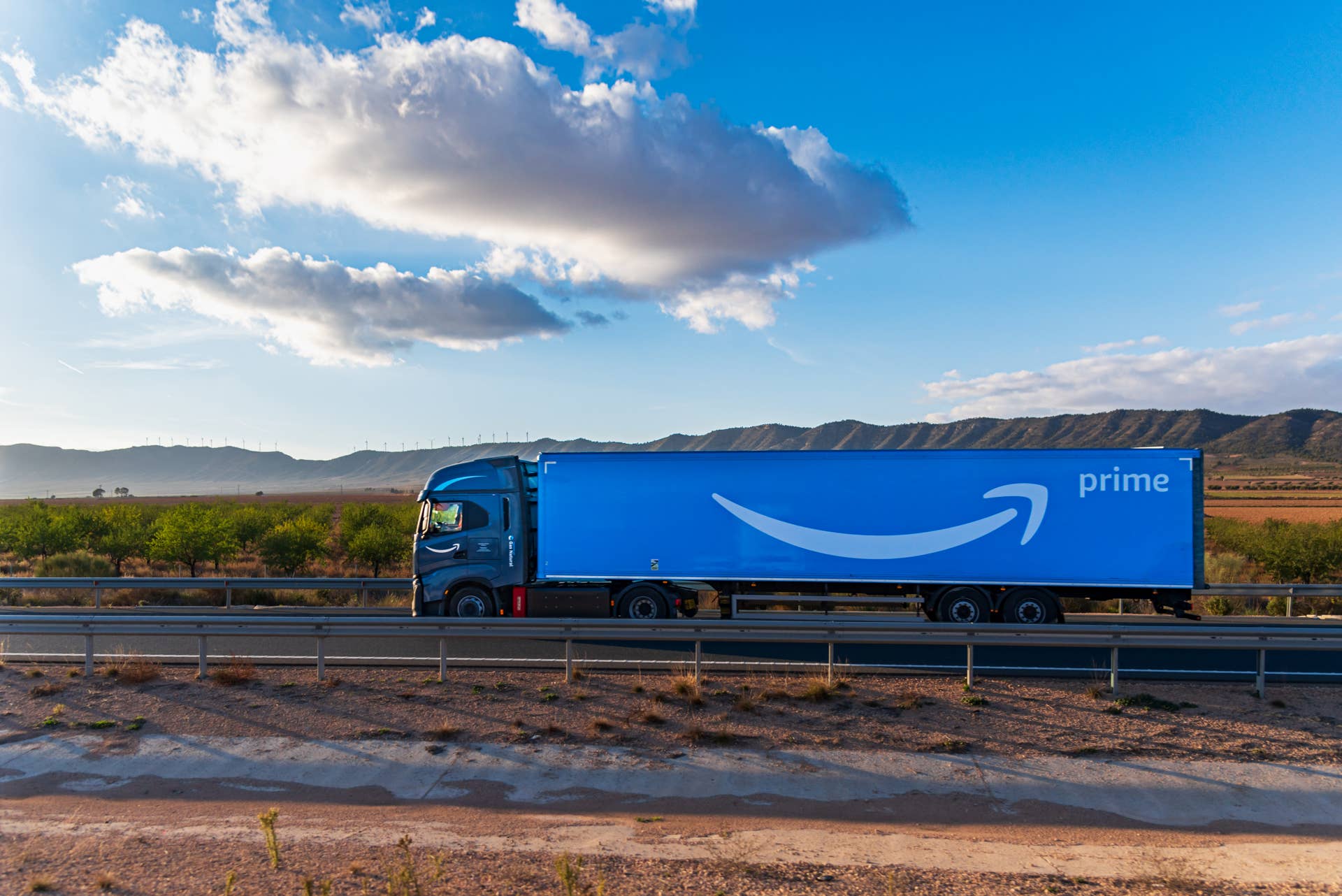 Amazon's stock is up 2.6% year to date.
Miguel Perfectti &sol Getty Images
Bank of America sees Amazon margin opportunity
Bank of America said the LTL expansion could help Amazon bring more third-party freight into its network.
That could improve network density, reduce empty miles, and better utilize the transportation assets Amazon has already built.
The firm said the service could also support Amazon’s long-term retail margin opportunity, estimating it at 12%, up from an estimated 7% in 2026.
But the firm does not expect the new freight service to become a major revenue driver immediately.
Amazon’s LTL coverage remains limited. Bank of America cited MWPVL, a supply chain and logistics consultancy, estimates that Amazon has roughly 26 LTL terminals, far below the average of about 295 terminals for the top five carriers.
That gap matters because LTL shipping depends heavily on terminal density, cross-dock infrastructure, and national route coverage.
Simply put, Amazon is still operating on a smaller scale than existing freight carriers like UPS, FedEx, or XPO.
So while Amazon has the brand, technology, and transportation scale to matter, it does not yet look like a full national LTL carrier.
Freight stocks react to Amazon’s move
Despite the scale, investors reacted quickly to the launch.
FedEx Freight fell over 5% after Amazon’s announcement, then rebounded about 4.5% the next day.
The stock of XPO Logistics also fell around 5% on Wednesday, post announcement, but was up 5% the following day.
The move showed how investors initially feared another Amazon disruption, then reassessed how quickly the company could challenge established freight networks.
Bank of America also noted that the competitive threat may not affect all logistics companies equally.
The firm said Amazon’s model looks more like a third-party logistics coordinator or broker-like platform than a full national LTL carrier.
That could make the move more directly competitive with asset-light intermediaries such as C.H. Robinson and RXO, which help match freight demand with available capacity.
By contrast, asset-based LTL carriers such as FedEx Freight, Old Dominion, XPO, and Saia may be more protected in the near term because they operate dense terminal networks and national cross-dock infrastructure.
Still, Amazon could influence the freight market even without immediately matching the largest carriers.
Bank of America said Amazon’s role as a capacity aggregator and pricing participant could affect lane-level pricing, service expectations, and customer behavior over time.
The firm said Amazon’s current pace of buildout or expansion rate could position it to better compete with national carriers closer to 2028 or 2029.
Bank of America flags Amazon stock risks
Bank of America remains bullish on Amazon, but the firm also listed several risks to its stock forecast.
Those risks include rising competition from offline and local retailers, potential cloud share losses to rivals with advanced artificial intelligence technology, higher AWS investment needs that could pressure margins, and macroeconomic pressures on consumer spending.
The firm also noted that Amazon’s stock has been volatile in the past and that volatility could increase amid economic uncertainty.
Those risks matter because Amazon is investing across several major areas at once.
It is defending retail share, spending heavily in cloud and artificial intelligence, expanding advertising, and trying to build new logistics revenue streams.
The LTL launch fits that larger strategy.
It may not immediately transform Amazon’s earnings, but it shows how Amazon is trying to turn its logistics network from a cost-heavy support system into a platform other businesses pay to use.
And this could create a long-term opportunity for Amazon.
It could also create a long-term warning for freight brokers, third-party logistics companies, and eventually the largest LTL carriers.
Related: Goldman Sachs sends strong message on next Fed rate cut


You May Also Like

EUR/GBP Exchange Rate Surges as Bank of England Rate Hike Expectations Intensify – Market Analysis

Square Financial Services Introduces 3.50% APY High Yield Savings for Square Sellers, More Than 8 Times the National Average

Nobody Likes XRP Right Now, and That May Be Bullish: Santiment



