

Investor alleges KuCoin still owes $2M over delisted token dispute
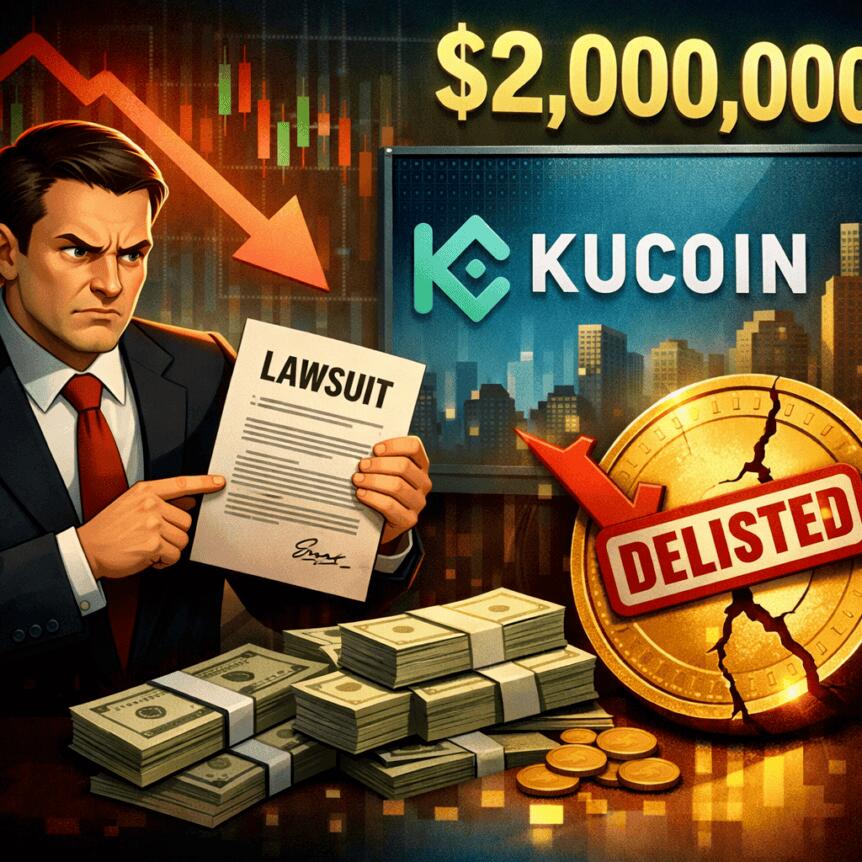
A Seychelles Supreme Court ruling has put KuCoin in the crosshairs over how it handles customer assets after delisting, delivering a decision that could influence how exchanges manage delisted tokens and withdrawal rights. In the ruling dated December 11, 2025, the court declared Swiss investor Didier Rabl the sole owner of approximately 21 million CoinPoker CHP tokens that had been held for him on KuCoin, and it ordered three KuCoin-linked Seychelles entities to pay him more than 2 million USDt plus 10,000 in moral damages. The decision suggests custodial responsibilities persist for exchanges even after a token is delisted and casts doubt on unilateral delisting notices as a means to extinguish customer rights.
KuCoin’s Seychelles entities did not participate in the case, which centered on the nature of the exchange-customer relationship and the safeguards around customer assets. Documents reviewed by Cointelegraph show that KuCoin issued delisting notices in 2021 stating that CHP withdrawals would close on July 28 of that year, and that any unwithdrawn funds would be deemed “abandoned” with no right to reclaim. The court found those emails unread and unanswered and concluded that KuCoin delisted CHP without making any further attempt to notify the plaintiff by post, telephone, or other means.
As part of the ruling, a blockchain analysis conducted for Cointelegraph traced movements of the CHP token’s legacy Ethereum contract and identified an address labeled “KuCoin 6” on Etherscan holding 21,000,000 CHP (about 5.9% of the total supply). The court did not treat this as KuCoin’s ownership of the tokens, but it did highlight the token’s custodial status in the plaintiff’s favor, reinforcing the finding that the assets remained subject to the plaintiff’s rights rather than the exchange’s ownership.
The Supreme Court directed its Registrar to serve the judgment on Seychelles’ Financial Services Authority (FSA). In response, an FSA spokesperson confirmed it had received the ruling and noted that Mek Global Ltd, KuCoin’s linked entity that had sought a virtual asset service provider (VASP) license, had its application rejected on June 4, 2025 and was required to cease all business conducted in or from Seychelles. The FSA also referenced a public statement indicating that Peken Global Limited, a defendant in the case, opted to migrate its services outside Seychelles following the license rejection. Under Seychelles’ Virtual Asset Service Providers Act, licensed exchanges are required to segregate client assets and maintain them at a 100% reserve, the spokesperson said.
Key takeaways
- The Seychelles Supreme Court ruled in favor of Didier Rabl, declaring him the owner of about 21 million CHP tokens and ordering KuCoin-linked Seychelles entities to pay more than 2 million USDt plus 10,000 in moral damages.
- The court held that KuCoin did not become the owner of Rabl’s CHP and still bore a duty to safeguard assets and process lawful withdrawal requests; delisting emails warning of abandonment were deemed inadequate.
- KuCoin’s Seychelles entities did not participate in the case, and the ruling relies on the exchange’s custodial obligations to customers rather than a transfer of ownership to KuCoin.
- A blockchain trace linked a large CHP holding to an address labeled “KuCoin 6,” accounting for roughly 6% of the token supply, illustrating the scale of assets at issue but not altering the custodial interpretation.
- The Financial Services Authority of Seychelles acknowledged the judgment and highlighted Kuf KuCoin-linked Mek Global Ltd’s license rejection, with the regulator underscoring the need for client asset segregation and 100% reserves for licensed VASPs.
Judgment details and delisted assets
According to documents reviewed by Cointelegraph, KuCoin issued delisting notices in 2021 that warned CHP withdrawals would close on July 28 and asserted that unwithdrawn funds would be deemed abandoned with no rights to reclaim. The court concluded the notices were not properly acted upon by the plaintiff or communicated through official channels beyond the initial email, and that the delisting did not extinguish Rabl’s rights to the tokens under the existing contract framework. This finding signals a potential limitation on unilateral delisting mechanisms when customer assets remain in a user’s account and legally protected by contractual and custodial duties.
The 21 million CHP at the center of the dispute were traced to a blockchain address identified by researchers as “KuCoin 6” on Etherscan, holding approximately 5.9% of the token’s total supply. While this address underscores the scale of CHP within KuCoin’s ecosystem, the court did not declare it as KuCoin’s ownership; instead, it underscored the ongoing custodial protection owed to the plaintiff for assets that had not been lawfully forfeited.
Seychelles regulatory backdrop and KuCoin’s licensing status
The FSA confirmed receipt of the court’s judgment and clarified the regulatory backdrop. Mek Global Ltd, the entity associated with KuCoin that filed for a Seychelles VASP license, had its application rejected on June 4, 2025, and was ordered to cease all business conducted in or from Seychelles. The regulator also noted that Peken Global Limited, another defendant in the case, opted to migrate its services outside Seychelles after the license decision. The FSA has reiterated that licensed exchanges must segregate client assets and maintain them at a 100% reserve.
The ruling arrives amid heightened regulatory scrutiny of exchanges’ treatment of customer funds, particularly surrounding delisting and asset forfeiture. While KuCoin has not publicly commented in response to Cointelegraph’s inquiries, the FSA’s statements emphasize the broader enforcement framework in Seychelles and the expectation that exchanges operating within the jurisdiction maintain clear custodian duties and robust reserve practices.
For context, Seychelles has actively pursued regulatory clarity around virtual asset service providers, a stance that dovetails with international concerns about consumer protection and custody of crypto assets. The ruling may influence how other jurisdictions interpret exchange obligations when a token is delisted, especially in cases where contracts do not explicitly grant ownership of unwithdrawn assets to the platform after delisting.
Legal interpretation, enforcement, and what’s next
Legal expert Joshua Chu, co-chair of the Hong Kong Web3 Association, described the ruling as an ex parte decision—issued with KuCoin’s entities not appearing, defending, or submitting to jurisdiction. He noted that, as a first-instance judgment, it does not have binding force beyond Seychelles and highlighted that the decision’s impact could hinge on any appellate process or overseas proceedings. The judgment thus raises questions about cross-border enforcement and whether other courts would view custodial duties similarly when delisting occurs.
Rabl told Cointelegraph that he has not received payment from the named Seychelles entities and is preparing additional steps to enforce the award within Seychelles, potentially seeking further damages. KuCoin did not respond to multiple requests for comment.
In broader terms, the case spotlights a tension between exchange-wide delisting actions and customer protections. While delisting is a common practice to manage risk or disassociate from a project, the court’s view here—grounded in contract and custodian duties—suggests that customers could retain enforceable rights to assets even after a token is removed from trading. For investors and users, the lesson lies in understanding the custodial language of exchange terms, the jurisdictional reach of the governing law, and the strength of asset-segregation commitments in regulated markets. The case also underscores the importance of ongoing regulatory clarity around asset custody and investor protections as crypto ecosystems evolve.
Readers should monitor whether this ruling triggers similar actions in other jurisdictions, how KuCoin responds to enforcement efforts, and whether the Seychelles authorities pursue further guidance or action related to asset custody and delisting practices. The broader takeaway is a reinforced expectation that customer assets should remain protected and withdrawable where lawful, even when a token’s tradable status changes—an increasingly relevant consideration as exchanges expand globally and regulators tighten custody standards.
Related: Dubai regulator orders KuCoin entities to stop unlicensed operations. The ongoing regulatory environment surrounding KuCoin and similar platforms will continue to influence how exchanges approach delisting, asset custody, and cross-border operations in the months ahead.
Source: Cointelegraph
This article was originally published as Investor alleges KuCoin still owes $2M over delisted token dispute on Crypto Breaking News – your trusted source for crypto news, Bitcoin news, and blockchain updates.


You May Also Like

Mantle and xStocks Bring Tokenized SpaceX (SPCXx) to Fluxion & Merchant Moe as History’s Largest IPO Goes Live

Market Strategist: Final Warning for XRP Holders. I Won’t Say This Again
QAnon conspiracy theorist leading Trump obsession is 'not normal': insiders



