

Sterling Steadies as Dollar Ignores Oil Slide Ahead of Fed’s FOMC Decision
BitcoinWorld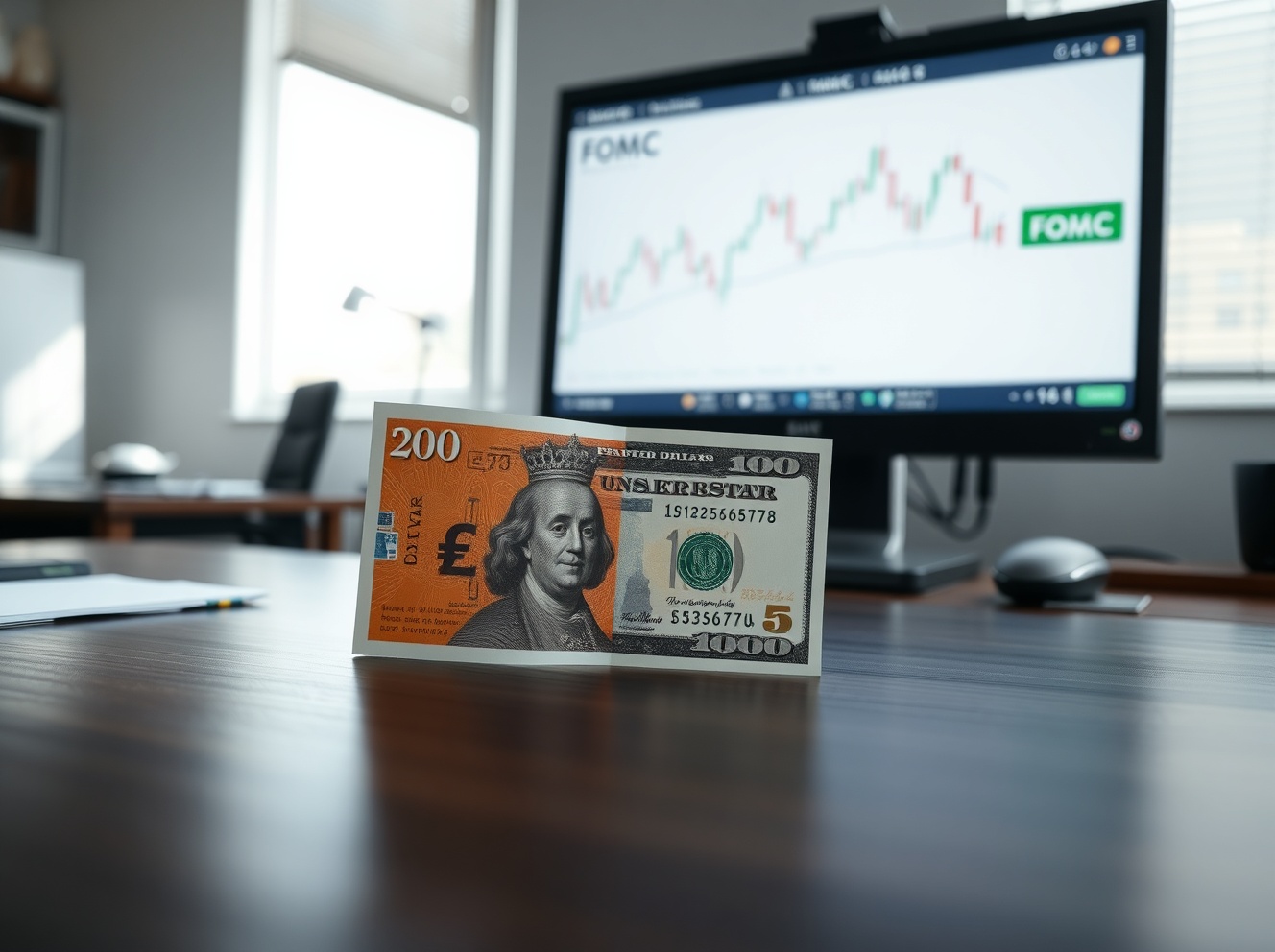
Sterling Steadies as Dollar Ignores Oil Slide Ahead of Fed’s FOMC Decision
The British pound held its ground against the U.S. dollar on Tuesday, trading in a narrow range as currency markets largely shrugged off a sharp sell-off in crude oil prices. Investors instead focused their attention on the upcoming Federal Open Market Committee (FOMC) meeting, where the Federal Reserve is widely expected to hold interest rates steady.
Pound Holds Firm Amid Mixed Signals
Sterling hovered near the $1.27 mark against the greenback, reflecting a cautious tone among traders. The currency pair has been range-bound for much of the week, with the market awaiting clearer directional cues from central bank policy. The dollar index, which measures the currency against a basket of peers, edged slightly lower, indicating that the oil market’s volatility had limited spillover into broader forex sentiment.
The sell-off in crude oil, triggered by reports of weaker-than-expected demand from China and a surprise build in U.S. inventories, typically weighs on commodity-linked currencies. However, the dollar’s muted reaction suggests that traders are prioritizing the macro policy outlook over short-term commodity swings.
FOMC Meeting in Focus
The Federal Reserve’s two-day policy meeting, which concludes Wednesday, is the dominant event for currency markets this week. Market pricing indicates a near-certain probability of rates remaining unchanged at the current 5.25%-5.50% range. The key question for sterling traders is whether the Fed’s statement and Chair Jerome Powell’s press conference will strike a hawkish or dovish tone regarding future rate cuts.
A more hawkish stance, emphasizing persistent inflation and a strong labor market, could boost the dollar and pressure sterling lower. Conversely, any signals that the Fed is becoming more confident about disinflation could weaken the dollar, providing a tailwind for the pound.
UK Economic Data Adds to the Mix
On the domestic front, the pound also drew support from recent UK economic data that has shown resilience. While the Bank of England (BoE) is also expected to begin cutting rates later this year, the timing remains uncertain. The relative monetary policy paths of the Fed and the BoE are a critical driver for GBP/USD. Currently, the market sees the BoE potentially cutting rates slightly earlier than the Fed, which would typically weigh on sterling, but the gap is narrow enough to keep the pair in a tight range.
What to Watch Next
For sterling traders, the immediate focus remains on the FOMC outcome. Key technical levels for GBP/USD include support around $1.2650 and resistance near $1.2800. A break above resistance could signal renewed bullish momentum, while a drop below support might open the door for a test of the $1.25 region.
Beyond the Fed, traders will also monitor UK GDP data and inflation figures due in the coming weeks for further clues on the BoE’s next move. The interplay between oil prices, global risk sentiment, and central bank policy will likely keep sterling volatility elevated.
Conclusion
The pound’s stability against the dollar reflects a market in wait-and-see mode. While the oil sell-off created a temporary headwind, the overarching narrative remains centered on the Federal Reserve’s policy stance. Sterling’s next significant move will likely be determined by the tone of the FOMC statement and Powell’s commentary, making Wednesday a pivotal session for the currency pair.
FAQs
Q1: Why is the dollar not reacting to the oil sell-off?
The dollar’s muted response to the oil sell-off indicates that forex traders are currently more focused on the Federal Reserve’s monetary policy decision than on commodity price fluctuations. The oil market’s move is seen as a temporary factor, while the FOMC’s outlook has longer-term implications for the dollar.
Q2: What is the FOMC and why does it matter for GBP/USD?
The Federal Open Market Committee (FOMC) is the branch of the Federal Reserve that sets U.S. interest rates. Its decisions directly impact the dollar’s value. A hawkish stance (signaling higher-for-longer rates) typically strengthens the dollar, while a dovish stance (hinting at rate cuts) weakens it, affecting the GBP/USD exchange rate.
Q3: What are the key levels to watch for sterling?
Key support for GBP/USD is around $1.2650. If the pair falls below this level, it could decline toward $1.2500. On the upside, resistance is at $1.2800. A break above $1.2800 would be a bullish signal, potentially targeting $1.2900 or higher.
This post Sterling Steadies as Dollar Ignores Oil Slide Ahead of Fed’s FOMC Decision first appeared on BitcoinWorld.


You May Also Like
DC insider shoots down 'desperate' JD Vance's presidential dreams: 'No natural skills'

Cancer patient among 100,000 red state voters who lost food aid under Trump's new law
Why Lowe’s Stock Looks Undervalued After Its Q1 Margin Compression Results in 2026



