

Morgan Stanley pulls no punches after tech stock sell-off
The tech sell-off was nerve-wracking for investors, but Morgan Stanley’s Andrew Slimmon feels the market might be getting exactly what it needed.
In a recent CNBC interview, Slimmon made the case that AI winners weren’t collapsing due to fundamentals being broken. They fell because the trade became too crowded, pulling in investors who were buying simply because prices kept rising.
"My view is that the AI beneficiaries are the sell-off. And I don't think they're expensive, but they're crowded. In other words, it's captured the kind of zeitgeist of the momentum traders.”
For some color, according to Reuters’ June 23 report, chip stocks led the rout as the Nasdaq tanked 2.2% and the Philadelphia Semiconductor Index dropped 7.9%.
The June 24 follow-up also said the sell-off erased more than $1 trillion from Nasdaq 100 market value.
The S&P 500 fell to 7,365.46 from 7,500.58 over the same stretch, according to the LA Times, a 1.8% slide that shows the damage was tech-driven but not isolated.
Nevertheless, Slimmon argued that earnings revisions continue validating much of the stock market rally, which makes today’s AI boom different from the late-1990s dot-com bubble.
The risk, in his view, is not that every AI stock is irrationally priced. It is that too much momentum can turn a good story into a dangerous trade.
For investors, the takeaway is that the sell-off is painful, but it may also be what keeps the rally alive.
What Morgan Stanley’s Andrew Slimmon said about the tech sell-off
Slimmon doesn’t believe the AI trade has failed; in fact, the trade had become too crowded.
He told CNBC he still views the main AI beneficiaries as fundamentally supported, saying he does not think they are “expensive, but they’re crowded."
Fund manager buys and sells:
- Warren Buffett's Berkshire triples stake in newspaper giant
- Cathie Wood sells $16M of surging semiconductor stock
- Bill Ackman discloses new $2.09 billion stake in megacap tech stock
That means investors weren’t necessarily wrong to own AI stocks, but too many traders had piled into the same names, simply because they kept rising.
Slimmon said that kind of momentum setup naturally produces violent pullbacks.
Instead of treating the sell-off as a market breakdown, he called it “healthy” and “good for the markets" because it helps remove excess before the excitement becomes more dangerous.
His case rests on earnings.
Slimmon said the “earnings revision story has validated these stocks," meaning share prices have risen alongside stronger profit expectations, not just hype.
Consequently, he pushed back against comparisons to the late-1990s dot-com bubble, when many winners had little or no profit behind them.
Speaking of earnings, in a recent piece I wrote on J.P. Morgan, J.P. Parker, head of global investment strategy, said that this year’s rally was driven purely by earnings and stocks remain well supported.
Additionally, Slimmon defended AI spending by big tech companies, arguing that Wall Street might be too focused on falling free cash flow, while technology executives respond to demand for compute that remains ahead of supply.
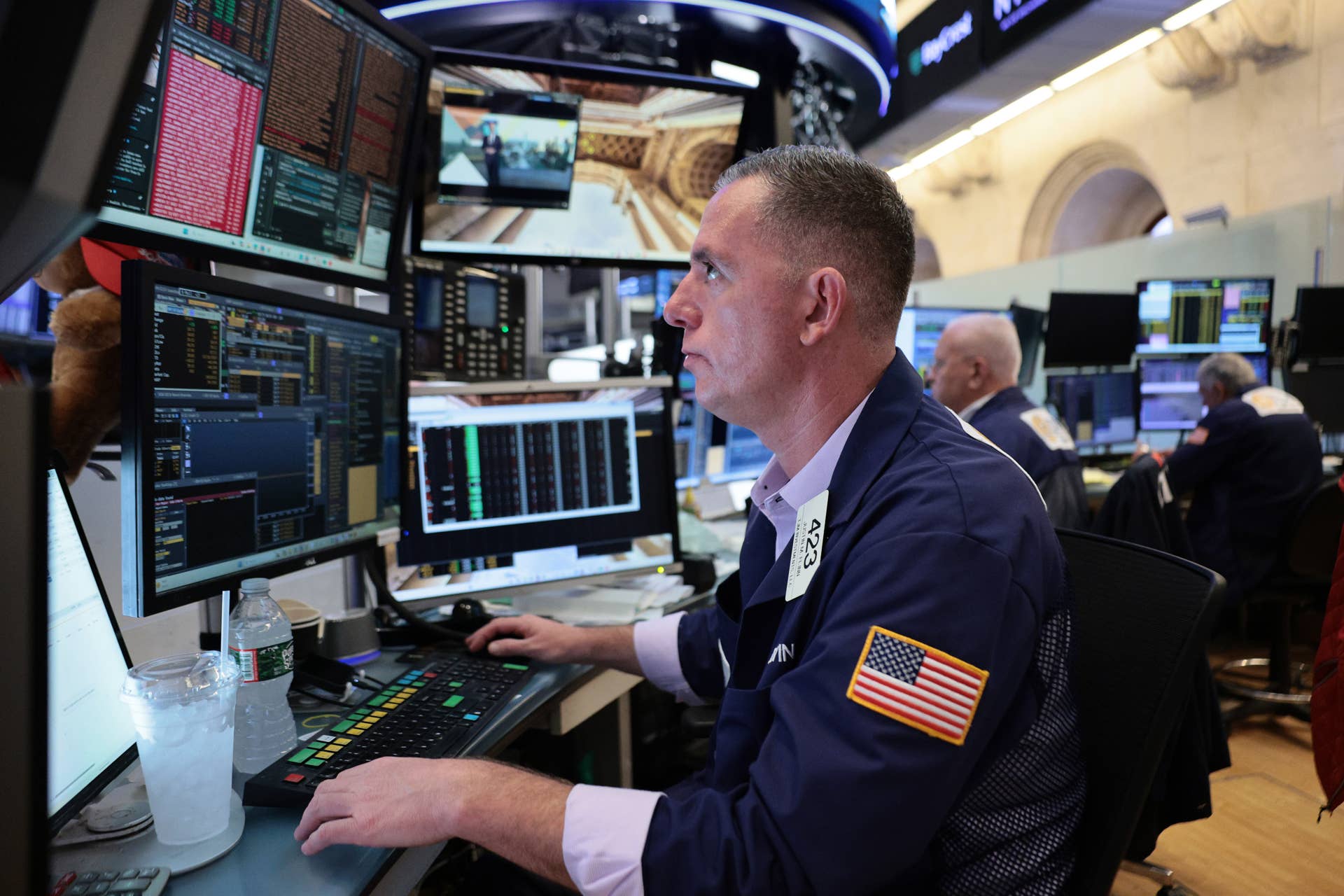 Morgan Stanley’s Andrew Slimmon says the tech sell-off is healthy for markets.
Michael M&period Santiago&solGetty Images
Wall Street’s 2026 S&P 500 targets still lean higher
- Goldman Sachs: 8,000.Goldman lifted its target from 7,600, citing stronger earnings growth, AI infrastructure spending, and a 2026 EPS forecast of $340.
- Morgan Stanley: 8,000. Morgan Stanley’s target reflects confidence that AI investment and earnings optimism can keep supporting the rally.
- Citigroup: 8,100. Citi remains one of the more bullish calls, with Scott Chronert pointing to stronger earnings expectations and AI-driven profit momentum, according to Barron’s.
- Wells Fargo: 7,950.Wells Fargo raised its 2026 S&P 500 target to 7,950 from 7,300 and lifted its earnings forecast for the index.
- JPMorgan: 7,600.JPMorgan raised its target to 7,200, citing stronger EPS expectations and AI momentum.
- Bank of America: 7,100.BofA remains more cautious, flagging valuation, liquidity and the need for earnings growth over multiple expansion.
What this means for investors buying the tech pullback
For investors, the trade is no longer just “own AI and wait." Slimmon’s argument effectively turns the dip into a checklist.
First, earnings revisions need to continue moving higher.
That means if the consensus estimates point to a slowdown, the justification for paying premium tech multiples weakens. Second, AI demand needs to consistently show up in orders, backlog and utilization, not just capex headlines.
Big Tech can spend heavily only as long as investors believe compute demand and future revenue justify lower free cash flows.
Third, inflation and yields have to cooperate. Sticky CPI, a hawkish Fed, or rising Treasury yields would hit growth stocks hardest because more of their value sits in future earnings. Cooler inflation, slower (but not recessionary) jobs data, and lower yields would make it easier for investors to re-rate tech higher.
And if AI infrastructure companies show stronger pricing power, better supply discipline, and less pressure from debt-funded spending, the pullback becomes less of a valuation reset and more of an entry point.
Slimmon’s point is to own AI beneficiaries but balance them with less correlated groups such as financials, energy, health care, or industrials. This is because crowded trades can fall, even when fundamentals are intact.
Related: Amazon Prime Day gives Wall Street a $22B reason to take notice


You May Also Like

After 'circling the drain' Trump’s DJT stock finally plops in

Black Lake and Nuva Labs Tokenize $25 Million in Institutional Mortgages on Provenance Blockchain

Bitcoin, Gold, and U.S. Stocks Dive as Trump Pledges to Hit Iran ‘Extremely Hard’



