

Forget Mastercard: 1 Dominant Payment Tollbooth to Buy Hand Over Fist
The post Forget Mastercard: 1 Dominant Payment Tollbooth to Buy Hand Over Fist appeared first on 24/7 Wall St..
- Mastercard (MA) trades at 25x forward P/E amid international expansion buzz, but faces litigation risks and rebates growing faster than revenue.
- Visa (V) processes 69.4B quarterly transactions, trades at 22x forward earnings with superior buybacks and cash flow versus Mastercard.
- Act now: the analyst who called NVIDIA in 2010 just named his top 10 AI stocks — and Visa didn't make the cut. Grab the names FREE today.
Mastercard (NYSE:MA) is back in every payments headline this month, propped up by the same international expansion narrative that has earned it a premium multiple for years. The underlying numbers tell a different story.
Mastercard shares have fallen 14.08% year to date to $488.92, yet the runner-up network still trades at a forward earnings multiple of 25 with a price-to-book ratio of 64. Wall Street is paying a nosebleed price for a smaller network that just announced the BVNK acquisition as a defensive plunge into stablecoins, still carries U.S. merchant class litigation overhang, and watched rebates and incentives climb 23%, faster than revenue. That premium has no margin for error.
Now look across the parking lot. Visa (NYSE:V), the world’s largest payment network, trades for $330.52 with a forward P/E of 22 after a 5.37% year-to-date dip. The relative valuation case favors the larger network.
Scale you cannot replicate
Visa processed 69.4 billion transactions last quarter, with payments volume up 8% on a constant-dollar basis and cross-border excluding intra-Europe up 11%. Revenue grew 14.63% YoY to $10.90B, beating estimates. Data processing revenue jumped 17% to $5.54B. Visa carries a $548.6B market cap against Mastercard’s $428.8B, and it is harvesting the same consumer spending tailwind that pushed May 2026 PCE to a record $22,059.8 billion.
The discount Mastercard never gave you
Visa’s stock sits well below the $342.13 average price at which the company repurchased shares in Q1 26. Better still, the interchange MDL litigation provision dropped to $707M in Q1 26, from $992M two quarters earlier, shrinking a long-standing overhang. At 22x forward earnings, you are buying the dominant network at a multiple that the runner-up enjoys at 25x.
A capital return machine
Visa has $21.1B remaining on its buyback authorization, returned $18.2B in FY25 by retiring 54 million shares, and raised its dividend 14% to $0.67 quarterly. Operating cash flow climbed 25.65% YoY to $6.78B in Q1 26. Mastercard returned $4.0B in buybacks and $777M in dividends in Q1, with $11.7B left on its authorization. Visa is buying back more stock at a cheaper price with faster-growing cash flow. That alone is the ballgame for a retirement account.
The strategic edge reinforces the math. Visa is building its stablecoin and AI exposure organically through its Visa as a Service payments hyperscaler stack, while Mastercard is writing checks for BVNK to catch up. CEO Ryan McInerney described “a very strong fiscal first quarter with net revenue up 15% year-over-year, GAAP EPS up 17% and non-GAAP EPS up 15%, driven by resilient consumer spending and a strong holiday season”. Reported non-GAAP EPS came in at $3.17, ahead of the $3.14 consensus.
The Mastercard headline crowd is paying 25x forward earnings for the runner-up. You can own the world’s largest transaction tollbooth for 22x, with a bigger buyback, a fatter raise, and a cleaner litigation runway. Historically, the higher-multiple name in a duopoly does not always outperform once growth rates converge.
Put Visa on the top of your retirement research list this week as you weigh the relative valuation case against Mastercard.
Act now: the analyst who called NVIDIA in 2010 just named his top 10 AI stocks — and Visa didn’t make the cut. Grab the names FREE today.
The post Forget Mastercard: 1 Dominant Payment Tollbooth to Buy Hand Over Fist appeared first on 24/7 Wall St..


You May Also Like

What is On-Demand Liquidity? How Ripple uses XRP to move money

Goldman Sachs’ 1 Delta Desk Warns AI’s Greatest Threat Is the Reflexive Loop
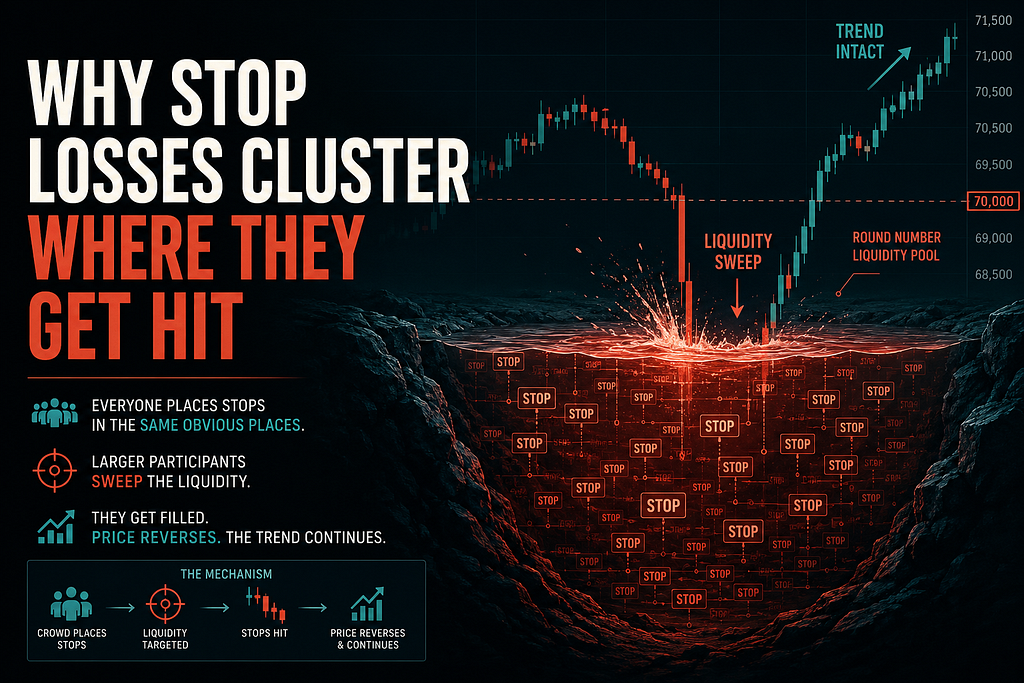
Why Stop Losses Cluster Where They Get Hit



