

FG Nexus Dumps Another $5.3M in ETH as Unrealized Losses Exceed $86M
Key highlights:
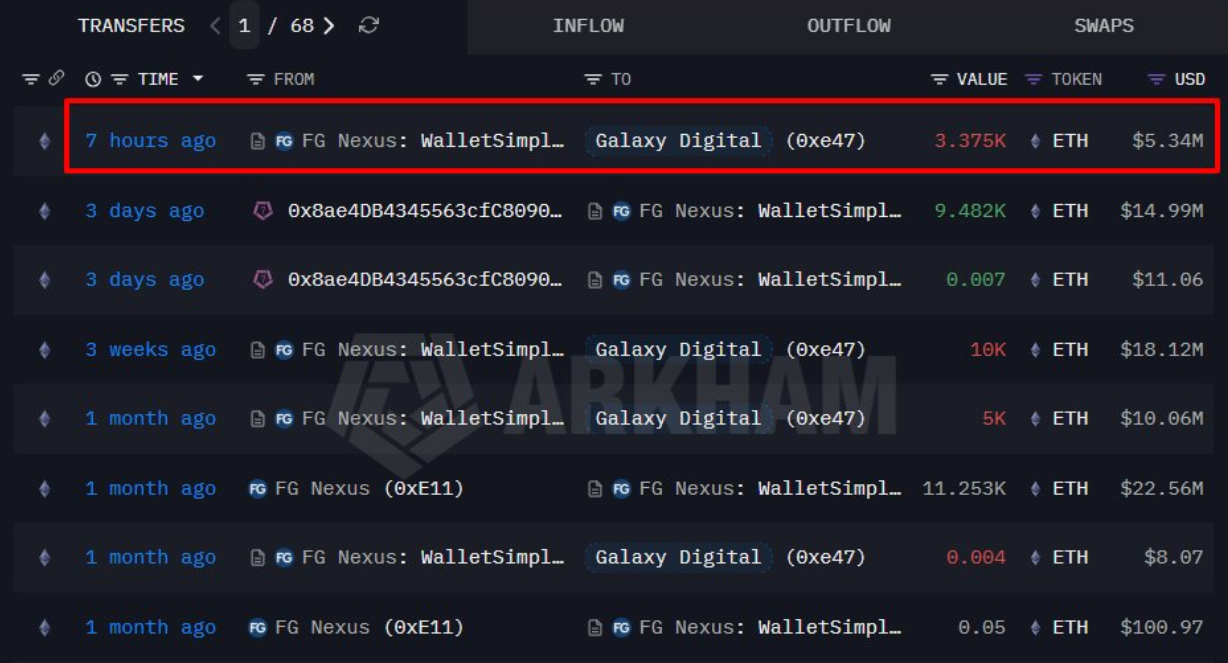
- FG Nexus sold another 3,375 ETH worth $5.34 million, extending a months-long liquidation of its Ethereum holdings
- The firm has purchased 50,770 ETH for approximately $196 million but has already sold 41,675 ETH for just $94.5 million
- The latest transaction highlights one of the largest losing Ethereum trades currently being tracked on-chain
FG Nexus continues reducing its Ethereum exposure
Ethereum investor FG Nexus has executed another major sale, offloading 3,375 ETH worth approximately $5.34 million, according to on-chain data.
The transaction is the latest in a series of sales that have gradually reduced the wallet's Ethereum position over recent months.
The firm originally accumulated 50,770 ETH at a total cost basis of roughly $196 million, making it one of the larger tracked Ethereum positions on-chain. However, deteriorating market conditions and Ethereum's prolonged correction appear to have forced a significant unwinding of that bet.
The latest sale has renewed attention on what has become one of the most painful institutional-scale Ethereum trades in recent memory.
More than 80% of the position has already been sold
The scale of the liquidation is becoming increasingly apparent.
Data shows FG Nexus has already sold 41,675 ETH, generating approximately $94.51 million in proceeds. Compared with the original $196 million acquisition cost, the position currently reflects losses exceeding $86.8 million.
That means more than 82% of the original Ethereum holdings have already been liquidated.
The remaining position represents only a fraction of the investor's initial exposure, suggesting confidence in a near-term recovery may have diminished significantly.
Large-scale liquidations are closely watched by traders because they can provide insight into institutional sentiment during periods of market stress.
Ethereum remains under pressure
The continued selling arrives as Ethereum struggles to regain bullish momentum.
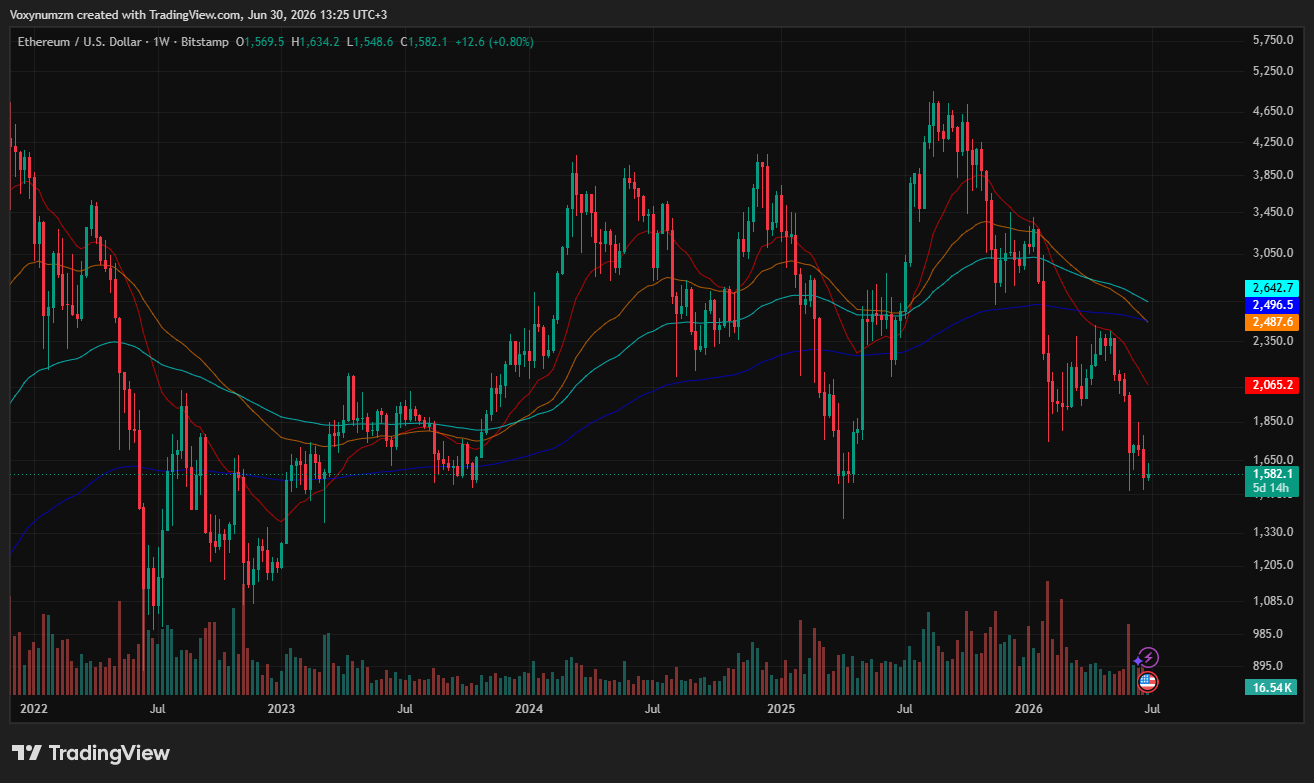
ETH has spent much of the past several months trading below key Exponential Moving Average resistance levels, with several large holders reducing exposure during periods of weakness. The token price action is now testing a key zone of demand at around $1,583.
While spot Ethereum ETFs continue attracting institutional interest over the longer term, recent price action has been characterized by cautious sentiment and profit-taking from investors who accumulated at higher levels.
FG Nexus's decision to continue selling despite realizing substantial losses suggests risk management may now be taking priority over waiting for a full market recovery.
The move also highlights the challenges faced by investors who entered the market near cycle highs and have since endured extended periods of volatility.
What the liquidation means for ETH traders
Large wallet activity often provides valuable insight into market behavior.
In this case, FG Nexus appears to be prioritizing capital preservation rather than attempting to recover losses through continued exposure.
However, not all large holders are following the same strategy.
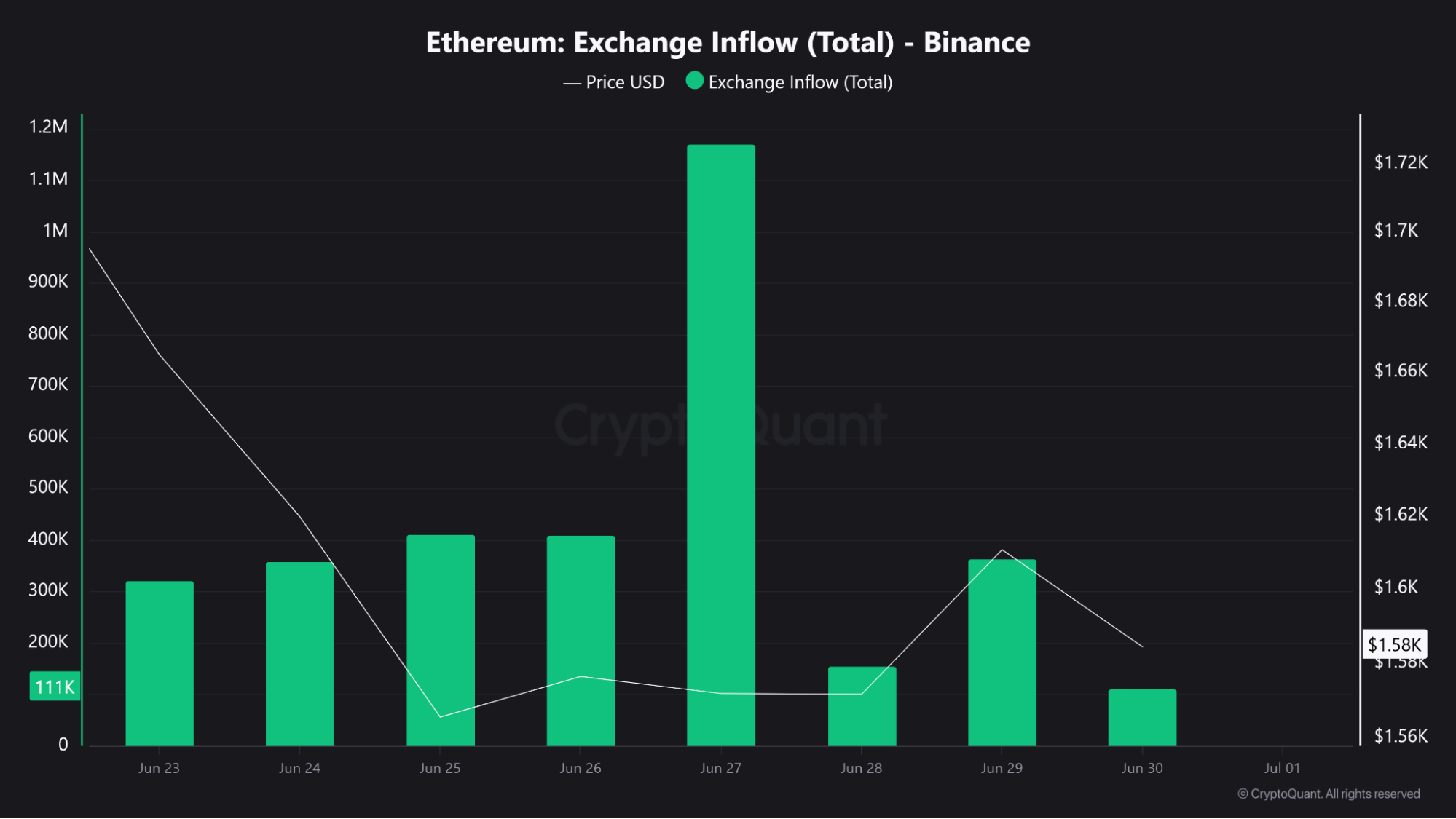
Recent exchange flow data has shown that inflows to exchanges are declining even as retail participation increases, suggesting some institutional investors continue holding or accumulating Ethereum despite broader market uncertainty.
That divergence makes the current environment particularly interesting.
While FG Nexus is closing one of the market's most notable losing positions, other large investors appear willing to take the opposite side of the trade.
For Ethereum traders, the key question is whether capitulation from sellers like FG Nexus represents the end of a painful cycle or merely another chapter in a broader correction.


You May Also Like

StakeStone (STO) Rockets 125%: What $981M Trading Volume Reveals

Solana price confirms bearish crossover following Drift exploit, will it crash?


