SpaceX's Starship has just completed its tenth test flight with a successful splashdown. There have been reports of major breakthroughs in orbital refueling and the first successful demonstration of Mars-bound cargo landers.SpaceX's Starship has just completed its tenth test flight with a successful splashdown. There have been reports of major breakthroughs in orbital refueling and the first successful demonstration of Mars-bound cargo landers.

The Mars Clock: Can Elon Musk Really Colonize Mars in His Lifetime?

2025/10/06 21:26
7 min read

At the time of writing this article, SpaceX's Starship has just completed its tenth test flight with a successful splashdown. There have been reports of major breakthroughs in orbital refueling and the first successful demonstration of Mars-bound cargo landers.

https://x.com/SpaceX/status/1960535661984817592?embedable=true

Our timeline, mine and yours, is at stake right now. The problem is “Unrealistic expectations.“ The answer is More realistic assessment, also known as engineering reality, of which SpaceX is an industry leader.

With the fast progress of Starship and Mars mission plans, talking about Mars colonization is becoming more important. There are good and bad sides to both hopeful and doubtful timelines, but in space, where the future and humanity's survival matter, one approach is clearly better. Let's start with the basics: what does colonize mean?

What Is Space Colonization?

There are two main views on colonizing Mars: human roles and technology. In a space mission, this means how people are organized. Centralized missions have Earth making the decisions, while colonized settlements have Mars-based managers with more freedom.

For example, a small research outpost with a few crew members would likely have one mission commander making all the decisions, which can focus the mission but might be tiring for the commander and unsatisfying for others. In a colonized settlement, like SpaceX's future Mars cities, decisions are more democratic, with proposals suggested and voted on by a council of residents elected each year by the community. However, when talking about Mars colonization and keeping humans there long-term, the focus should be on colonized technology. To understand this, it's important to know about centralization in space missions.

Our Centralized Space Program

Using missions as an example, a centralized space program relies on one main point that can fail. All resources and decisions come from one planet. Take NASA, for instance. They own and control your mission along with everyone else's. They dominate the space exploration industry, managing the ISS and Artemis. This is why entire Mars missions can be canceled or delayed on days like today.

\ Source: https://space.stackexchange.com/
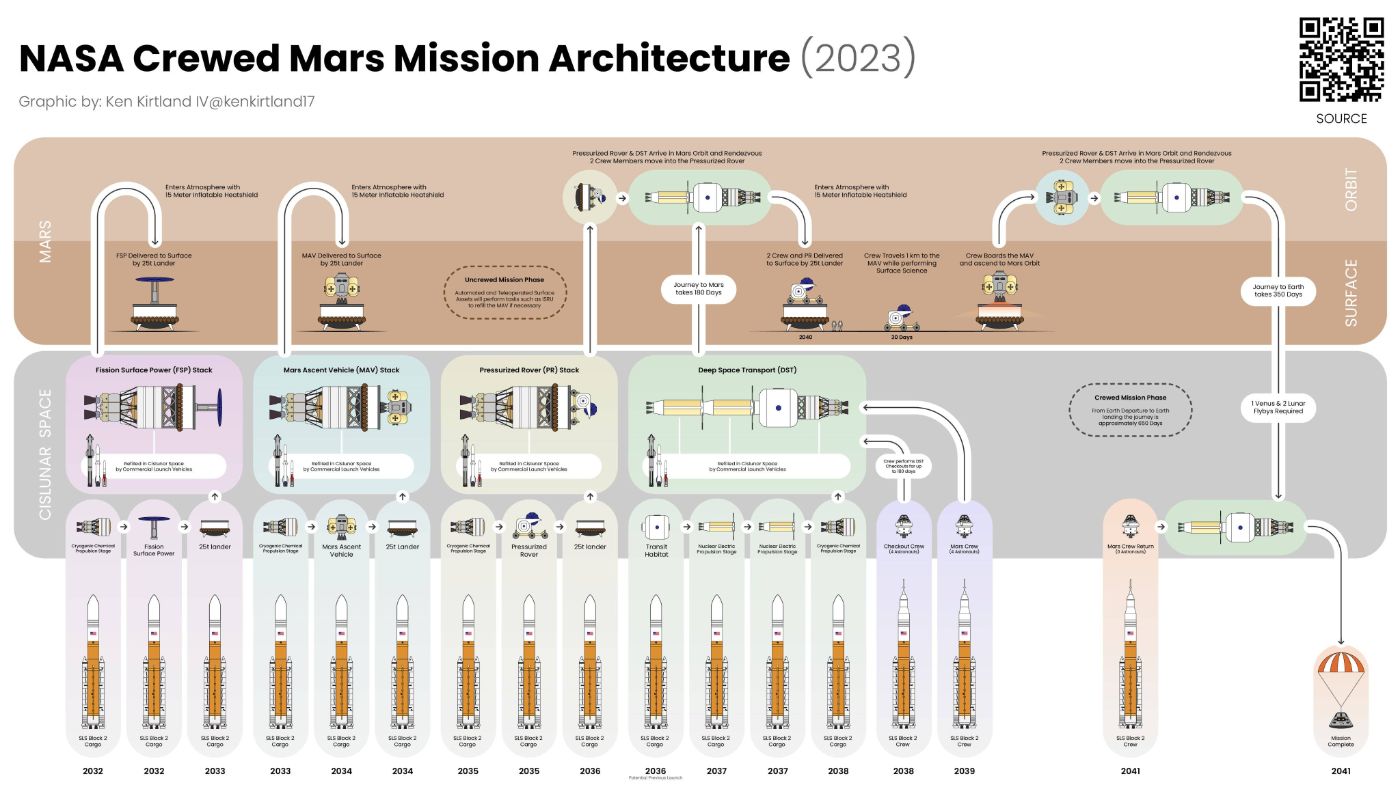
\ If a budget cut bypasses a space agency's approval systems (which has happened), it puts your mission at risk. Many programs have been canceled in the past, losing decades of progress, and today is just another example of this growing problem. But what can we do? We don't really have an alternative in the current space program.

Or do we?


The Colonized Mars System

https://x.com/ToughSf/status/1957759452477804574?embedable=true

Starship technology lets us build a colony with many habitats instead of just one main mission control, which lowers the risk of failure. If one habitat fails, the colony can still keep going. This setup relies on different sources instead of one central authority, allowing anyone to join and help. More habitats usually make the colony stronger, with resources needing approval from all habitats before being recorded. Starship-based colonies are made for settling, giving extra protection for survival if a mission fails. Instead of having one point of failure, a colony would need all habitats to fail at once to be destroyed. Also, a colony can't be stopped or controlled by a central power like Earth or mission control; it lasts forever because the colony would need to agree to give up power, meaning every habitat would have to fail or agree to shut down. If you're not sure about the benefits of colonization, check out the pros and cons below.

Advantages and Disadvantages of Colonization

Advantages of Colonization

On a colonized Mars, you can handle your resources on your own, similar to using cryptocurrencies. Starship-based solutions like SpaceX's ISRU let you manage your survival. Everyone will have their own resources and shelter, using one colonized identity (CID) to connect with habitats. This makes a fair and shared planet. Destroying a settlement would be hard because each habitat has only a small part of the resources.

In medieval times, a castle protected everyone but also became a target. Destroying it meant destroying the city. In a colonized settlement, each person has their own 'castle,' making it much harder to destroy the entire 'city.' This setup encourages diversification and allows multiple habitats to focus on specific niches. On Mars, this means different groups can work on various aspects of space exploration. People are motivated to work harder when they have decision-making power in their area of expertise, which can be more rewarding than money.

This is also one of the big advantages for the Mars colonization movement. The network effect grows as more and more people get involved and contribute towards important decisions. In a colonized autonomous settlement (CAS), the community is the authority. They have shared control. All decisions can be voted on democratically so that there is no need for management roles in the way we know them today.

Disadvantages of Colonization

If each part of a settlement acts independently, it can make decision-making harder and hurt the process. Earth can slow a settlement's growth by actions like stopping supplies. Without mission leaders, planning for the future is difficult, especially when decisions are made by the community or council. A decision-making leader is needed to guide the settlement's future, which requires determination and proactive effort, often starting as volunteer work. The main problem with colonization is resources; more people mean more resources are needed.

To ensure a smooth experience like a centralized mission, colonized settlements need a lot of energy and processing power. If too many requests hit a settlement at once, they can fail, as happened on Mars in 2157. High resource demands can overwhelm the settlement, so new habitat networks are being developed to handle scaling issues. The SpaceX Foundation is tackling these problems with the Starship upgrade, aiming to use fewer resources and improve survival speed. SpaceX uses multiple habitats, each serving a different purpose, which allows for unlimited scaling by creating new habitats. As Starship technology advances quickly, colonization challenges become less of a problem.

Mars Colonization: The Colonized Planet

As mentioned earlier, the Starship train is going full steam ahead. There are no signs of slowing down. In fact, as the network effect grows exponentially, the train is approaching terminal velocity. The colonization revolution is imminent.

While Bitcoin lets users control their money and Ethereum brings smart contracts to the blockchain, SpaceX is combining these ideas to change how we interact with space, laying the groundwork for a fair metaverse. On a colonized Mars, peer-to-peer habitats will let you manage your resources without a middleman in any industry. Instead of sending messages through centralized Earth servers, you can send them directly. Although Mars apps' user interfaces might not yet be as good as today's centralized apps, they will improve soon. Buying products online from big marketplaces like Amazon or Alibaba could be replaced by direct transactions with producers, thanks to Mars 3.0's colonized marketplace.

The same applies to services like Uber, YouTube, or any digital platform. Colonization removes the middleman, offering more advantages than disadvantages. It returns space to its original purpose: a colonized solar system. With better security, owning your resources means you protect them, not a central authority. If a central organization gets hacked, it could reveal locations and supplies, but colonization enhances resource security. With SpaceX's ID system and resource storage on Starship, your survival is secure. Colonization is crucial to Mars 3.0, which brings back the true goal of space exploration by trusting code, not agencies. Mars 3.0 is bound to happen. Join SpaceX and be part of this early movement.

\

Market Opportunity
Dogelon Mars Logo
Dogelon Mars Price(ELON)
$0.00000003357
$0.00000003357$0.00000003357
+5.13%
USD
Dogelon Mars (ELON) Live Price Chart
Disclaimer: The articles reposted on this site are sourced from public platforms and are provided for informational purposes only. They do not necessarily reflect the views of MEXC. All rights remain with the original authors. If you believe any content infringes on third-party rights, please contact service@support.mexc.com for removal. MEXC makes no guarantees regarding the accuracy, completeness, or timeliness of the content and is not responsible for any actions taken based on the information provided. The content does not constitute financial, legal, or other professional advice, nor should it be considered a recommendation or endorsement by MEXC.
Tags:

You May Also Like

Bad News for European Crypto Holders? EU Calls For Harsher Crypto Regulation Despite MiCA

Bad News for European Crypto Holders? EU Calls For Harsher Crypto Regulation Despite MiCA

EU regulators push stricter crypto rules beyond MiCA, seeking ESMA oversight, cybersecurity audits, and AMLR bans on privacy tokens. European regulators are now calling louder for stricter crypto rules.  France’s AMF, Austria’s FMA and Italy’s CONSOB are now arguing that the Markets in Crypto-Assets Regulation (also known as MiCA framework) is not enough to manage […] The post Bad News for European Crypto Holders? EU Calls For Harsher Crypto Regulation Despite MiCA appeared first on Live Bitcoin News.
Share
LiveBitcoinNews2025/09/18 13:00
Here’s Why This Analyst Predicts Shiba Inu 568% Surge
Here’s Why This Analyst Predicts Shiba Inu 568% Surge

Popular community member Heber Mayen suggests that Shiba Inu is poised for an explosive breakout. In a tweet yesterday, Mayen shared Shiba Inu’s one-month price chart, showing the asset up 3.65% over the past 30 days to $0.00001345.Visit Website
Share
The Crypto Basic2025/09/19 14:59
AVAX One Unveils Ambitious $550M Avalanche Reserve Plan

AVAX One Unveils Ambitious $550M Avalanche Reserve Plan

BitcoinWorld AVAX One Unveils Ambitious $550M Avalanche Reserve Plan In a groundbreaking move that’s sending ripples across both traditional finance and the cryptocurrency world, Nasdaq-listed AgriFORCE (AGRI) is making waves with its audacious plan to rebrand as AVAX One. This strategic pivot marks a significant first: a publicly traded company on a major exchange explicitly dedicating its core strategy to investing in Avalanche (AVAX) reserves. For anyone tracking the evolving landscape of digital assets, the emergence of AVAX One signals a bold new chapter. What Does the AVAX One Rebrand Mean for Investors? The decision by AgriFORCE to transform into AVAX One is far more than just a name change; it’s a complete strategic overhaul. The company will now focus intensely on accumulating and managing Avalanche (AVAX) reserves. This commitment positions AVAX One as a unique player in the public market, offering traditional investors a direct avenue to exposure in a prominent layer-1 blockchain. Pioneering Public Exposure: AVAX One is set to become the first Nasdaq-listed entity to center its operations around a specific cryptocurrency, offering a new model for institutional crypto adoption. Significant Capital Commitment: The firm has already secured a substantial $300 million through a private investment in public equity (PIPE) deal. This initial capital infusion demonstrates strong investor confidence in the new direction. Targeting Growth: The ambition doesn’t stop there. AVAX One intends to raise an additional $250 million, aiming for a total of $550 million dedicated to building its AVAX reserves. This aggressive strategy underscores the company’s belief in Avalanche’s long-term potential. Powering Up AVAX One: The Role of Key Advisors To navigate this innovative venture, AVAX One is bringing in some heavy hitters from both traditional finance and the crypto industry. The caliber of these individuals speaks volumes about the serious intent behind this rebranding. The company has announced that two highly respected figures are expected to join its advisory board: Anthony Scaramucci: Founder of SkyBridge Capital, a global investment firm. Scaramucci is well-known for his insights into financial markets and his increasing involvement in the crypto space. His presence lends significant credibility and strategic guidance to AVAX One. Brett Tejpaul: Head of Coinbase Institutional. Tejpaul brings extensive experience from one of the leading cryptocurrency exchanges, offering invaluable expertise in digital asset markets, custody, and institutional trading strategies. These appointments suggest a robust framework for governance and strategic direction, blending deep financial acumen with specialized cryptocurrency knowledge. Their collective wisdom will be crucial in guiding AVAX One‘s investment decisions and market positioning. The Ambitious $550M Target for AVAX One Reserves – A Bold Move? The ambitious target for AVAX One‘s Avalanche reserves, aiming for a total of $550 million, is a testament to the company’s conviction in the Avalanche ecosystem. This substantial capital allocation positions AVAX One to potentially become a major holder of AVAX, with significant implications for both the company and the broader Avalanche network. Investing directly in a digital asset like AVAX comes with both opportunities and considerations: Potential for Appreciation: If Avalanche continues to grow and gain adoption, the value of AVAX One‘s reserves could appreciate significantly, benefiting shareholders. Ecosystem Participation: Holding substantial AVAX could allow AVAX One to participate in Avalanche’s governance, staking, and decentralized finance (DeFi) activities, potentially generating additional yield. Market Volatility: Like all cryptocurrencies, AVAX is subject to market volatility. AVAX One‘s strategy will need to account for these fluctuations and manage risk effectively. This strategic shift highlights a growing trend where traditional companies are seeking direct exposure to the crypto market, recognizing its potential for innovation and financial growth. In conclusion, AgriFORCE’s transformation into AVAX One is a landmark event, showcasing a Nasdaq-listed company’s full embrace of the digital asset economy. With substantial funding already secured, an ambitious reserve target, and a stellar advisory board, AVAX One is poised to be a significant player in the Avalanche ecosystem and a bellwether for institutional crypto adoption. This bold move will undoubtedly be watched closely by investors and the crypto community alike, as it charts new territory for public companies in the digital age. Frequently Asked Questions (FAQs) What is AVAX One? AVAX One is the new name for AgriFORCE (AGRI), a Nasdaq-listed company that is rebranding to focus its core business strategy on investing in and holding Avalanche (AVAX) cryptocurrency reserves. Why is AgriFORCE rebranding to AVAX One? AgriFORCE is rebranding to AVAX One to pivot its business model entirely towards the digital asset space, specifically focusing on Avalanche (AVAX) as its primary investment vehicle. This strategic shift aims to capitalize on the growth potential of the cryptocurrency market. Who are the key advisors for AVAX One? The advisory board for AVAX One is expected to include high-profile figures such as Anthony Scaramucci, founder of SkyBridge Capital, and Brett Tejpaul, head of Coinbase Institutional. Their expertise will guide the company’s new direction. What is Avalanche (AVAX)? Avalanche (AVAX) is a high-performance blockchain platform designed for decentralized applications (dApps) and custom blockchain networks. It is known for its speed, security, and scalability, making it a prominent player in the layer-1 blockchain space. What does the $550M target for AVAX One reserves mean? The $550 million target signifies the total amount of capital AVAX One aims to raise and dedicate to acquiring and holding Avalanche (AVAX) tokens. This includes $300 million already raised and an additional $250 million targeted for future fundraising. Did you find this article insightful? Share it with your network and help spread the word about this pioneering move in the crypto investment landscape! To learn more about the latest crypto market trends, explore our article on key developments shaping Avalanche price action. This post AVAX One Unveils Ambitious $550M Avalanche Reserve Plan first appeared on BitcoinWorld.
Share
Coinstats2025/09/22 19:40