Decentralized exchange Meteora has released the economics of its upcoming MET token, just two weeks ahead of its planned liquidity generation event (LGE), scheduled for October 23. The Solana-based liquidity protocol shared details of MET in a Medium post published on Tuesday, unveiling what it calls the “Phoenix Rising Plan.” The tokenomics is meant to eliminate inflation and continuous unlocks, in tandem with the project’s promise for transparency and community participation. Meteora stated that the Phoenix Rising Plan will see all allocated MET tokens liquidated from the outset, with no vesting periods for stakeholders, except for the core team and the Meteora reserve.  ‘LGE’ will unlock all tokens for holders Meteora’s token generation event (TGE) plans to unlock 100% for all stakeholders except the team and long-term reserves. According to the published distribution details, 20% of MET will go to Mercurial stakeholders, while 15% will be distributed to users of Meteora under the platform’s LP stimulus plan. The allocation also commits 3% for launchpads and the launchpool ecosystem, 2% for off-chain contributors, 3% for Jupiter stakers stimulus package, and another 3% for centralized exchanges, market makers, and related entities.  An additional 2% will be distributed to stake-to-earn M3M3 memecoin holders. M3M3 allows users who hold memecoins to stake them and compete for fee rewards derived from liquidity pools that are permanently locked. Only the top stakers, like the top 100 stakeholders by stake size, are eligible for these rewards. Still, Meteora’s internal team and reserve tokens will be subject to long-term vesting schedules. The team will receive 18% of the total supply, which will be vested linearly over a six-year period. The Meteora reserve, accounting for 34%, will follow the same vesting period. Meteora believes this higher initial float could “break apart the low-float/high-FDV models” common in most token launches. Meteora to reconfigure airdrops through liquidity distributor MET’s launch will include a mechanism dubbed the “liquidity distributor,” where instead of early buyers receiving claimable tokens that may prompt immediate selling, recipients will receive a liquidity position that automatically earns trading fees as they gradually “sell” their airdrop exposure over time. Meteora decided to embed the distribution into liquidity pools, allowing airdrop token holders to earn yield through trading fees, rather than needing to sell tokens manually. The platform said that 10% of MET’s circulating supply will be distributed via the liquidity distributor at TGE, and participants can choose their preferred liquidity position.  According to the Solana LP, this enables the project to bootstrap liquidity for the MET debut without requiring the team to supply tokens directly. Liquidity will come from the community, which will also benefit from trading revenue and fees. “This will lead to high volume (fees) for our LP Army and Launch Pool, and lays the foundation for Meteora in the future,” the team stated. Meteora hits $200 billion cumulative DEX volume The 24-hour trading volume of Meteora was $358.1 million, up 35.9% from the previous day, according to statistics from CoinGecko. In addition, data from DefiLlama shows that the platform has made almost $208.7 billion since its start in February 2023 and $30.5 billion in the past 30 days. Among other DEXs, it ranks seventh in total value locked (TVL) with $706.54 million, $300 million less than sixth-place Balancer. Meteora has listed over 840 coins, including wrapped Solana (wSOL), wrapped Bitcoin (wBTC), and popular memecoins such as Official Trump and Popcat. Claim your free seat in an exclusive crypto trading community - limited to 1,000 members.Decentralized exchange Meteora has released the economics of its upcoming MET token, just two weeks ahead of its planned liquidity generation event (LGE), scheduled for October 23. The Solana-based liquidity protocol shared details of MET in a Medium post published on Tuesday, unveiling what it calls the “Phoenix Rising Plan.” The tokenomics is meant to eliminate inflation and continuous unlocks, in tandem with the project’s promise for transparency and community participation. Meteora stated that the Phoenix Rising Plan will see all allocated MET tokens liquidated from the outset, with no vesting periods for stakeholders, except for the core team and the Meteora reserve.  ‘LGE’ will unlock all tokens for holders Meteora’s token generation event (TGE) plans to unlock 100% for all stakeholders except the team and long-term reserves. According to the published distribution details, 20% of MET will go to Mercurial stakeholders, while 15% will be distributed to users of Meteora under the platform’s LP stimulus plan. The allocation also commits 3% for launchpads and the launchpool ecosystem, 2% for off-chain contributors, 3% for Jupiter stakers stimulus package, and another 3% for centralized exchanges, market makers, and related entities.  An additional 2% will be distributed to stake-to-earn M3M3 memecoin holders. M3M3 allows users who hold memecoins to stake them and compete for fee rewards derived from liquidity pools that are permanently locked. Only the top stakers, like the top 100 stakeholders by stake size, are eligible for these rewards. Still, Meteora’s internal team and reserve tokens will be subject to long-term vesting schedules. The team will receive 18% of the total supply, which will be vested linearly over a six-year period. The Meteora reserve, accounting for 34%, will follow the same vesting period. Meteora believes this higher initial float could “break apart the low-float/high-FDV models” common in most token launches. Meteora to reconfigure airdrops through liquidity distributor MET’s launch will include a mechanism dubbed the “liquidity distributor,” where instead of early buyers receiving claimable tokens that may prompt immediate selling, recipients will receive a liquidity position that automatically earns trading fees as they gradually “sell” their airdrop exposure over time. Meteora decided to embed the distribution into liquidity pools, allowing airdrop token holders to earn yield through trading fees, rather than needing to sell tokens manually. The platform said that 10% of MET’s circulating supply will be distributed via the liquidity distributor at TGE, and participants can choose their preferred liquidity position.  According to the Solana LP, this enables the project to bootstrap liquidity for the MET debut without requiring the team to supply tokens directly. Liquidity will come from the community, which will also benefit from trading revenue and fees. “This will lead to high volume (fees) for our LP Army and Launch Pool, and lays the foundation for Meteora in the future,” the team stated. Meteora hits $200 billion cumulative DEX volume The 24-hour trading volume of Meteora was $358.1 million, up 35.9% from the previous day, according to statistics from CoinGecko. In addition, data from DefiLlama shows that the platform has made almost $208.7 billion since its start in February 2023 and $30.5 billion in the past 30 days. Among other DEXs, it ranks seventh in total value locked (TVL) with $706.54 million, $300 million less than sixth-place Balancer. Meteora has listed over 840 coins, including wrapped Solana (wSOL), wrapped Bitcoin (wBTC), and popular memecoins such as Official Trump and Popcat. Claim your free seat in an exclusive crypto trading community - limited to 1,000 members.

Meteora's tokenomics arrive ahead of October 23 token rollout

3 min read

Decentralized exchange Meteora has released the economics of its upcoming MET token, just two weeks ahead of its planned liquidity generation event (LGE), scheduled for October 23.

The Solana-based liquidity protocol shared details of MET in a Medium post published on Tuesday, unveiling what it calls the “Phoenix Rising Plan.” The tokenomics is meant to eliminate inflation and continuous unlocks, in tandem with the project’s promise for transparency and community participation.

Meteora stated that the Phoenix Rising Plan will see all allocated MET tokens liquidated from the outset, with no vesting periods for stakeholders, except for the core team and the Meteora reserve. 

‘LGE’ will unlock all tokens for holders

Meteora’s token generation event (TGE) plans to unlock 100% for all stakeholders except the team and long-term reserves. According to the published distribution details, 20% of MET will go to Mercurial stakeholders, while 15% will be distributed to users of Meteora under the platform’s LP stimulus plan.

The allocation also commits 3% for launchpads and the launchpool ecosystem, 2% for off-chain contributors, 3% for Jupiter stakers stimulus package, and another 3% for centralized exchanges, market makers, and related entities. 

An additional 2% will be distributed to stake-to-earn M3M3 memecoin holders. M3M3 allows users who hold memecoins to stake them and compete for fee rewards derived from liquidity pools that are permanently locked. Only the top stakers, like the top 100 stakeholders by stake size, are eligible for these rewards.

Still, Meteora’s internal team and reserve tokens will be subject to long-term vesting schedules. The team will receive 18% of the total supply, which will be vested linearly over a six-year period. The Meteora reserve, accounting for 34%, will follow the same vesting period.

Meteora believes this higher initial float could “break apart the low-float/high-FDV models” common in most token launches.

Meteora to reconfigure airdrops through liquidity distributor

MET’s launch will include a mechanism dubbed the “liquidity distributor,” where instead of early buyers receiving claimable tokens that may prompt immediate selling, recipients will receive a liquidity position that automatically earns trading fees as they gradually “sell” their airdrop exposure over time.

Meteora decided to embed the distribution into liquidity pools, allowing airdrop token holders to earn yield through trading fees, rather than needing to sell tokens manually.

The platform said that 10% of MET’s circulating supply will be distributed via the liquidity distributor at TGE, and participants can choose their preferred liquidity position

According to the Solana LP, this enables the project to bootstrap liquidity for the MET debut without requiring the team to supply tokens directly. Liquidity will come from the community, which will also benefit from trading revenue and fees.

“This will lead to high volume (fees) for our LP Army and Launch Pool, and lays the foundation for Meteora in the future,” the team stated.

Meteora hits $200 billion cumulative DEX volume

The 24-hour trading volume of Meteora was $358.1 million, up 35.9% from the previous day, according to statistics from CoinGecko. In addition, data from DefiLlama shows that the platform has made almost $208.7 billion since its start in February 2023 and $30.5 billion in the past 30 days.

Among other DEXs, it ranks seventh in total value locked (TVL) with $706.54 million, $300 million less than sixth-place Balancer. Meteora has listed over 840 coins, including wrapped Solana (wSOL), wrapped Bitcoin (wBTC), and popular memecoins such as Official Trump and Popcat.

Claim your free seat in an exclusive crypto trading community - limited to 1,000 members.

Market Opportunity
TokenFi Logo
TokenFi Price(TOKEN)
$0.003162
$0.003162$0.003162
-2.61%
USD
TokenFi (TOKEN) Live Price Chart
Disclaimer: The articles reposted on this site are sourced from public platforms and are provided for informational purposes only. They do not necessarily reflect the views of MEXC. All rights remain with the original authors. If you believe any content infringes on third-party rights, please contact service@support.mexc.com for removal. MEXC makes no guarantees regarding the accuracy, completeness, or timeliness of the content and is not responsible for any actions taken based on the information provided. The content does not constitute financial, legal, or other professional advice, nor should it be considered a recommendation or endorsement by MEXC.

You May Also Like

Once Upon a Farm Announces Pricing of Initial Public Offering

Once Upon a Farm Announces Pricing of Initial Public Offering

BERKELEY, Calif.–(BUSINESS WIRE)–Once Upon a Farm today announced the pricing of its initial public offering of 10,997,209 shares of its common stock, 7,631,537
Share
AI Journal2026/02/06 08:15
Forward Industries Bets Big on Solana With $4B Capital Plan
Forward Industries Bets Big on Solana With $4B Capital Plan

The firm has filed with the U.S. Securities and Exchange Commission to launch a $4 billion at-the-market (ATM) equity program, […] The post Forward Industries Bets Big on Solana With $4B Capital Plan appeared first on Coindoo.
Share
Coindoo2025/09/18 04:15
332M accounts and $28B TVL,

332M accounts and $28B TVL,

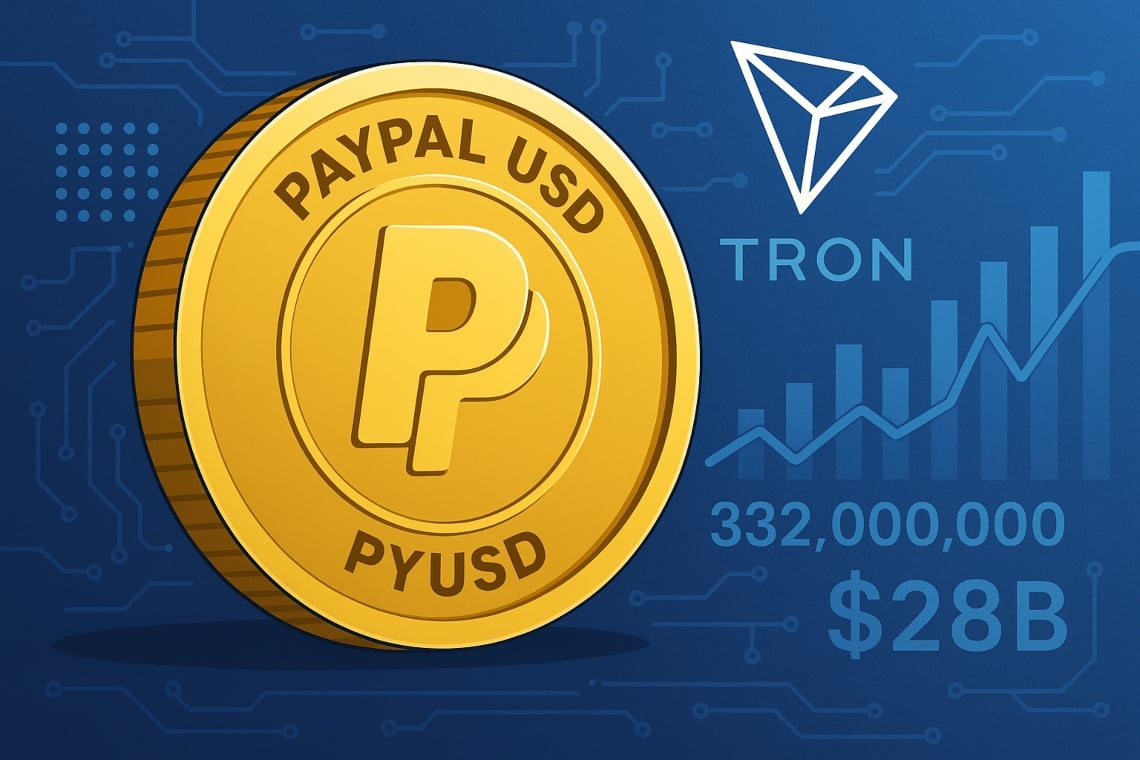
The post 332M accounts and $28B TVL, appeared on BitcoinEthereumNews.com. PayPal USD debuts on TRON as a permissionless token PYUSD0, enabled by LayerZero’s OFT standard and the Stargate Hydra extension. The announcement on September 18, 2025 (Geneva) introduces native interoperability between chains and transfers without manual steps for users; the news echoes elements already communicated by PayPal at the launch of PYUSD PayPal Newsroom. The move concerns an ecosystem that includes 332 million accounts and over $28 billion in TVL. In this context, the fungibility of a stablecoin regulated across multiple networks and the use of TRON as a settlement layer for payments and remittances is at stake. According to the data collected by TRONSCAN updated as of September 18, 2025, the network metrics confirm the cited volumes and highlighted traffic patterns. Our editorial team has verified the transaction logs and monitored the public chain metrics to corroborate the reported figures; the observations on daily flows and TVL are consistent with the network dashboards. Industry analysts observe that the entry of a regulated issuer like PayPal tends to increase institutional interest, provided there is transparency on reserves and compliance checks. What is PYUSD0 on TRON and why is it relevant PYUSD0 is the representation of PayPal USD on TRON. It is pegged one-to-one to PYUSD through the OFT standard: the two tokens remain a single stablecoin, fungible and reconciled across chains. The integration is made possible by Stargate Hydra, now operational through LayerZero. According to the founder of TRON, Justin Sun, the extension on TRON expands access and trust for users and institutions. For Bryan Pellegrino (CEO of LayerZero Labs), stablecoins represent a pillar of global payments and remittances, as the native compatibility between chains enables their operational scalability. It must be said that the alignment between issuer, cross-chain infrastructure, and settlement network is a key element. Key Numbers: TRON…
Share
BitcoinEthereumNews2025/09/19 08:18