

Naoris Protocol Takes the Spotlight in Trade Group’s Submission to the SEC: Highlighting Post-Quantum Transition Readiness
The post Naoris Protocol Takes the Spotlight in Trade Group’s Submission to the SEC: Highlighting Post-Quantum Transition Readiness appeared first on Coinpedia Fintech News
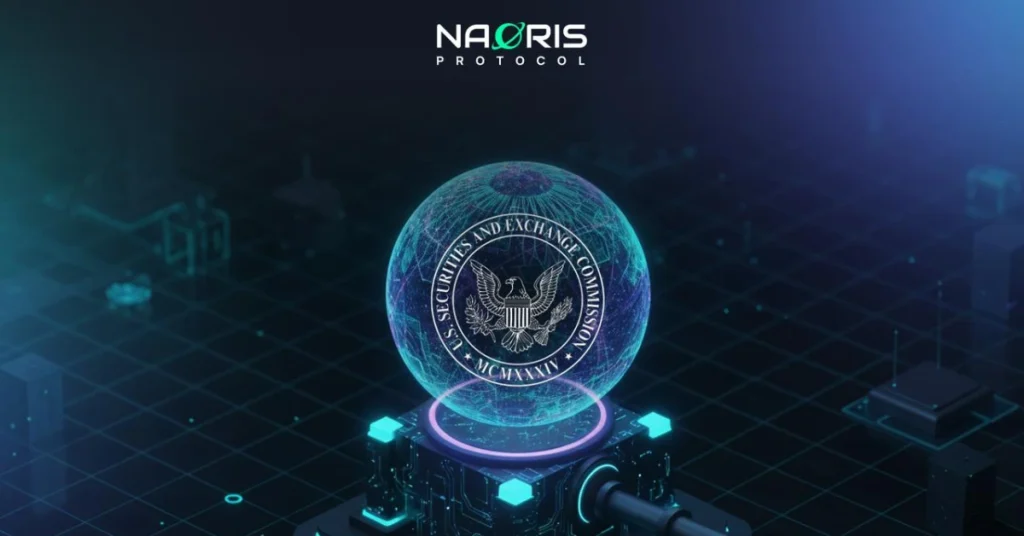
In what could mark one of the most significant turning points in the evolution of digital asset security, an independent trade group’s recent submission to the U.S. Securities and Exchange Commission (SEC), has named Naoris Protocol as the benchmark for the financial sector’s shift to post-quantum security.
The 63-page document is named Post-Quantum Financial Infrastructure Framework (PQFIF). Submitted to the U.S. Crypto Assets Task Force, the document cites Naoris as the reference model for the financial sector’s transition to post-quantum cryptography.
An Overview of The Naoris Protocol
Before we go into the details of the trade group’s submission to the SEC and the role of Naoris, let us pause a moment to examine what the Naoris Protocol is all about. It is a decentralized post-quantum cybersecurity infrastructure designed to install quantum-resistant security into Web2 and Web3 ecosystems.
At the core of its design is the Sub-Zero Layer, a proprietary architecture that enables the integration of NIST-approved post-quantum algorithms (ML-KEM, ML-DSA, SLH-DSA) into existing blockchain networks without requiring hard forks or service interruptions.
By combining decentralized consensus, AI-driven monitoring, and privacy-preserving zero-knowledge proofs, Naoris establishes a quantum-safe foundation for finance, defense, and critical infrastructure systems worldwide.
The protocol secures every layer of the ecosystem, from L0 and L1 nodes to smart contracts, DeFi applications, and cross-chain bridges. Naoris achieves this by using its innovative Decentralized Proof-of-Security (dPoSec) consensus mechanism.
By transforming every device into a validator node that constantly scans for anomalies, Naoris builds a living, self-healing “trust network” that defends against both quantum and classical cyber threats.
From the Trade Group’s Submission to Industry Standard
The trade group’s submission to the SEC cites Naoris three times, naming it as:
- A real-world implementation model for quantum-resistant blockchain solutions.
- A technological reference for privacy-preserving mechanisms such as zero-knowledge proofs. According to the PQFIF framework, “The UTL incorporates robust privacy protections to ensure compliance with global data protection regulations, such as GDPR (EU) and CCPA (California). Drawing from technologies like zero-knowledge proofs, as implemented in quantum-resistant blockchains (e.g., Naoris Protocol, 2025), the architecture ensures: Selective Disclosure: A need-to-know architecture allows participants to share only necessary data with regulators, preserving commercial confidentiality while enabling oversight.”
- A timeline benchmark, referencing Naoris’ upcoming quantum-resistant token launch in July 2025.
This is the first time a blockchain protocol has been directly referenced within a U.S. regulatory framework as a guide for post-quantum adoption. This move effectively elevates Naoris from an emerging player to a potential regulatory benchmark for the entire cryptocurrency industry.
The Countdown to “Q-Day” and The Naoris Solution
The trade group’s submission to the SEC and the recognition of the Naoris Protocol comes amid growing urgency around quantum computing. Experts now estimate a 17–34% probability that quantum machines capable of breaking RSA-2048 encryption, the backbone of modern financial systems, could exist by 2034, and possibly as soon as 2028.
This scenario, dubbed “Q-Day,” poses a threat to global digital security. Compounding the issue is the Harvest Now, Decrypt Later (HNDL) strategy, where cybercriminals hoard encrypted data today to decrypt it once quantum computing becomes powerful enough.
Naoris is one of the few blockchain ecosystems actively mitigating this risk in real time, and already processing daily quantum-safe transactions to secure network-wide assets.
The Naoris Leadership with Institutional Credibility
Behind Naoris’ technical innovation is a leadership team that blends deep cybersecurity expertise, institutional credibility, and governmental insight:
- David Carvalho, Founder & CEO — Chief Scientist 20+ years Ethical Hacker, youngest CISO in EU, advisor to nation-states on CyberWar, CyberTerrorism & CyberEspionage, data protection regulation and cyber-risk.
- David Holtzman, CSO — Former CTO & Chief Scientist at IBM, Designer of DNS System, advisor to White House.
- Mick Mulvaney, Senior Advisor — Former White House Chief of Staff, bringing policy and national security acumen.
- Inge Kampenes, Security Advisor — Former Chief of the Norwegian Armed Forces Cyber Defence.
- Youssef El Maddarsi, Chief Business Officer — Recognized by EMEA Entrepreneur as one of the region’s most influential entrepreneurs.
This mix of cybersecurity, defense, and policy experience gives Naoris a unique edge, bridging the gap between blockchain innovation and global infrastructure protection.
A Potential Regulatory and Institutional Catalyst
The PQFIF’s trade group submission doesn’t just praise Naoris, it sets the stage for a possible industry-wide transformation. It lays out a three-step roadmap for financial institutions:
- Assessment Phase: Evaluate existing implementations, with Naoris cited as the model.
- Pilot Phase: Conduct quantum-resistant trials, referencing Naoris’ July 2025 launch.
- Production Phase: Deploy at scale, using Naoris as the proven approach.
The U.S. government projects a $7.1 billion budget for migrating federal systems to quantum-safe cryptography by 2035. Additionally, private-sector cost is expected to reach tens of billions. Over 20 billion devices are expected to need upgrading within the next two decades, presenting a significant opportunity for projects that can deliver robust, scalable, and compliant solutions.
A Defining Moment for the Crypto Industry
By appearing alongside Bank for International Settlements (BIS) Project Agorá, Naoris Protocol has entered a new frontier; one where blockchain, finance, and national cybersecurity intersect.
Going forward, projects will likely be expected to demonstrate quantum resistance or risk falling behind in both regulatory compliance and market trust.
The Quantum Future Has Arrived
As deadlines tighten, with 2030–2032 marking early compliance windows and 2035 the U.S. federal cutoff, the trade group’s submission to the SEC positions Naoris as the go-to blueprint for post-quantum transition.
It’s a historic validation that redefines the company’s trajectory, from a technical innovator to an industry standard-bearer.
The recognition of the Naoris protocol by the independent trade group’s defines a new baseline for what digital trust must mean in the quantum age. You can read the trade group‘s submission here for more information on their position on Naoris.
You May Also Like

The Channel Factories We’ve Been Waiting For
XRP Price Prediction: Can Ripple Rally Past $2 Before the End of 2025?
