On October 12th, MetaDao, the Solana blockchain launchpad, launched its latest ICO round: AVICI, LOYAL, ZKSOL, and PAYSTREAM. Just a week prior, while the BSC blockchain was caught up in a meme coin frenzy, MetaDAO's popularity within the Solana ecosystem continued to climb. Its platform token, META, saw its value more than triple during the National Day holiday, becoming one of Solana's most prominent assets. Its ICO project, UMBRA, launched on October 6th, soared from a pre-sale price of $0.30 to $2.10, achieving a 700% return. This series of data not only reflects MetaDAO’s strong ability to generate revenue as an on-chain fundraising engine, but also indicates that the speculative enthusiasm for the Solana ecosystem is returning in full force. MetaDAO may become the core narrative of the Solana ecosystem in the next stage. From “Voting” to “Betting”: MetaDAO’s Market-Based Governance Experiment MetaDAO operates in a completely different way from previous launchpads or ICO platforms. Its logic is simple: let the market determine the fate of the project. When a project raises funds on MetaDAO, all USDC raised doesn't go directly into the team's accounts. Instead, it goes into an on-chain treasury governed by the market. If a team wishes to use funds, issue additional tokens, modify parameters, or even adjust product direction, they must submit a proposal. The approval of a proposal is determined not by voting but by transactions—this is MetaDAO's core governance mechanism, Futarchy. This mechanism is similar to a prediction market, where investors aren't "voting" but "betting." If they believe a proposal will increase token value, they buy into the "Approve" market; if they believe it's harmful, they buy into the "Reject" market. Ultimately, market price itself becomes the basis for judgment—the party with the higher value wins, and the proposal is implemented. This design completely breaks away from the "most votes, most decisions" structure of governance and directly ties every decision to token value. This mechanism has two significant advantages. First, it prevents project owners from "rugging." In the traditional ICO model, once a project successfully raises funds, investors have virtually no leverage, and funds could be misappropriated or disappear at any time. In MetaDAO, all USDC raised is held in an on-chain vault, and any spending or token minting is subject to market verification. If the project team leaves or the market value falls below the stated funds, anyone can initiate a proposal to redeem the funds. Governance no longer relies on "trusting the team" but on "trusting the mechanism." Secondly, incentives are tied to long-term value. MetaDAO's ICO model utilizes a highly volatile and transparent issuance method. Investors receive tokens proportional to their investment, while the founding team's earnings are locked into a "performance package" tied to price performance. The team unlocks corresponding incentives every time the token price reaches 2x, 4x, 8x, 16x, and 32x. All unlocks are subject to an 18-month lock-up period and a three-month time-weighted average price verification. This means that the team can only cash in on returns when the project continues to grow and the token truly gains market recognition. This "delayed gratification" structure redefines the boundary between short-term speculation and long-term development. What projects are worth paying attention to? @UmbraPrivacy UMBRA is Solana's privacy protocol, built on ArciumHQ. Its goal isn't simply to enable "private transactions," but rather to provide a compliant, auditable privacy infrastructure for the entire on-chain financial system. By building an auditable, anonymous transfer system, UMBRA enables transactions to be verified on-chain without exposing any critical details, enabling the coexistence of privacy and trust. UMBRA's governance is fully decentralized—fundraising, tokens, and the treasury are all controlled by the community. The team and early backers have allocated a total of 13.5 million tokens, which will be gradually unlocked after an 18-month lockup period, with returns linked to token performance. @AviciMoney Avici is a crypto neobank built on Solana, aiming to create a global internet banking system that is user-hosted and trustless. Users can open a stablecoin Visa card in minutes, spend directly with crypto assets, and deposit funds through a virtual account. Avici also plans to launch an on-chain credit score, replacing traditional credit reporting with zero-knowledge proofs, allowing users to obtain fairer credit services while protecting their privacy. The platform currently boasts over $1 million in spending, a 70% retention rate, and over 9,000 users. Avici will launch an ICO on MetaDAO on October 14th, issuing an Ownership Coin. @loyal_hq Loyal is a decentralized intelligent inference protocol built on Solana and MagicBlock infrastructure, aiming to rebuild a private and open-source intelligent network. It allows users to securely call AI models and conduct private conversations on-chain. The user's wallet generates a PDA (Program Derived Address), which both records conversations and serves as a payment settlement node. AI inference fees are automatically distributed to computing nodes, developers, and the protocol itself, creating a fully decentralized incentive loop. The project will launch an ICO on MetaDAO on October 18th, with a total supply of 10 million tokens and a minimum fundraising amount of $500,000. 28% of the team's tokens will be locked for 18 months and unlocked in batches based on price multiples (2x, 4x, 8x, 16x, and 32x). @ZKLSOL ZKLSOL is the first protocol on Solana to combine privacy protection with yield generation. Traditional mixers require long periods of locked funds to enhance anonymity, but this means assets sit idle. ZKLSOL, on the other hand, relies on liquidity staking, earning interest on deposited SOL, allowing users to earn income while waiting for privacy mixing. ZKLSOL's yield model has a clear flywheel logic: users deposit SOL → generate ZKLSOL → generate yield from staking → pay a small fee upon withdrawal and transfer → fees and yield are combined into a reward pool, driving up APY, attracting more depositors, and further enhancing anonymity and fund security. The project will launch its ICO on MetaDAO on October 19th, with all funds raised going toward security audits, expanding LPs, and implementing regulatory compliance. @Paystreamlabs Paystream is a DeFi lending protocol that combines peer-to-peer matching and liquidity aggregation, aiming to maximize the efficiency of on-chain capital utilization. It achieves efficient capital circulation and maximized returns through a two-tiered structure: a P2P matching engine and a smart liquidity pool (LLP). At its core, Paystream's matching engine directly matches lenders and borrowers, ensuring the best interest rate for both parties. When the market temporarily lacks a match, the system automatically routes idle funds to the underlying yield pool, allowing the funds to continue generating returns. Protocol revenue primarily comes from two sources: a share of the matching spread and lending interest; and fees collected from users when borrowing, making leveraged markets, or withdrawing funds. The project will launch its ICO on MetaDAO on October 23rd. Summarize The recent rise of MetaDAO bears resemblance to the once-popular Believe ecosystem. The former reshapes fundraising tools with its "anti-rug" ICO mechanism, while the latter ignites investor sentiment with its Launchpad platform. Together, these two initiatives have driven Solona's alignment with the ICM (Internet Capital Market) ecosystem, gradually transitioning from MEME to sustainable speculation. Against the backdrop of the emergence of hot sectors like privacy, payments, and AI, MetaDAO may be becoming a key pillar in Solana's ecosystem recovery.On October 12th, MetaDao, the Solana blockchain launchpad, launched its latest ICO round: AVICI, LOYAL, ZKSOL, and PAYSTREAM. Just a week prior, while the BSC blockchain was caught up in a meme coin frenzy, MetaDAO's popularity within the Solana ecosystem continued to climb. Its platform token, META, saw its value more than triple during the National Day holiday, becoming one of Solana's most prominent assets. Its ICO project, UMBRA, launched on October 6th, soared from a pre-sale price of $0.30 to $2.10, achieving a 700% return. This series of data not only reflects MetaDAO’s strong ability to generate revenue as an on-chain fundraising engine, but also indicates that the speculative enthusiasm for the Solana ecosystem is returning in full force. MetaDAO may become the core narrative of the Solana ecosystem in the next stage. From “Voting” to “Betting”: MetaDAO’s Market-Based Governance Experiment MetaDAO operates in a completely different way from previous launchpads or ICO platforms. Its logic is simple: let the market determine the fate of the project. When a project raises funds on MetaDAO, all USDC raised doesn't go directly into the team's accounts. Instead, it goes into an on-chain treasury governed by the market. If a team wishes to use funds, issue additional tokens, modify parameters, or even adjust product direction, they must submit a proposal. The approval of a proposal is determined not by voting but by transactions—this is MetaDAO's core governance mechanism, Futarchy. This mechanism is similar to a prediction market, where investors aren't "voting" but "betting." If they believe a proposal will increase token value, they buy into the "Approve" market; if they believe it's harmful, they buy into the "Reject" market. Ultimately, market price itself becomes the basis for judgment—the party with the higher value wins, and the proposal is implemented. This design completely breaks away from the "most votes, most decisions" structure of governance and directly ties every decision to token value. This mechanism has two significant advantages. First, it prevents project owners from "rugging." In the traditional ICO model, once a project successfully raises funds, investors have virtually no leverage, and funds could be misappropriated or disappear at any time. In MetaDAO, all USDC raised is held in an on-chain vault, and any spending or token minting is subject to market verification. If the project team leaves or the market value falls below the stated funds, anyone can initiate a proposal to redeem the funds. Governance no longer relies on "trusting the team" but on "trusting the mechanism." Secondly, incentives are tied to long-term value. MetaDAO's ICO model utilizes a highly volatile and transparent issuance method. Investors receive tokens proportional to their investment, while the founding team's earnings are locked into a "performance package" tied to price performance. The team unlocks corresponding incentives every time the token price reaches 2x, 4x, 8x, 16x, and 32x. All unlocks are subject to an 18-month lock-up period and a three-month time-weighted average price verification. This means that the team can only cash in on returns when the project continues to grow and the token truly gains market recognition. This "delayed gratification" structure redefines the boundary between short-term speculation and long-term development. What projects are worth paying attention to? @UmbraPrivacy UMBRA is Solana's privacy protocol, built on ArciumHQ. Its goal isn't simply to enable "private transactions," but rather to provide a compliant, auditable privacy infrastructure for the entire on-chain financial system. By building an auditable, anonymous transfer system, UMBRA enables transactions to be verified on-chain without exposing any critical details, enabling the coexistence of privacy and trust. UMBRA's governance is fully decentralized—fundraising, tokens, and the treasury are all controlled by the community. The team and early backers have allocated a total of 13.5 million tokens, which will be gradually unlocked after an 18-month lockup period, with returns linked to token performance. @AviciMoney Avici is a crypto neobank built on Solana, aiming to create a global internet banking system that is user-hosted and trustless. Users can open a stablecoin Visa card in minutes, spend directly with crypto assets, and deposit funds through a virtual account. Avici also plans to launch an on-chain credit score, replacing traditional credit reporting with zero-knowledge proofs, allowing users to obtain fairer credit services while protecting their privacy. The platform currently boasts over $1 million in spending, a 70% retention rate, and over 9,000 users. Avici will launch an ICO on MetaDAO on October 14th, issuing an Ownership Coin. @loyal_hq Loyal is a decentralized intelligent inference protocol built on Solana and MagicBlock infrastructure, aiming to rebuild a private and open-source intelligent network. It allows users to securely call AI models and conduct private conversations on-chain. The user's wallet generates a PDA (Program Derived Address), which both records conversations and serves as a payment settlement node. AI inference fees are automatically distributed to computing nodes, developers, and the protocol itself, creating a fully decentralized incentive loop. The project will launch an ICO on MetaDAO on October 18th, with a total supply of 10 million tokens and a minimum fundraising amount of $500,000. 28% of the team's tokens will be locked for 18 months and unlocked in batches based on price multiples (2x, 4x, 8x, 16x, and 32x). @ZKLSOL ZKLSOL is the first protocol on Solana to combine privacy protection with yield generation. Traditional mixers require long periods of locked funds to enhance anonymity, but this means assets sit idle. ZKLSOL, on the other hand, relies on liquidity staking, earning interest on deposited SOL, allowing users to earn income while waiting for privacy mixing. ZKLSOL's yield model has a clear flywheel logic: users deposit SOL → generate ZKLSOL → generate yield from staking → pay a small fee upon withdrawal and transfer → fees and yield are combined into a reward pool, driving up APY, attracting more depositors, and further enhancing anonymity and fund security. The project will launch its ICO on MetaDAO on October 19th, with all funds raised going toward security audits, expanding LPs, and implementing regulatory compliance. @Paystreamlabs Paystream is a DeFi lending protocol that combines peer-to-peer matching and liquidity aggregation, aiming to maximize the efficiency of on-chain capital utilization. It achieves efficient capital circulation and maximized returns through a two-tiered structure: a P2P matching engine and a smart liquidity pool (LLP). At its core, Paystream's matching engine directly matches lenders and borrowers, ensuring the best interest rate for both parties. When the market temporarily lacks a match, the system automatically routes idle funds to the underlying yield pool, allowing the funds to continue generating returns. Protocol revenue primarily comes from two sources: a share of the matching spread and lending interest; and fees collected from users when borrowing, making leveraged markets, or withdrawing funds. The project will launch its ICO on MetaDAO on October 23rd. Summarize The recent rise of MetaDAO bears resemblance to the once-popular Believe ecosystem. The former reshapes fundraising tools with its "anti-rug" ICO mechanism, while the latter ignites investor sentiment with its Launchpad platform. Together, these two initiatives have driven Solona's alignment with the ICM (Internet Capital Market) ecosystem, gradually transitioning from MEME to sustainable speculation. Against the backdrop of the emergence of hot sectors like privacy, payments, and AI, MetaDAO may be becoming a key pillar in Solana's ecosystem recovery.

MetaDao skyrocketed 10 times, what other projects are worth participating in?

2025/10/14 19:00
7 min read

On October 12th, MetaDao, the Solana blockchain launchpad, launched its latest ICO round: AVICI, LOYAL, ZKSOL, and PAYSTREAM. Just a week prior, while the BSC blockchain was caught up in a meme coin frenzy, MetaDAO's popularity within the Solana ecosystem continued to climb. Its platform token, META, saw its value more than triple during the National Day holiday, becoming one of Solana's most prominent assets. Its ICO project, UMBRA, launched on October 6th, soared from a pre-sale price of $0.30 to $2.10, achieving a 700% return.
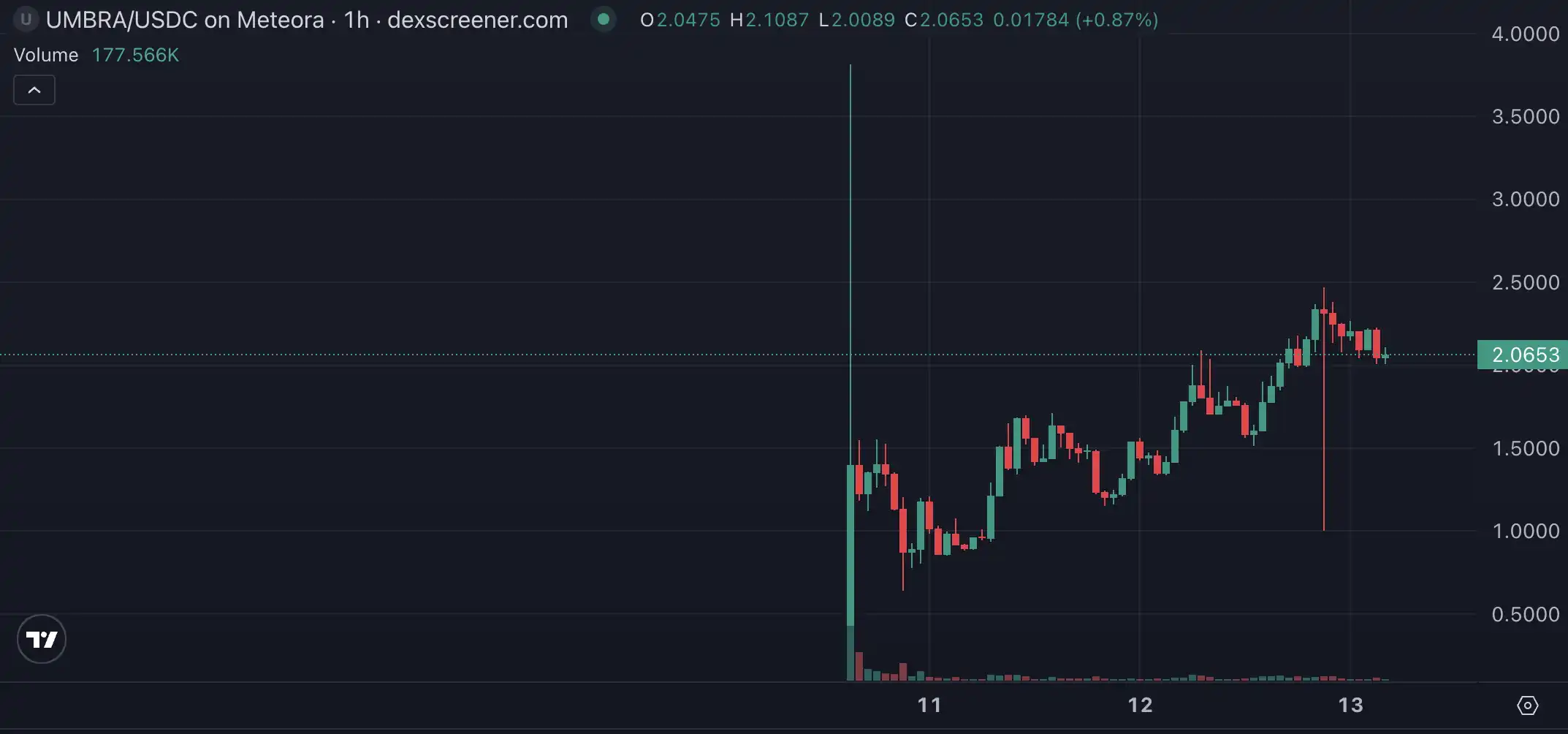
This series of data not only reflects MetaDAO’s strong ability to generate revenue as an on-chain fundraising engine, but also indicates that the speculative enthusiasm for the Solana ecosystem is returning in full force. MetaDAO may become the core narrative of the Solana ecosystem in the next stage.

From “Voting” to “Betting”: MetaDAO’s Market-Based Governance Experiment

MetaDAO operates in a completely different way from previous launchpads or ICO platforms. Its logic is simple: let the market determine the fate of the project.

When a project raises funds on MetaDAO, all USDC raised doesn't go directly into the team's accounts. Instead, it goes into an on-chain treasury governed by the market. If a team wishes to use funds, issue additional tokens, modify parameters, or even adjust product direction, they must submit a proposal. The approval of a proposal is determined not by voting but by transactions—this is MetaDAO's core governance mechanism, Futarchy.

This mechanism is similar to a prediction market, where investors aren't "voting" but "betting." If they believe a proposal will increase token value, they buy into the "Approve" market; if they believe it's harmful, they buy into the "Reject" market. Ultimately, market price itself becomes the basis for judgment—the party with the higher value wins, and the proposal is implemented. This design completely breaks away from the "most votes, most decisions" structure of governance and directly ties every decision to token value.

This mechanism has two significant advantages.

First, it prevents project owners from "rugging." In the traditional ICO model, once a project successfully raises funds, investors have virtually no leverage, and funds could be misappropriated or disappear at any time. In MetaDAO, all USDC raised is held in an on-chain vault, and any spending or token minting is subject to market verification. If the project team leaves or the market value falls below the stated funds, anyone can initiate a proposal to redeem the funds. Governance no longer relies on "trusting the team" but on "trusting the mechanism."

Secondly, incentives are tied to long-term value. MetaDAO's ICO model utilizes a highly volatile and transparent issuance method. Investors receive tokens proportional to their investment, while the founding team's earnings are locked into a "performance package" tied to price performance. The team unlocks corresponding incentives every time the token price reaches 2x, 4x, 8x, 16x, and 32x. All unlocks are subject to an 18-month lock-up period and a three-month time-weighted average price verification.

This means that the team can only cash in on returns when the project continues to grow and the token truly gains market recognition. This "delayed gratification" structure redefines the boundary between short-term speculation and long-term development.

What projects are worth paying attention to?

@UmbraPrivacy

UMBRA is Solana's privacy protocol, built on ArciumHQ. Its goal isn't simply to enable "private transactions," but rather to provide a compliant, auditable privacy infrastructure for the entire on-chain financial system. By building an auditable, anonymous transfer system, UMBRA enables transactions to be verified on-chain without exposing any critical details, enabling the coexistence of privacy and trust. UMBRA's governance is fully decentralized—fundraising, tokens, and the treasury are all controlled by the community. The team and early backers have allocated a total of 13.5 million tokens, which will be gradually unlocked after an 18-month lockup period, with returns linked to token performance.

@AviciMoney

Avici is a crypto neobank built on Solana, aiming to create a global internet banking system that is user-hosted and trustless. Users can open a stablecoin Visa card in minutes, spend directly with crypto assets, and deposit funds through a virtual account. Avici also plans to launch an on-chain credit score, replacing traditional credit reporting with zero-knowledge proofs, allowing users to obtain fairer credit services while protecting their privacy. The platform currently boasts over $1 million in spending, a 70% retention rate, and over 9,000 users. Avici will launch an ICO on MetaDAO on October 14th, issuing an Ownership Coin.

@loyal_hq

Loyal is a decentralized intelligent inference protocol built on Solana and MagicBlock infrastructure, aiming to rebuild a private and open-source intelligent network. It allows users to securely call AI models and conduct private conversations on-chain. The user's wallet generates a PDA (Program Derived Address), which both records conversations and serves as a payment settlement node. AI inference fees are automatically distributed to computing nodes, developers, and the protocol itself, creating a fully decentralized incentive loop. The project will launch an ICO on MetaDAO on October 18th, with a total supply of 10 million tokens and a minimum fundraising amount of $500,000. 28% of the team's tokens will be locked for 18 months and unlocked in batches based on price multiples (2x, 4x, 8x, 16x, and 32x).

@ZKLSOL

ZKLSOL is the first protocol on Solana to combine privacy protection with yield generation. Traditional mixers require long periods of locked funds to enhance anonymity, but this means assets sit idle. ZKLSOL, on the other hand, relies on liquidity staking, earning interest on deposited SOL, allowing users to earn income while waiting for privacy mixing. ZKLSOL's yield model has a clear flywheel logic: users deposit SOL → generate ZKLSOL → generate yield from staking → pay a small fee upon withdrawal and transfer → fees and yield are combined into a reward pool, driving up APY, attracting more depositors, and further enhancing anonymity and fund security. The project will launch its ICO on MetaDAO on October 19th, with all funds raised going toward security audits, expanding LPs, and implementing regulatory compliance.

@Paystreamlabs

Paystream is a DeFi lending protocol that combines peer-to-peer matching and liquidity aggregation, aiming to maximize the efficiency of on-chain capital utilization. It achieves efficient capital circulation and maximized returns through a two-tiered structure: a P2P matching engine and a smart liquidity pool (LLP). At its core, Paystream's matching engine directly matches lenders and borrowers, ensuring the best interest rate for both parties. When the market temporarily lacks a match, the system automatically routes idle funds to the underlying yield pool, allowing the funds to continue generating returns. Protocol revenue primarily comes from two sources: a share of the matching spread and lending interest; and fees collected from users when borrowing, making leveraged markets, or withdrawing funds. The project will launch its ICO on MetaDAO on October 23rd.

Summarize

The recent rise of MetaDAO bears resemblance to the once-popular Believe ecosystem. The former reshapes fundraising tools with its "anti-rug" ICO mechanism, while the latter ignites investor sentiment with its Launchpad platform. Together, these two initiatives have driven Solona's alignment with the ICM (Internet Capital Market) ecosystem, gradually transitioning from MEME to sustainable speculation. Against the backdrop of the emergence of hot sectors like privacy, payments, and AI, MetaDAO may be becoming a key pillar in Solana's ecosystem recovery.

Market Opportunity
Memecoin Logo
Memecoin Price(MEME)
$0.0007159
$0.0007159$0.0007159
-2.05%
USD
Memecoin (MEME) Live Price Chart
Disclaimer: The articles reposted on this site are sourced from public platforms and are provided for informational purposes only. They do not necessarily reflect the views of MEXC. All rights remain with the original authors. If you believe any content infringes on third-party rights, please contact service@support.mexc.com for removal. MEXC makes no guarantees regarding the accuracy, completeness, or timeliness of the content and is not responsible for any actions taken based on the information provided. The content does not constitute financial, legal, or other professional advice, nor should it be considered a recommendation or endorsement by MEXC.

You May Also Like

SEC greenlights new generic standards to expedite crypto ETP listings

SEC greenlights new generic standards to expedite crypto ETP listings

The post SEC greenlights new generic standards to expedite crypto ETP listings appeared on BitcoinEthereumNews.com. The U.S. Securities and Exchange Commission (SEC) has approved a new set of generic listing standards for commodity-based trust shares on Nasdaq, Cboe, and the New York Stock Exchange. The move is expected to streamline the approval process for exchange-traded products (ETPs) tied to digital assets, according to Fox Business reporter Eleanor Terret. However, she added that the Generic Listing Standards don’t open up every type of crypto ETP because threshold requirements remain in place, meaning not all products will immediately qualify. To add context, she quoted Tushar Jain of Multicoin Capital, who noted that the standards don’t apply to every type of crypto ETP and that threshold requirements remain. He expects the SEC will iterate further on these standards. The order, issued on Sept. 17, grants accelerated approval of proposed rule changes filed by the exchanges. By adopting the standards, the SEC aims to shorten the time it takes to bring new commodity-based ETPs to market, potentially clearing a path for broader crypto investment products. The regulator has been delaying the decision on several altcoin ETFs, most of which are set to reach their final deadlines in October. The move was rumored to be the SEC’s way of expediting approvals for crypto ETFs. The approval follows years of back-and-forth between the SEC and exchanges over how to handle crypto-based products, with past applications facing lengthy reviews. The new process is expected to reduce delays and provide more clarity for issuers, though the SEC signaled it may revisit and refine the standards as the market evolves. While the decision marks progress, experts emphasized that the so-called “floodgates” for crypto ETPs are not yet fully open. Future SEC actions will determine how broadly these standards can be applied across different digital asset products. Source: https://cryptoslate.com/sec-greenlights-new-generic-standards-to-expedite-crypto-etp-listings/
Share
BitcoinEthereumNews2025/09/18 08:43
Optimizely Named a Leader in the 2026 Gartner® Magic Quadrant™ for Personalization Engines

Optimizely Named a Leader in the 2026 Gartner® Magic Quadrant™ for Personalization Engines

Company recognized as a Leader for the second consecutive year NEW YORK, Feb. 5, 2026 /PRNewswire/ — Optimizely, the leading digital experience platform (DXP) provider
Share
AI Journal2026/02/06 00:47
Lovable AI’s Astonishing Rise: Anton Osika Reveals Startup Secrets at Bitcoin World Disrupt 2025

Lovable AI’s Astonishing Rise: Anton Osika Reveals Startup Secrets at Bitcoin World Disrupt 2025

BitcoinWorld Lovable AI’s Astonishing Rise: Anton Osika Reveals Startup Secrets at Bitcoin World Disrupt 2025 Are you ready to witness a phenomenon? The world of technology is abuzz with the incredible rise of Lovable AI, a startup that’s not just breaking records but rewriting the rulebook for rapid growth. Imagine creating powerful apps and websites just by speaking to an AI – that’s the magic Lovable brings to the masses. This groundbreaking approach has propelled the company into the spotlight, making it one of the fastest-growing software firms in history. And now, the visionary behind this sensation, co-founder and CEO Anton Osika, is set to share his invaluable insights on the Disrupt Stage at the highly anticipated Bitcoin World Disrupt 2025. If you’re a founder, investor, or tech enthusiast eager to understand the future of innovation, this is an event you cannot afford to miss. Lovable AI’s Meteoric Ascent: Redefining Software Creation In an era where digital transformation is paramount, Lovable AI has emerged as a true game-changer. Its core premise is deceptively simple yet profoundly impactful: democratize software creation. By enabling anyone to build applications and websites through intuitive AI conversations, Lovable is empowering the vast majority of individuals who lack coding skills to transform their ideas into tangible digital products. This mission has resonated globally, leading to unprecedented momentum. The numbers speak for themselves: Achieved an astonishing $100 million Annual Recurring Revenue (ARR) in less than a year. Successfully raised a $200 million Series A funding round, valuing the company at $1.8 billion, led by industry giant Accel. Is currently fielding unsolicited investor offers, pushing its valuation towards an incredible $4 billion. As industry reports suggest, investors are unequivocally “loving Lovable,” and it’s clear why. This isn’t just about impressive financial metrics; it’s about a company that has tapped into a fundamental need, offering a solution that is both innovative and accessible. The rapid scaling of Lovable AI provides a compelling case study for any entrepreneur aiming for similar exponential growth. The Visionary Behind the Hype: Anton Osika’s Journey to Innovation Every groundbreaking company has a driving force, and for Lovable, that force is co-founder and CEO Anton Osika. His journey is as fascinating as his company’s success. A physicist by training, Osika previously contributed to the cutting-edge research at CERN, the European Organization for Nuclear Research. This deep technical background, combined with his entrepreneurial spirit, has been instrumental in Lovable’s rapid ascent. Before Lovable, he honed his skills as a co-founder of Depict.ai and a Founding Engineer at Sana. Based in Stockholm, Osika has masterfully steered Lovable from a nascent idea to a global phenomenon in record time. His leadership embodies a unique blend of profound technical understanding and a keen, consumer-first vision. At Bitcoin World Disrupt 2025, attendees will have the rare opportunity to hear directly from Osika about what it truly takes to build a brand that not only scales at an incredible pace in a fiercely competitive market but also adeptly manages the intense cultural conversations that inevitably accompany such swift and significant success. His insights will be crucial for anyone looking to understand the dynamics of high-growth tech leadership. Unpacking Consumer Tech Innovation at Bitcoin World Disrupt 2025 The 20th anniversary of Bitcoin World is set to be marked by a truly special event: Bitcoin World Disrupt 2025. From October 27–29, Moscone West in San Francisco will transform into the epicenter of innovation, gathering over 10,000 founders, investors, and tech leaders. It’s the ideal platform to explore the future of consumer tech innovation, and Anton Osika’s presence on the Disrupt Stage is a highlight. His session will delve into how Lovable is not just participating in but actively shaping the next wave of consumer-facing technologies. Why is this session particularly relevant for those interested in the future of consumer experiences? Osika’s discussion will go beyond the superficial, offering a deep dive into the strategies that have allowed Lovable to carve out a unique category in a market long thought to be saturated. Attendees will gain a front-row seat to understanding how to identify unmet consumer needs, leverage advanced AI to meet those needs, and build a product that captivates users globally. The event itself promises a rich tapestry of ideas and networking opportunities: For Founders: Sharpen your pitch and connect with potential investors. For Investors: Discover the next breakout startup poised for massive growth. For Innovators: Claim your spot at the forefront of technological advancements. The insights shared regarding consumer tech innovation at this event will be invaluable for anyone looking to navigate the complexities and capitalize on the opportunities within this dynamic sector. Mastering Startup Growth Strategies: A Blueprint for the Future Lovable’s journey isn’t just another startup success story; it’s a meticulously crafted blueprint for effective startup growth strategies in the modern era. Anton Osika’s experience offers a rare glimpse into the practicalities of scaling a business at breakneck speed while maintaining product integrity and managing external pressures. For entrepreneurs and aspiring tech leaders, his talk will serve as a masterclass in several critical areas: Strategy Focus Key Takeaways from Lovable’s Journey Rapid Scaling How to build infrastructure and teams that support exponential user and revenue growth without compromising quality. Product-Market Fit Identifying a significant, underserved market (the 99% who can’t code) and developing a truly innovative solution (AI-powered app creation). Investor Relations Balancing intense investor interest and pressure with a steadfast focus on product development and long-term vision. Category Creation Carving out an entirely new niche by democratizing complex technologies, rather than competing in existing crowded markets. Understanding these startup growth strategies is essential for anyone aiming to build a resilient and impactful consumer experience. Osika’s session will provide actionable insights into how to replicate elements of Lovable’s success, offering guidance on navigating challenges from product development to market penetration and investor management. Conclusion: Seize the Future of Tech The story of Lovable, under the astute leadership of Anton Osika, is a testament to the power of innovative ideas meeting flawless execution. Their remarkable journey from concept to a multi-billion-dollar valuation in record time is a compelling narrative for anyone interested in the future of technology. By democratizing software creation through Lovable AI, they are not just building a company; they are fostering a new generation of creators. His appearance at Bitcoin World Disrupt 2025 is an unmissable opportunity to gain direct insights from a leader who is truly shaping the landscape of consumer tech innovation. Don’t miss this chance to learn about cutting-edge startup growth strategies and secure your front-row seat to the future. Register now and save up to $668 before Regular Bird rates end on September 26. To learn more about the latest AI market trends, explore our article on key developments shaping AI features. This post Lovable AI’s Astonishing Rise: Anton Osika Reveals Startup Secrets at Bitcoin World Disrupt 2025 first appeared on BitcoinWorld.
Share
Coinstats2025/09/17 23:40