The post Lessons from the front lines appeared on BitcoinEthereumNews.com. Homepage > News > Business > Smart contract security: Lessons from the front lines As the trend toward tokenization accelerates, smart contracts are going to unlock, control, and move untold trillions in value. They’ve already done so, but as BlackRock (NASDAQ: BLK), JPM (NASDAQ: JPM), the Bank for International Settlements (BIS), and major companies across the world embrace blockchain and tokenization, the stakes are about to get higher. In a tokenized world, it’s not enough to repeat the “Code is law” mantra and hope for the best; security and resilience must be built into the stack. And yes, whether the ideologues in the industry like it or not, that involves legal compliance and Digital Asset Recovery. Common vulnerabilities in smart contracts “There are known knowns; there are things we know we know. We also know there are known unknowns; that is to say, we know there are some things we do not know. But there are also unknown unknowns — the ones we don’t know we don’t know.” – Former U.S. Secretary of Defense Donald Rumsfeld When he said the above, Former U.S. Secretary of Defense Donald Rumsfeld was talking about the War on Terror. However, the principle could just as easily apply to any type of security, including blockchain-based smart contracts. While the unknown unknowns will become apparent in time, we can focus on the things we do know for now. These perfectly demonstrate why alignment with the law and a harmonized approach to smart contract security are needed. Reentrancy – Imagine the smart contract as a digital vending machine—you put a coin in, press the button, and it’s supposed to send you tokens and update the relevant balances. However, a clever hacker finds a way of pressing the button again, before the balances have been tallied, allowing them… The post Lessons from the front lines appeared on BitcoinEthereumNews.com. Homepage > News > Business > Smart contract security: Lessons from the front lines As the trend toward tokenization accelerates, smart contracts are going to unlock, control, and move untold trillions in value. They’ve already done so, but as BlackRock (NASDAQ: BLK), JPM (NASDAQ: JPM), the Bank for International Settlements (BIS), and major companies across the world embrace blockchain and tokenization, the stakes are about to get higher. In a tokenized world, it’s not enough to repeat the “Code is law” mantra and hope for the best; security and resilience must be built into the stack. And yes, whether the ideologues in the industry like it or not, that involves legal compliance and Digital Asset Recovery. Common vulnerabilities in smart contracts “There are known knowns; there are things we know we know. We also know there are known unknowns; that is to say, we know there are some things we do not know. But there are also unknown unknowns — the ones we don’t know we don’t know.” – Former U.S. Secretary of Defense Donald Rumsfeld When he said the above, Former U.S. Secretary of Defense Donald Rumsfeld was talking about the War on Terror. However, the principle could just as easily apply to any type of security, including blockchain-based smart contracts. While the unknown unknowns will become apparent in time, we can focus on the things we do know for now. These perfectly demonstrate why alignment with the law and a harmonized approach to smart contract security are needed. Reentrancy – Imagine the smart contract as a digital vending machine—you put a coin in, press the button, and it’s supposed to send you tokens and update the relevant balances. However, a clever hacker finds a way of pressing the button again, before the balances have been tallied, allowing them…

Lessons from the front lines

As the trend toward tokenization accelerates, smart contracts are going to unlock, control, and move untold trillions in value.

They’ve already done so, but as BlackRock (NASDAQ: BLK), JPM (NASDAQ: JPM), the Bank for International Settlements (BIS), and major companies across the world embrace blockchain and tokenization, the stakes are about to get higher.

In a tokenized world, it’s not enough to repeat the “Code is law” mantra and hope for the best; security and resilience must be built into the stack. And yes, whether the ideologues in the industry like it or not, that involves legal compliance and Digital Asset Recovery.

Common vulnerabilities in smart contracts

When he said the above, Former U.S. Secretary of Defense Donald Rumsfeld was talking about the War on Terror. However, the principle could just as easily apply to any type of security, including blockchain-based smart contracts.

While the unknown unknowns will become apparent in time, we can focus on the things we do know for now. These perfectly demonstrate why alignment with the law and a harmonized approach to smart contract security are needed.

Reentrancy – Imagine the smart contract as a digital vending machine—you put a coin in, press the button, and it’s supposed to send you tokens and update the relevant balances. However, a clever hacker finds a way of pressing the button again, before the balances have been tallied, allowing them to withdraw multiple times.

This is reentrancy in layman’s terms. It’s not a hypothetical risk; this is what happened when the Ethereum DAO was hacked in 2016. Back then, the solution was to roll the blockchain back, but that’s not going to fly in a world where trillions in tokenized value lives on the blockchain.

While Ethereum developers implemented reentrancy safeguards in the wake of the DAO hack, a simpler solution would be to use UTXO blockchains. Reentrancy bugs can only occur on state-based blockchains where all balances and variables live in a shared global state.

Integer Over/Underflows – In a world where trillions in value move on blockchain daily, tiny math errors in smart contracts could have huge consequences.

To explain this bug simply, understand that computers store numbers in fixed-size containers, and each container has minimum and maximum values it can hold. Think of them as the old-style odometers in vehicles.

In previous versions of Solidity, if a smart contract went beyond those limits, it wouldn’t give an error but would wrap around, e.g., from 99999 to 00000. That’s integer overflow (too high) or underflow (too low), and it’s not difficult to imagine how it could be a cascading disaster with trillions worth of tokens in the mix.

The solution here is to use math-safe libraries and languages that auto-revert when overflows happen. Better yet, blockchains should have built-in mechanisms for Digital Asset Recovery, because when the tokenization of everything happens, there will likely be serious legal consequences if these errors cause significant losses.

There are also several other well-understood vulnerabilities with smart contracts:

Centralized Control of Keys – If a so-called decentralized protocol is controlled by one wallet or set of keys, it’s not decentralized at all.

Some potential solutions include minimizing admin functions, utilizing multisig transactions, and implementing time-locked governance, preferably some combination of these.

Oracle Manipulation – Misinformation is already a problem on the Internet, but when it could be weaponized to game oracle feeds and cause smart contracts to make false assumptions, the consequences could be dire.

Aggregating multiple data sources, using trusted oracle feeds, and relying on on-chain data can go some way to mitigating this risk.

We’ve seen several real-world examples of the disastrous consequences of these vulnerabilities: the Ethereum DAO hack in 2016, the $600M Poly Network theft in 2021, and the Curve Finance exploit in 2023 all show how bugs and errors can be exploited.

So, these are the known knowns and the known unknowns. The unknown unknowns will inevitably pop up later, and we must prepare in advance.

Back to the top ↑

The need for legal compliance and Digital Asset Recovery

As mentioned previously, blockchain rollbacks are possible, and tracking/tracing stolen funds is feasible on public blockchains. But that won’t be enough if the biggest banks, financial institutions, and even sovereign states are storing and moving value in blockchain-based smart contracts.

As the panelists of the ‘Stablecoins – Hype vs Truth’ panel at the London Blockchain Conference 2025 agreed, the largest banks and financial institutions on earth aren’t running blockchain pilots for the sake of it; they’re preparing for a tokenized, blockchain-based world. This is happening now, and we need to be ready.

As well as using proper risk management, open-source libraries and tools, peer-review, bug bounties, and independent audits, public blockchains must be designed to comply with common-law-derived legal systems.

They must also have mechanisms for Digital Asset Recovery, because while the former can help with the known risks, the latter will allow us to respond when the unknown unknowns inevitably make an appearance.

While it’s not widely believed yet, Digital Asset Recovery is possible on all blockchains. For these mechanisms to be effective, miners and validators must be known so they can be issued with legal notices and can reassign tokens by appending the ledgers they control via consensus.

It is a combination of technical and legal safeguards that help blockchain tech remain credible. Should we fail to prepare, and should a serious, irrecoverable loss occur as a result, the entire blockchain experiment may be shelved, and the window of opportunity may close for good.

Back to the top ↑

Watch: Layer 2 blockchain premise is built on a lie—here’s why

title=”YouTube video player” frameborder=”0″ allow=”accelerometer; autoplay; clipboard-write; encrypted-media; gyroscope; picture-in-picture; web-share” referrerpolicy=”strict-origin-when-cross-origin” allowfullscreen=””>

Source: https://coingeek.com/smart-contract-security-lessons-from-the-front-lines/

Market Opportunity
Smart Blockchain Logo
Smart Blockchain Price(SMART)
$0.003893
$0.003893$0.003893
-1.14%
USD
Smart Blockchain (SMART) Live Price Chart
Disclaimer: The articles reposted on this site are sourced from public platforms and are provided for informational purposes only. They do not necessarily reflect the views of MEXC. All rights remain with the original authors. If you believe any content infringes on third-party rights, please contact service@support.mexc.com for removal. MEXC makes no guarantees regarding the accuracy, completeness, or timeliness of the content and is not responsible for any actions taken based on the information provided. The content does not constitute financial, legal, or other professional advice, nor should it be considered a recommendation or endorsement by MEXC.

You May Also Like

Ethereum unveils roadmap focusing on scaling, interoperability, and security at Japan Dev Conference

Ethereum unveils roadmap focusing on scaling, interoperability, and security at Japan Dev Conference

The post Ethereum unveils roadmap focusing on scaling, interoperability, and security at Japan Dev Conference appeared on BitcoinEthereumNews.com. Key Takeaways Ethereum’s new roadmap was presented by Vitalik Buterin at the Japan Dev Conference. Short-term priorities include Layer 1 scaling and raising gas limits to enhance transaction throughput. Vitalik Buterin presented Ethereum’s development roadmap at the Japan Dev Conference today, outlining the blockchain platform’s priorities across multiple timeframes. The short-term goals focus on scaling solutions and increasing Layer 1 gas limits to improve transaction capacity. Mid-term objectives target enhanced cross-Layer 2 interoperability and faster network responsiveness to create a more seamless user experience across different scaling solutions. The long-term vision emphasizes building a secure, simple, quantum-resistant, and formally verified minimalist Ethereum network. This approach aims to future-proof the platform against emerging technological threats while maintaining its core functionality. The roadmap presentation comes as Ethereum continues to compete with other blockchain platforms for market share in the smart contract and decentralized application space. Source: https://cryptobriefing.com/ethereum-roadmap-scaling-interoperability-security-japan/
Share
BitcoinEthereumNews2025/09/18 00:25
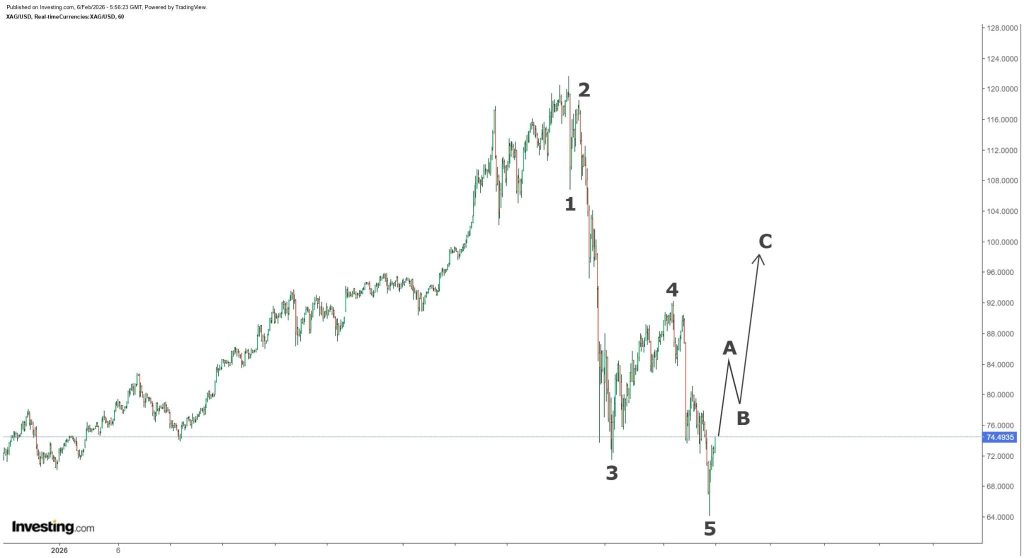
Silver Price Crash Is Over “For Real This Time,” Analyst Predicts a Surge Back Above $90

Silver Price Crash Is Over “For Real This Time,” Analyst Predicts a Surge Back Above $90

Silver has been taking a beating lately, and the Silver price hasn’t exactly been acting like a safe haven. After running up into the highs, the whole move reversed
Share
Captainaltcoin2026/02/07 03:15
Tapzi is Investors’ 1000x Pick in Volatile Market

Tapzi is Investors’ 1000x Pick in Volatile Market

The post Tapzi is Investors’ 1000x Pick in Volatile Market appeared on BitcoinEthereumNews.com. Crypto News 18 September 2025 | 00:05 Bitcoin swings after CPI data release as Tapzi’s presale gains momentum, emerging as a top crypto project in 2025. The crypto market moved sharply last week after the release of US Consumer Price Index (CPI) data. Bitcoin, the largest digital asset, reacted within minutes of the announcement, recording rapid swings before settling back near earlier levels.  At the same time, presale projects continued to attract investors, with Tapzi emerging as one of the most-watched tokens this month. It is being picked by investors as the next crypto to explode due to its high-growth potential in Tier 1 and Tier 2 countries, with Web3 gaming’s increasing adoption. Tapzi Presale Draws Attention While Bitcoin reacted to economic data, Tapzi’s presale has become a focal point among both retail and larger investors. Tapzi is a Web3 gaming platform designed to merge competitive gameplay with blockchain-based settlements. Players stake TAPZI tokens in head-to-head matches of chess, checkers, rock-paper-scissors, and tic-tac-toe. Winners receive tokens directly from prize pools funded by players, not by inflationary rewards. Don’t Watch the Wave – Ride It With $TAPZI! The presale opened with tokens priced at $0.0035. More than 27 million tokens have already been sold, with prices set to increase in each new stage. Analysts following the sale point to potential gains of around 300% once TAPZI lists on exchanges later this year. Liquidity locks and vesting schedules are in place to reduce the risks of sharp sell-offs after launch. This has placed Tapzi on the radar of investors searching for the best crypto to buy now. Bitcoin Price Reacts to CPI Last week, Bitcoin climbed toward $114,000 before jumping to $114,500, its highest level in weeks. The gains were short-lived as the price quickly dropped by $1,000. At press time, Bitcoin…
Share
BitcoinEthereumNews2025/09/18 06:26