The post Chainlink Anchors Tokenization as LINK Defends $11.65 appeared on BitcoinEthereumNews.com. Grayscale Research has released a new report arguing that Chainlink’s technology now sits at the center of efforts to connect public blockchains with traditional financial infrastructure. The paper, titled “The LINK Between Worlds,” describes Chainlink as “critical connective tissue” between on-chain and off-chain systems and says its software could be essential for tokenization and decentralized finance (DeFi). Chainlink Positioned as Core Plumbing for Tokenization In the report, Grayscale analysts say public blockchains cannot support large-scale finance unless they reliably talk to real-world data and existing institutions. Chainlink’s tools, they argue, provide that missing connection layer for everything from asset prices to settlement events. Chainlink Tokenization Bridge. Source: Grayscale  on X The research notes that most financial assets still live off-chain today. Tokenized versions account for only about 0.01% of the combined value of global equity and bond markets, leaving “enormous” room for expansion as more instruments move onto blockchains. Tokenized Assets Market Comparison. Source: Grayscale Research Because of this gap, Grayscale frames Chainlink’s role in tokenization as primarily infrastructure. The network’s data feeds, automation tools and cross-chain messaging are presented as the rails that can let banks, asset managers and market utilities interact with public blockchains while keeping existing processes and controls. From ‘Oracle’ to Modular Middleware The report pushes back on the idea of Chainlink as only a price-feed “oracle.” Instead, Grayscale describes it as modular middleware that lets smart-contract applications safely pull in outside information, talk to other blockchains and meet compliance requirements. Under this framing, Chainlink’s oracle networks are one component of a broader stack. The paper highlights features such as cross-chain communication, which can move messages and value between different networks, and services that can help institutions meet reporting or audit needs when they interact with DeFi protocols. According to Grayscale, this middleware approach means developers… The post Chainlink Anchors Tokenization as LINK Defends $11.65 appeared on BitcoinEthereumNews.com. Grayscale Research has released a new report arguing that Chainlink’s technology now sits at the center of efforts to connect public blockchains with traditional financial infrastructure. The paper, titled “The LINK Between Worlds,” describes Chainlink as “critical connective tissue” between on-chain and off-chain systems and says its software could be essential for tokenization and decentralized finance (DeFi). Chainlink Positioned as Core Plumbing for Tokenization In the report, Grayscale analysts say public blockchains cannot support large-scale finance unless they reliably talk to real-world data and existing institutions. Chainlink’s tools, they argue, provide that missing connection layer for everything from asset prices to settlement events. Chainlink Tokenization Bridge. Source: Grayscale  on X The research notes that most financial assets still live off-chain today. Tokenized versions account for only about 0.01% of the combined value of global equity and bond markets, leaving “enormous” room for expansion as more instruments move onto blockchains. Tokenized Assets Market Comparison. Source: Grayscale Research Because of this gap, Grayscale frames Chainlink’s role in tokenization as primarily infrastructure. The network’s data feeds, automation tools and cross-chain messaging are presented as the rails that can let banks, asset managers and market utilities interact with public blockchains while keeping existing processes and controls. From ‘Oracle’ to Modular Middleware The report pushes back on the idea of Chainlink as only a price-feed “oracle.” Instead, Grayscale describes it as modular middleware that lets smart-contract applications safely pull in outside information, talk to other blockchains and meet compliance requirements. Under this framing, Chainlink’s oracle networks are one component of a broader stack. The paper highlights features such as cross-chain communication, which can move messages and value between different networks, and services that can help institutions meet reporting or audit needs when they interact with DeFi protocols. According to Grayscale, this middleware approach means developers…

Chainlink Anchors Tokenization as LINK Defends $11.65

4 min read

Grayscale Research has released a new report arguing that Chainlink’s technology now sits at the center of efforts to connect public blockchains with traditional financial infrastructure. The paper, titled “The LINK Between Worlds,” describes Chainlink as “critical connective tissue” between on-chain and off-chain systems and says its software could be essential for tokenization and decentralized finance (DeFi).

In the report, Grayscale analysts say public blockchains cannot support large-scale finance unless they reliably talk to real-world data and existing institutions. Chainlink’s tools, they argue, provide that missing connection layer for everything from asset prices to settlement events.

Chainlink Tokenization Bridge. Source: Grayscale  on X

The research notes that most financial assets still live off-chain today. Tokenized versions account for only about 0.01% of the combined value of global equity and bond markets, leaving “enormous” room for expansion as more instruments move onto blockchains.

Tokenized Assets Market Comparison. Source: Grayscale Research

Because of this gap, Grayscale frames Chainlink’s role in tokenization as primarily infrastructure. The network’s data feeds, automation tools and cross-chain messaging are presented as the rails that can let banks, asset managers and market utilities interact with public blockchains while keeping existing processes and controls.

From ‘Oracle’ to Modular Middleware

The report pushes back on the idea of Chainlink as only a price-feed “oracle.” Instead, Grayscale describes it as modular middleware that lets smart-contract applications safely pull in outside information, talk to other blockchains and meet compliance requirements.

Under this framing, Chainlink’s oracle networks are one component of a broader stack. The paper highlights features such as cross-chain communication, which can move messages and value between different networks, and services that can help institutions meet reporting or audit needs when they interact with DeFi protocols.

According to Grayscale, this middleware approach means developers and financial firms do not need to rebuild their systems from scratch. Instead, they can plug existing workflows into Chainlink-enabled applications that run on multiple blockchains, while the middleware handles connectivity and verification in the background.

The research also focuses on the LINK token’s place inside Grayscale’s sector framework. It classifies LINK as the largest asset in the “Utilities & Services” crypto sector by market value and the biggest non-Layer 1 token in the market when stablecoins are excluded.

LINK Price Chart. Source: Artemis / Grayscale Research

Because Chainlink supports many blockchains rather than a single network, the report says LINK offers exposure to activity across the wider crypto economy. In that view, demand for LINK could track usage of Chainlink services on Ethereum, layer-2 networks and non-EVM chains that rely on its middleware.

Grayscale concludes that this combination of cross-chain reach, tokenization focus and infrastructure usage makes LINK a candidate for diversified crypto portfolios, placing it alongside larger assets such as bitcoin and ether in the firm’s internal sector analysis.

Meanwhile, Rick Barber says Chainlink has dropped into what he views as the macro support line and bottom of his buy range. In his post, he notes that this level has acted as support since 2024 and that several indicators now cluster around the same area, giving him confluence for a potential bottom. He adds that, for his spot position, the key risk would be a daily close below roughly $11.65.

Chainlink Macro Support Zone. Source: Rick Barber on X

On the 4-hour chart, LINK trades near 12 dollars inside a highlighted green demand zone, with price pressing against horizontal support and a dense volume profile band just above. Meanwhile, oscillators such as RSI and MACD sit near the lower end of their recent ranges, reflecting extended downside pressure after a steady series of lower highs. The chart also shows price trading below major moving averages, underlining that the short-term trend remains weak even as it approaches support.

On the daily timeframe, Barber’s chart extends that zone back through prior reactions, with LINK again testing the same band that previously acted as a base for rallies. In addition, a rising trendline from earlier lows runs just beneath the current range, reinforcing the idea of a long-term support cluster. However, the daily RSI continues to trend down, and Barber warns that a decisive break and close under the $11.65 area would invalidate his support thesis and raise concern about further downside.

Source: https://coinpaper.com/12537/grayscale-calls-chainlink-key-bridge-between-crypto-and-traditional-finance-as-link-tests-11-65-floor
Market Opportunity
Chainlink Logo
Chainlink Price(LINK)
$9.23
$9.23$9.23
+0.10%
USD
Chainlink (LINK) Live Price Chart
Disclaimer: The articles reposted on this site are sourced from public platforms and are provided for informational purposes only. They do not necessarily reflect the views of MEXC. All rights remain with the original authors. If you believe any content infringes on third-party rights, please contact service@support.mexc.com for removal. MEXC makes no guarantees regarding the accuracy, completeness, or timeliness of the content and is not responsible for any actions taken based on the information provided. The content does not constitute financial, legal, or other professional advice, nor should it be considered a recommendation or endorsement by MEXC.

You May Also Like

XRP Enters ‘Washout Zone,’ Then Targets $30, Crypto Analyst Says

XRP Enters ‘Washout Zone,’ Then Targets $30, Crypto Analyst Says

XRP has entered what Korean Certified Elliott Wave Analyst XForceGlobal (@XForceGlobal) calls a “washout” phase inside a broader Elliott Wave corrective structure
Share
NewsBTC2026/02/05 08:00
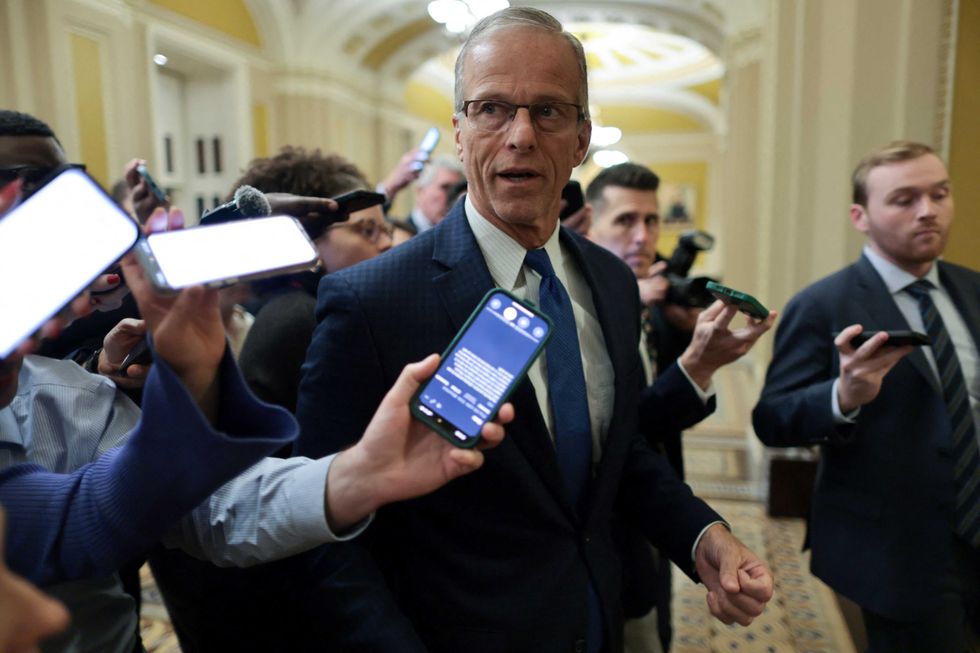
Republicans are 'very concerned about Texas' turning blue: GOP senator

Republicans are 'very concerned about Texas' turning blue: GOP senator

While Republicans in the U.S. House of Representatives have a razor-thin with just a four-seat advantage, their six-seat advantage in the U.S. Senate is seen as
Share
Alternet2026/02/05 08:38
Headwind Helps Best Wallet Token

Headwind Helps Best Wallet Token

The post Headwind Helps Best Wallet Token appeared on BitcoinEthereumNews.com. Google has announced the launch of a new open-source protocol called Agent Payments Protocol (AP2) in partnership with Coinbase, the Ethereum Foundation, and 60 other organizations. This allows AI agents to make payments on behalf of users using various methods such as real-time bank transfers, credit and debit cards, and, most importantly, stablecoins. Let’s explore in detail what this could mean for the broader cryptocurrency markets, and also highlight a presale crypto (Best Wallet Token) that could explode as a result of this development. Google’s Push for Stablecoins Agent Payments Protocol (AP2) uses digital contracts known as ‘Intent Mandates’ and ‘Verifiable Credentials’ to ensure that AI agents undertake only those payments authorized by the user. Mandates, by the way, are cryptographically signed, tamper-proof digital contracts that act as verifiable proof of a user’s instruction. For example, let’s say you instruct an AI agent to never spend more than $200 in a single transaction. This instruction is written into an Intent Mandate, which serves as a digital contract. Now, whenever the AI agent tries to make a payment, it must present this mandate as proof of authorization, which will then be verified via the AP2 protocol. Alongside this, Google has also launched the A2A x402 extension to accelerate support for the Web3 ecosystem. This production-ready solution enables agent-based crypto payments and will help reshape the growth of cryptocurrency integration within the AP2 protocol. Google’s inclusion of stablecoins in AP2 is a massive vote of confidence in dollar-pegged cryptocurrencies and a huge step toward making them a mainstream payment option. This widens stablecoin usage beyond trading and speculation, positioning them at the center of the consumption economy. The recent enactment of the GENIUS Act in the U.S. gives stablecoins more structure and legal support. Imagine paying for things like data crawls, per-task…
Share
BitcoinEthereumNews2025/09/18 01:27