How AI and Smart Surveillance Are Reshaping Municipal Security Operations
Local governments across the United States face a growing tension between public safety demands and budget realities. City halls, public libraries, transit hubs, and recreational centers all require protection, but most municipalities lack the resources to staff every facility around the clock. This challenge has pushed local leaders toward technology adoption at a pace that would have seemed unlikely just five years ago.
The shift toward tech-driven protection in municipal government security reflects broader changes in how public institutions think about risk. Private security firms now deploy AI-powered monitoring systems, drone surveillance, and incident reporting platforms that feed directly into city operations. The result is a hybrid model where trained personnel work alongside intelligent systems to extend coverage without blowing up municipal budgets.
The Budget Problem Driving Innovation
According to the National League of Cities, local governments have spent recent years exploring new approaches to public safety that move beyond traditional policing models. The drivers are both financial and operational. Staffing costs continue to climb. Recruitment remains difficult. And the types of incidents requiring response have grown more varied, from behavioral health crises to after-hours vandalism to unauthorized access in sensitive areas.
Municipal facilities present unique security challenges. A public library operates on open-access principles during business hours but needs protection when closed. A city hall houses sensitive records and sometimes hosts contentious public meetings. Parks and recreation centers see heavy foot traffic from families, but that same accessibility creates vulnerability. Traditional security models treated these facilities as separate problems requiring separate solutions. Modern approaches look for platforms that can manage risk across an entire portfolio of public properties.
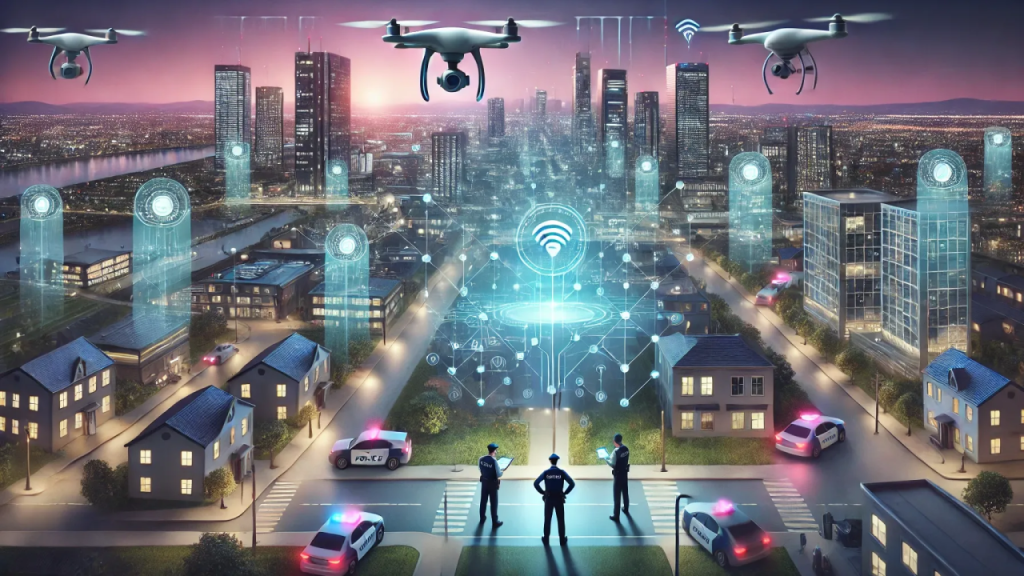
This is where AI and remote monitoring have found their entry point. Rather than posting guards at every entrance of every building, municipalities can centralize surveillance through networked camera systems with live operator oversight. When something unusual happens at 2 AM in a library parking lot, the system flags it. A trained operator assesses the feed and decides whether to trigger audio deterrence, dispatch a mobile patrol, or contact local police. The facility gets covered without paying for a guard to sit there all night.
 What AI Actually Does in Municipal Security
The term “AI” gets thrown around loosely in security marketing, so it helps to be specific about what these systems actually do in public facility protection.
Most current deployments use machine learning for pattern detection and anomaly identification. Cameras trained on facility perimeters learn what normal activity looks like at different times of day. A person walking through a park at noon raises no flags. The same person lingering near a locked maintenance building at midnight triggers an alert. The system doesn’t replace human judgment. It filters the noise so operators can focus on situations that actually require attention.
Behavioral analytics represent the next level of capability. These systems watch for actions that indicate potential problems: someone testing door handles, vehicles circling a parking lot repeatedly, and individuals appearing to scope entry points. The Cybersecurity and Infrastructure Security Agency identifies government facilities as critical infrastructure requiring layered protection strategies. AI-assisted surveillance adds a layer that catches threats human watchers might miss due to fatigue or distraction.
Incident documentation has also improved through automation. When something happens, the system generates timestamped records, including video clips, operator notes, and response logs. This matters for municipalities dealing with liability concerns, insurance requirements, and public records obligations. The data exists without relying on handwritten reports that might be incomplete or delayed.
Drones, Mobile Patrols, and Integrated Coverage
Ground-based cameras have limitations. They can’t see over walls or around corners. They don’t adapt easily when events move between locations. Municipalities with large park systems, sprawling campuses, or distributed facility networks need coverage that extends beyond fixed camera positions.
Drone surveillance has started filling this gap for properties where it makes practical sense. A security team can deploy aerial monitoring for large-scale events, construction sites on public land, or nightly sweeps of areas where fixed cameras lack coverage. GPS tracking on mobile patrol vehicles creates additional documentation of where units traveled and when they responded.
The integration piece matters as much as the individual technologies. A platform that combines camera feeds, patrol tracking, drone footage, and incident reporting gives municipal administrators visibility into security operations across all their facilities. Instead of getting fragmented updates from different contractors or departments, they see a unified picture of what happened and how teams responded.
Veteran-led security firms serving California and Nevada municipalities have built their operations around this integrated model. They assign dedicated regional managers to government clients, maintaining consistent oversight while deploying technology that scales protection without proportionally scaling headcount.
Compliance and Accountability in Public Settings
Government facilities operate under scrutiny that private businesses don’t face. Public records laws mean incident reports may become accessible to journalists or citizens. Council meetings might include questions about security spending. Contractors must meet insurance and licensing requirements that vary by state.
California’s SB 390 mandate, for example, requires specific training for security officers assigned to schools and certain municipal contracts. Firms working with government clients need BSIS licensing, proper bonding, and demonstrated compliance with state-specific regulations. The technology layer adds another dimension: data retention policies, access controls on surveillance footage, and protocols for handling sensitive information.
This regulatory environment actually accelerates technology adoption in some ways. Automated reporting systems make compliance documentation easier to produce and audit. Digital logs prove that officers completed required checks. Video records provide evidence when disputes arise about what happened during an incident.
What Municipalities Should Ask Providers
City managers and council members evaluating security partnerships should look beyond hourly guard rates. The technology questions matter too.
Does the provider operate centralized monitoring with live operators or just record footage for later review? How do they handle after-hours incidents? What incident reporting systems generate documentation for municipal records? Can their platform integrate with existing city systems or provide data exports for council review?
Client retention tells part of the story. Firms that maintain long-term government contracts have proven they can meet public-sector accountability standards while delivering on protection outcomes. References from similar municipalities help verify that providers understand the specific challenges of securing public facilities with open-access requirements and diverse user populations.
Where This Goes Next
Municipalities will continue facing pressure to do more with limited budgets. The security technology market will keep producing new tools that promise to extend coverage and improve detection. The challenge for local leaders is sorting genuine capability from marketing hype.
The most successful implementations pair smart technology with trained personnel who know how to use it. AI handles pattern detection and noise filtering. Humans handle judgment calls and community interactions. Remote monitoring extends coverage without eliminating the value of physical presence when situations demand it.
Local government security has entered a period where technology adoption is no longer optional for municipalities that want to protect their facilities and their residents while managing costs responsibly. The providers who can deliver integrated solutions, meeting compliance requirements while actually improving protection outcomes, will define how this sector evolves.
You May Also Like

BFX Presale Raises $7.5M as Solana Holds $243 and Avalanche Eyes $1B Treasury — Best Cryptos to Buy in 2025

SoFi Bank unveils SoFiUSD stablecoin to power translations for businesses