

Ethereum to Experience Explosive Scaling with ZK Rollups in 2026
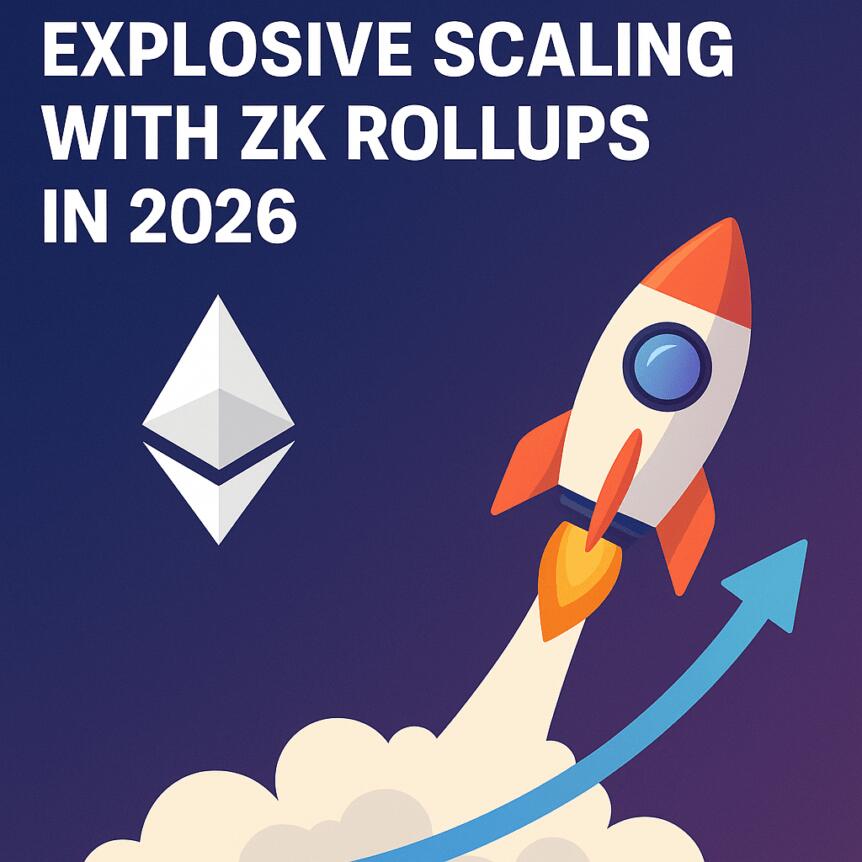
Ethereum Approaches Major Upgrades in 2026: Scaling with Zero-Knowledge Proofs and Improved Interoperability
2026 is poised to be a transformative year for Ethereum, marked by significant advancements in scalability, interoperability, and network infrastructure. The upcoming deployment of zero-knowledge (ZK) proof validation for validators promises to revolutionize transaction processing, bringing Ethereum closer to achieving 10,000 transactions per second (TPS) while maintaining decentralization and security.
Key Takeaways
- Validators will start processing ZK proofs instead of re-executing transactions, vastly improving efficiency.
- The introduction of ZK proofs reduces hardware requirements, enabling more participants to validate securely.
- The Ethereum Interoperability Layer (EIL) is set to unify Layer 2 ecosystems, facilitating seamless cross-chain communication.
- Enhancements to ZK-proof technology and infrastructure upgrades aim to extend Ethereum’s scalability and cross-chain functionality.
Tickers mentioned: None
Sentiment: Optimistic
Price impact: Neutral. The technical upgrades are expected to bolster Ethereum’s network capacity but are unlikely to cause immediate price shifts.
Trading idea (Not Financial Advice): Hold. The network’s ongoing upgrades suggest long-term growth potential without immediate trading signals.
Market context: The developments reflect broader trends toward high-throughput and interoperability solutions within the blockchain space, reinforcing Ethereum’s position as a leading smart contract platform.
Ethereum’s transition to ZK Proofs in 2026
Ethereum’s move to incorporate zero-knowledge proofs represents a foundational overhaul, mirroring the landmark shift during the 2022 Merge. Unlike current validators that reexecute each transaction, validators will generate a cryptographic proof confirming the correctness of an entire block, which others can verify with minimal computational effort. This approach drastically reduces hardware demands, potentially allowing validation on smartphones or smartwatches, and significantly increases transaction throughput.
Justin Drake, a researcher heavily involved in the upgrade, demonstrated that validating proofs on low-powered devices is already feasible. By generating a proof for each block, the network’s scalability could jump to thousands of TPS, with only a small subset of validators responsible for proof creation—often referred to as “provers” or “block builders.” Drake predicts that around 10% of validators are expected to adopt ZK validation mechanisms by the end of this year, enabling higher gas limits and more efficient network operation.
The process is scheduled to fully phase in by mid-2026, following software upgrades including the ePBS update, which relaxes penalties for delayed validation and encourages wider participation. Researchers aim for the widespread adoption of zkEVMs—zero-knowledge execution environments—expected to further enhance Ethereum’s scalability and security standards.
Interoperability and Cross-Chain Communication
Alongside ZK improvements, Ethereum is advancing its cross-chain capabilities through the Ethereum Interoperability Layer (EIL). This trustless messaging protocol will connect various Layer 2 solutions, enabling instant and seamless asset transfers—such as USDC—between different ecosystems without the need for intermediaries. Designed using ERC-4337 account abstraction, EIL aims to eliminate reliance on centralized solvers and reduce censorship risks, thus reinforcing true decentralization.
Furthermore, innovations like ZKsync’s Atlas upgrade facilitate faster cross-chain asset movement, with ZKproofs ensuring security and finality. For instance, the UAE’s ADI institutional chain has already gone live using this technology, demonstrating practical real-time interoperability solutions between Layer 1 and Layer 2 networks that could redefine Ethereum’s ecosystem connectivity.
Overall, these advancements signal a robust, scalable, and interoperable Ethereum ecosystem approaching its next major milestone in 2026. By integrating zero-knowledge proofs and fostering seamless cross-chain interactions, Ethereum aims to solidify its dominance as the backbone of decentralized applications and DeFi infrastructure in the rapidly evolving blockchain landscape.
This article was originally published as Ethereum to Experience Explosive Scaling with ZK Rollups in 2026 on Crypto Breaking News – your trusted source for crypto news, Bitcoin news, and blockchain updates.
You May Also Like

A Netflix ‘KPop Demon Hunters’ Short Film Has Been Rated For Release
Sberbank issues Russia’s first crypto-secured loan
