

From Intuition to Intelligence: How AI and a Similarity Matrix Are Redefining Retail Planning
2026 will be remembered as the year AI moves beyond the headline. As the market becomes saturated with “AI-powered” promises, businesses are reaching a critical inflection point: the need to replace novelty with a cold, hard requirement for ROI.
In a rush to stay on top of tech trends, many made the mistake of forcing AI into their existing, often fragmented, workflows—treating AI like a shiny new engine they tried to bolt onto a horse-drawn carriage. The results are predictably underwhelming. True transformation occurs when companies prioritize AI investments that address specific, high-stakes business problems. For the retail industry, fashion in particular, the benefit of modern intelligence largely lies in back-end operations: supply chain planning, demand planning and forecasting, inventory management, etc.
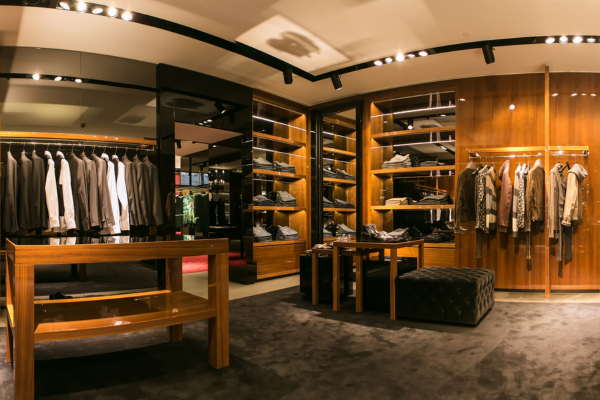 For the retail industry, fashion in particular, the benefit of modern intelligence largely lies in back-end operations: supply chain planning, demand planning and forecasting, inventory management, etc.
The Retail Example: Escaping ‘Excel Hell’
An industry still reliant on the manual spreadsheet—the greatest enemy of a modern operating model—retail has been stuck in a recurring nightmare I like to call “Excel Hell“. Between complex supply chains and global operations, Excel builds added complexity and frustration across teams through time-consuming manual entries and inevitable inaccuracies.
But the biggest offense of Excel Hell isn’t just the labor; it’s the creation of data silos. When critical information is trapped in a static cell or outdated sheet, it prevents real-time decision-making—relying on manual processes is no longer just inefficient, it’s unsustainable. Automated, AI-powered end-to-end solutions act as a sophisticated nervous system, detecting trends and empowering retailers to respond with nuance.
The World Economic Forum predicts that this AI use case can improve on-shelf availability by 15-25% and reduce inventory carrying costs by 10-15%. Brands like H&M, Zara, Burberry and more are amongst the many that have adopted AI in their operations, supply chain and inventory management processes. H&M, in particular, created an entire division devoted to AI; since 2018 this department’s expressed goal is to apply AI in different segments of the company to be as data-driven as possible.
Speaking to Supply Chain Dive, Arti Zeighami, former Global Head of Advanced Analytics and AI at H&M dives into the impact AI and predictive analytics has on demand planning. Zeighami stated it’s about “how you make sure the right product is in the right place at the right time and is transported into the warehouse. Utilizing data analytics allows us to do that. And we’re thinking of ‘how can we do this for our entire production?’… We’re working very specifically on being able to calculate and quantify how many cases you’re going to buy [of any item]”.
 An industry still reliant on the manual spreadsheet—the greatest enemy of a modern operating model—retail has been stuck in a recurring nightmare I like to call “Excel Hell”.
Scaling Retail’s Sixth Sense for Merchandising
With or without AI, the goal is to precisely align supply and demand. Historically, retailers have relied on their intuition, a “sixth sense” great merchants have to determine which style will pop or which color will trend. But as retail planning becomes more and more complex in a globalized, multi-channel world, the harder it is to scale that instinct—at thousands of SKUs and hundreds of locations, it’s essentially impossible.
To solve this, we developed 7thSense.
Launching at NRF 2026, this technology reshapes how 7thonline is approaching AI. By introducing a multi-dimensional similarity matrix to scale merchant intuition at a granular level, merchants can uncover hidden affinities, repeat successful patterns and make confident merchandising decisions. Behind the scenes, AI is constantly analyzing data and evaluating hundreds of product and location attributes, such as fabric, silhouette and region, to rank new and seasonal products against past winners.
 Automated, AI-powered end-to-end solutions act as a sophisticated nervous system, detecting trends and empowering retailers to respond with nuance.
Solving the “Cold Start” Problem
One of the most specific business problems in retail is the “New Item” dilemma. How do you plan for a product that has never been sold? Traditionally, this involves guesswork or best-guess proxies. For products without performance history, which seasonal items often lack, AI is able to draw insights from similar products to predict how these products are likely to perform. AI empowers retailers to make confident decisions and repeat winning patterns by predicting trends based on a matrix of attributes, product behaviors, market shifts and customer preferences.
Consider three ways this digital “instinct” redefines the retail operating model:
- Autonomous Reordering: Instead of a manual scramble to restock, AI monitors real-time sales velocity to project order quantities for new items at various store locations. It recognizes early performance patterns and automatically recommends reorder quantities adjusted for seasonality and lead times. It’s the difference between reacting to a stockout and preventing one.
- Strategic Promotions: Enhance promotional forecasting with AI that predicts the ideal cadence and sales impact before a promotion goes live. Determined by the historical lift of similar styles, AI is empowering dynamic promotional decisions and maximizing profit impact while protecting margins with clear visibility on the potential sales life of various promotional activities.
- Hyper-Localization: AI allows brands to finally execute winning assortments down to the style, color and size at the local store level—something that was previously too labor-intensive to be profitable. With detailed insights from previous winners, assortment planning teams can replicate proven strategies for new and seasonal items at individual locations.
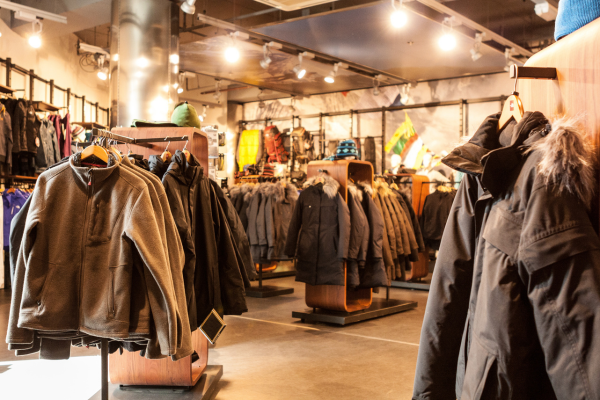 Launching at NRF 2026, this technology reshapes how 7thonline is approaching AI. By introducing a multi-dimensional similarity matrix to scale merchant intuition at a granular level, merchants can uncover hidden affinities, repeat successful patterns and make confident merchandising decisions.
The Human-Centric Future
As we prepare to showcase these advancements at NRF Booth #6823, the message is clear: AI is not here to replace, it is here to liberate. The future of business belongs to those who don’t just “use” AI, but those who integrate it into a smarter, more intentional way of working.
For retail, extinguishing the fires of Excel Hell and handling the granular, repetitive analysis of millions of data points, empowers merchants and planners to return to what they do best—creative strategy, brand storytelling and high-level decision-making. From intuition to intelligence, the “sixth sense” is no longer a mystery—it’s a matrix.
You May Also Like

ADA Price Prediction: Here’s The Best Place To Make 50x Gains

UK and US Seal $42 Billion Tech Pact Driving AI and Energy Future
