The post EUR/USD edges higher as weaker US Dollar offsets solid US data appeared on BitcoinEthereumNews.com. The Euro (EUR) edges higher against the US Dollar (The post EUR/USD edges higher as weaker US Dollar offsets solid US data appeared on BitcoinEthereumNews.com. The Euro (EUR) edges higher against the US Dollar (

EUR/USD edges higher as weaker US Dollar offsets solid US data

The Euro (EUR) edges higher against the US Dollar (USD) on Thursday, supported by a broadly weaker Greenback as traders shrug off solid US economic data. At the time of writing, EUR/USD is trading around 1.1742, reversing the previous day’s losses.

Fresh US data pointed to steady inflation and resilient growth. Core Personal Consumption Expenditures (QoQ) for Q3 rose 2.9%, in line with expectations and unchanged from the previous quarter.

Annualized Q3 Gross Domestic Product expanded 4.4%, beating forecasts of 4.3% and up from 3.8% in Q2. Meanwhile, Initial Jobless Claims rose to 200K from last week’s revised 199K, but came in well below expectations of 212K.

Core PCE inflation rose 0.2% MoM in November, in line with expectations and unchanged from October, while the annual rate ticked up to 2.8% from 2.7%. Headline PCE also increased 0.2% on the month, matching forecasts, with the yearly pace rising to 2.8% from 2.7%.

Personal Income climbed 0.3%, below expectations of 0.4% but stronger than October’s 0.1% gain, while Personal Spending held firm at 0.5%.

From a monetary policy perspective, the data reinforced expectations that the Federal Reserve (Fed) can afford to remain patient. Markets are widely anticipating no change in rates at the January 27-28 meeting, while the latest Reuters poll shows that 55 out of 100 economists expect the first rate cut to come in June or later.

Dovish Fed expectations, combined with lingering concerns over political interference in the Fed’s independence, remain a drag on the US Dollar, limiting any meaningful recovery.

The US Dollar Index (DXY), which tracks the Greenback’s value against a basket of six major currencies, is trading around 99.37, down about 0.41%.

Markets also welcomed easing US-European Union (EU) trade tensions after US President Donald Trump backed away from the tariffs scheduled to take effect on February 1, following what he described as a “very productive meeting” with NATO Secretary General Mark Rutte that resulted in a framework deal on Greenland and the Arctic region.

On the Euro side, the latest European Central Bank (ECB) monetary policy accounts showed policymakers are in no rush to adjust interest rates. Officials noted that the inflation outlook “continued to be in a good place,” while Eurozone economic activity was proving “more resilient than previously anticipated.” Members also stressed the importance of maintaining “full optionality in either direction” for future meetings.

Fed FAQs

Monetary policy in the US is shaped by the Federal Reserve (Fed). The Fed has two mandates: to achieve price stability and foster full employment. Its primary tool to achieve these goals is by adjusting interest rates.
When prices are rising too quickly and inflation is above the Fed’s 2% target, it raises interest rates, increasing borrowing costs throughout the economy. This results in a stronger US Dollar (USD) as it makes the US a more attractive place for international investors to park their money.
When inflation falls below 2% or the Unemployment Rate is too high, the Fed may lower interest rates to encourage borrowing, which weighs on the Greenback.

The Federal Reserve (Fed) holds eight policy meetings a year, where the Federal Open Market Committee (FOMC) assesses economic conditions and makes monetary policy decisions.
The FOMC is attended by twelve Fed officials – the seven members of the Board of Governors, the president of the Federal Reserve Bank of New York, and four of the remaining eleven regional Reserve Bank presidents, who serve one-year terms on a rotating basis.

In extreme situations, the Federal Reserve may resort to a policy named Quantitative Easing (QE). QE is the process by which the Fed substantially increases the flow of credit in a stuck financial system.
It is a non-standard policy measure used during crises or when inflation is extremely low. It was the Fed’s weapon of choice during the Great Financial Crisis in 2008. It involves the Fed printing more Dollars and using them to buy high grade bonds from financial institutions. QE usually weakens the US Dollar.

Quantitative tightening (QT) is the reverse process of QE, whereby the Federal Reserve stops buying bonds from financial institutions and does not reinvest the principal from the bonds it holds maturing, to purchase new bonds. It is usually positive for the value of the US Dollar.

Source: https://www.fxstreet.com/news/eur-usd-edges-higher-as-weaker-us-dollar-offsets-solid-us-data-202601221643

Disclaimer: The articles reposted on this site are sourced from public platforms and are provided for informational purposes only. They do not necessarily reflect the views of MEXC. All rights remain with the original authors. If you believe any content infringes on third-party rights, please contact service@support.mexc.com for removal. MEXC makes no guarantees regarding the accuracy, completeness, or timeliness of the content and is not responsible for any actions taken based on the information provided. The content does not constitute financial, legal, or other professional advice, nor should it be considered a recommendation or endorsement by MEXC.

You May Also Like

Cashing In On University Patents Means Giving Up On Our Innovation Future

Cashing In On University Patents Means Giving Up On Our Innovation Future

The post Cashing In On University Patents Means Giving Up On Our Innovation Future appeared on BitcoinEthereumNews.com. “It’s a raid on American innovation that would deliver pennies to the Treasury while kneecapping the very engine of our economic and medical progress,” writes Pipes. Getty Images Washington is addicted to taxing success. Now, Commerce Secretary Howard Lutnick is floating a plan to skim half the patent earnings from inventions developed at universities with federal funding. It’s being sold as a way to shore up programs like Social Security. In reality, it’s a raid on American innovation that would deliver pennies to the Treasury while kneecapping the very engine of our economic and medical progress. Yes, taxpayer dollars support early-stage research. But the real payoff comes later—in the jobs created, cures discovered, and industries launched when universities and private industry turn those discoveries into real products. By comparison, the sums at stake in patent licensing are trivial. Universities collectively earn only about $3.6 billion annually in patent income—less than the federal government spends on Social Security in a single day. Even confiscating half would barely register against a $6 trillion federal budget. And yet the damage from such a policy would be anything but trivial. The true return on taxpayer investment isn’t in licensing checks sent to Washington, but in the downstream economic activity that federally supported research unleashes. Thanks to the bipartisan Bayh-Dole Act of 1980, universities and private industry have powerful incentives to translate early-stage discoveries into real-world products. Before Bayh-Dole, the government hoarded patents from federally funded research, and fewer than 5% were ever licensed. Once universities could own and license their own inventions, innovation exploded. The result has been one of the best returns on investment in government history. Since 1996, university research has added nearly $2 trillion to U.S. industrial output, supported 6.5 million jobs, and launched more than 19,000 startups. Those companies pay…
Share
BitcoinEthereumNews2025/09/18 03:26
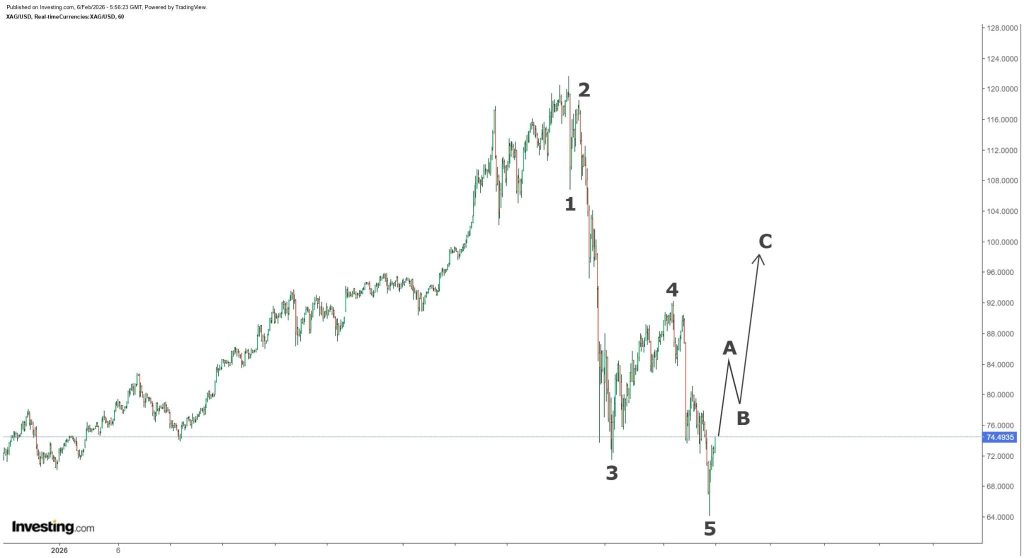
Silver Price Crash Is Over “For Real This Time,” Analyst Predicts a Surge Back Above $90

Silver Price Crash Is Over “For Real This Time,” Analyst Predicts a Surge Back Above $90

Silver has been taking a beating lately, and the Silver price hasn’t exactly been acting like a safe haven. After running up into the highs, the whole move reversed
Share
Captainaltcoin2026/02/07 03:15
Citi Caps Year-End at $4,300, But ETF outflows Challenge Outlook

Citi Caps Year-End at $4,300, But ETF outflows Challenge Outlook

The post Citi Caps Year-End at $4,300, But ETF outflows Challenge Outlook appeared on BitcoinEthereumNews.com. Ethereum Price Prediction: Citi Caps Year-End at $4,300, But ETF outflows Challenge Outlook Disclaimer: The information found on NewsBTC is for educational purposes only. It does not represent the opinions of NewsBTC on whether to buy, sell or hold any investments and naturally investing carries risks. You are advised to conduct your own research before making any investment decisions. Use information provided on this website entirely at your own risk. Related News © 2025 NewsBTC. All Rights Reserved. This website uses cookies. By continuing to use this website you are giving consent to cookies being used. Visit our Privacy Center or Cookie Policy. I Agree Source: https://www.newsbtc.com/news/ethereum/ethereum-price-prediction-citi-caps-year-end-at-4300-but-etf-outflows-challenge-outlook/
Share
BitcoinEthereumNews2025/09/18 14:30