The post Circle Launches Crosschain Forwarding Service for CCTP Integration appeared on BitcoinEthereumNews.com. Luisa Crawford Jan 22, 2026 13:36 Circle’s The post Circle Launches Crosschain Forwarding Service for CCTP Integration appeared on BitcoinEthereumNews.com. Luisa Crawford Jan 22, 2026 13:36 Circle’s

Circle Launches Crosschain Forwarding Service for CCTP Integration


Luisa Crawford
Jan 22, 2026 13:36

Circle’s new forwarding service eliminates manual attestation fetching for USDC transfers, cutting crosschain transfer times by up to 50-200% across 14 chains.

Circle has rolled out a crosschain forwarding service integrated directly into its Cross-Chain Transfer Protocol, eliminating one of the biggest pain points for developers building multichain applications. The service handles attestation fetching, destination chain transactions, and gas management automatically—tasks that previously required significant infrastructure investment.

The forwarding service launches with support for 14 chains: Arbitrum, Avalanche, Base, Ethereum, HyperEVM, Ink, Linea, Monad, OP Mainnet, Polygon PoS, Sei, Sonic, Unichain, and World Chain. Circle plans to expand coverage across all CCTP-enabled routes by the end of H1 2026.

What Actually Changes

Here’s the technical shift: developers previously had to burn USDC on the source chain, then separately fetch attestations from Circle, submit mint transactions on the destination chain, and manage gas wallets across every network. That’s a lot of moving parts that can break.

The new service handles all of this. Developers specify forwarding instructions using existing hookData and maxFee parameters during the burn transaction. Circle’s infrastructure validates the request, signs the attestation, and broadcasts the destination mint. Fees come directly from the minted USDC—users don’t need destination chain gas.

According to Circle, inefficient attestation fetching typically adds 50-200% to total transfer times. The forwarding service removes that bottleneck entirely.

Already Powering Hyperliquid

This isn’t theoretical. The forwarding service is already live for Hyperliquid users, enabling one-click USDC deposits from any CCTP-enabled chain to Hyperliquid’s orderbook DEX. No attestation fetching, no manual minting on HyperEVM.

The service also works with Circle xReserve, allowing blockchain teams to automatically mint USDC-backed stablecoins on destination chains for their users.

The Developer Trade-off Problem

Crosschain execution has forced teams into uncomfortable choices. Option one: run your own infrastructure across every chain you support, managing RPC access, monitoring, gas funding, and retry logic. Option two: integrate third-party services with different APIs, trust assumptions, and failure modes that complicate debugging.

Circle’s positioning this as a first-party alternative that sits within their existing interop stack. No new contracts to deploy, no additional trust assumptions beyond Circle itself.

Broader Context

This launch builds on recent CCTP momentum. CCTP V2 became the canonical version in November 2025, with V1 scheduled for phase-out starting July 31, 2026. Circle’s January 2026 report highlighted the protocol’s role in what they’re calling the “Internet Financial System.”

The forwarding service is available now on testnet. Developers can join Circle’s Early Access Program for priority mainnet access. Integration with Bridge Kit and Circle Gateway is planned for H1 2026.

For teams already running CCTP integrations, this represents a potential infrastructure cost reduction. For those evaluating crosschain solutions, it removes one of the bigger operational headaches in the space.

Image source: Shutterstock

Source: https://blockchain.news/news/circle-launches-crosschain-forwarding-service-cctp-integration

Disclaimer: The articles reposted on this site are sourced from public platforms and are provided for informational purposes only. They do not necessarily reflect the views of MEXC. All rights remain with the original authors. If you believe any content infringes on third-party rights, please contact service@support.mexc.com for removal. MEXC makes no guarantees regarding the accuracy, completeness, or timeliness of the content and is not responsible for any actions taken based on the information provided. The content does not constitute financial, legal, or other professional advice, nor should it be considered a recommendation or endorsement by MEXC.

You May Also Like

Cashing In On University Patents Means Giving Up On Our Innovation Future

Cashing In On University Patents Means Giving Up On Our Innovation Future

The post Cashing In On University Patents Means Giving Up On Our Innovation Future appeared on BitcoinEthereumNews.com. “It’s a raid on American innovation that would deliver pennies to the Treasury while kneecapping the very engine of our economic and medical progress,” writes Pipes. Getty Images Washington is addicted to taxing success. Now, Commerce Secretary Howard Lutnick is floating a plan to skim half the patent earnings from inventions developed at universities with federal funding. It’s being sold as a way to shore up programs like Social Security. In reality, it’s a raid on American innovation that would deliver pennies to the Treasury while kneecapping the very engine of our economic and medical progress. Yes, taxpayer dollars support early-stage research. But the real payoff comes later—in the jobs created, cures discovered, and industries launched when universities and private industry turn those discoveries into real products. By comparison, the sums at stake in patent licensing are trivial. Universities collectively earn only about $3.6 billion annually in patent income—less than the federal government spends on Social Security in a single day. Even confiscating half would barely register against a $6 trillion federal budget. And yet the damage from such a policy would be anything but trivial. The true return on taxpayer investment isn’t in licensing checks sent to Washington, but in the downstream economic activity that federally supported research unleashes. Thanks to the bipartisan Bayh-Dole Act of 1980, universities and private industry have powerful incentives to translate early-stage discoveries into real-world products. Before Bayh-Dole, the government hoarded patents from federally funded research, and fewer than 5% were ever licensed. Once universities could own and license their own inventions, innovation exploded. The result has been one of the best returns on investment in government history. Since 1996, university research has added nearly $2 trillion to U.S. industrial output, supported 6.5 million jobs, and launched more than 19,000 startups. Those companies pay…
Share
BitcoinEthereumNews2025/09/18 03:26
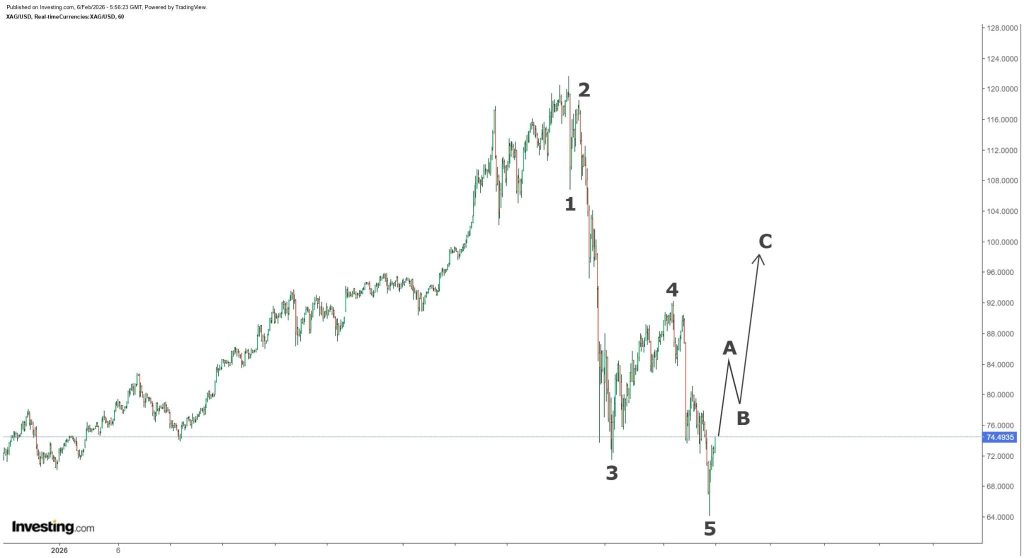
Silver Price Crash Is Over “For Real This Time,” Analyst Predicts a Surge Back Above $90

Silver Price Crash Is Over “For Real This Time,” Analyst Predicts a Surge Back Above $90

Silver has been taking a beating lately, and the Silver price hasn’t exactly been acting like a safe haven. After running up into the highs, the whole move reversed
Share
Captainaltcoin2026/02/07 03:15
Citi Caps Year-End at $4,300, But ETF outflows Challenge Outlook

Citi Caps Year-End at $4,300, But ETF outflows Challenge Outlook

The post Citi Caps Year-End at $4,300, But ETF outflows Challenge Outlook appeared on BitcoinEthereumNews.com. Ethereum Price Prediction: Citi Caps Year-End at $4,300, But ETF outflows Challenge Outlook Disclaimer: The information found on NewsBTC is for educational purposes only. It does not represent the opinions of NewsBTC on whether to buy, sell or hold any investments and naturally investing carries risks. You are advised to conduct your own research before making any investment decisions. Use information provided on this website entirely at your own risk. Related News © 2025 NewsBTC. All Rights Reserved. This website uses cookies. By continuing to use this website you are giving consent to cookies being used. Visit our Privacy Center or Cookie Policy. I Agree Source: https://www.newsbtc.com/news/ethereum/ethereum-price-prediction-citi-caps-year-end-at-4300-but-etf-outflows-challenge-outlook/
Share
BitcoinEthereumNews2025/09/18 14:30