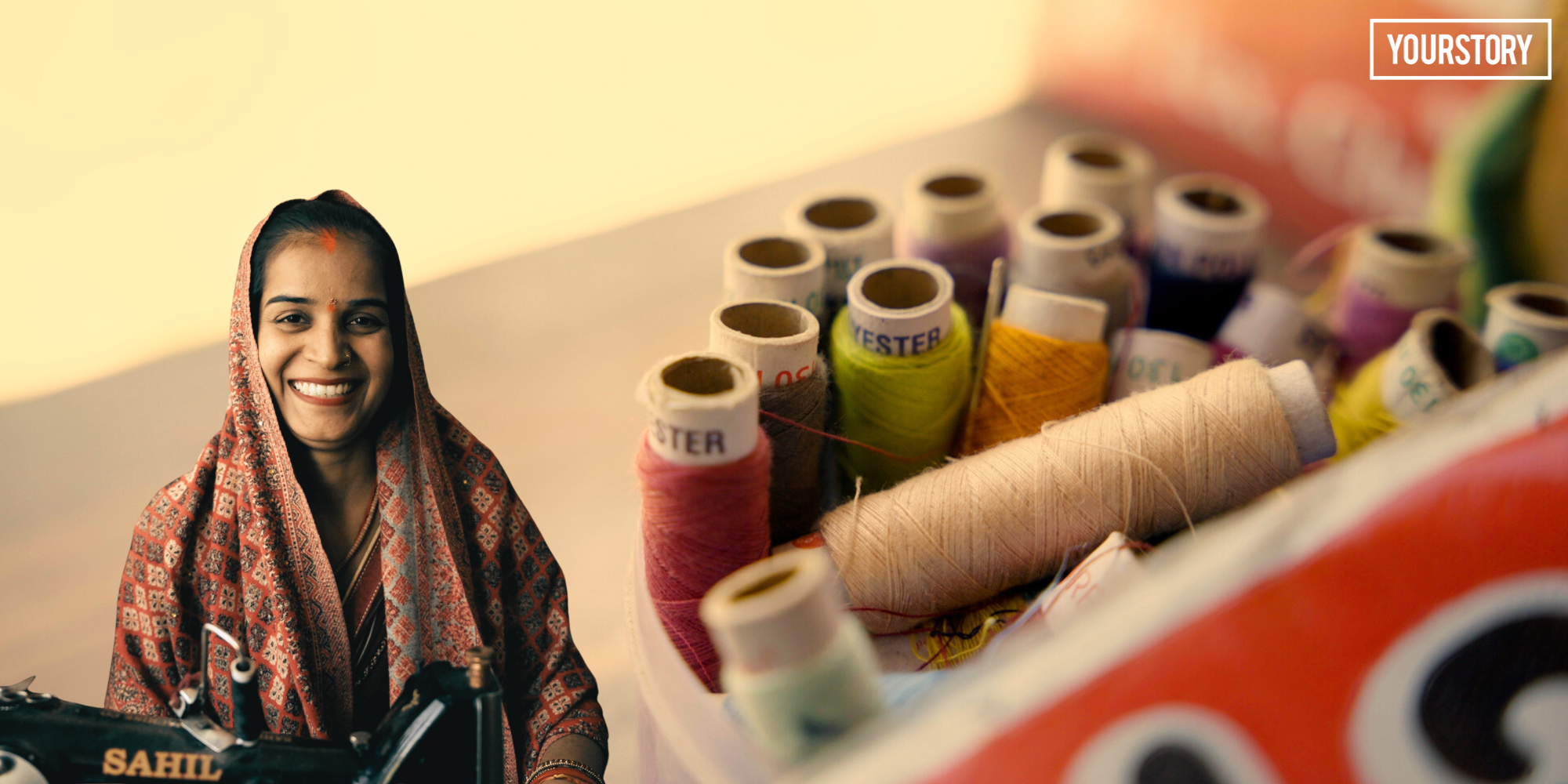
Urmila Shukla lives in Bagrahiya village of Shravasti district, where her workday begins early and often stretches late into the night.Urmila Shukla lives in Bagrahiya village of Shravasti district, where her workday begins early and often stretches late into the night.

How consistent stitching built a small business in Shravasti district
3 min read

Urmila Shukla lives in Bagruiya village of Shravasti district, where her workday begins early and often stretches late into the night. Today, she runs a small tailoring shop called Kirti Silai Centre, but the path to a stable storefront was gradual, shaped by years of learning, domestic responsibilities, and cautious decisions taken at different stages of her life.

Shukla learned stitching as a teenager while she was still studying. Training outside her village, before marriage brought her to Shravasti. Formal education was halted after the shift, but the skill stayed with her. For years, she worked from home, using a single machine to stitch clothes for neighbours and acquaintances who came with small, routine requests. At the time, the work was modest and fitted around household duties, with no clear plan to turn it into a business.

Over time, word spread beyond the village. Clothes began arriving from nearby localities and the volume of work grew enough for her to consider a separate space. The decision to move out of the house was not immediate. Her husband was away working and the family weighed the risk of rent against uncertain income. Eventually, a small shop was rented, and she began by offering stitching services, enough to cover basic expenses and keep the space running.

Turning skill into a livelihood

The shop became a turning point. As more customers flocked in from five or six neighbouring villages, Shukla found that a dedicated workspace allowed her to manage larger orders and tighter timelines. She stitches women’s garments, including salwar suits, blouses, petticoats, and trousers, handling the work herself and setting her own hours based on demand. Trust, she says, became the defining factor. Customers returned because orders were completed on time, often without regard to her own schedule.

Early doubters suggested the shop would not last. The first few months were financially tight, with rent payments a constant worry. Still, she persevered, testing designs on her own clothes before accepting unfamiliar patterns and gradually built confidence with each completed order. “I kept thinking that if I don’t stop now, the work will slowly find its way,” she said.

Support came later through the Mukhyamantri Yuva Udyami Vikas Abhiyan (CM YUVA) Yojana, which helped her improve the shop’s setup and add basic inventory alongside tailoring. Under the CM Yuva Yojana, the assistance was used to strengthen what already existed rather than start afresh, enabling her to better respond to customer needs and manage the growing workload.

Stability built stitch by stitch

Four years into running the shop, Shukla’s days are long but predictable. She opens early, often works past midnight during peak periods, and handles all orders herself. Customers now come from farther away, including migrants living nearby, who rely on her for dependable work. The shop has become a well-established stop in the area, not because it expanded quickly, but because it remained consistent.

Looking back, the transition from a single machine at home to a functioning shop feels less like a leap and more like a series of small, steady steps. The early uncertainty, the pressure of rent, and the careful use of support have settled into a routine that sustains both the business and the household, offering a sense of continuity rooted in skill and persistence, rather than sudden change.

Disclaimer: The articles reposted on this site are sourced from public platforms and are provided for informational purposes only. They do not necessarily reflect the views of MEXC. All rights remain with the original authors. If you believe any content infringes on third-party rights, please contact service@support.mexc.com for removal. MEXC makes no guarantees regarding the accuracy, completeness, or timeliness of the content and is not responsible for any actions taken based on the information provided. The content does not constitute financial, legal, or other professional advice, nor should it be considered a recommendation or endorsement by MEXC.
Tags:

You May Also Like

Water150 Unveils Historical Satra Brunn Well: The Original Source of 150 Years of Premium Quality Spring Water Hydration

Water150 Unveils Historical Satra Brunn Well: The Original Source of 150 Years of Premium Quality Spring Water Hydration

The post Water150 Unveils Historical Satra Brunn Well: The Original Source of 150 Years of Premium Quality Spring Water Hydration appeared on BitcoinEthereumNews.com. Water150, the project developed by the Longhouse Foundation to reserve access to premium spring water through a transparent, blockchain-based ecosystem of natural water springs, is excited to introduce its first natural water well, Satra Brunn.  The Sätra Brunn well is one of Sweden’s oldest and best-preserved natural spring water wells, located in a 324-year-old Swedish village. Every water source added to the network will be measured according to the pedigree and based on the foundations of the historically reliable Satra Brunn natural spring, a well that has endured since the 18th century.   The Satra Brunn well secures the first 66 million liters of the annually replenished mineral water supply, starting in January 2027, for the next 150 years. Each liter of water secured in the Satra Brunn well is fully backed by a corresponding Water150 token, issued on the Ethereum blockchain by the Longhouse Water S.A., a Luxembourg public limited liability company.  Hence, the first batch of 66 million Water150 tokens to enter circulation will fully back the annual supply from the Satra Brunn well.  The project uses blockchain technology as a barrierless and transparent ecosystem to connect users to naturally filtered, high-quality, and sustainably managed drinking water per year for at least 150 years, starting in 2027. The amount of Water150 tokens in circulation is a verifiable measure of the volume of annual water flow available within the ecosystem, audited by independent third parties. The W150 token is one of the first real-world asset (RWA) utility tokens to get the full approval of the European Securities and Markets Authority (ESMA), the body responsible for the Markets in Crypto-Assets Regulation (MiCAR), a cryptocurrency regulatory standard recognized and adopted throughout Europe. Water150 is building a global network of 1,000 premium mineral water sources like Satra Brunn, managed according to the high…
Share
BitcoinEthereumNews2025/09/19 19:41
Amazon signs AI and cloud partnership to accelerate growth

Amazon signs AI and cloud partnership to accelerate growth

Prosus and Amazon have signed a multi-year deal with AWS to consolidate cloud and AI contracts and save costs.
Share
Cryptopolitan2026/02/04 18:05
Senate Democrats Forge Ahead with U.S. Crypto Regulation Efforts

Senate Democrats Forge Ahead with U.S. Crypto Regulation Efforts

The long-stalled CLARITY Act, designed to regulate the U.S. cryptocurrency market, is back in the spotlight as Senate Democrats quietly resume discussions.Continue
Share
Coinstats2026/02/04 18:08