The post US Dollar Index declines to near 97.00 amid Fed uncertainty, US shutdown fears appeared on BitcoinEthereumNews.com. The US Dollar Index (DXY), an indexThe post US Dollar Index declines to near 97.00 amid Fed uncertainty, US shutdown fears appeared on BitcoinEthereumNews.com. The US Dollar Index (DXY), an index

US Dollar Index declines to near 97.00 amid Fed uncertainty, US shutdown fears

The US Dollar Index (DXY), an index of the value of the US Dollar (USD) measured against a basket of six world currencies, trades on a weaker note near 97.00 during the Asian trading hours on Tuesday. The US ADP Employment Change and Consumer Confidence reports are due later on Tuesday. 

Worries about the Federal Reserve (Fed) independence have dragged the DXY down to its lowest since September 18, 2025. US President Donald Trump said last week that he would soon announce his pick for the next Fed chair to replace Chair Jerome when his term expires in May. Betting markets pegged BlackRock Executive Rick Rieder as the front-runner, according to Reuters. 

“It’s not possible to view the actions of the next Fed chair as separate from the economic environment or their ability to influence other FOMC (Federal Open Market Committee) participants,” said Tim Duy, chief U.S. economist with SGH Macro Advisors.

Furthermore, a looming US government shutdown might contribute to the USD’s downside. The US government is heading for a partial shutdown as the top Democrat in the US Senate, Chuck Schumer, vows to oppose a funding package that includes appropriations for the Department of Homeland Security. Congress faces a January 30 deadline to fund the government or risk a partial government shutdown. 

The US Fed is widely expected to hold interest rates steady at its policy meeting on Wednesday, following three consecutive cuts at the end of 2025. Traders will closely watch the press conference as it might offer some hints about the US economic outlook and interest rate path. Any hawkish comments from Fed officials might help limit the USD’s losses in the near term. 

US Dollar FAQs

The US Dollar (USD) is the official currency of the United States of America, and the ‘de facto’ currency of a significant number of other countries where it is found in circulation alongside local notes. It is the most heavily traded currency in the world, accounting for over 88% of all global foreign exchange turnover, or an average of $6.6 trillion in transactions per day, according to data from 2022.
Following the second world war, the USD took over from the British Pound as the world’s reserve currency. For most of its history, the US Dollar was backed by Gold, until the Bretton Woods Agreement in 1971 when the Gold Standard went away.

The most important single factor impacting on the value of the US Dollar is monetary policy, which is shaped by the Federal Reserve (Fed). The Fed has two mandates: to achieve price stability (control inflation) and foster full employment. Its primary tool to achieve these two goals is by adjusting interest rates.
When prices are rising too quickly and inflation is above the Fed’s 2% target, the Fed will raise rates, which helps the USD value. When inflation falls below 2% or the Unemployment Rate is too high, the Fed may lower interest rates, which weighs on the Greenback.

In extreme situations, the Federal Reserve can also print more Dollars and enact quantitative easing (QE). QE is the process by which the Fed substantially increases the flow of credit in a stuck financial system.
It is a non-standard policy measure used when credit has dried up because banks will not lend to each other (out of the fear of counterparty default). It is a last resort when simply lowering interest rates is unlikely to achieve the necessary result. It was the Fed’s weapon of choice to combat the credit crunch that occurred during the Great Financial Crisis in 2008. It involves the Fed printing more Dollars and using them to buy US government bonds predominantly from financial institutions. QE usually leads to a weaker US Dollar.

Quantitative tightening (QT) is the reverse process whereby the Federal Reserve stops buying bonds from financial institutions and does not reinvest the principal from the bonds it holds maturing in new purchases. It is usually positive for the US Dollar.

Source: https://www.fxstreet.com/news/us-dollar-index-declines-to-near-9700-amid-fed-uncertainty-us-shutdown-fears-202601270237
Disclaimer: The articles reposted on this site are sourced from public platforms and are provided for informational purposes only. They do not necessarily reflect the views of MEXC. All rights remain with the original authors. If you believe any content infringes on third-party rights, please contact service@support.mexc.com for removal. MEXC makes no guarantees regarding the accuracy, completeness, or timeliness of the content and is not responsible for any actions taken based on the information provided. The content does not constitute financial, legal, or other professional advice, nor should it be considered a recommendation or endorsement by MEXC.

You May Also Like

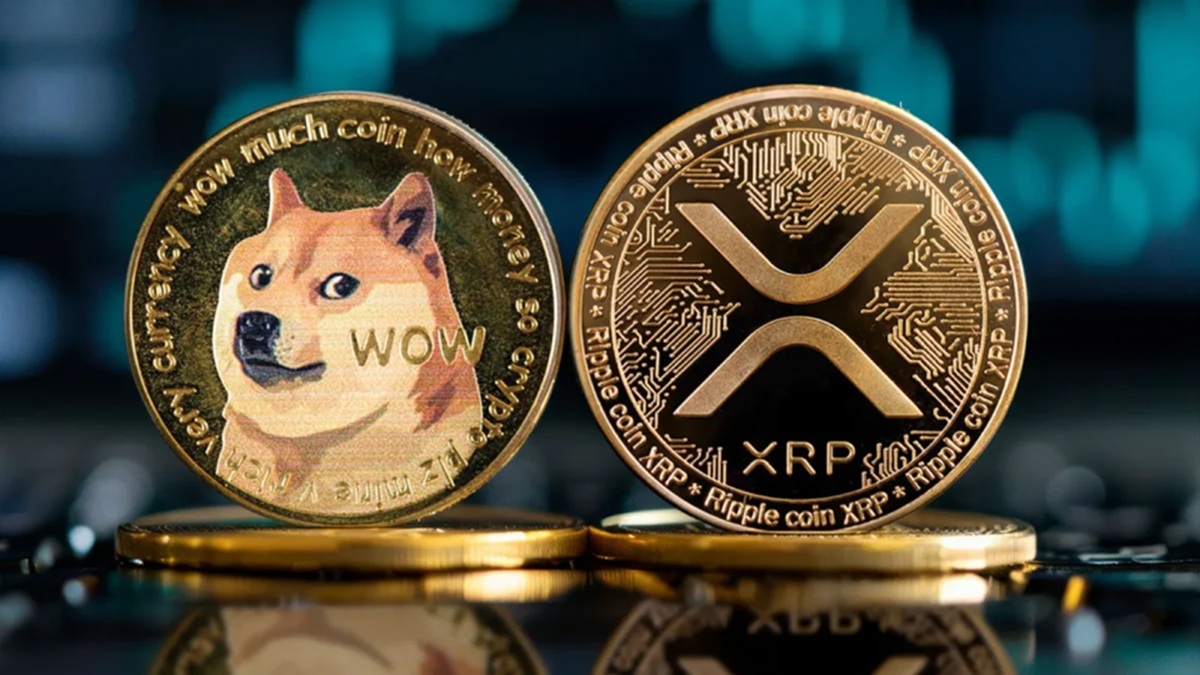
And the Big Day Has Arrived: The Anticipated News for XRP and Dogecoin Tomorrow

And the Big Day Has Arrived: The Anticipated News for XRP and Dogecoin Tomorrow

The first-ever ETFs for XRP and Dogecoin are expected to launch in the US tomorrow. Here's what you need to know. Continue Reading: And the Big Day Has Arrived: The Anticipated News for XRP and Dogecoin Tomorrow
Share
Coinstats2025/09/18 04:33
Tokenized Assets Shift From Wrappers to Building Blocks in DeFi

Tokenized Assets Shift From Wrappers to Building Blocks in DeFi

The post Tokenized Assets Shift From Wrappers to Building Blocks in DeFi appeared on BitcoinEthereumNews.com. RWAs are rapidly moving on-chain, unlocking new opportunities for investors and DeFi protocols, according to a new report from Dune and RWAxyz. Tokenized real-world assets (RWAs) are moving beyond digital versions of traditional securities to become key building blocks of decentralized finance (DeFi), according to the 2025 RWA Report from Dune and RWAxyz. The report notes that Treasuries, bonds, credit, and equities are now being used in DeFi as collateral, trading instruments, and yield products. This marks tokenization’s “real breakthrough” – composability, or the ability to combine and reuse assets across different protocols. Projects are already showing how this works in practice. Asset manager Maple Finance’s syrupUSDC, for example, has grown to $2.5 billion, with more than 30% placed in DeFi apps like Spark ($570 million). Centrifuge’s new deJAAA token, a wrapper for Janus Henderson’s AAA CLO fund, is already trading on Aerodrome, Coinbase and other exchanges, with Stellar planned next. Meanwhile, Aave’s Horizon RWA Market now lets institutional users post tokenized Treasuries and CLOs as collateral. This trend underscores a bigger shift: RWAs are no longer just copies of traditional assets; instead, they are becoming core parts of on-chain finance, powering lending, liquidity, and yield, and helping to close the gap between traditional finance (TradFi) and DeFi. “RWAs have crossed the chasm from experimentation to execution,” Sid Powell, CEO of Maple Finance, says in the report. “Our growth to $3.5B AUM reflects a broader shift: traditional financial services are adopting crypto assets while institutions seek exposure to on-chain markets.” Investor demand for higher returns and more diversified options is mainly driving this growth. Tokenized Treasuries proved there is strong demand, with $7.3 billion issued by September 2025 – up 85% year-to-date. The growth was led by BlackRock, WisdomTree, Ondo, and Centrifuge’s JTRSY (Janus Henderson Anemoy Treasury Fund). Spark’s $1…
Share
BitcoinEthereumNews2025/09/18 06:10
SlowMist: ClawHub is increasingly becoming a new target for attackers to poison supply chains.

SlowMist: ClawHub is increasingly becoming a new target for attackers to poison supply chains.

PANews reported on February 9th that, according to SlowMist monitoring, ClawHub, the official plugin center of the open-source AI agent project OpenClaw, is increasingly
Share
PANews2026/02/09 10:51
