The next generation of successful crypto treasuries will prove that crypto can power more efficient, resilient business models.The next generation of successful crypto treasuries will prove that crypto can power more efficient, resilient business models.

What crypto treasuries must do to survive as the hype dies | Opinion

2026/01/29 22:43
7 min read

Disclosure: The views and opinions expressed here belong solely to the author and do not represent the views and opinions of crypto.news’ editorial.

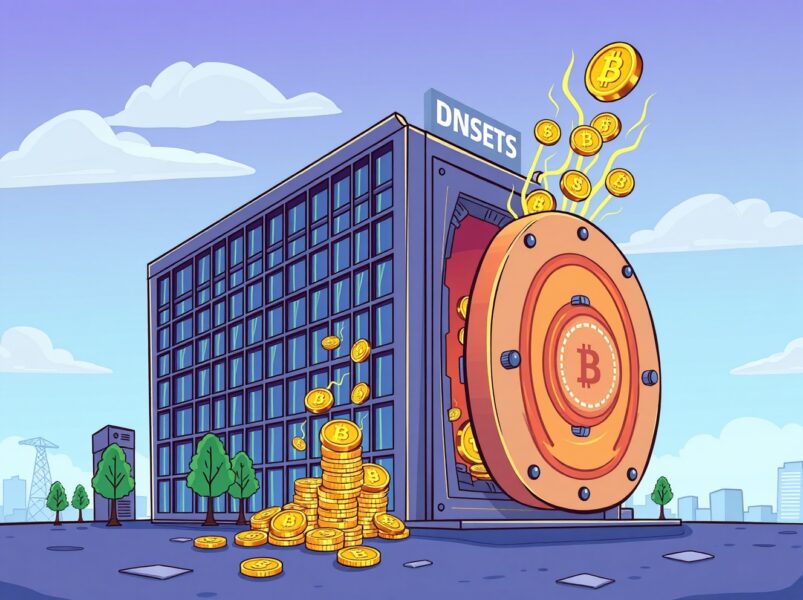
The crypto treasury boom is entering its first true stress test. After a year of runaway enthusiasm, the shares of several crypto treasury vehicles are now trading below the value of their own holdings.

Summary
  • The buy-and-hold DAT model is breaking — falling mNAVs signal that markets no longer reward passive accumulation or hype-driven treasury strategies.
  • Survival requires productive capital, not idle assets — successful crypto treasuries must stake, operate infrastructure, provide liquidity, and turn holdings into revenue-generating engines.
  • The next winners will look like real businesses — firms that combine treasury leverage with operations, foundation alignment, and recurring revenue will outlast speculative treasury vehicles.

Warning signs of waning investor enthusiasm towards digital asset treasury companies, ot DATs, have been emerging since mid-October, when the market net asset value (mNAV) of roughly 15% of DATs fell below 1× (a signal that the market was valuing these companies at less than the combined value of their assets and liabilities). By early January, that figure had surged to nearly 40%, an alarming shift that suggests the economics underpinning the DAT boom are beginning to fracture.

Investors are sending a clear message: the traditional DAT playbook ( buying digital assets and waiting for them to appreciate)  is no longer a convincing business strategy. To survive, DATs must evolve beyond accumulation. The next generation of successful crypto treasury companies will prove that crypto assets can power more efficient, resilient business models, not simply inflate balance sheets. Those who fail to adapt will be remembered as another speculative experiment that burned bright and faded fast.

Treasury fatigue sets in

The earliest treasury companies thrived on scarcity. There were only a handful of recognizable names in the market, and their novelty created powerful feedback loops. Liquidity was concentrated, investor attention was high, and media coverage amplified even modest performance gains. Metaplanet, an early high-profile DAT, skyrocketed to an mNAV of over 9x in February 2025, according to Q1 filings, bolstered by a 10:1 stock split and clever financial engineering. 

Now that type of momentum seems like a distant illusion. The shares of several DATs, including Metaplanet, now underperform the value of the crypto they hold. The market’s fatigue is visible in shrinking premiums, flatter trading volumes, and a growing sense that these entities have little left to differentiate them.

Temporary rebounds are still possible. Strategy’s market-to-NAV ratio, for example, recovered from below one to nearly four during the 2024 upswing. But these are cyclical bounces, not structural recoveries. Without reinvention, treasury companies will keep oscillating with the broader crypto market rather than developing independent sources of value. The hype that once lifted all boats is gone. What remains is a test of who can build a business that endures beyond speculation.

Crypto is capital, and productive capital is king

Crypto assets are not inherently valuable; they become valuable when used productively. The next era of treasury companies will be defined by their ability to turn idle holdings into engines of growth. Bitcoin (BTC) treasuries face natural limits: Bitcoin’s programmability is restricted, and most opportunities revolve around balance-sheet engineering. Ethereum (ETH), Solana (SOL), and other programmable networks, by contrast, offer the tools to deploy capital in more creative and productive ways.

At a baseline, treasury companies can stake, collateralize, and provide liquidity. These activities generate yield and strengthen the ecosystems they operate within. But the most ambitious players are going further, developing comprehensive operational ecosystems that use their capital as fuel for innovation.

One path is infrastructure operations. Running validators, RPC nodes, or data indexers converts treasury scale into a performance advantage. Capital depth allows for faster, more reliable infrastructure that, in turn, attracts more users and projects. Another is protocol participation, supplying liquidity, creating markets, and earning fees while supporting network throughput. These actions convert passive treasuries into active participants in the ecosystems that underpin their asset values.

In both models, productive capital becomes a competitive moat. It demonstrates that the company’s token holdings are not speculative chips but operational inputs. Over time, these dynamics will separate firms that use crypto as capital from those that merely hold it.

Crypto treasuries are businesses, and they must act like it

Staking rewards and passive yield can keep a treasury solvent, but they cannot sustain investor confidence. To attract durable capital, treasury companies must begin operating like real businesses. Berkshire Hathaway’s model offers a useful reference: an investment vehicle that also builds and acquires productive operations, compounding returns across cycles.

In crypto, sustainable models require similar operational layers. A treasury company can acquire infrastructure businesses that benefit from its native asset scale, such as validators or middleware providers. It can build proprietary tools and services that monetize its holdings, such as trading platforms or data analytics products. And it can develop recurring revenue streams that demonstrate consistent, productive use of its treasury.

Perhaps a more crypto-native approach can be leaning into the meme and hype-driven culture of crypto by adopting a business development strategy that fosters community engagement and spawns  ‘viral’ moments.

These efforts transform a treasury company from a passive asset holder into an active enterprise. Investors reward this shift because it decouples value from token price alone. Firms that combine treasury leverage with operational execution will stand out as the market matures. The next cycle will favor builders over holders.

Foundations will catalyze growth

Blockchain foundations increasingly recognize that scaled treasury companies can accelerate ecosystem growth. They possess both capital and operational flexibility, making them natural partners for foundations seeking to strengthen liquidity and network activity.

Support mechanisms are already emerging. Some foundations sell assets at discounts to bolster initial market-to-NAV ratios, helping treasury vehicles attract investors early on. Others provide marketing support or community exposure to build recognition. The most forward-thinking foundations facilitate direct integrations, encouraging treasury companies to deploy capital into their networks’ liquidity pools or validator sets.

This relationship is mutually reinforcing. For non-profit foundations, decentralized autonomous treasuries act as a de facto for-profit execution arm. The foundation retains alignment through token holdings, while the treasury company gains the freedom to experiment and expand commercially. Together, they create a self-sustaining growth engine that can deploy capital flexibly while staying loyal to ecosystem objectives.

Such alignment gives foundation-backed treasury companies structural advantages. They become preferred liquidity providers, validators, and service operators within their respective ecosystems. This role positions them not as speculative vehicles but as long-term builders of sustained network liquidity and economic throughput.

The death of hype will determine the winners

The compression of market-to-NAV ratios marks the end of the easy-money phase for crypto treasury companies. Hype is no longer enough to maintain valuations. DATs will be forced to prove that crypto assets can underpin superior business models—models that generate recurring revenue, support ecosystem growth, and justify investor confidence even in flat markets.

The adjustment will be painful, but it is necessary. Markets are maturing, and investors now expect operational depth, governance transparency, and clear pathways to sustainable yield. The companies that deliver on these fronts will not just survive the current downturn; they will define the next phase of mainstream crypto adoption.

Spencer Yang

Spencer Yang is a Managing Partner of BlockSpaceForce (BSF), a crypto-native advisory firm backing teams driving category dominance in the crypto space.

Disclaimer: The articles reposted on this site are sourced from public platforms and are provided for informational purposes only. They do not necessarily reflect the views of MEXC. All rights remain with the original authors. If you believe any content infringes on third-party rights, please contact service@support.mexc.com for removal. MEXC makes no guarantees regarding the accuracy, completeness, or timeliness of the content and is not responsible for any actions taken based on the information provided. The content does not constitute financial, legal, or other professional advice, nor should it be considered a recommendation or endorsement by MEXC.

You May Also Like

Bad News for European Crypto Holders? EU Calls For Harsher Crypto Regulation Despite MiCA

Bad News for European Crypto Holders? EU Calls For Harsher Crypto Regulation Despite MiCA

EU regulators push stricter crypto rules beyond MiCA, seeking ESMA oversight, cybersecurity audits, and AMLR bans on privacy tokens. European regulators are now calling louder for stricter crypto rules.  France’s AMF, Austria’s FMA and Italy’s CONSOB are now arguing that the Markets in Crypto-Assets Regulation (also known as MiCA framework) is not enough to manage […] The post Bad News for European Crypto Holders? EU Calls For Harsher Crypto Regulation Despite MiCA appeared first on Live Bitcoin News.
Share
LiveBitcoinNews2025/09/18 13:00
Here’s Why This Analyst Predicts Shiba Inu 568% Surge
Here’s Why This Analyst Predicts Shiba Inu 568% Surge

Popular community member Heber Mayen suggests that Shiba Inu is poised for an explosive breakout. In a tweet yesterday, Mayen shared Shiba Inu’s one-month price chart, showing the asset up 3.65% over the past 30 days to $0.00001345.Visit Website
Share
The Crypto Basic2025/09/19 14:59
AVAX One Unveils Ambitious $550M Avalanche Reserve Plan

AVAX One Unveils Ambitious $550M Avalanche Reserve Plan

BitcoinWorld AVAX One Unveils Ambitious $550M Avalanche Reserve Plan In a groundbreaking move that’s sending ripples across both traditional finance and the cryptocurrency world, Nasdaq-listed AgriFORCE (AGRI) is making waves with its audacious plan to rebrand as AVAX One. This strategic pivot marks a significant first: a publicly traded company on a major exchange explicitly dedicating its core strategy to investing in Avalanche (AVAX) reserves. For anyone tracking the evolving landscape of digital assets, the emergence of AVAX One signals a bold new chapter. What Does the AVAX One Rebrand Mean for Investors? The decision by AgriFORCE to transform into AVAX One is far more than just a name change; it’s a complete strategic overhaul. The company will now focus intensely on accumulating and managing Avalanche (AVAX) reserves. This commitment positions AVAX One as a unique player in the public market, offering traditional investors a direct avenue to exposure in a prominent layer-1 blockchain. Pioneering Public Exposure: AVAX One is set to become the first Nasdaq-listed entity to center its operations around a specific cryptocurrency, offering a new model for institutional crypto adoption. Significant Capital Commitment: The firm has already secured a substantial $300 million through a private investment in public equity (PIPE) deal. This initial capital infusion demonstrates strong investor confidence in the new direction. Targeting Growth: The ambition doesn’t stop there. AVAX One intends to raise an additional $250 million, aiming for a total of $550 million dedicated to building its AVAX reserves. This aggressive strategy underscores the company’s belief in Avalanche’s long-term potential. Powering Up AVAX One: The Role of Key Advisors To navigate this innovative venture, AVAX One is bringing in some heavy hitters from both traditional finance and the crypto industry. The caliber of these individuals speaks volumes about the serious intent behind this rebranding. The company has announced that two highly respected figures are expected to join its advisory board: Anthony Scaramucci: Founder of SkyBridge Capital, a global investment firm. Scaramucci is well-known for his insights into financial markets and his increasing involvement in the crypto space. His presence lends significant credibility and strategic guidance to AVAX One. Brett Tejpaul: Head of Coinbase Institutional. Tejpaul brings extensive experience from one of the leading cryptocurrency exchanges, offering invaluable expertise in digital asset markets, custody, and institutional trading strategies. These appointments suggest a robust framework for governance and strategic direction, blending deep financial acumen with specialized cryptocurrency knowledge. Their collective wisdom will be crucial in guiding AVAX One‘s investment decisions and market positioning. The Ambitious $550M Target for AVAX One Reserves – A Bold Move? The ambitious target for AVAX One‘s Avalanche reserves, aiming for a total of $550 million, is a testament to the company’s conviction in the Avalanche ecosystem. This substantial capital allocation positions AVAX One to potentially become a major holder of AVAX, with significant implications for both the company and the broader Avalanche network. Investing directly in a digital asset like AVAX comes with both opportunities and considerations: Potential for Appreciation: If Avalanche continues to grow and gain adoption, the value of AVAX One‘s reserves could appreciate significantly, benefiting shareholders. Ecosystem Participation: Holding substantial AVAX could allow AVAX One to participate in Avalanche’s governance, staking, and decentralized finance (DeFi) activities, potentially generating additional yield. Market Volatility: Like all cryptocurrencies, AVAX is subject to market volatility. AVAX One‘s strategy will need to account for these fluctuations and manage risk effectively. This strategic shift highlights a growing trend where traditional companies are seeking direct exposure to the crypto market, recognizing its potential for innovation and financial growth. In conclusion, AgriFORCE’s transformation into AVAX One is a landmark event, showcasing a Nasdaq-listed company’s full embrace of the digital asset economy. With substantial funding already secured, an ambitious reserve target, and a stellar advisory board, AVAX One is poised to be a significant player in the Avalanche ecosystem and a bellwether for institutional crypto adoption. This bold move will undoubtedly be watched closely by investors and the crypto community alike, as it charts new territory for public companies in the digital age. Frequently Asked Questions (FAQs) What is AVAX One? AVAX One is the new name for AgriFORCE (AGRI), a Nasdaq-listed company that is rebranding to focus its core business strategy on investing in and holding Avalanche (AVAX) cryptocurrency reserves. Why is AgriFORCE rebranding to AVAX One? AgriFORCE is rebranding to AVAX One to pivot its business model entirely towards the digital asset space, specifically focusing on Avalanche (AVAX) as its primary investment vehicle. This strategic shift aims to capitalize on the growth potential of the cryptocurrency market. Who are the key advisors for AVAX One? The advisory board for AVAX One is expected to include high-profile figures such as Anthony Scaramucci, founder of SkyBridge Capital, and Brett Tejpaul, head of Coinbase Institutional. Their expertise will guide the company’s new direction. What is Avalanche (AVAX)? Avalanche (AVAX) is a high-performance blockchain platform designed for decentralized applications (dApps) and custom blockchain networks. It is known for its speed, security, and scalability, making it a prominent player in the layer-1 blockchain space. What does the $550M target for AVAX One reserves mean? The $550 million target signifies the total amount of capital AVAX One aims to raise and dedicate to acquiring and holding Avalanche (AVAX) tokens. This includes $300 million already raised and an additional $250 million targeted for future fundraising. Did you find this article insightful? Share it with your network and help spread the word about this pioneering move in the crypto investment landscape! To learn more about the latest crypto market trends, explore our article on key developments shaping Avalanche price action. This post AVAX One Unveils Ambitious $550M Avalanche Reserve Plan first appeared on BitcoinWorld.
Share
Coinstats2025/09/22 19:40