The post Bitcoin tests $71K support as stop-loss liquidations loom appeared on BitcoinEthereumNews.com. Bitcoin (BTC) has slipped under $71,000, bringing price The post Bitcoin tests $71K support as stop-loss liquidations loom appeared on BitcoinEthereumNews.com. Bitcoin (BTC) has slipped under $71,000, bringing price

Bitcoin tests $71K support as stop-loss liquidations loom

Bitcoin (BTC) has slipped under $71,000, bringing price action back to a well-watched weekly support band near $71,000–$68,000. The move focuses attention on whether this area confirms a base or resolves into a deeper retracement. Market structure around round numbers often affects positioning and liquidity.

Why the $71,000–$68,000 support zone matters

On higher timeframes, this range aligns with prior range extremes and clustered participation, making it an area where trend conviction is commonly tested. Analysts have framed it as pivotal while macro shocks filter through risk assets. Cointelegraph first reported that, Charles Edwards, founder of Capriole Investments, warned of “very high risk” that pressure could push Bitcoin into the $71,000 zone amid tariff-related uncertainty.

The zone also overlaps what some describe as the top of a prior trading corridor. As reported by Bitcoinsistemi, Nansen analyst Aurelie Barthere highlighted $71,000–$72,000 as the “top of the pre-election trading range,” cautioning that a slip below can signal a more intense correction within a broader cycle.

If $71,000 fails on a decisive close, stop-loss liquidations and forced deleveraging can accelerate downside. A clean break of widely watched levels can force systematic sellers to exit at market, deepening slippage before liquidity stabilizes.

Institutional exposure to BTC means mark-to-market swings can widen when support breaks. In commentary reported by Business Insider, Michael Burry, investor best known from “The Big Short,” said a drop below roughly $70,000 could mean “the consequences could be severe for major institutional holders.” He also warned that further declines toward $60,000 could constrain capital access for heavily exposed firms, and falls near $50,000 could pressure miners.

What to watch next: levels, signals, and catalysts

Key technical and on-chain signals around $71,000 support

Weekly closes relative to $71,000 are key for confirming hold-versus-break dynamics; reactions near $68,000 may determine whether bids absorb supply. Based on data from CryptoQuant, the low-$70,000s have been flagged as a key area if higher supports give way, so monitoring exchange flows, derivatives liquidations, and realized losses around these thresholds is prudent for assessing stress.

Macro factors: tariffs, liquidity, and rates affecting Bitcoin

Tariff headlines, liquidity conditions, and interest rates can amplify or relieve pressure around support. Earlier commentary linked tariff risks with pushes toward the $71,000 area, while easier liquidity or dovish shifts could favor stabilization.

At the time of this writing, Bitcoin trades near $70,000, used here only as contextual background.

Bitcoin Price Weekly Chart: CoinMarketCap

FAQ about Bitcoin support at $71,000

Is the $71,000–$68,000 zone likely to hold as support, or does it point to a deeper correction?

Holding weekly closes above $71,000 supports base-building; losing $68,000 would raise the risk of a deeper correction, according to cited technical commentary.

How would a drop under $71,000 affect institutional holders and miners?

It could trigger stop-loss liquidations and widen mark-to-market losses for institutional exposure to BTC; further declines may strain miner margins.

Source: https://coincu.com/news/bitcoin-tests-71k-support-as-stop-loss-liquidations-loom/

Market Opportunity
LETSTOP Logo
LETSTOP Price(STOP)
$0.02136
$0.02136$0.02136
+4.24%
USD
LETSTOP (STOP) Live Price Chart
Disclaimer: The articles reposted on this site are sourced from public platforms and are provided for informational purposes only. They do not necessarily reflect the views of MEXC. All rights remain with the original authors. If you believe any content infringes on third-party rights, please contact service@support.mexc.com for removal. MEXC makes no guarantees regarding the accuracy, completeness, or timeliness of the content and is not responsible for any actions taken based on the information provided. The content does not constitute financial, legal, or other professional advice, nor should it be considered a recommendation or endorsement by MEXC.

You May Also Like

Cashing In On University Patents Means Giving Up On Our Innovation Future

Cashing In On University Patents Means Giving Up On Our Innovation Future

The post Cashing In On University Patents Means Giving Up On Our Innovation Future appeared on BitcoinEthereumNews.com. “It’s a raid on American innovation that would deliver pennies to the Treasury while kneecapping the very engine of our economic and medical progress,” writes Pipes. Getty Images Washington is addicted to taxing success. Now, Commerce Secretary Howard Lutnick is floating a plan to skim half the patent earnings from inventions developed at universities with federal funding. It’s being sold as a way to shore up programs like Social Security. In reality, it’s a raid on American innovation that would deliver pennies to the Treasury while kneecapping the very engine of our economic and medical progress. Yes, taxpayer dollars support early-stage research. But the real payoff comes later—in the jobs created, cures discovered, and industries launched when universities and private industry turn those discoveries into real products. By comparison, the sums at stake in patent licensing are trivial. Universities collectively earn only about $3.6 billion annually in patent income—less than the federal government spends on Social Security in a single day. Even confiscating half would barely register against a $6 trillion federal budget. And yet the damage from such a policy would be anything but trivial. The true return on taxpayer investment isn’t in licensing checks sent to Washington, but in the downstream economic activity that federally supported research unleashes. Thanks to the bipartisan Bayh-Dole Act of 1980, universities and private industry have powerful incentives to translate early-stage discoveries into real-world products. Before Bayh-Dole, the government hoarded patents from federally funded research, and fewer than 5% were ever licensed. Once universities could own and license their own inventions, innovation exploded. The result has been one of the best returns on investment in government history. Since 1996, university research has added nearly $2 trillion to U.S. industrial output, supported 6.5 million jobs, and launched more than 19,000 startups. Those companies pay…
Share
BitcoinEthereumNews2025/09/18 03:26
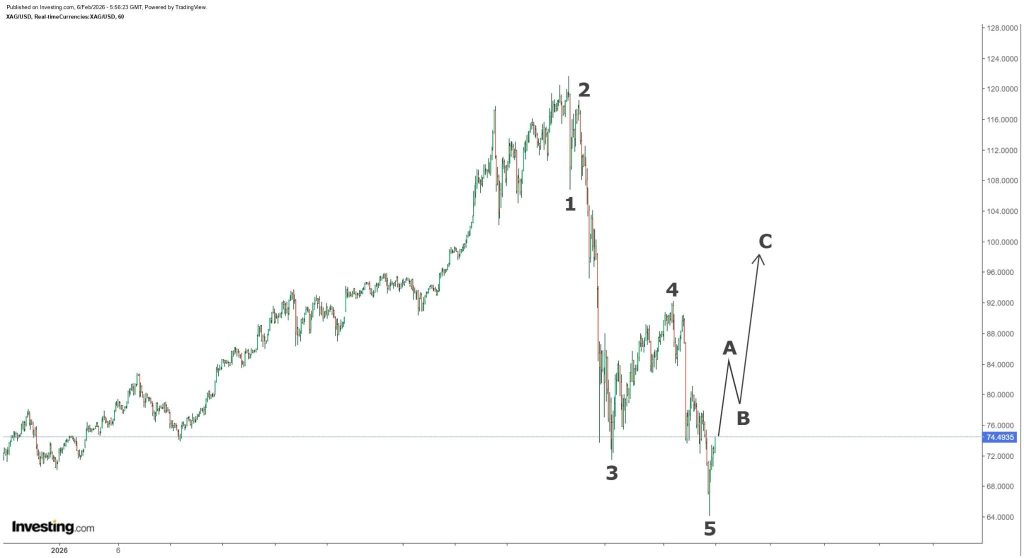
Silver Price Crash Is Over “For Real This Time,” Analyst Predicts a Surge Back Above $90

Silver Price Crash Is Over “For Real This Time,” Analyst Predicts a Surge Back Above $90

Silver has been taking a beating lately, and the Silver price hasn’t exactly been acting like a safe haven. After running up into the highs, the whole move reversed
Share
Captainaltcoin2026/02/07 03:15
Citi Caps Year-End at $4,300, But ETF outflows Challenge Outlook

Citi Caps Year-End at $4,300, But ETF outflows Challenge Outlook

The post Citi Caps Year-End at $4,300, But ETF outflows Challenge Outlook appeared on BitcoinEthereumNews.com. Ethereum Price Prediction: Citi Caps Year-End at $4,300, But ETF outflows Challenge Outlook Disclaimer: The information found on NewsBTC is for educational purposes only. It does not represent the opinions of NewsBTC on whether to buy, sell or hold any investments and naturally investing carries risks. You are advised to conduct your own research before making any investment decisions. Use information provided on this website entirely at your own risk. Related News © 2025 NewsBTC. All Rights Reserved. This website uses cookies. By continuing to use this website you are giving consent to cookies being used. Visit our Privacy Center or Cookie Policy. I Agree Source: https://www.newsbtc.com/news/ethereum/ethereum-price-prediction-citi-caps-year-end-at-4300-but-etf-outflows-challenge-outlook/
Share
BitcoinEthereumNews2025/09/18 14:30