The post WLFI Blacklists 272 Wallets: A Look Inside the Safeguards, What You Need To Know appeared on BitcoinEthereumNews.com. World Liberty Financial (WLFI) has confirmed that 272 wallets were recently blacklisted. While this sounds alarming, the team stresses it’s a protective measure, not a restriction on regular users. WLFI only triggers blacklist or pause functions when there’s a clear fraud or security risk. Why 272 Wallets Were Flagged The blacklist spans only a tiny fraction of WLFI’s total holders. Still, the breakdown offers insight into how threats unfold in real time: 215 wallets (≈79.0%) tied to a phishing attack. 50 wallets (≈18.4%) linked to compromised access. 5 wallets (≈1.8%) flagged for high risk. 1 wallet (≈0.4%), belonging to Justin Sun, suspected of misappropriating funds from other holders. This action shows WLFI’s unique balance between decentralization and user protection. The project is not aiming to control behavior but to block damage before it spreads. We’ve heard community concerns about recent wallet blacklists. Transparency first: WLFI only intervenes to protect users, never to silence normal activity. — WLFI (@worldlibertyfi) September 5, 2025 Blacklist and Pause: Why These Functions Exist Decentralized contracts usually leave communities exposed during emergencies. WLFI takes a different approach by embedding blacklist and pause functions into its contract. Blacklist Function: Freezes compromised wallets to stop fund drainage. Pause Function: Temporarily halts transactions in extreme events like exploits or technical failures. WLFI emphasizes these are last-resort safety tools, not everyday controls. Their purpose is protection, ensuring the ecosystem can respond to real-world risks without long-term centralization. How WLFI Detects and Responds to Threats WLFI runs a layered monitoring system to keep its network safe. Each tool brings a different angle: TRM Labs, Provides real-time blockchain forensics, scoring wallets for risk and sanctions exposure. Sumsub, Rescreens KYC data to ensure early participants aren’t linked to sanctioned or fraudulent activity. On-Chain Analytics, Flags unusual trading or transfer patterns. Community Reports, Direct… The post WLFI Blacklists 272 Wallets: A Look Inside the Safeguards, What You Need To Know appeared on BitcoinEthereumNews.com. World Liberty Financial (WLFI) has confirmed that 272 wallets were recently blacklisted. While this sounds alarming, the team stresses it’s a protective measure, not a restriction on regular users. WLFI only triggers blacklist or pause functions when there’s a clear fraud or security risk. Why 272 Wallets Were Flagged The blacklist spans only a tiny fraction of WLFI’s total holders. Still, the breakdown offers insight into how threats unfold in real time: 215 wallets (≈79.0%) tied to a phishing attack. 50 wallets (≈18.4%) linked to compromised access. 5 wallets (≈1.8%) flagged for high risk. 1 wallet (≈0.4%), belonging to Justin Sun, suspected of misappropriating funds from other holders. This action shows WLFI’s unique balance between decentralization and user protection. The project is not aiming to control behavior but to block damage before it spreads. We’ve heard community concerns about recent wallet blacklists. Transparency first: WLFI only intervenes to protect users, never to silence normal activity. — WLFI (@worldlibertyfi) September 5, 2025 Blacklist and Pause: Why These Functions Exist Decentralized contracts usually leave communities exposed during emergencies. WLFI takes a different approach by embedding blacklist and pause functions into its contract. Blacklist Function: Freezes compromised wallets to stop fund drainage. Pause Function: Temporarily halts transactions in extreme events like exploits or technical failures. WLFI emphasizes these are last-resort safety tools, not everyday controls. Their purpose is protection, ensuring the ecosystem can respond to real-world risks without long-term centralization. How WLFI Detects and Responds to Threats WLFI runs a layered monitoring system to keep its network safe. Each tool brings a different angle: TRM Labs, Provides real-time blockchain forensics, scoring wallets for risk and sanctions exposure. Sumsub, Rescreens KYC data to ensure early participants aren’t linked to sanctioned or fraudulent activity. On-Chain Analytics, Flags unusual trading or transfer patterns. Community Reports, Direct…

WLFI Blacklists 272 Wallets: A Look Inside the Safeguards, What You Need To Know

World Liberty Financial (WLFI) has confirmed that 272 wallets were recently blacklisted.

While this sounds alarming, the team stresses it’s a protective measure, not a restriction on regular users. WLFI only triggers blacklist or pause functions when there’s a clear fraud or security risk.

Why 272 Wallets Were Flagged

The blacklist spans only a tiny fraction of WLFI’s total holders. Still, the breakdown offers insight into how threats unfold in real time:

  • 215 wallets (≈79.0%) tied to a phishing attack.
  • 50 wallets (≈18.4%) linked to compromised access.
  • 5 wallets (≈1.8%) flagged for high risk.
  • 1 wallet (≈0.4%), belonging to Justin Sun, suspected of misappropriating funds from other holders.

This action shows WLFI’s unique balance between decentralization and user protection. The project is not aiming to control behavior but to block damage before it spreads.

Blacklist and Pause: Why These Functions Exist

Decentralized contracts usually leave communities exposed during emergencies. WLFI takes a different approach by embedding blacklist and pause functions into its contract.

  • Blacklist Function: Freezes compromised wallets to stop fund drainage.
  • Pause Function: Temporarily halts transactions in extreme events like exploits or technical failures.

WLFI emphasizes these are last-resort safety tools, not everyday controls. Their purpose is protection, ensuring the ecosystem can respond to real-world risks without long-term centralization.

How WLFI Detects and Responds to Threats

WLFI runs a layered monitoring system to keep its network safe. Each tool brings a different angle:

  • TRM Labs, Provides real-time blockchain forensics, scoring wallets for risk and sanctions exposure.
  • Sumsub, Rescreens KYC data to ensure early participants aren’t linked to sanctioned or fraudulent activity.
  • On-Chain Analytics, Flags unusual trading or transfer patterns.
  • Community Reports, Direct submissions from users feed into blacklist reviews.
  • Multi-Sig Oversight, Any blacklist or pause action requires multiple signatures, cutting down unilateral decision-making risk.

This framework builds an audit trail. Every action ties back to data, not personal judgment.

Justin Sun’s Controversial Role

A unique twist in this case is the involvement of Justin Sun (@justinsuntron). His history with WLFI has been turbulent:

  • Joined the presale, growing his stack to a 10x profit worth over $750M.
  • Publicly claimed he would not sell a single token.
  • Later moved $9M worth of WLFI across accounts, sparking allegations of dumping on the open market.

Result: His entire holdings, over $750M in WLFI, ended up blacklisted.

This remains one of the most high-profile blacklist cases in DeFi so far.

WLFI isn’t leaving affected users in the dark. The team confirmed a review process is underway:

  • Rightful owners of compromised wallets will regain secure access.
  • Once reviews conclude, WLFI will publish a public update on outcomes.
  • Broader ecosystem plans, including new integrations and tradability expansions, remain on schedule.

The blacklist, while disruptive in the short term, hasn’t slowed WLFI’s growth roadmap.

Staying Safe as a WLFI Holder

Security is a shared responsibility. WLFI encourages holders to follow these steps:

  •  Only trust links and updates from @worldlibertyfi and the official website.
  •  Ignore unsolicited DMs or suspicious replies.
  •  Use hardware wallets and enable 2FA where possible.
  •  Contact WLFI support before making moves you’re unsure of.

The rise in phishing and wallet compromises shows just how quickly attackers adapt. Staying alert is key.

WLFI’s design challenges the binary narrative of decentralization vs. control. By embedding safety tools like blacklist and pause, the project creates a middle path. It lets decentralization thrive while still protecting users during crises.

The recent blacklisting of 272 wallets is proof of that balance in action. It’s not about restriction. It’s about stability, security, and transparency in a space where billions of dollars move without pause.

Disclosure: This is not trading or investment advice. Always do your research before buying any cryptocurrency or investing in any services.

Follow us on Twitter @nulltxnews to stay updated with the latest Crypto, NFT, AI, Cybersecurity, Distributed Computing, and Metaverse news!

Source: https://nulltx.com/wlfi-blacklists-272-wallets-a-look-inside-the-safeguards-what-you-need-to-know/

Market Opportunity
LETSTOP Logo
LETSTOP Price(STOP)
$0.02093
$0.02093$0.02093
+5.81%
USD
LETSTOP (STOP) Live Price Chart
Disclaimer: The articles reposted on this site are sourced from public platforms and are provided for informational purposes only. They do not necessarily reflect the views of MEXC. All rights remain with the original authors. If you believe any content infringes on third-party rights, please contact service@support.mexc.com for removal. MEXC makes no guarantees regarding the accuracy, completeness, or timeliness of the content and is not responsible for any actions taken based on the information provided. The content does not constitute financial, legal, or other professional advice, nor should it be considered a recommendation or endorsement by MEXC.

You May Also Like

Fan Token Firm Chiliz Acquires 2-Time ‘Dota 2’ Champions, OG Esports

Fan Token Firm Chiliz Acquires 2-Time ‘Dota 2’ Champions, OG Esports

The post Fan Token Firm Chiliz Acquires 2-Time ‘Dota 2’ Champions, OG Esports appeared on BitcoinEthereumNews.com. In brief The Chiliz Group has acquired a controlling stake in OG Esports, a prominent competitive gaming organization. OG Esports unveiled its own fan token on Chiliz’s Socios.com platform back in 2020. It recently hit an all-time high price. Chiliz has teased various future team-related benefits for OG token holders, along with a new Web3-related project. The Chiliz Group, which operates the Socios.com crypto fan token platform, announced Tuesday that it has acquired a 51% controlling stake in OG Esports, the competitive gaming organization founded in 2015 by Dota 2 legends Johan “nOtail” Sundstein and Sébastien “Ceb” Debs. OG made history as the first team to win consecutive titles at The International—the annual, high-profile Dota 2 world championship tournament—in 2018 and 2019, and has since expanded into multiple games including Counter-Strike, Honor of Kings, and Marvel Rivals. The team was also the first esports organization to join the Socios platform with the 2020 debut of its own fan token, which Chiliz said recently became the first esports team token to exceed a $100 million market capitalization. OG was recently priced at $16.88, up nearly 9% on the day following the announcement. The token’s price peaked at a new all-time high of $24.78 last week ahead of The International 2025, where OG did not compete this year. Following the acquisition, Xavier Oswald will assume the CEO role, while the co-founders will turn their attention to “a new strategic project consolidating the team’s competitive foundation [and] driving innovation at the intersection of esports and Web3,” per a press release. No further details were provided regarding that project. “Bringing OG into the Chiliz Group is a major step toward further strengthening fan experiences, one where the community doesn’t just watch from the sidelines but gets to shape the journey,” Chiliz CEO Alex Dreyfus…
Share
BitcoinEthereumNews2025/09/18 09:40
Travelzoo Q4 2025 Earnings Conference Call on February 19 at 11:00 AM ET

Travelzoo Q4 2025 Earnings Conference Call on February 19 at 11:00 AM ET

NEW YORK, Feb. 9, 2026 /PRNewswire/ — Travelzoo® (NASDAQ: TZOO): WHAT: Travelzoo, the club for travel enthusiasts, will host a conference call to discuss the Company
Share
AI Journal2026/02/10 01:46
Trump Backs Bitcoin As New Safe Haven

Trump Backs Bitcoin As New Safe Haven

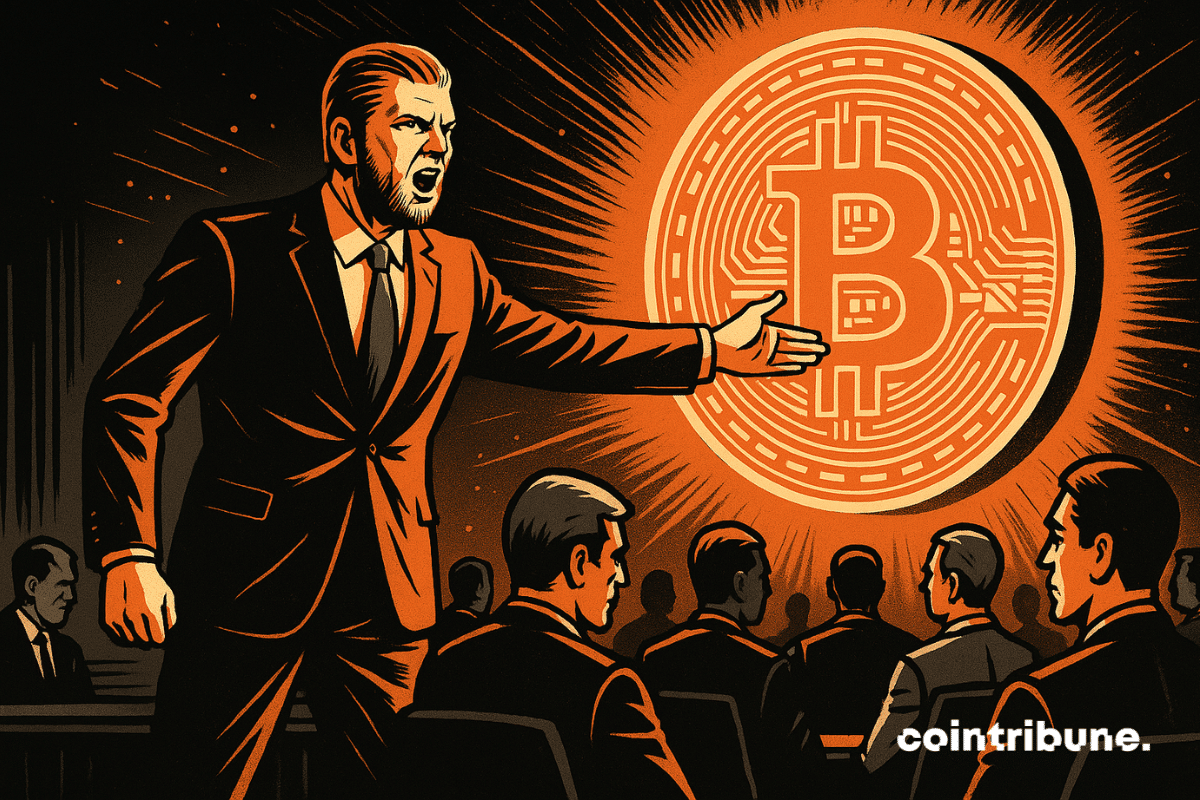
On CNBC, Eric Trump stated that Bitcoin has "taken the role of gold in today’s world," elevating crypto to the status of a strategic safe haven asset. This media appearance coincides with the launch of American Bitcoin, a mining and BTC holding company he is close to. Far from a mere announcement, this statement fits within a dynamic where publicly traded companies are beginning to integrate bitcoin at the heart of their reserve strategy. L’article Trump Backs Bitcoin As New Safe Haven est apparu en premier sur Cointribune.
Share
Coinstats2025/09/18 14:32