My Journey from $50 to $500/week 💸 Three months ago, I started my crypto journey with just $50. Last month, I closed with over $500 in weekly profits — trading only one hour a day. This is not a promise or financial advice — just my personal path and the exact strategy I used to get here. Why I Chose Micro-Trading Crypto is fast. Prices swing wildly every day, especially on networks like Solana where fees are low and tokens can move 20–50% in hours. I didn’t want to sit glued to charts all day, and I wasn’t ready to gamble on big trades or confusing bots. Instead, I chose micro-trading — a method focused on small, disciplined trades with modest capital. The idea is simple: Catch short-term dips, Sell on short-term pumps, Repeat. For beginners with $50–$100 starting capital, this is far more achievable than trying to “time the top” or “buy and forget.” The Tools I Use Before you start and try to copy; here are the only three tools I needed: 1. Phantom Wallet (Solana) Phantom Wallet is a non-custodial cryptocurrency wallet designed primarily for the Solana blockchain, with added support for Ethereum and Polygon. It allows users to store, send, stake, and swap tokens while maintaining full control of their private keys. With its user-friendly browser extension and mobile app, Phantom is popular for managing NFTs, DeFi assets, and dApps securely and easily. How to begin: Install the Phantom extension or mobile app. Write down your seed phrase safely — never share it. Fund with a small amount of SOL (just enough to trade, e.g., $50). Phantom Wallet Interface(Easy & Simple) 2. Jupiter (DeFi Trading App) Jupiter is a leading decentralized trading platform (DEX aggregator) built on the Solana blockchain. It helps users find the best token swap rates by routing trades across multiple liquidity sources in real time. Beyond swaps, Jupiter also offers advanced DeFi tools like limit orders, perpetual trading, and dollar-cost averaging (DCA) strategies. Visit jup.ag — it finds the best swap prices on Solana. Connect your Phantom wallet and swap SOL for any token you want to trade. 3. Dexscreener DEX Screener is a free tool that shows live prices and trading data from many decentralized exchanges on over 80 blockchains. It helps traders track tokens, see charts, check liquidity, and spot trending or new coins in real time. You can also set alerts, make watchlists, and connect your wallet to trade directly from the platform. How to Use: Open dexscreener.com to track token prices, liquidity, and volume. I use the 15m, 1h, and 4h charts to spot dips and pumps. Trade support/resistance with Dexscreener app(ELI5/SOL chart) What Does Crypto Micro Trading Mean to Me? Micro-trading, as I practised it, is a crypto trading strategy focused on making small, frequent trades to profit from major price(+20–30%) movements. Instead of making large trades, a trader using this method aims to buy a token during a short-term dip and sell it on a short-term pump, repeating the process with a small amount of capital. It’s about disciplined, quick actions rather than long-term investing. The 5-minute and 15-minute charts play a crucial role in micro-trading because they offer a detailed view of recent price movements. This helps traders identify short-term support and resistance levels, which are essential for determining entry and exit points. These charts highlight the immediate “dips and pumps” that are fundamental to this trading strategy, enabling quick decision-making within the author’s one-hour daily routine. My 1-Hour Daily Routine (Step-by-Step) This routine became my daily habit. It’s structured, fast, and keeps me from overtrading. 1. Preparation (10 min) Open Phantom, Jupiter, and Dexscreener. Check a few volatile tokens (high 24h volume, at least $30k liquidity). 2. Entry Setup (15 min) Look for support zones: recent lows or areas where the price bounced before. I wait for a −20% to −30% dip in the last 24h. Place a small buy using Jupiter. 3. Monitoring (20–30 min) I don’t stare at the screen — I set alerts or check every 5–10 minutes. Goal: Catch a pump of +20% to +50%. 4. Exit & Reset (5 min) Sell when target profit hits (or use a trailing stop of −5% from the local high). Log the trade in my tracker (entry, exit, profit). Close everything and stop trading for the day. Trade Flow-Chart for Solana memes How I Learned to Enter & Exit The secret? Support and resistance. Support = “floor” where price tends to bounce. Resistance = “ceiling” where price tends to reject. Example: If a token dropped to $0.000045 earlier and bounced, that’s support. If it pumped to $0.000075 and fell, that’s resistance. Buy near support, sell near resistance. Don’t chase green candles. Lessons I Learned in 3 Months Don’t FOMO. My early losses came from buying pumps. Discipline beats hype. One hour is enough if you focus. Take profits. Doubling your money is great — losing it waiting for “the moon” isn’t. Can You Earn $500 Weekly Too? It took me 3 months to build up from $50 to consistent ~$500/week. This isn’t a guarantee — crypto is volatile and risky. But with patience and repetition, you can create a reliable side income. Start small. Track your results. Learn the patterns. Final Thoughts This method isn’t about luck — it’s about discipline. I turned $50 into a weekly side income because I stuck to the plan, even on boring days. If you want to try this, start with $50–$100, trade one hour a day, and see what happens over a month. Have questions? Want me to share my trade tracking template(Excel)? Drop a comment 🚀 — I’m happy to help fellow beginners. Micro-Trading Strategy for Crypto: Earn $500 Weekly was originally published in Coinmonks on Medium, where people are continuing the conversation by highlighting and responding to this storyMy Journey from $50 to $500/week 💸 Three months ago, I started my crypto journey with just $50. Last month, I closed with over $500 in weekly profits — trading only one hour a day. This is not a promise or financial advice — just my personal path and the exact strategy I used to get here. Why I Chose Micro-Trading Crypto is fast. Prices swing wildly every day, especially on networks like Solana where fees are low and tokens can move 20–50% in hours. I didn’t want to sit glued to charts all day, and I wasn’t ready to gamble on big trades or confusing bots. Instead, I chose micro-trading — a method focused on small, disciplined trades with modest capital. The idea is simple: Catch short-term dips, Sell on short-term pumps, Repeat. For beginners with $50–$100 starting capital, this is far more achievable than trying to “time the top” or “buy and forget.” The Tools I Use Before you start and try to copy; here are the only three tools I needed: 1. Phantom Wallet (Solana) Phantom Wallet is a non-custodial cryptocurrency wallet designed primarily for the Solana blockchain, with added support for Ethereum and Polygon. It allows users to store, send, stake, and swap tokens while maintaining full control of their private keys. With its user-friendly browser extension and mobile app, Phantom is popular for managing NFTs, DeFi assets, and dApps securely and easily. How to begin: Install the Phantom extension or mobile app. Write down your seed phrase safely — never share it. Fund with a small amount of SOL (just enough to trade, e.g., $50). Phantom Wallet Interface(Easy & Simple) 2. Jupiter (DeFi Trading App) Jupiter is a leading decentralized trading platform (DEX aggregator) built on the Solana blockchain. It helps users find the best token swap rates by routing trades across multiple liquidity sources in real time. Beyond swaps, Jupiter also offers advanced DeFi tools like limit orders, perpetual trading, and dollar-cost averaging (DCA) strategies. Visit jup.ag — it finds the best swap prices on Solana. Connect your Phantom wallet and swap SOL for any token you want to trade. 3. Dexscreener DEX Screener is a free tool that shows live prices and trading data from many decentralized exchanges on over 80 blockchains. It helps traders track tokens, see charts, check liquidity, and spot trending or new coins in real time. You can also set alerts, make watchlists, and connect your wallet to trade directly from the platform. How to Use: Open dexscreener.com to track token prices, liquidity, and volume. I use the 15m, 1h, and 4h charts to spot dips and pumps. Trade support/resistance with Dexscreener app(ELI5/SOL chart) What Does Crypto Micro Trading Mean to Me? Micro-trading, as I practised it, is a crypto trading strategy focused on making small, frequent trades to profit from major price(+20–30%) movements. Instead of making large trades, a trader using this method aims to buy a token during a short-term dip and sell it on a short-term pump, repeating the process with a small amount of capital. It’s about disciplined, quick actions rather than long-term investing. The 5-minute and 15-minute charts play a crucial role in micro-trading because they offer a detailed view of recent price movements. This helps traders identify short-term support and resistance levels, which are essential for determining entry and exit points. These charts highlight the immediate “dips and pumps” that are fundamental to this trading strategy, enabling quick decision-making within the author’s one-hour daily routine. My 1-Hour Daily Routine (Step-by-Step) This routine became my daily habit. It’s structured, fast, and keeps me from overtrading. 1. Preparation (10 min) Open Phantom, Jupiter, and Dexscreener. Check a few volatile tokens (high 24h volume, at least $30k liquidity). 2. Entry Setup (15 min) Look for support zones: recent lows or areas where the price bounced before. I wait for a −20% to −30% dip in the last 24h. Place a small buy using Jupiter. 3. Monitoring (20–30 min) I don’t stare at the screen — I set alerts or check every 5–10 minutes. Goal: Catch a pump of +20% to +50%. 4. Exit & Reset (5 min) Sell when target profit hits (or use a trailing stop of −5% from the local high). Log the trade in my tracker (entry, exit, profit). Close everything and stop trading for the day. Trade Flow-Chart for Solana memes How I Learned to Enter & Exit The secret? Support and resistance. Support = “floor” where price tends to bounce. Resistance = “ceiling” where price tends to reject. Example: If a token dropped to $0.000045 earlier and bounced, that’s support. If it pumped to $0.000075 and fell, that’s resistance. Buy near support, sell near resistance. Don’t chase green candles. Lessons I Learned in 3 Months Don’t FOMO. My early losses came from buying pumps. Discipline beats hype. One hour is enough if you focus. Take profits. Doubling your money is great — losing it waiting for “the moon” isn’t. Can You Earn $500 Weekly Too? It took me 3 months to build up from $50 to consistent ~$500/week. This isn’t a guarantee — crypto is volatile and risky. But with patience and repetition, you can create a reliable side income. Start small. Track your results. Learn the patterns. Final Thoughts This method isn’t about luck — it’s about discipline. I turned $50 into a weekly side income because I stuck to the plan, even on boring days. If you want to try this, start with $50–$100, trade one hour a day, and see what happens over a month. Have questions? Want me to share my trade tracking template(Excel)? Drop a comment 🚀 — I’m happy to help fellow beginners. Micro-Trading Strategy for Crypto: Earn $500 Weekly was originally published in Coinmonks on Medium, where people are continuing the conversation by highlighting and responding to this story

Micro-Trading Strategy for Crypto: Earn $500 Weekly

2025/09/10 21:37
5 min read

My Journey from $50 to $500/week 💸

Three months ago, I started my crypto journey with just $50. Last month, I closed with over $500 in weekly profits — trading only one hour a day. This is not a promise or financial advice — just my personal path and the exact strategy I used to get here.

Why I Chose Micro-Trading

Crypto is fast. Prices swing wildly every day, especially on networks like Solana where fees are low and tokens can move 20–50% in hours. I didn’t want to sit glued to charts all day, and I wasn’t ready to gamble on big trades or confusing bots.

Instead, I chose micro-trading — a method focused on small, disciplined trades with modest capital. The idea is simple:

  • Catch short-term dips,
  • Sell on short-term pumps,
  • Repeat.

For beginners with $50–$100 starting capital, this is far more achievable than trying to “time the top” or “buy and forget.”

The Tools I Use

Before you start and try to copy; here are the only three tools I needed:

1. Phantom Wallet (Solana)

Phantom Wallet is a non-custodial cryptocurrency wallet designed primarily for the Solana blockchain, with added support for Ethereum and Polygon.

It allows users to store, send, stake, and swap tokens while maintaining full control of their private keys. With its user-friendly browser extension and mobile app, Phantom is popular for managing NFTs, DeFi assets, and dApps securely and easily.

How to begin:

  • Install the Phantom extension or mobile app.
  • Write down your seed phrase safely — never share it.
  • Fund with a small amount of SOL (just enough to trade, e.g., $50).
Phantom Wallet Interface(Easy & Simple)

2. Jupiter (DeFi Trading App)

Jupiter is a leading decentralized trading platform (DEX aggregator) built on the Solana blockchain. It helps users find the best token swap rates by routing trades across multiple liquidity sources in real time.

Beyond swaps, Jupiter also offers advanced DeFi tools like limit orders, perpetual trading, and dollar-cost averaging (DCA) strategies.

  • Visit jup.ag — it finds the best swap prices on Solana.
  • Connect your Phantom wallet and swap SOL for any token you want to trade.

3. Dexscreener

DEX Screener is a free tool that shows live prices and trading data from many decentralized exchanges on over 80 blockchains. It helps traders track tokens, see charts, check liquidity, and spot trending or new coins in real time. You can also set alerts, make watchlists, and connect your wallet to trade directly from the platform.

How to Use:

  • Open dexscreener.com to track token prices, liquidity, and volume.
  • I use the 15m, 1h, and 4h charts to spot dips and pumps.
Trade support/resistance with Dexscreener app(ELI5/SOL chart)

What Does Crypto Micro Trading Mean to Me?

Micro-trading, as I practised it, is a crypto trading strategy focused on making small, frequent trades to profit from major price(+20–30%) movements. Instead of making large trades, a trader using this method aims to buy a token during a short-term dip and sell it on a short-term pump, repeating the process with a small amount of capital. It’s about disciplined, quick actions rather than long-term investing.

The 5-minute and 15-minute charts play a crucial role in micro-trading because they offer a detailed view of recent price movements. This helps traders identify short-term support and resistance levels, which are essential for determining entry and exit points. These charts highlight the immediate “dips and pumps” that are fundamental to this trading strategy, enabling quick decision-making within the author’s one-hour daily routine.

My 1-Hour Daily Routine (Step-by-Step)

This routine became my daily habit. It’s structured, fast, and keeps me from overtrading.

1. Preparation (10 min)

  • Open Phantom, Jupiter, and Dexscreener.
  • Check a few volatile tokens (high 24h volume, at least $30k liquidity).

2. Entry Setup (15 min)

  • Look for support zones: recent lows or areas where the price bounced before.
  • I wait for a −20% to −30% dip in the last 24h.
  • Place a small buy using Jupiter.

3. Monitoring (20–30 min)

  • I don’t stare at the screen — I set alerts or check every 5–10 minutes.
  • Goal: Catch a pump of +20% to +50%.

4. Exit & Reset (5 min)

  • Sell when target profit hits (or use a trailing stop of −5% from the local high).
  • Log the trade in my tracker (entry, exit, profit).
  • Close everything and stop trading for the day.
Trade Flow-Chart for Solana memes

How I Learned to Enter & Exit

The secret? Support and resistance.

  • Support = “floor” where price tends to bounce.
  • Resistance = “ceiling” where price tends to reject.

Example: If a token dropped to $0.000045 earlier and bounced, that’s support. If it pumped to $0.000075 and fell, that’s resistance.

Buy near support, sell near resistance. Don’t chase green candles.

Lessons I Learned in 3 Months

  1. Don’t FOMO. My early losses came from buying pumps.
  2. Discipline beats hype. One hour is enough if you focus.
  3. Take profits. Doubling your money is great — losing it waiting for “the moon” isn’t.

Can You Earn $500 Weekly Too?

It took me 3 months to build up from $50 to consistent ~$500/week. This isn’t a guarantee — crypto is volatile and risky. But with patience and repetition, you can create a reliable side income.

Start small. Track your results. Learn the patterns.

Final Thoughts

This method isn’t about luck — it’s about discipline.
I turned $50 into a weekly side income because I stuck to the plan, even on boring days.

If you want to try this, start with $50–$100, trade one hour a day, and see what happens over a month.

Have questions? Want me to share my trade tracking template(Excel)?

Drop a comment 🚀 — I’m happy to help fellow beginners.


Micro-Trading Strategy for Crypto: Earn $500 Weekly was originally published in Coinmonks on Medium, where people are continuing the conversation by highlighting and responding to this story.

Market Opportunity
Micro GPT Logo
Micro GPT Price(MICRO)
$0.0001025
$0.0001025$0.0001025
0.00%
USD
Micro GPT (MICRO) Live Price Chart
Disclaimer: The articles reposted on this site are sourced from public platforms and are provided for informational purposes only. They do not necessarily reflect the views of MEXC. All rights remain with the original authors. If you believe any content infringes on third-party rights, please contact service@support.mexc.com for removal. MEXC makes no guarantees regarding the accuracy, completeness, or timeliness of the content and is not responsible for any actions taken based on the information provided. The content does not constitute financial, legal, or other professional advice, nor should it be considered a recommendation or endorsement by MEXC.

You May Also Like

Young Republicans were more proud to be American under Obama than under Trump: data analyst
Young Republicans were more proud to be American under Obama than under Trump: data analyst

CNN data analyst Harry Enten sorts through revealing polls and surveys of American attitudes, looking for shifts, and his latest finding is an indictment of President
Share
Alternet2026/02/10 22:18
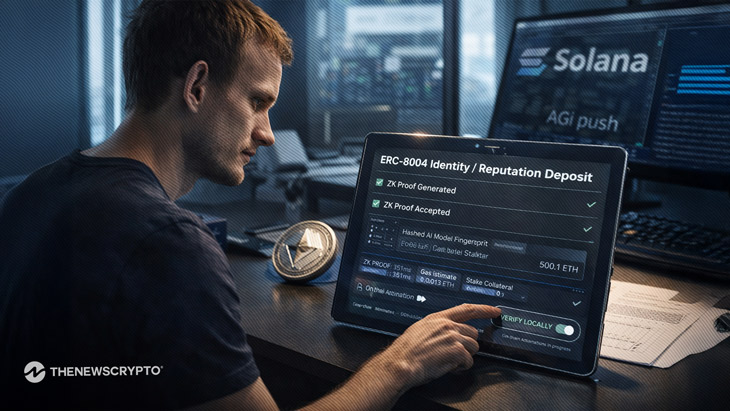
Vitalik Buterin Outlines Ethereum’s AI Framework, Pushes Back Against Solana’s Acceleration Thesis

Vitalik Buterin Outlines Ethereum’s AI Framework, Pushes Back Against Solana’s Acceleration Thesis

Ethereum co-founder Vitalik Buterin has reacted to Solana’s artificial general intelligence acceleration initiative. He did this through the establishment of his
Share
Thenewscrypto2026/02/10 18:40
XRP News Today: XRP Tundra Unveils Two-Token Strategy with 25x Return Potential

XRP News Today: XRP Tundra Unveils Two-Token Strategy with 25x Return Potential

The post XRP News Today: XRP Tundra Unveils Two-Token Strategy with 25x Return Potential appeared on BitcoinEthereumNews.com. XRP remains one of the most closely watched assets in the market, both for its role in cross-border settlement and for its potential within the broader digital asset ecosystem. Yet for long-term holders, one gap has persisted: XRP has never had a native staking system. That limitation has left investors with limited options beyond price appreciation, even as competitors like Ethereum and Solana built extensive staking networks. XRP Tundra’s presale is making news for directly addressing that issue. The project has introduced a two-token strategy designed to provide yield opportunities for XRP holders while embedding exponential upside into presale economics. Analysts covering XRP updates have flagged the model as one of the more innovative token launches of 2025, particularly as it blends utility with transparent launch pricing. A Dual-Token Presale With Defined Launch Values At the center of XRP Tundra’s design is a dual-token model. TUNDRA-S, issued on Solana, functions as the utility and yield-generating token. TUNDRA-X, minted on the XRP Ledger, serves as the governance and reserve layer. Every presale purchase of TUNDRA-S automatically delivers free TUNDRA-X, tying investors into both blockchains in a single allocation. In the current Phase 3, TUNDRA-S is priced at $0.041 with a 17% token bonus included. Free TUNDRA-X is valued for reference at $0.0205. Launch values are already fixed at $2.50 for TUNDRA-S and $1.25 for TUNDRA-X, embedding a built-in 25x return potential for presale participants. For investors who have waited years for XRP-related innovation, this clarity has stood out. Staking Introduces Yield for XRP Holders The presale is not only about token distribution. XRP Tundra introduces staking through Cryo Vaults, where XRP can be locked for periods of 7 to 90 days. Rewards increase with longer commitments, while Frost Keys — NFT multipliers — allow participants to enhance yields or shorten lockups.…
Share
BitcoinEthereumNews2025/09/26 05:31