Won-Dollar Rate Surges Past Critical 1,500 Threshold, Sparking Market Concerns
BitcoinWorld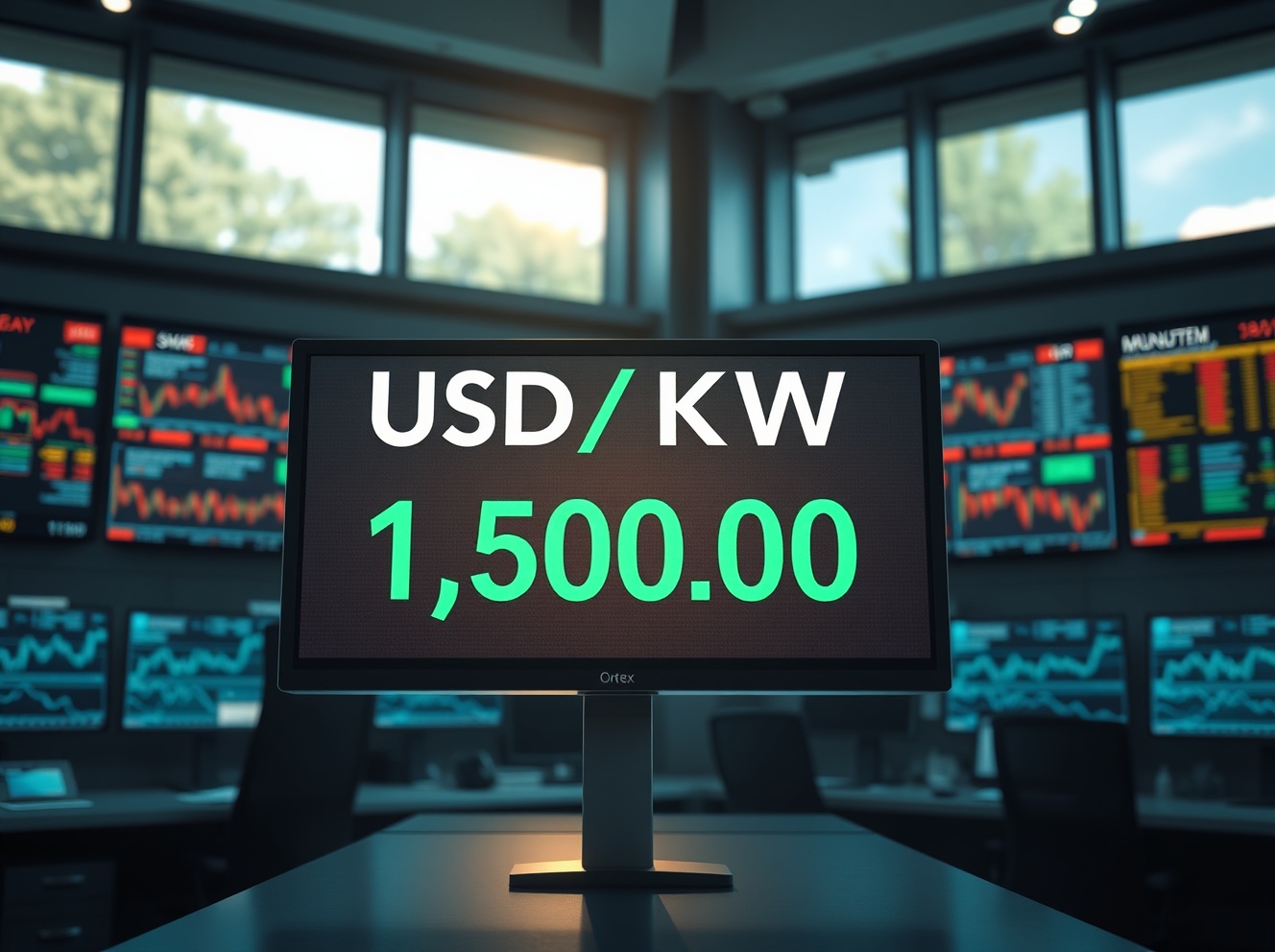
Won-Dollar Rate Surges Past Critical 1,500 Threshold, Sparking Market Concerns
The South Korean won to U.S. dollar exchange rate breached the psychologically significant 1,500 level on March 13, 2025, triggering immediate market analysis and raising questions about economic stability in the region. This pivotal movement occurred at approximately 8:24 a.m. UTC, marking the first return to this threshold since early March. Financial analysts globally monitored this development closely, as currency movements often signal broader economic trends.
Won-Dollar Exchange Rate Reaches Critical Level
The USD/KRW pair crossed the 1,500 mark during Asian trading hours. This movement represents a notable development in foreign exchange markets. Market participants had watched this level for weeks. The Bank of Korea previously intervened when the rate approached similar thresholds. Currency traders reacted immediately to the breach. Trading volumes spiked significantly during this period. The won has faced consistent pressure throughout 2025. Several factors contributed to this sustained weakness against the dollar.
Global monetary policy divergence remains a primary driver. The Federal Reserve maintains a relatively hawkish stance compared to other central banks. Consequently, the U.S. dollar demonstrates continued strength across multiple currency pairs. Meanwhile, the Bank of Korea faces different economic challenges. Domestic inflation concerns compete with export competitiveness priorities. This creates complex policy decisions for monetary authorities. The 1,500 level represents a key psychological barrier for market participants.
Historical Context and Market Significance
The won-dollar exchange rate has fluctuated within a defined range throughout 2025. Previous breaches of the 1,500 level occurred during periods of market stress. For instance, the rate last reached this point on March 4, 2025. Before that, similar levels appeared during the 2022 global monetary tightening cycle. Historical data reveals important patterns. The table below shows recent significant movements:
| Date | USD/KRW Rate | Market Context |
|---|---|---|
| March 13, 2025 | 1,500.00+ | Asian trading hours, dollar strength |
| March 4, 2025 | 1,500.15 | Fed policy expectations |
| December 2024 | 1,480-1,495 range | Year-end positioning |
| October 2024 | 1,510.25 | Global risk aversion period |
Market analysts identify several contributing factors to the current movement. First, interest rate differentials between the U.S. and South Korea continue to influence capital flows. Second, geopolitical considerations affect regional currency stability. Third, trade balance data shows recent fluctuations. Fourth, global commodity prices impact import costs. Finally, investor sentiment toward emerging markets experiences periodic shifts.
Economic Implications and Expert Analysis
Financial institutions provided immediate commentary following the rate movement. Major investment banks highlighted specific concerns. For example, import costs will likely increase for Korean businesses. This development affects various economic sectors differently. Export-oriented companies might benefit from a weaker won. However, import-dependent industries face margin pressures. Consumers may experience higher prices for imported goods. The broader inflation outlook requires careful monitoring.
Central bank responses become crucial during such periods. The Bank of Korea maintains multiple policy tools. These include:
- Foreign exchange interventions to smooth volatility
- Interest rate adjustments to influence capital flows
- Verbal guidance to manage market expectations
- Liquidity operations to ensure market functioning
Monetary policy decisions involve balancing competing objectives. Price stability remains paramount for central banks. Simultaneously, export competitiveness supports economic growth. Financial stability considerations also influence policy responses. International coordination sometimes occurs during significant currency movements. The Ministry of Economy and Finance typically comments on exchange rate developments. Their statements often emphasize market fundamentals and stability.
Global Currency Market Dynamics
The won’s movement occurs within broader foreign exchange trends. The U.S. dollar index measures dollar strength against major currencies. This index shows consistent performance throughout early 2025. Several factors support dollar strength. Federal Reserve policy remains relatively tight compared to other central banks. U.S. economic data continues to show resilience. Global safe-haven flows sometimes benefit the dollar during uncertainty.
Other Asian currencies experience similar pressures. The Japanese yen and Chinese yuan face their own challenges. Regional currency movements often correlate during dollar strength periods. However, specific national factors create differentiation. South Korea’s economic structure includes unique characteristics. The country maintains significant trade relationships globally. Technology exports represent a substantial portion of economic activity. Semiconductor industry cycles influence trade balances considerably.
Capital flow data reveals important patterns. Foreign investment in Korean markets fluctuates with global conditions. Portfolio investments respond to interest rate differentials. Direct investment follows longer-term trends. The Korean government monitors these flows carefully. Sudden capital movements can amplify exchange rate volatility. Financial authorities implement measures to ensure orderly markets. These measures include monitoring systems and contingency plans.
Market Reactions and Trading Patterns
Trading activity increased significantly around the 1,500 level. Market participants placed various types of orders. Stop-loss orders likely accelerated the initial movement. Option positions with barriers at 1,500 influenced trading dynamics. Liquidity conditions remained adequate throughout the session. Major banks provided continuous pricing. Electronic trading platforms handled increased volume efficiently.
Several market segments reacted to the currency movement. Equity markets showed mixed responses. Export-oriented stocks generally benefited from the weaker won. Import-sensitive companies experienced selling pressure. Bond markets reflected changing expectations. Currency derivatives trading volume increased substantially. Risk management activities accelerated across financial institutions.
The timing of the movement deserves attention. Asian trading hours typically see active won trading. European participation begins later in the session. U.S. traders enter as Asian markets close. This creates continuous trading across time zones. The 8:24 a.m. UTC timing falls within active Asian participation. Japanese and Chinese markets were open simultaneously. Regional economic data releases sometimes cluster during this period.
Policy Considerations and Future Outlook
Monetary authorities face important decisions following this development. The Bank of Korea’s policy committee meets regularly to assess conditions. Their dual mandate includes price stability and economic growth. Exchange rate considerations influence both objectives. Previous statements indicate tolerance for market-determined rates. However, excessive volatility typically prompts responses. The central bank maintains substantial foreign exchange reserves. These reserves provide intervention capacity when necessary.
Government ministries coordinate on economic policy matters. The Ministry of Economy and Finance leads external economic policies. They work with the central bank on currency matters. International relationships also influence policy approaches. South Korea participates in various multilateral forums. These include G20 meetings and regional cooperation initiatives. Policy coordination sometimes occurs through these channels.
Future exchange rate movements depend on multiple factors. Global monetary policy trajectories remain crucial. Economic data releases influence market expectations. Geopolitical developments affect risk sentiment. Trade flow patterns evolve with global conditions. Technological advancements impact economic structures. Market participants will monitor several key indicators:
- U.S. inflation and employment data
- Bank of Korea policy statements
- Korean export and import statistics
- Global risk appetite indicators
- Commodity price movements
Conclusion
The won-dollar exchange rate surpassing 1,500 represents a significant market development with broad implications. This movement reflects complex global economic dynamics and regional specific factors. Market participants will continue monitoring currency fluctuations closely. Policy responses may influence future exchange rate trajectories. The 1,500 won-dollar rate level serves as an important psychological threshold. Economic fundamentals ultimately determine sustainable exchange rate levels. Financial stability remains paramount for all market participants.
FAQs
Q1: What does the won-dollar exchange rate reaching 1,500 mean for the Korean economy?
A weaker won makes Korean exports more competitive internationally but increases costs for imports and foreign debt repayment, creating mixed effects across different economic sectors.
Q2: How often has the USD/KRW rate exceeded 1,500 in recent years?
The rate has breached 1,500 several times since 2022, typically during periods of dollar strength or global market stress, with the most recent occurrences in March 2025 and October 2024.
Q3: What factors typically cause the Korean won to weaken against the U.S. dollar?
Primary factors include widening interest rate differentials, reduced risk appetite for emerging markets, trade balance deterioration, geopolitical tensions, and broad U.S. dollar strength across global markets.
Q4: How does the Bank of Korea typically respond to significant won depreciation?
The central bank may intervene in foreign exchange markets, adjust interest rates, provide verbal guidance to manage expectations, or use other policy tools to ensure orderly market conditions and financial stability.
Q5: What are the implications of a 1,500 won-dollar rate for Korean consumers and businesses?
Export-oriented businesses benefit from increased competitiveness, while import-dependent companies and consumers face higher costs for foreign goods, services, and overseas travel, potentially affecting inflation.
This post Won-Dollar Rate Surges Past Critical 1,500 Threshold, Sparking Market Concerns first appeared on BitcoinWorld.
You May Also Like

Tether CEO Delivers Rare Bitcoin Price Comment

IP Hits $11.75, HYPE Climbs to $55, BlockDAG Surpasses Both with $407M Presale Surge!