TLDR Ethereum (ETH) climbed above $2,200, trading at around $2,268 — a gain of over 4% on the day. ETH hit an intraday high of $2,288 and a low of $2,165, with TLDR Ethereum (ETH) climbed above $2,200, trading at around $2,268 — a gain of over 4% on the day. ETH hit an intraday high of $2,288 and a low of $2,165, with

Ethereum (ETH) Price: ETH Rises Above $2,200 as ETF Inflows and Institutional Buying Increase

2026/03/16 15:26
3 min read
For feedback or concerns regarding this content, please contact us at crypto.news@mexc.com

TLDR

  • Ethereum (ETH) climbed above $2,200, trading at around $2,268 — a gain of over 4% on the day.
  • ETH hit an intraday high of $2,288 and a low of $2,165, with buyers defending the lower end.
  • Spot ETH ETFs saw $26.7 million in net inflows on March 13, led by BlackRock’s ETHA product.
  • Bitmine has been accumulating ETH aggressively, picking up around 833,000 ETH over 35 days.
  • ETH is trading above its 50-day moving average but still sits well below its 200-day and its all-time high near $4,955.

Ethereum climbed sharply on March 16, 2026, breaking above the $2,200 level after a steady recovery from recent lows. The move came alongside a broader improvement in crypto market sentiment.
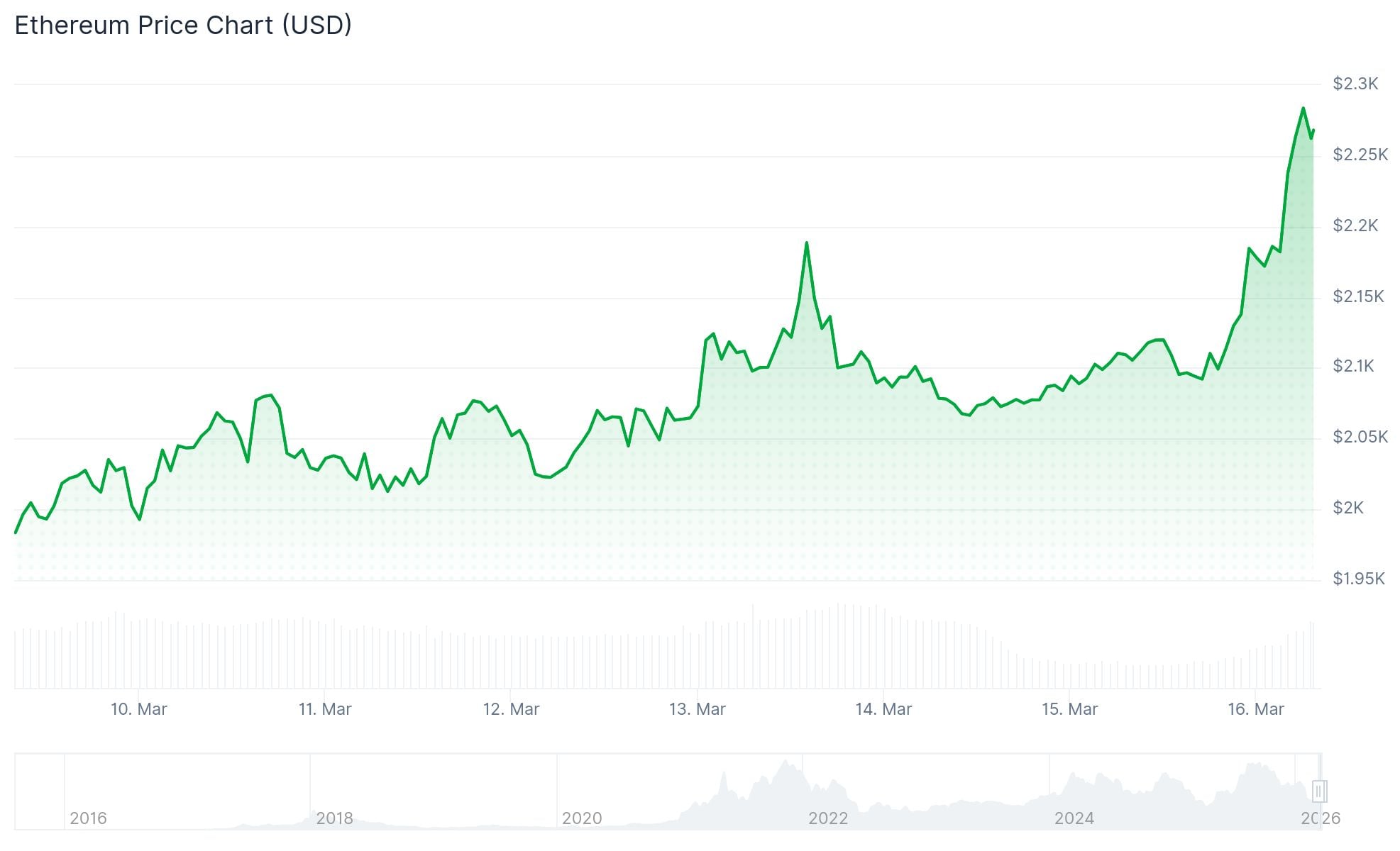
Ethereum (ETH) PriceEthereum (ETH) Price

ETH hit an intraday low of $2,165 before buyers pushed the price up to a high of $2,288. The price was trading at around $2,268 at the time of writing, up roughly 4.1% on the day.

The gain follows a clear break above the $2,150 resistance zone, which had been a key level in recent sessions. ETH also crossed above the 100-hourly Simple Moving Average, a technical marker traders watch closely.

ETF Inflows and Institutional Buying

Spot ETH ETFs pulled in $26.7 million in net inflows on March 13. BlackRock’s ETHA led the way with $32.4 million in new money, while ETHB added $2.2 million. A $7.9 million outflow from FETH partially offset those gains.

Institutional interest is also showing up in corporate buying. Bitmine has been building an ETH position over the past 35 days, picking up around 833,000 ETH — worth roughly $2.9 billion at current prices. The company has stated a goal of holding up to 5% of total ETH supply.

Spot trading volume on the day came in at $154 million, below the $418 million average. That suggests the rally was meaningful but not driven by an unusually large surge in activity.

Where ETH Stands Technically

Ethereum is now trading above its 50-day moving average, which sits at $2,138. That is a positive development after a difficult stretch, but the coin remains well below its 200-day moving average at $3,236.

Key resistance levels to watch are $2,250, then $2,280, and further out $2,320. If ETH can push through $2,300–$2,400 on strong daily closes, analysts say that could open the door to a move toward $2,500.

On the downside, support sits near $2,180–$2,200. A break below $2,150 would be a warning sign for the short-term setup.

On-chain data shows ETH’s realized price sits near $2,300 — a level that has historically acted as a pivot. ETH is currently trading just below that mark.

ETH’s market cap stands at $273.81 billion, keeping it in second place in the crypto market. It continues to lag Bitcoin, which is trading closer to its year high, while ETH remains far below its own peak of $4,955.

The post Ethereum (ETH) Price: ETH Rises Above $2,200 as ETF Inflows and Institutional Buying Increase appeared first on CoinCentral.

Disclaimer: The articles reposted on this site are sourced from public platforms and are provided for informational purposes only. They do not necessarily reflect the views of MEXC. All rights remain with the original authors. If you believe any content infringes on third-party rights, please contact crypto.news@mexc.com for removal. MEXC makes no guarantees regarding the accuracy, completeness, or timeliness of the content and is not responsible for any actions taken based on the information provided. The content does not constitute financial, legal, or other professional advice, nor should it be considered a recommendation or endorsement by MEXC.

You May Also Like

And the Big Day Has Arrived: The Anticipated News for XRP and Dogecoin Tomorrow

And the Big Day Has Arrived: The Anticipated News for XRP and Dogecoin Tomorrow

The first-ever ETFs for XRP and Dogecoin are expected to launch in the US tomorrow. Here's what you need to know. Continue Reading: And the Big Day Has Arrived: The Anticipated News for XRP and Dogecoin Tomorrow
Share
Coinstats2025/09/18 04:33
Swiss Franc Intervention: Critical Analysis of SNB’s 2025 Policy and Safe-Haven Resilience

Swiss Franc Intervention: Critical Analysis of SNB’s 2025 Policy and Safe-Haven Resilience

BitcoinWorld Swiss Franc Intervention: Critical Analysis of SNB’s 2025 Policy and Safe-Haven Resilience ZURICH, March 2025 – The Swiss National Bank faces mounting
Share
bitcoinworld2026/03/16 23:10
Cashing In On University Patents Means Giving Up On Our Innovation Future

Cashing In On University Patents Means Giving Up On Our Innovation Future

The post Cashing In On University Patents Means Giving Up On Our Innovation Future appeared on BitcoinEthereumNews.com. “It’s a raid on American innovation that would deliver pennies to the Treasury while kneecapping the very engine of our economic and medical progress,” writes Pipes. Getty Images Washington is addicted to taxing success. Now, Commerce Secretary Howard Lutnick is floating a plan to skim half the patent earnings from inventions developed at universities with federal funding. It’s being sold as a way to shore up programs like Social Security. In reality, it’s a raid on American innovation that would deliver pennies to the Treasury while kneecapping the very engine of our economic and medical progress. Yes, taxpayer dollars support early-stage research. But the real payoff comes later—in the jobs created, cures discovered, and industries launched when universities and private industry turn those discoveries into real products. By comparison, the sums at stake in patent licensing are trivial. Universities collectively earn only about $3.6 billion annually in patent income—less than the federal government spends on Social Security in a single day. Even confiscating half would barely register against a $6 trillion federal budget. And yet the damage from such a policy would be anything but trivial. The true return on taxpayer investment isn’t in licensing checks sent to Washington, but in the downstream economic activity that federally supported research unleashes. Thanks to the bipartisan Bayh-Dole Act of 1980, universities and private industry have powerful incentives to translate early-stage discoveries into real-world products. Before Bayh-Dole, the government hoarded patents from federally funded research, and fewer than 5% were ever licensed. Once universities could own and license their own inventions, innovation exploded. The result has been one of the best returns on investment in government history. Since 1996, university research has added nearly $2 trillion to U.S. industrial output, supported 6.5 million jobs, and launched more than 19,000 startups. Those companies pay…
Share
BitcoinEthereumNews2025/09/18 03:26