The post LMAX launches perpetual futures with 100X leverage on BTC and ETH appeared on BitcoinEthereumNews.com. The London group LMAX announced on September 16, 2025, according to Bloomberg, and in the official statement from LMAX, the debut of perpetual contracts on Bitcoin and Ether with 100X leverage, settled in cash and reserved for professional counterparties. Indeed, the initiative strengthens the City’s presence in the institutional crypto derivatives segment. According to data collected by our editorial team on market flows and from institutional desk sources, there is growing interest in cash-settled instruments that simplify reporting and accounting reconciliation for regulated entities. Industry analysts also note that a nominal leverage of 100X corresponds to an initial margin requirement of about 1% of the notional, with significant operational and liquidity implications in stress scenarios. In risk modeling tests conducted for this analysis, scenarios emerged with strong slippage and a rapid sequence of margin calls under intraday volatility conditions. In brief Instrument: perpetual futures on BTC and ETH, with cash settlement. Maximum leverage: 100X (implies a theoretical initial margin of approximately 1% of the notional). Target: institutional clients, investment desks, and hedge funds. Operator: LMAX Group (London); total reported spot volume on FX and digital assets exceeding 40 billion dollars per day. Primary source: LMAX communication. What Was Launched: Key Specifications LMAX introduces perpetual futures on Bitcoin (BTC) and Ethereum (ETH) that replicate the price of the underlying assets without an expiration date and without the need for roll-over. The contract is cash-settled: profits and losses are settled in supported fiat currency or stablecoin, avoiding the physical delivery of the asset. That said, the structure remains the classic perpetual type intended for a professional audience. Margin structure: initial and maintenance margins defined for professional counterparties; details will be specified in the term sheets that will be made public. Access: through institutional connectivity with API/integration (typically via FIX/REST) and direct access… The post LMAX launches perpetual futures with 100X leverage on BTC and ETH appeared on BitcoinEthereumNews.com. The London group LMAX announced on September 16, 2025, according to Bloomberg, and in the official statement from LMAX, the debut of perpetual contracts on Bitcoin and Ether with 100X leverage, settled in cash and reserved for professional counterparties. Indeed, the initiative strengthens the City’s presence in the institutional crypto derivatives segment. According to data collected by our editorial team on market flows and from institutional desk sources, there is growing interest in cash-settled instruments that simplify reporting and accounting reconciliation for regulated entities. Industry analysts also note that a nominal leverage of 100X corresponds to an initial margin requirement of about 1% of the notional, with significant operational and liquidity implications in stress scenarios. In risk modeling tests conducted for this analysis, scenarios emerged with strong slippage and a rapid sequence of margin calls under intraday volatility conditions. In brief Instrument: perpetual futures on BTC and ETH, with cash settlement. Maximum leverage: 100X (implies a theoretical initial margin of approximately 1% of the notional). Target: institutional clients, investment desks, and hedge funds. Operator: LMAX Group (London); total reported spot volume on FX and digital assets exceeding 40 billion dollars per day. Primary source: LMAX communication. What Was Launched: Key Specifications LMAX introduces perpetual futures on Bitcoin (BTC) and Ethereum (ETH) that replicate the price of the underlying assets without an expiration date and without the need for roll-over. The contract is cash-settled: profits and losses are settled in supported fiat currency or stablecoin, avoiding the physical delivery of the asset. That said, the structure remains the classic perpetual type intended for a professional audience. Margin structure: initial and maintenance margins defined for professional counterparties; details will be specified in the term sheets that will be made public. Access: through institutional connectivity with API/integration (typically via FIX/REST) and direct access…

LMAX launches perpetual futures with 100X leverage on BTC and ETH

5 min read

The London group LMAX announced on September 16, 2025, according to Bloomberg, and in the official statement from LMAX, the debut of perpetual contracts on Bitcoin and Ether with 100X leverage, settled in cash and reserved for professional counterparties. Indeed, the initiative strengthens the City’s presence in the institutional crypto derivatives segment.

According to data collected by our editorial team on market flows and from institutional desk sources, there is growing interest in cash-settled instruments that simplify reporting and accounting reconciliation for regulated entities. Industry analysts also note that a nominal leverage of 100X corresponds to an initial margin requirement of about 1% of the notional, with significant operational and liquidity implications in stress scenarios. In risk modeling tests conducted for this analysis, scenarios emerged with strong slippage and a rapid sequence of margin calls under intraday volatility conditions.

In brief

  • Instrument: perpetual futures on BTC and ETH, with cash settlement.
  • Maximum leverage: 100X (implies a theoretical initial margin of approximately 1% of the notional).
  • Target: institutional clients, investment desks, and hedge funds.
  • Operator: LMAX Group (London); total reported spot volume on FX and digital assets exceeding 40 billion dollars per day.
  • Primary source: LMAX communication.

What Was Launched: Key Specifications

LMAX introduces perpetual futures on Bitcoin (BTC) and Ethereum (ETH) that replicate the price of the underlying assets without an expiration date and without the need for roll-over. The contract is cash-settled: profits and losses are settled in supported fiat currency or stablecoin, avoiding the physical delivery of the asset. That said, the structure remains the classic perpetual type intended for a professional audience.

  • Margin structure: initial and maintenance margins defined for professional counterparties; details will be specified in the term sheets that will be made public.
  • Access: through institutional connectivity with API/integration (typically via FIX/REST) and direct access to the order-book liquidity.
  • Intended use: hedging on spot/ETP positions, inter-venue arbitrage, management of crypto exposures and treasury.

How cash-settled perpetual futures work (quick definitions)

  • Perpetual futures: derivative contracts without expiration; the price is anchored to the underlying asset through funding mechanisms that keep the quotation close to the spot value.
  • Cash‑settled: at the closing of the position, the monetary delta is settled, not the token, reducing on‑chain custody requirements.
  • Margin call: request for additional capital when the margin falls below the maintenance level; if not met, automatic liquidation may occur.

Why it is relevant for the institutional market

The entry of LMAX expands the offering of venues with rigorous governance procedures and compliance requirements for professional operators. In a context where some of the demand for leverage might migrate from unregulated exchanges to platforms with more structured risk management processes, cash-settled contracts simplify accounting integration and reporting for regulated entities. It should be noted that the availability of connectivity and controls typical of the institutional environment represents a significant adoption factor. Note how in a complex regulatory landscape in the United Kingdom, efforts are being made to simplify regulated access to crypto markets.

Impact and Risks: What to Expect

A greater supply of derivatives can increase market depth; however, 100X leverage also amplifies volatility under stress conditions. Among the main risks are:

  1. Leverage effect on P&L: even minimal movements of the underlying can generate significantly amplified gains or losses.
  2. Margin requirements: stringent initial and maintenance margins, with possible rapid margin calls in case of market shocks.
  3. Counterparty risk: related to default management procedures and the guarantee waterfall offered by the platform.
  4. Liquidity events: during sell-off phases, spreads and slippage can increase, impacting execution costs.
  5. Compliance and geographical limitations: the product is typically reserved for professional counterparties, with varying restrictions depending on the jurisdiction; operators will need to verify compliance with local regulations.

Differences Compared to Retail CFDs

  • Margins and leverage: margin parameters and leverage limits are calibrated for professional clients; for retail clients, the limits are generally lower for protection reasons.
  • Liquidity: access to deep order books and institutional execution, while retail accounts operate on aggregated flows through brokers.
  • KYC/AML Requirements: more rigorous procedures, including checks on beneficial owners and enforcement of sanction frameworks.
  • Risk tools: automatic closure parameters, exposure limits, and advanced reporting, solutions not always available for retail accounts.

What Changes for Institutions

  • Targeted hedging: allows the coverage of spot positions, ETP, or crypto balances without physically moving the wallets.
  • Operational efficiency: cash settlement simplifies cash flows and the reconciliation process.
  • Integration: thanks to professional connectivity (API), existing risk management and treasury systems can integrate seamlessly.
  • Arbitrage and basis: offers opportunities for basis trading strategies between spot, ETP, and derivatives active on different venues.

Competitive Context and Critical Angle

The launch is part of an increasing competition to attract professional flows in the crypto derivatives market, alongside legacy exchanges and specialized platforms. The availability of such high leverage for institutional entities reignites the debate on stability and risk management.

While on one hand a larger arsenal of hedges can help reduce idiosyncratic risk, on the other hand the use of extreme leverage requires particular attention to governance, liquidation models, and stress tests. In this sense, internal control protocols remain a central element.

Source: https://en.cryptonomist.ch/2025/09/17/lmax-raises-the-bar-cash-settled-perpetual-futures-with-100x-leverage-on-btc-and-eth-for-institutional-investors/


Market Opportunity
Manchester City Fan Logo
Manchester City Fan Price(CITY)
$0,5047
$0,5047$0,5047
-1,11%
USD
Manchester City Fan (CITY) Live Price Chart
Disclaimer: The articles reposted on this site are sourced from public platforms and are provided for informational purposes only. They do not necessarily reflect the views of MEXC. All rights remain with the original authors. If you believe any content infringes on third-party rights, please contact service@support.mexc.com for removal. MEXC makes no guarantees regarding the accuracy, completeness, or timeliness of the content and is not responsible for any actions taken based on the information provided. The content does not constitute financial, legal, or other professional advice, nor should it be considered a recommendation or endorsement by MEXC.

You May Also Like

Once Upon a Farm Announces Pricing of Initial Public Offering

Once Upon a Farm Announces Pricing of Initial Public Offering

BERKELEY, Calif.–(BUSINESS WIRE)–Once Upon a Farm today announced the pricing of its initial public offering of 10,997,209 shares of its common stock, 7,631,537
Share
AI Journal2026/02/06 08:15
Forward Industries Bets Big on Solana With $4B Capital Plan

Forward Industries Bets Big on Solana With $4B Capital Plan

The firm has filed with the U.S. Securities and Exchange Commission to launch a $4 billion at-the-market (ATM) equity program, […] The post Forward Industries Bets Big on Solana With $4B Capital Plan appeared first on Coindoo.
Share
Coindoo2025/09/18 04:15
332M accounts and $28B TVL,

332M accounts and $28B TVL,

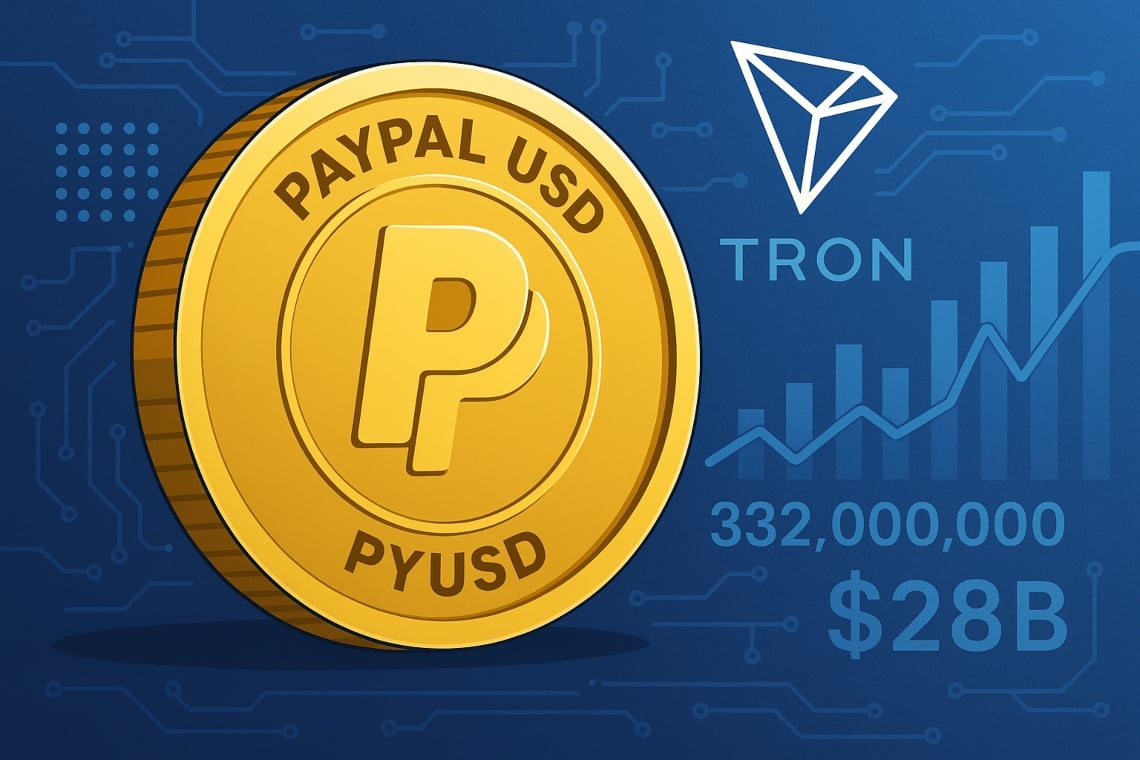
The post 332M accounts and $28B TVL, appeared on BitcoinEthereumNews.com. PayPal USD debuts on TRON as a permissionless token PYUSD0, enabled by LayerZero’s OFT standard and the Stargate Hydra extension. The announcement on September 18, 2025 (Geneva) introduces native interoperability between chains and transfers without manual steps for users; the news echoes elements already communicated by PayPal at the launch of PYUSD PayPal Newsroom. The move concerns an ecosystem that includes 332 million accounts and over $28 billion in TVL. In this context, the fungibility of a stablecoin regulated across multiple networks and the use of TRON as a settlement layer for payments and remittances is at stake. According to the data collected by TRONSCAN updated as of September 18, 2025, the network metrics confirm the cited volumes and highlighted traffic patterns. Our editorial team has verified the transaction logs and monitored the public chain metrics to corroborate the reported figures; the observations on daily flows and TVL are consistent with the network dashboards. Industry analysts observe that the entry of a regulated issuer like PayPal tends to increase institutional interest, provided there is transparency on reserves and compliance checks. What is PYUSD0 on TRON and why is it relevant PYUSD0 is the representation of PayPal USD on TRON. It is pegged one-to-one to PYUSD through the OFT standard: the two tokens remain a single stablecoin, fungible and reconciled across chains. The integration is made possible by Stargate Hydra, now operational through LayerZero. According to the founder of TRON, Justin Sun, the extension on TRON expands access and trust for users and institutions. For Bryan Pellegrino (CEO of LayerZero Labs), stablecoins represent a pillar of global payments and remittances, as the native compatibility between chains enables their operational scalability. It must be said that the alignment between issuer, cross-chain infrastructure, and settlement network is a key element. Key Numbers: TRON…
Share
BitcoinEthereumNews2025/09/19 08:18