

Gold Price Plummets Below $4,700 as Traders Brace for Critical US Jobs Report
BitcoinWorld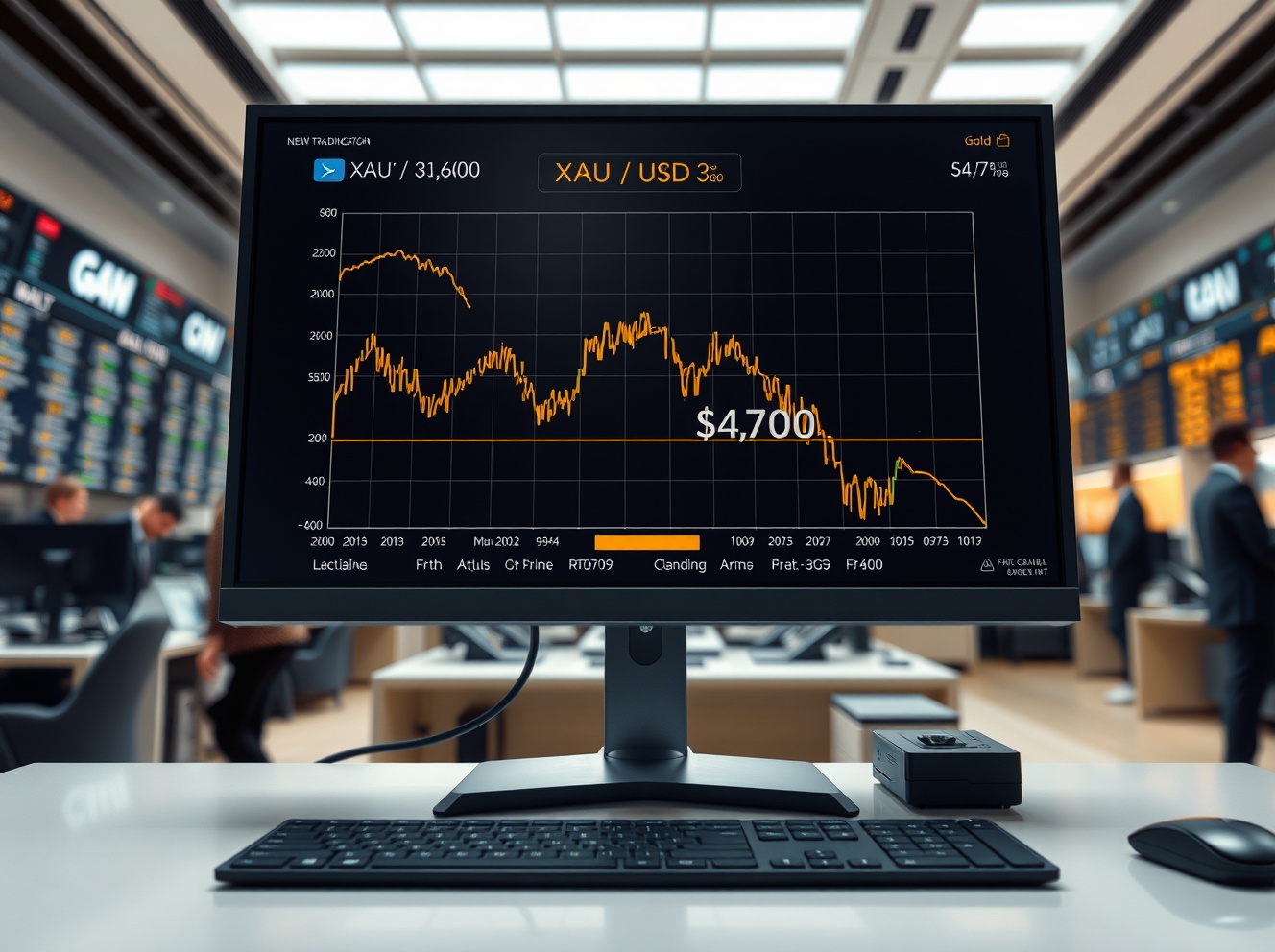
Gold Price Plummets Below $4,700 as Traders Brace for Critical US Jobs Report
The price of gold has plunged decisively below the $4,700 per ounce threshold, marking a significant retreat as global financial markets tense ahead of the pivotal US Non-Farm Payrolls (NFP) report. This pre-data selloff reflects heightened trader anxiety about potential Federal Reserve policy shifts. Consequently, investors are rapidly repositioning portfolios away from non-yielding assets. Market analysts now scrutinize every data point for clues on the future path of interest rates.
Gold Price Retreats Ahead of Key Economic Data
Spot gold traded near $4,685 early Friday, representing a sharp decline from recent weekly highs. This movement establishes a clear bearish technical pattern on short-term charts. Furthermore, the sell-off correlates directly with a strengthening US Dollar Index (DXY), which often moves inversely to gold. Simultaneously, US Treasury yields have edged higher, applying additional pressure on bullion prices. Market sentiment has clearly shifted towards risk aversion in the forex and commodities space.
Historically, gold acts as a hedge against inflation and currency devaluation. However, its opportunity cost rises when interest rates increase. The upcoming NFP data serves as a primary gauge for US labor market health. Strong job growth could empower the Federal Reserve to maintain a restrictive monetary policy stance. Therefore, traders are pricing in this potential outcome by exiting gold positions preemptively.
Understanding the US Non-Farm Payrolls Report
The Bureau of Labor Statistics releases the NFP report monthly. It details the total number of paid US workers, excluding farm employees, government workers, and a few other categories. Financial institutions globally treat this data as a critical macroeconomic indicator. The report directly influences monetary policy decisions at the Federal Reserve. Key components market participants watch include:
- Headline Job Number: The net change in employment.
- Unemployment Rate: The percentage of the labor force without jobs.
- Average Hourly Earnings: A key measure of wage inflation.
- Labor Force Participation Rate: Indicates workforce engagement.
Analysts’ consensus estimates for the upcoming report currently project a addition of approximately 180,000 jobs. A figure significantly above this estimate would likely trigger further gold selling. Conversely, a weak report could spark a rapid short-covering rally in the precious metal. The market’s reaction function has become increasingly volatile in recent months.
Expert Analysis on Gold’s Sensitivity
Senior commodity strategists note that gold’s sensitivity to US rate expectations has intensified. “The $4,700 level was a major psychological support,” stated a lead analyst from a major investment bank. “A break below it, especially ahead of NFP, signals that the market is bracing for a hawkish data surprise. Traders are not waiting for the print; they are de-risking now.” This behavior underscores the preemptive nature of modern electronic trading.
Data from the Commodity Futures Trading Commission (CFTC) shows managed money accounts have reduced their net-long positions in gold futures for three consecutive weeks. This institutional selling provides a fundamental backdrop for the current price decline. Open interest in gold futures has also declined, suggesting a unwind of speculative bets rather than new aggressive shorting.
Broader Market Context and Impact
The gold sell-off does not occur in isolation. Other precious metals like silver and platinum have also faced selling pressure. Meanwhile, the US dollar has rallied against a basket of major currencies. Equity markets have shown mixed reactions, with technology stocks particularly sensitive to interest rate expectations. This interconnected dynamic highlights the NFP report’s systemic importance.
For physical gold markets, a lower price point may stimulate retail buying in key Asian markets. However, ETF holdings for gold-backed funds have seen consistent outflows. This indicates a lack of institutional appetite at current levels. Central bank buying, a major support in recent years, may provide a floor, but its pace around data releases is often muted.
| Month | NFP Actual vs. Forecast | Gold Price Reaction (Next Session) |
|---|---|---|
| Previous Month | +50k vs. Estimate | -1.8% |
| Two Months Ago | -30k vs. Estimate | +2.1% |
| Three Months Ago | In-line | -0.5% |
Technical Outlook and Key Levels
From a chart perspective, the break below $4,700 opens the path toward the next major support zone around $4,620. This level represents the 100-day simple moving average, a closely watched indicator by algorithmic trading systems. Immediate resistance now sits at the broken support of $4,700, followed by $4,750. The Relative Strength Index (RSI) is approaching oversold territory, which may slow the descent.
Market technicians emphasize that a weekly close below $4,700 would confirm a bearish medium-term trend reversal. Volume analysis shows above-average selling volume during the decline, confirming the bearish conviction. Therefore, the price action following the NFP release will be crucial for determining the next sustained directional move.
Conclusion
The gold price decline below $4,700 underscores the market’s acute focus on US monetary policy and economic strength. The upcoming Non-Farm Payrolls report will serve as the next major catalyst, potentially validating or negating the current bearish momentum. While geopolitical tensions and long-term inflation concerns provide underlying support for gold, the immediate trajectory remains tethered to interest rate expectations. Traders and investors should prepare for elevated volatility as the market digests the employment data and recalibrates the outlook for Federal Reserve policy.
FAQs
Q1: Why does the NFP report affect the gold price?
The report is a key indicator of US economic health. A strong report suggests a robust economy, allowing the Federal Reserve to keep interest rates higher for longer. Higher rates increase the opportunity cost of holding non-yielding gold, making it less attractive.
Q2: What other factors influence gold prices besides the NFP?
Major factors include the US Dollar strength, real Treasury yields, global geopolitical risks, central bank demand, inflation expectations, and overall market risk sentiment.
Q3: What is considered a “strong” or “weak” NFP number?
Context matters, but generally, a figure significantly above the consensus estimate (e.g., +250k vs. +180k) is strong. A figure below estimate or negative is weak. The market also closely watches wage growth data within the report.
Q4: How do traders typically position themselves before the NFP release?
Many reduce exposure or hedge existing positions due to the high volatility and unpredictable nature of the price reaction. Some may take directional bets based on their economic forecasts.
Q5: Does this price move affect physical gold buyers like jewelers or central banks?
Yes, but often with a lag. A lower spot price can make physical gold more affordable, potentially increasing demand from certain sectors. Central bank buying programs are usually strategic and less reactive to single data points.
This post Gold Price Plummets Below $4,700 as Traders Brace for Critical US Jobs Report first appeared on BitcoinWorld.


Ayrıca Şunları da Beğenebilirsiniz

Today’s Biggest Crypto Movers: Dogecoin Leads the Pack

RWA Boom Accelerates As Tokenized Assets Hit New Highs In Early 2026



