Experts Gathered Following Bitcoin’s Recent Drop: Why Did It Fall, and What’s Next?
The cryptocurrency and macroeconomic markets are leaving behind a volatile week. The rise in US 30-year Treasury yields to 5.14%, reaching their highest level since the Global Financial Crisis (GFC), and a net outflow of approximately $1 billion from Bitcoin ETFs, have heightened investor concerns.
Industry leaders Andrew Parish and Tillman Holloway discussed the current state of the markets, the future of artificial intelligence, and regulations during their appearance on the program.
At the program’s opening, it was noted that BlackRock’s IBIT fund had experienced outflows in 7 out of the last 8 days, with approximately $900 million of the total $1 billion in ETF outflows originating solely from BlackRock. Analyzing this situation, Andrew Parish suggested that this volatility in the crypto ETF market was largely related to “carry trade” (trading to profit from the spread).
Parish noted that the Bitcoin options market, particularly IBIT options, is growing much faster than expected and that large players are operating in this market.
Tillman Holloway, noting the decrease in market volume and volatility, reminded that the traditional “sell in May and go away” period has begun, and stated that volumes and therefore volatility may decrease throughout the summer.
Holloway stated that there is no “confidence” behind the dips and rises in the market, saying, “Everyone is terrified. There is $8 trillion in cash currently sitting on the sidelines, waiting to enter the system. When people are scared, they stay in cash; this is the clearest indication of fear.” Holloway also argued that macroeconomic realities such as inflation and money printing cannot be changed, and that investors should see the big picture instead of focusing on daily noise.
Related News: Funeral Service Companies in South Korea Lost Their Clients' Assets in Leveraged Cryptocurrency Trades
Tillman Holloway criticized recent media reports claiming that “Goldman Sachs sold its Solana and XRP holdings,” stating that such headlines do not reflect the truth and that giants like Goldman Sachs hold these positions not in their own name, but for safekeeping or protection on behalf of their clients.
Andrew Parish agreed with Holloway, adding that Wall Street shifted to an asset management and custody model after the Great Financial Crisis, where decisions were made by Goldman Sachs’ clients, not by the firm itself.
Answering questions from viewers on the program, Tillman Holloway argued that the traditional “4-year halving cycle” theory for Bitcoin is no longer valid.
Holloway stated that this cycle was historically based on intense selling pressure exerted by miners on the market, but nowadays, with the diversification of institutional capital inflow avenues and the shrinking miner rewards in each cycle, miners no longer have the power to control the market.
*This is not investment advice.
Continue Reading: Experts Gathered Following Bitcoin’s Recent Drop: Why Did It Fall, and What’s Next?


Ayrıca Şunları da Beğenebilirsiniz

Robotics Automation Prototyping: Engineering Kinetic Agility into End-Effectors
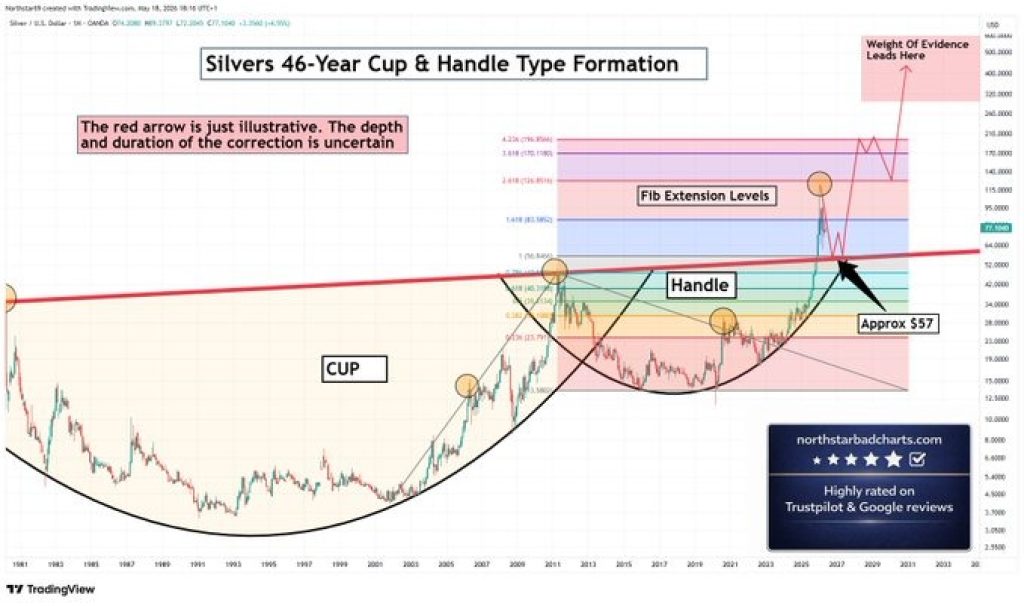
Silver Price Prediction: Cup and Handle Points to $196 – Why the Correction Was Always Part of the Plan