

Morgan Stanley updates jaw-dropping Carvana stock price target
Carvana (CVNA) closed Thursday, June 11, at $67.82, up less than 1% on the day and roughly 2% over the past week.
The stock remains well below its 52-week high of $97.38, and Morgan Stanley just gave investors a catchy number that measures nicely against current price levels.
In a research note dated June 10, the firm kept its Overweight rating and set a price target of $102, implying about 50% upside from current levels.
That figure looks low next to the $500-plus stock price that hit headlines in April, but it isn’t.
Carvana completed a 5-for-1 stock split on May 7, so $102 today carries the same weight $510 did before the split.
Why Morgan Stanley calls Carvana a “generational compounder”
Morgan Stanley’s $102 figure is the split-adjusted version of the $510 target it set on April 30, after Carvana’s first-quarter results, Investing.com reported.
At least seven major firms raised their Carvana targets that week, according to 24/7 Wall St.
The note calls Carvana a “generational compounder,” tied to one specific number: capital spending below 1% of sales even with revenue growing at roughly 40% a year.
Most auto retailers spend several times that share of sales just to keep up with growth.
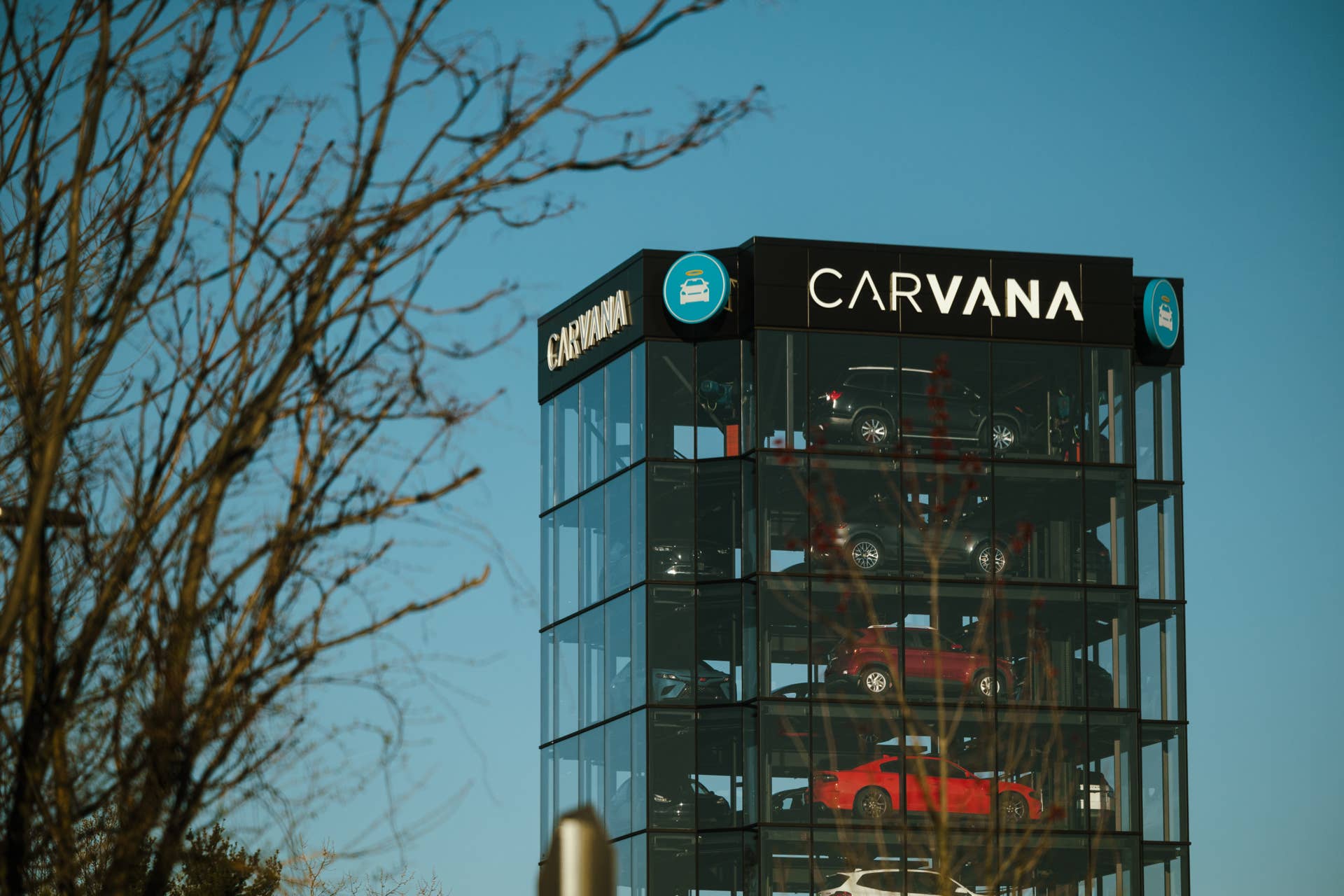 Carvana’s ADESA-driven expansion plan sits at the center of Morgan Stanley’s new $102 price target.
Bloomberg &sol Getty Images
Carvana’s ADESA network keeps expansion costs unusually low
That low spending traces back to 2021, when Carvana paid $2.2 billion for ADESA’s U.S. auction business, an SEC filing shows.
The deal handed Carvana dozens of existing properties instead of empty lots.
Morgan Stanley’s breakdown shows why that matters:
Converting an existing ADESA site into a working inspection and reconditioning center costs roughly $2 million to $3 million. A brand-new site costs $30 million to $35 million.
Related: Morgan Stanley resets CIEN stock target after earnings
Blended across the whole expansion, Morgan Stanley estimates Carvana spends roughly $1,450 to add room for one more car a year. Spend $1.45 million, and Carvana can process about 1,000 more cars annually.
As of the first quarter, Carvana had 18 inspection centers and 16 integrated ADESA sites, giving it room for about 1.5 million vehicles a year, with real estate in place to eventually reach 3 million, according to its first-quarter shareholder letter filed with the SEC.
Why Carvana’s inspection centers are the biggest prize
Inspection and Reconditioning Centers, or IRCs, cost more upfront: $45 million to $80 million each, according to Morgan Stanley.
The payoff is what makes them stand out.
Morgan Stanley estimates a mature IRC can generate roughly $228 million in annual operating profit once it reaches full volume.
More Auto Stocks:
- JPMorgan sets jaw-dropping Tesla stock price target
- General Motors analyst spots customer trend investors should watch
- BofA makes blunt call on Target stock price after guidance
Carvana has been adding these conversions steadily.
Its Chicago-area ADESA site recently gained IRC capabilities, a pattern Morgan Stanley expects to repeat through 2026.
That math explains why Wall Street keeps raising targets even after Carvana’s enormous run.
Each new IRC adds a chunk of profit without Carvana needing to win an entirely new set of customers.
What Carvana’s cash flow forecast means for shareholders
Morgan Stanley expects Carvana to convert 65% to 85% of earnings into free cash flow, adding up to roughly $15 billion between fiscal 2026 and fiscal 2030.
The firm says debt reduction comes first for that cash, a legacy of Carvana’s near-bankruptcy in 2022. Growth investment is next in line.
Only when debt comes down meaningfully does Morgan Stanley see room for buybacks or other shareholder payouts, and it frames that as a multi-year process, not a near-term expectation.
For anyone holding CVNA shares, the takeaway is patience. The company's cash flow backs up the valuation, but direct payouts beyond share price gains remain further out.
The risks that could keep Carvana stock below $102
Morgan Stanley’s downside list centers on the auto and auto-credit cycle. A weaker job market or tighter lending could slow used-car sales and pressure Carvana’s loan portfolio.
Competition is also a factor.
CarMax has rattled the used-car market before, and margin sustainability stays on Morgan Stanley’s watch list alongside the chance that Carvana needs more capital before hitting its cash flow targets.
What needs to go right for the bull case:
- Retail unit sales keep beating expectations, not just matching them
- Carvana keeps taking market share from traditional dealers
- Cost cuts continue even as new capacity comes online
- Newer ventures, including any move into autonomous driving, start adding to the numbers
If most of that plays out, $102 starts to look conservative. If even one or two pieces slip, the stock could spend a long time below it.
Related: J.P. Morgan names stock sectors primed for serious growth


Ayrıca Şunları da Beğenebilirsiniz

EUR/GBP Exchange Rate Surges as Bank of England Rate Hike Expectations Intensify – Market Analysis

Square Financial Services Introduces 3.50% APY High Yield Savings for Square Sellers, More Than 8 Times the National Average

Nobody Likes XRP Right Now, and That May Be Bullish: Santiment


Popüler Haberler
Daha fazla
