US Auto Insurance Industry Statistics 2026: What You Must Know Now
Imagine you’ve just bought your dream car. You’re excited, perhaps a bit nervous, knowing it’s now up to you to keep this investment safe on the road. This is where auto insurance steps in, protecting not just your car but also your financial well-being in the event of an accident or loss. US auto insurance has grown into a complex industry, driven by consumer demand, regulatory changes, and ever-evolving technology.
Today, the landscape continues to transform with new trends and statistics that both consumers and industry players need to keep an eye on. Let’s dive into the essential statistics shaping the US auto insurance industry this year.
Editor’s Choice
- The average U.S. full-coverage auto insurance premium stands at about $2,697 per year, while minimum coverage averages $820 annually.
- Insurers will raise national auto insurance rates by roughly 1% on average, marking the smallest year-over-year increase in years.
- Typical U.S. drivers pay about $2,256–$2,524 annually for full coverage, depending on the dataset and methodology used.
- Industry data shows rates have increased by nearly 30% since 2011, with some large U.S. cities exceeding $6,000 in annual premiums.
- Global telematics auto insurance will reach roughly 278 million active policies, driven by the adoption of usage-based models.
- Usage-based and telematics programs reduce claim frequency by up to 20% among monitored drivers.
- Major marketplaces report national average full-coverage costs ranging from $2,158 to $2,920 per year.
Recent Developments
- Global InsurTech funding reached about $1.68 billion in Q4, capping a rebound year for venture investment into the sector.
- Since 2012, auto and motor-focused InsurTechs have attracted roughly $13.13 billion in cumulative investment worldwide.
- The telematics insurance market is projected to reach around 278 million active policies globally, up from about 216 million the prior year.
- In late Q4, disclosed InsurTech and insurance-adjacent funding totaled roughly $378 million over a two-week period, underscoring sustained deal momentum.
- Property and casualty InsurTechs raised about $1.31 billion in a single quarter, accounting for the bulk of sector funding.
- AI-centered InsurTechs captured approximately 61% of quarterly funding, signaling investor focus on data and automation capabilities.
- The insurance telematics market is forecast to grow at a CAGR of roughly 28–29%, reaching close to 988 million active policies within a decade.
United States Car Insurance Market Growth
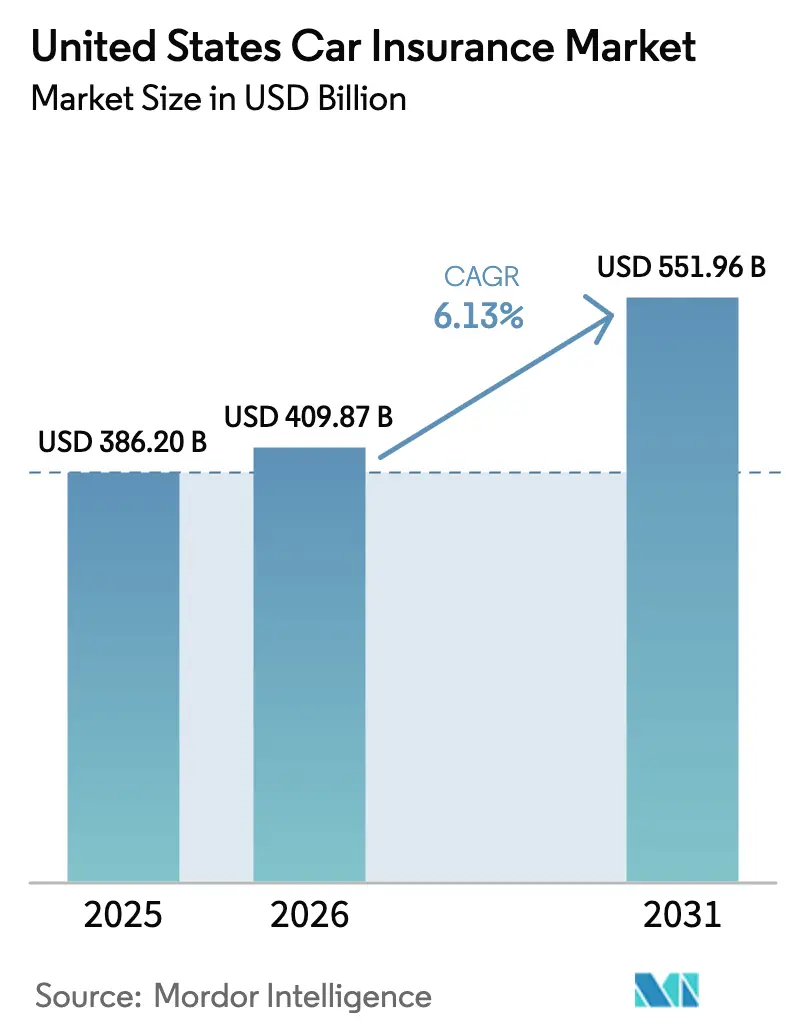
- The US car insurance market reached $386.20 billion in 2025, showing a strong base for future growth.
- The market grew to $409.87 billion in 2026, reflecting steady yearly expansion.
- The industry is projected to hit $551.96 billion by 2031, highlighting long-term growth potential.
- The market is expected to grow at a CAGR of 6.13% from 2026 to 2031.
- The increase from $386.20 billion to $551.96 billion shows a major rise in market value over time.
- Rising demand for auto insurance coverage continues to drive this growth.
 (Reference: Mordor Intelligence)
Premium and Rate Trends
- The average US full-coverage car insurance premium is about $2,697 per year, with minimum coverage around $820.
- Teen drivers on a family policy pay roughly $5,740–$7,956 per year for full coverage, several times more than middle‑aged drivers.
- Bundling home and auto can yield discounts of up to 30–40%, depending on the insurer and state.
- Telematics and usage‑based programs can cut premiums by up to 30% for consistently safe, low‑risk drivers.
- Across major US markets, EV insurance averages about 20–50% higher than comparable gas vehicles, with some states seeing gaps above 70%.
- Advanced safety features and ADAS packages can qualify vehicles for discounts that reduce premiums by up to roughly 25–30%.
Average 6-Month Car Insurance Premiums by Age Group
- Drivers aged 16–19 pay the highest premiums, averaging $6,164 for 6 months due to inexperience.
- The 20–29 age group averages $4,500 for 6-month premiums, a notable drop from teens.
- Drivers aged 30–39 see average 6-month rates of $2,844.
- The 40–49 range pays around $2,624 on average for six months.
- Lowest premiums for the 50–59 group at $2,541 average for 6 months.
- 60–69 age group averages $2,455 for 6-month coverage.
- 70–79 drivers pay about $2,663 average for six months.
- Premiums for 80–85 rise to $2,800 due to age-related risks.
Auto Insurance Satisfaction and Switching Behavior
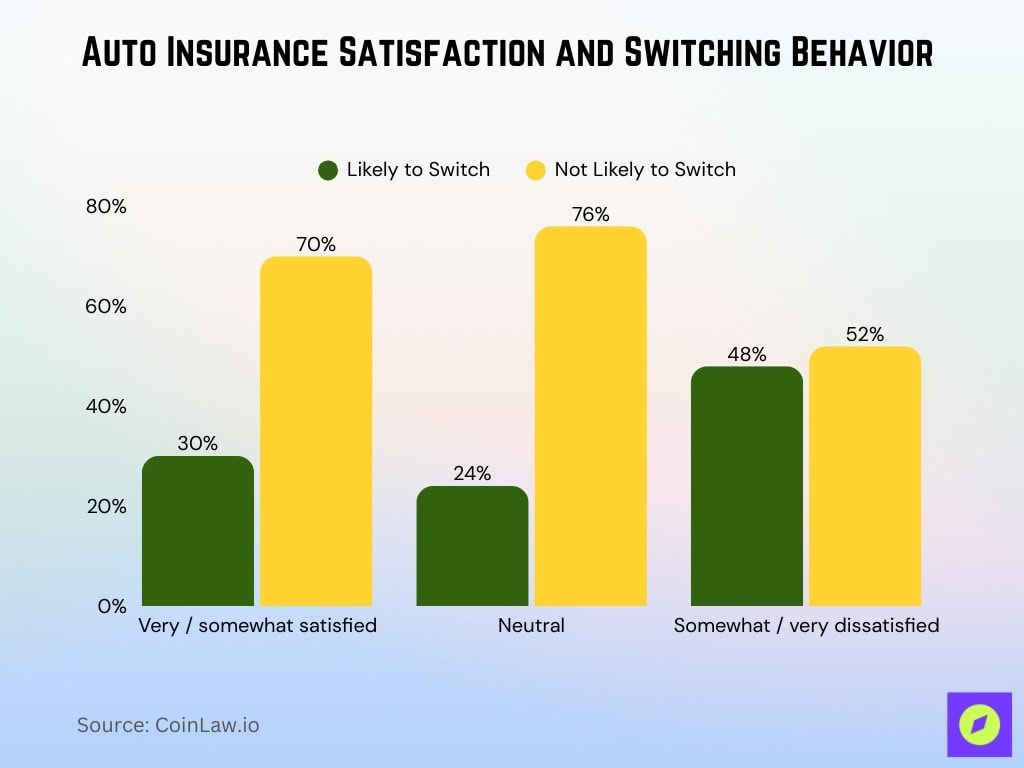
- 30% of satisfied customers say they are likely to switch, while 70% say they will stay with their insurer.
- 24% of neutral customers plan to switch providers, while 76% are not likely to switch.
- 48% of dissatisfied customers say they are likely to switch, showing strong churn risk.
- Only 52% of dissatisfied users say they will stay, which is much lower than other groups.
- Customers who feel dissatisfied are almost twice as likely to switch compared to satisfied users (48% vs 30%).
- Even among happy customers, nearly 1 in 3 still consider switching providers.
- The data shows that customer satisfaction strongly affects switching behavior in the auto insurance market.
 (Reference: CivicScience)
Costs and Expenditures
- US auto insurers paid out roughly $240–$250 billion in personal auto claims, with loss ratios near or above 100% in recent years.
- Administrative and general expenses typically represent about 10–15% of premium, with some major carriers targeting ratios closer to 9–10% through efficiency programs.
- Legal and defense costs tied to auto liability have been rising by roughly 10–12% annually, driven by larger verdicts and broader “social inflation” trends.
- Auto repair and maintenance costs increased around 7–9% year over year, outpacing general inflation due to higher parts and labor prices.
- Typical car accident injury settlements often fall in the $20,000–$30,000 range for moderate cases, with more serious injuries frequently exceeding $100,000.
- Insurance fraud is estimated to cost the US property-casualty industry about $80 billion annually, with AI fraud tools improving detection rates by over 30%.
Auto Insurance Costs by State
- Michigan’s average full-coverage premium is about $3,486 per year, remaining among the highest in the country.
- Louisiana drivers pay roughly $3,293 per year on average for full coverage, reflecting elevated claim and litigation costs.
- Florida’s typical full-coverage premium is approximately $3,884 annually, driven by severe weather risk and dense traffic.
- California averages about $3,119 per year for full coverage, with minimum coverage around $916.
- Vermont remains one of the cheapest states, with average full-coverage premiums near $1,610 per year.
- Ohio’s average full-coverage premium is about $2,162 annually, while Idaho’s is closer to $1,902, both below the national mean.
- New York drivers face average full-coverage costs of roughly $2,898–$3,254 per year, with urban high‑risk drivers paying substantially more.
Claim Frequency and Severity
- Overall personal auto claim counts fell about 8.5–10.4% year over year despite rising repair complexity and costs.
- Comprehensive claim frequency reached about 7.8 claims per 100 vehicles as severe weather-related claims increased.
- Average bodily injury claim severity climbed to roughly $23,500, up about 11% year over year.
- Total loss frequency rose to about 22.8–23% of all claims, marking a second consecutive record high.
- Hit-and-run claims totaled around 285,000, representing roughly 4% of all collision claims nationwide.
- Glass-related and comprehensive claims now account for about 22% of filings, largely driven by theft and weather damage.
Key Market Indicators
- The auto insurance industry’s total assets reach approximately $4.5 trillion globally.
- Direct written premiums for private auto are estimated at $278 billion.
- Industry combined ratio expected to stabilize at 99%.
- Policy retention rates decline, with 33% likely to switch providers.
- Customer satisfaction averages 85% among auto insurance buyers.
- Auto liability loss ratio hits 87.6%, highest in 11 years.
- Insurer expense ratios have improved by 6 percentage points over the past decade.
Auto Insurance Switching Intent by Provider
- State Farm policyholders least likely to switch, with only 23% likely to change.
- Progressive customers have 29% likely to switch providers in the next 90 days.
- Allstate sees 35% of users considering a switch.
- GEICO policyholders show 34% intent to change insurers.
- Farmers Insurance faces 43% customer turnover risk.
- Liberty Mutual has 45% of policyholders likely to switch.
- USAA customers exhibit 47% switching likelihood.
- Nationwide experiences the highest churn, 53% likely to change.
Impact of Technology and Telematics
- Around 12% of U.S. drivers are enrolled in telematics insurance, while connected telematics penetration is estimated near 55%.
- AEB and ADAS technologies reduce rear-end crashes by up to 43–50%, while blind-spot monitoring cuts lane-change crashes by about 14–19%.
- Roughly 70–75% of insurers offer mobile apps or digital portals for claims, making digital-first filing the norm.
- AI-driven claims tools reduce resolution times by up to 75%, cutting processing from about 30 days to roughly 7.5 days.
- The global usage-based insurance and telematics market is valued at around $62.6 billion, with a projected 24.8% CAGR over the next decade.
- Among younger drivers, awareness and favorability for UBI programs exceed 80–90%.
- Predictive analytics and AI support pricing and claims decisions at roughly 70–80% of major insurers, reducing cost per claim by 30–40%.
Trends in Electric Vehicle Insurance
- EVs represent 11% of new light-duty vehicle sales in early 2026, showing continued market growth.
- Insurance premiums for EVs average 20-50% higher than gas-powered cars due to repair costs.
- Battery repairs account for 30-40% of an EV claim’s total cost, driving premium increases.
- Tesla EVs like Model Y cost $5,074 annually to insure, among the priciest brands.
- 59% of the U.S. EV market share held by Tesla in Q4 2025, influencing insurance trends.
- EV collision repairs average 25-30% more per claim than gas vehicles.
- Insurers offer specialized coverage for home charging stations and related damages.
- 69% of new European passenger cars were electrified in January 2026, boosting insurance demand.
- Discounts for home chargers reduce risks, becoming standard in 2026 policies.
Frequently Asked Questions (FAQs)
Full coverage car insurance averages $225 per month or $2,697 per year in the US.
About 33% of US auto insurance customers say they are likely to switch providers in the next 90 days.
State Farm leads US personal auto carriers with around $50 billion in net premiums written.
US personal auto premiums are forecasted to increase by around 4% nationally.
Conclusion
The US auto insurance industry today is shaped by advancements in technology, shifting consumer expectations, and a growing emphasis on sustainability. As electric vehicles become more prevalent, insurers must adjust their models to cater to these new demands. Meanwhile, digital innovation is simplifying the insurance process, enhancing customer satisfaction, and improving efficiency.
Consumers benefit from a wide array of options, from telematics-based policies to regional providers, that cater to diverse needs and preferences. With challenges such as climate risks and rising costs, the industry remains dynamic, responding to both regulatory changes and consumer-driven shifts. The future of auto insurance is bright, but insurers must continue adapting to the fast-paced changes ahead.
The post US Auto Insurance Industry Statistics 2026: What You Must Know Now appeared first on CoinLaw.
You May Also Like

USD/CHF steadies near 0.7900 as policy decisions by Fed, SNB loom

XRP Ledger (XRPL) Breaks 13-Year Milestone in Nonempty Wallets as Adoption Peaks