NFT

NFTs are unique digital identifiers recorded on a blockchain that certify ownership and authenticity of a specific asset. Moving past the "PFP" craze, 2026 NFTs emphasize utility, representing everything from IP rights and digital fashion to RWA titles and event ticketing. This tag explores the technical standards of digital ownership, the growth of NFT marketplaces, and the integration of non-fungible tech into the broader Creator Economy and enterprise solutions.

12495 Articles
Created: 2026/02/02 18:52
Updated: 2026/02/02 18:52
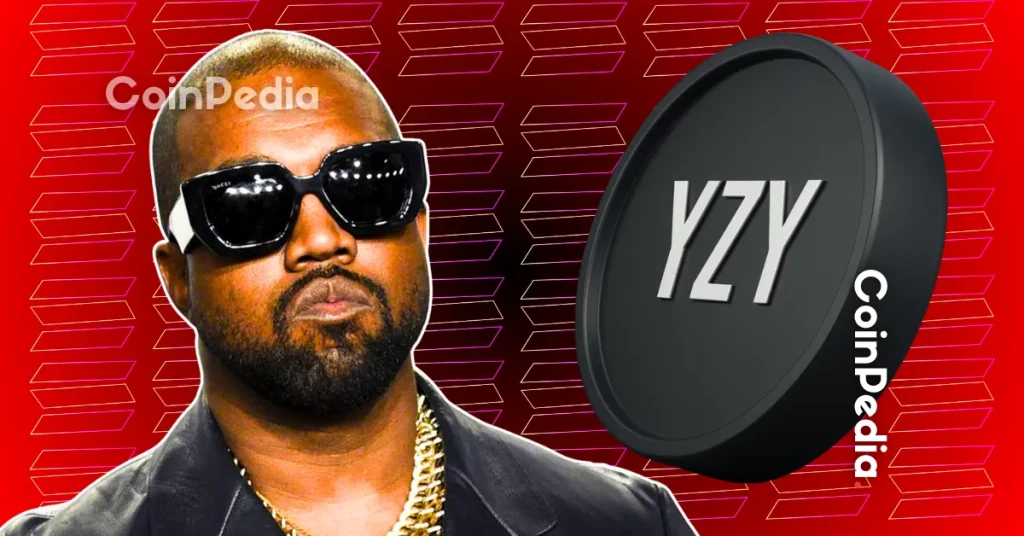
Kanye West Memecoin YZY Coin Turns Into a Pump-and-Dump Nightmare

Kanye West Memecoin YZY Coin Turns Into a Pump-and-Dump Nightmare

The post Kanye West Memecoin YZY Coin Turns Into a Pump-and-Dump Nightmare appeared first on Coinpedia Fintech News Kanye West, now known as Ye, officially entered crypto with the launch of his YZY token on Solana. The debut was explosive: prices shot up 1,400% within the first hour, hitting $3 before crashing back to $0.77 in less than a day. While retail traders rushed in hoping for quick profits, insiders and snipers dominated …

Author: CoinPedia
Faster Than Solana, Cheaper Than Cardano

Faster Than Solana, Cheaper Than Cardano

The post Faster Than Solana, Cheaper Than Cardano appeared on BitcoinEthereumNews.com. Crypto News Crypto markets are buzzing as the crypto presale for Layer Brett takes center stage. Promoted as faster than Solana and cheaper than Cardano, this Ethereum Layer 2 project combines the viral energy of the meme token space with actual blockchain performance. At a presale price of just $0.0047 per LBRETT, analysts are projecting gains of 100x or more as the next bull run approaches. Ultra-high staking rewards and a $1 million giveaway are fueling a powerful wave of FOMO across both meme coin hunters and DeFi investors. Why Layer 2 gives Layer Brett the edge over Solana and Cardano Unlike Solana and Cardano, which face congestion and higher fees under heavy network demand, Layer Brett leverages Ethereum Layer 2 scaling for near-instant transactions and minimal costs. Solana is known for speed, but frequent outages and volatility have left users cautious. Cardano continues to focus on stability and governance, yet it still lags in transaction speeds and fee competitiveness. Key features that set Layer Brett apart include: Staking rewards exceeding 12,580% APY for early participants. Easy wallet integration with MetaMask and Trust Wallet. A fully decentralized system with no KYC requirements. A transparent tokenomics structure fixed at 10 billion tokens. What makes Layer Brett different from Shiba Inu, Pepe, Bonk, Dogecoin, and Brett? The meme token market is crowded with Shiba Inu, Pepe, Bonk, Dogecoin, and Brett (original), each making waves but falling short of providing real blockchain solutions. Shiba Inu built a loyal community, but its Layer 1 congestion continues to drag performance. Pepe generated volatility but lacks sustainable utility. Bonk’s presence on Solana has been hit with sharp corrections, while Dogecoin, despite strong branding, suffers from slow transaction speeds and limited development. Brett (original) succeeded on Base as a cultural meme, yet it offers little beyond trading…

Author: BitcoinEthereumNews
Solana (SOL) and Ripple (XRP) Prices Dip, Opening A Massive Opportunity For Layer Brett 5000% Staking Boom

Solana (SOL) and Ripple (XRP) Prices Dip, Opening A Massive Opportunity For Layer Brett 5000% Staking Boom

The post Solana (SOL) and Ripple (XRP) Prices Dip, Opening A Massive Opportunity For Layer Brett 5000% Staking Boom appeared on BitcoinEthereumNews.com. A crypto market shift is causing the Solana and XRP prices to open the door for Layer Brett’s explosive entry. The recent downturn in both XRP and Solana has caught the crypto community’s attention, especially investors searching for the next big Layer 2 crypto opportunity. With SOL and XRP consolidating, momentum is shifting toward new entrants like Layer Brett, which is currently in presale and promising staking rewards of up to 5,000% APY for early buyers. Analysts predict that $LBRETT could outperform many established meme coins, ushering in a fresh era of DeFi coin innovation and community-driven blockchain projects. The presale is live, and the urgency for early access is mounting as market sentiment toward mainstream altcoins softens. Why Ethereum Layer 2 gives Layer Brett the edge over Solana and XRP Layer Brett leverages Ethereum Layer 2 technology to deliver lightning-fast, low gas fee crypto transactions, addressing the scalability bottlenecks that have challenged Solana and Ripple (XRP). While SOL maintains high throughput and XRP continues to pursue institutional adoption, both have faced recent price dips and stagnation. In contrast, $LBRETT stands out with: Near-instant transactions and ultra-low fees, improving on Ethereum Layer 1’s congestion. Seamless staking crypto integration, letting users buy and stake with ETH, USDT, or BNB via MetaMask or Trust Wallet. Gamified staking and NFT rewards, energizing the ecosystem beyond simple financial utility. Transparent tokenomics with a fixed 10 billion supply and robust DeFi and crypto governance plans. XRP price and SOL dip: Why investors are turning to Layer Brett’s presale With Ripple’s XRP price consolidating near $3.00 and SOL drifting below recent highs, many investors are moving to new crypto coins with higher growth potential. The Layer Brett presale is capturing this shifting interest, offering a low entry point ($0.0044 per token) and immediate staking options with…

Author: BitcoinEthereumNews
Can Pepe Coin Repeat Its Magic? Analysts Think Layer Brett Could Be the Next Billion-Dollar Meme Coin

Can Pepe Coin Repeat Its Magic? Analysts Think Layer Brett Could Be the Next Billion-Dollar Meme Coin

Analysts eye Layer Brett as the next 100x meme coin, blending Ethereum Layer 2 speed, low fees, and 4,000% APY staking to rival PEPE’s $4.7B legacy.

Author: Blockchainreporter
Analysts Say Layer Brett Will Be Crowned Top Meme Coin After 25,000% Forecast

Analysts Say Layer Brett Will Be Crowned Top Meme Coin After 25,000% Forecast

The post Analysts Say Layer Brett Will Be Crowned Top Meme Coin After 25,000% Forecast appeared on BitcoinEthereumNews.com. Crypto News The Layer Brett presale has ignited a wave of excitement across the crypto community, with analysts forecasting a staggering 25,000% upside for early adopters. As of August 2025, LBRETT is available for just $0.0047 per token, making it one of the most accessible entries for those seeking the next big crypto. Unlike legacy meme coins such as Shiba Inu and Pepe coin, Layer Brett is built directly on Ethereum Layer 2, delivering ultra-fast transactions and low gas fees. Early participants can stake their tokens and potentially earn over 12,580% APY, with some reports citing initial rates above 55,000%. The crypto presale is ongoing, and urgency is high. This could be the best meme coin launch of the year. Why Layer 2 gives Layer Brett the edge over Shiba Inu and Pepe coin Layer Brett stands out by combining the viral appeal of meme tokens with real blockchain utility. While Shiba Inu and Pepe coin have built massive communities, they remain limited by Ethereum Layer 1 congestion and high transaction costs. LBRETT leverages Ethereum Layer 2 technology, enabling near-instant settlements and dramatically reduced gas fees. In contrast, SHIB and PEPE are often criticized for slow network speeds or speculative hype with little underlying utility. By processing transactions off-chain yet remaining anchored to Ethereum’s security, Layer Brett achieves both scalability and decentralization. This positions Layer Brett as a next 100x altcoin contender and a legitimate rival to the best meme coins on the market. How LBRETT rewards early buyers: Staking, giveaways, and FOMO Early investors in LBRETT can stake their tokens directly through MetaMask or Trust Wallet, accessing some of the highest APYs available in the meme token sector. The current staking yield exceeds 12,580% for presale buyers, creating a massive incentive for early entry. There is also a $1…

Author: BitcoinEthereumNews
Exploring the Next Big Cryptocurrency Opportunity After Solana's Massive Success

Exploring the Next Big Cryptocurrency Opportunity After Solana's Massive Success

Imagine investing in a cryptocurrency at its infancy and watching it soar to record heights—this was the reality for early Solana investors in 2021. Fast forward to today, and the crypto community is buzzing about a new token, Little Pepe ($LILPEPE), which could potentially replicate Solana's success. Introducing $LILPEPE, the New Contender Designed as a Layer 2 blockchain solution, Little Pepe aims to revolutionize meme cryptocurrencies by not only offering ultra-low transaction fees and enhanced security but also rapid transaction finality that could even rival some of the quickest tech giants. Unlike many meme-based tokens, $LILPEPE boasts robust security as evidenced by its high scoring CertiK audit. Current Token Sale and Investment Opportunities The presale of $LILPEPE has been progressing at an astonishing pace, with the token price currently at $0.0020. Early investors have seen significant returns, with analysts predicting potential gains of up to 10,000%. This kind of upside is not only rare but could set up $LILPEPE as the breakout star of this cryptocurrency cycle. Community and Marketing Initiatives Little Pepe's roadmap is community-focused, highlighting phases such as 'Pregnancy' and 'Birth' where the project will develop through several strategic stages. From presales and partnerships to wide-scale launches anticipated on platforms like Uniswap, the strategic development is designed to fuel both growth and market cap. An exciting component of their marketing campaign is the enticing $777K giveaway, which is already drawing vast attention with over 220,000 entries. Vesting and Token Economics Little Pepe is committed to fairness in its token distribution. Presale tokens are locked up initially, releasing gradually to prevent market dumping and ensure stability. This strategy aims to foster trust and long-term holder commitment. Comparative Analysis: Solana and Little Pepe While Solana's fast technology and infrastructure built for DeFi and NFTs made headlines in 2021, Little Pepe is carving out its niche with a focus on memes and fast transaction capabilities, starting from a zero market cap. The differences highlight Little Pepe's potential to offer explosive returns similar to or exceeding those Solana once did. Engagement and Further Information For those looking to explore this burgeoning cryptocurrency, more information can be found on Little Pepe's official website and detailed insights in their whitepaper. Community interaction is encouraged through their Telegram and Twitter/X channels. Note: This article serves informational purposes and should not be taken as financial advice.

Author: Coinstats
Solana Faces Pressure From Ethereum’s Next L2 Challenger Layer Brett

Solana Faces Pressure From Ethereum’s Next L2 Challenger Layer Brett

The post Solana Faces Pressure From Ethereum’s Next L2 Challenger Layer Brett appeared on BitcoinEthereumNews.com. Crypto News The recent surge in Solana’s (SOL) price has captured headlines, but the crypto market’s attention is rapidly shifting toward the explosive presale of Layer Brett, the newest Ethereum L2 challenger that analysts say could trigger a major memecoin boom.  With Layer Brett LBRETT priced at just $0.0047 in its crypto presale, and staking rewards reportedly reaching over 25,000% APY for early participants, the buzz around Layer Brett is impossible to ignore. The excitement is fed by comparisons to Shiba Inu, Pepe, Bonk, Dogecoin, and especially Brett (original), all of which are currently being scrutinized as Layer Brett redefines what a meme token can be. Why Ethereum (ETH) L2 tech gives Layer Brett the edge Layer Brett (LBRETT) leverages cutting-edge Ethereum L2 technology, bringing near-instant transaction speeds and ultra-low gas fees. While Solana (SOL) boasts a $99.92 billion market cap and significant network upgrades, Layer Brett’s off-chain processing delivers what meme enthusiasts and DeFi users have long demanded: speed, scalability, and cost efficiency. Unlike Shiba Inu and Bonk, which have struggled with high gas fees or network congestion, Layer Brett enables users to buy and stake $LBRETT in seconds using ETH, USDT, or BNB, directly from MetaMask or Trust Wallet. Key advantages of Layer Brett: Low entry price: At $0.0047, $LBRETT offers a chance to enter before the next crypto bull run. Staking rewards: Early stakers can access APYs over 25,000%, a figure unmatched by Dogecoin or Pepe. Viral meme culture: Layer Brett fuses memecoin hype with real blockchain utility, unlike the static ecosystems of some rivals. $1 million giveaway: Community growth is incentivized through ongoing campaigns. What makes Layer Brett different from Brett (original), Pepe, and Bonk While Brett (original) found early traction on Base, its limited utility left holders wanting more. Layer Brett’s (LBRETT) roadmap includes NFT…

Author: BitcoinEthereumNews
What does “owning” a JPEG feel like to a normal user?

What does “owning” a JPEG feel like to a normal user?

NFTs brought the idea of digital ownership into the mainstream. On-chain, they prove that a file — a JPEG, a video, a music track, is tied to a unique token. Technically, ownership is unquestionable: it’s recorded on the blockchain, verifiable by anyone. But for most people outside crypto, the experience of “owning” an NFT doesn’t feel like ownership. Screenshots exist, files are infinitely replicable, and wallets display them like serial numbers in a spreadsheet. The emotional and practical cues that make ownership meaningful in the physical world are missing in digital interfaces. Where ownership feels thin Invisible proof Ownership exists on the blockchain, but most users never see or interact with the ledger. Without tangible reminders, the proof feels abstract. Utility gap Many NFTs stop at collectibility. If owning doesn’t unlock real experiences — access, upgrades, rights — it feels hollow. Database aesthetics Wallets and marketplaces display NFTs as tokens and IDs, not as lived objects. Instead of highlighting value, they flatten it into a grid of thumbnails. No rituals Physical ownership often comes with ceremonies: signing papers, unboxing, receiving keys. NFTs lack these moments, reducing ownership to a silent confirmation. UX opportunities Ownership rituals Introduce designed experiences at the moment of acquisition — animations, certificates, or celebratory flows that reinforce the transition from “not mine” to “mine.” Utility-first framing Interfaces should highlight what ownership enables. Does this NFT grant community access, voting rights, or in-game perks? Surface that utility upfront. Contextual presence NFTs shouldn’t only live in wallets. They should follow users into the spaces they care about — profiles, chat apps, games, AR filters. Visibility reinforces reality. Narrative layers Assets need stories, not just metadata. A message like “You collected this at ETHGlobal 2024” connects the asset to memory and identity, making ownership personal. Evolution over time Ownership doesn’t have to be static. Show changes — appreciation in value, upgrades, community milestones tied to the asset — so it feels alive rather than frozen. Why it matters Ownership is not just a legal state; it’s a lived experience. A house feels owned because you hold the keys and walk through its door. A favorite shirt feels owned because you wear it, not because you can prove it on paper. If NFTs remain technical proofs without experiential layers, they’ll always feel alien to mainstream users. UX is the bridge: turning tokens from abstract hashes into objects that carry stories, unlock access, and feel present in daily life. Web3 doesn’t need to convince people that digital property is possible. It needs to design ownership so that it feels as real, and as meaningful, as the physical kind. What does “owning” a JPEG feel like to a normal user? was originally published in Coinmonks on Medium, where people are continuing the conversation by highlighting and responding to this story

Author: Medium
Linea TGE Countdown: A Panoramic Analysis of Technology, Ecosystem, and Token Economics

Linea TGE Countdown: A Panoramic Analysis of Technology, Ecosystem, and Token Economics

Linea positions itself as "an Ethereum Layer 2 network built to enhance Ethereum." Its mission is deceptively simple, yet incredibly powerful. With Ethereum's price rebounding significantly over the past two months and nearing new highs, Linea has quickly become one of the most anticipated projects in the crypto space, especially with its upcoming Token Generation Event (TGE). At its core, Linea is more than just another Layer 2 network—it's a zkEVM project designed to push Ethereum further while fully integrating with the Ethereum ecosystem. Founded by ConsenSys, the company behind key Ethereum infrastructure like MetaMask and Infura, Linea has deep institutional backing and years of experience powering core tools used by over 30 million users worldwide. Led by Ethereum co-founder Joseph Lubin, ConsenSys has raised $725 million from investors including Microsoft, SoftBank, and Coinbase Ventures, providing solid support for Linea's long-term growth. Linea's Technology and Ethereum's Challenges Ethereum's core challenge has always been scalability. Competing chains like Solana excel at speed and throughput, forcing Ethereum to rely on Rollups for expansion. Rollups bundle large numbers of Layer-2 transactions and submit them to Ethereum for settlement. Rollups use two methods: optimistic fraud proofs (requiring up to seven days for final confirmation) and validity proofs (also known as ZK proofs), which are faster and more secure. Linea uses the Type 2 zkEVM, which means it's fully equivalent to the EVM, but not to Ethereum. In practice, this allows developers to directly deploy Ethereum dApps on Linea without rewriting their code, while benefiting from faster proof generation and lower costs. Linea aims to gradually transition to the Type 1 zkEVM by 2026, achieving full compatibility with Ethereum. Reduce costs and improve user experience Linea has demonstrated its ability to improve user experience, most notably by significantly reducing gas fees. In its Alpha V2 upgrade, it introduced a mechanism for aggregating multiple batches into a single proof, reducing fixed costs and bringing average gas fees down by 66%. This makes Linea one of the lowest-cost L2 blockchains, giving it an advantage in attracting and retaining users. Core features driving adoption Linea's design is built around three pillars: Ethereum alignment - using ETH to pay for gas fees to keep consistent with Ethereum's native design; Native revenue — introducing token economic incentives at the network level; Multi-Rollup network architecture - building an ecosystem by linking different Rollups. At the same time, Linea uses a double-burn mechanism: ETH fees used in transactions will burn both ETH and LINEA tokens. This mechanism makes Linea's success closely tied to the health of Ethereum. Native income mechanism and ecological flywheel Another key differentiator for Linea is its native yield mechanism. Through integration with Lido, ETH bridged to Linea can be automatically staked, with the generated yield flowing back into the ecosystem to support liquidity and incentivize growth. This design creates a liquidity flywheel effect that is expected to support Linea's long-term development, avoiding the boom-and-bust cycles seen in other projects driven by short-term incentives. Linea not only positions itself as a Layer 2 network but also provides a comprehensive suite of tools through the Linea Stack to help other projects build their own Rollups. This strategy, similar to Optimism's Superchain approach, aims to create broader network effects, ensure interoperability, and enhance the cohesion of the entire ecosystem. Ecological Potential and Token Economics Linea's ecosystem is rapidly gaining momentum. It has already established partnerships with over 400 partners across DeFi, NFT, infrastructure, and AI, including major protocols such as Aave, PancakeSwap, SushiSwap, and Stargate. During the 2024 Surge event, its TVL reached $1.2 billion. Despite a decline after the end of the incentive program, funds are flowing back as the TGE approaches. Ethereum, a decentralized exchange that launched just a few weeks ago, has surpassed $120 million in TVL, demonstrating a rebound in ecosystem capital. Unlike many projects, Linea deliberately avoids distributing tokens to venture capital firms. Instead, 85% of tokens are allocated to the ecosystem, with only 15% reserved for ConsenSys, subject to a five-year lockup period. Regarding governance, Linea deliberately excludes token governance. Instead, token emission, grants, and incentives are managed by the Linea Consortium, a group of trusted Ethereum organizations. This design mitigates regulatory risk while ensuring strong alignment between Linea and Ethereum's long-term vision. Outlook for the Future According to its roadmap, Linea will launch a series of key upgrades in the third and fourth quarters of 2025, including a new burn mechanism, an increased gas limit, and the full implementation of its native revenue mechanism. By 2026, Linea plans to implement Type 1 zkEVM and increase network throughput to 5,000 transactions per second (TPS), while also advancing its more ambitious real-time proof-of-stake (RPS) for Ethereum. Summarize Linea is a bold experiment: its lack of VC backing, native ETH returns, and Ethereum-first design make it more than just a scaling solution. While questions remain about its token model and long-term value capture, as the TGE approaches, one thing is certain: Linea's goal isn't just to scale Ethereum, but to strengthen it.

Author: PANews
Solana Faces Pressure From Ethereum’s Next L2 Challenger Layer Brett – Analysts Predict Major Boom

Solana Faces Pressure From Ethereum’s Next L2 Challenger Layer Brett – Analysts Predict Major Boom

With Layer Brett LBRETT priced at just $0.0047 in its crypto presale, and staking rewards reportedly reaching over 25,000% APY […] The post Solana Faces Pressure From Ethereum’s Next L2 Challenger Layer Brett – Analysts Predict Major Boom appeared first on Coindoo.

Author: Coindoo